How Far to Walk From a Grid Road
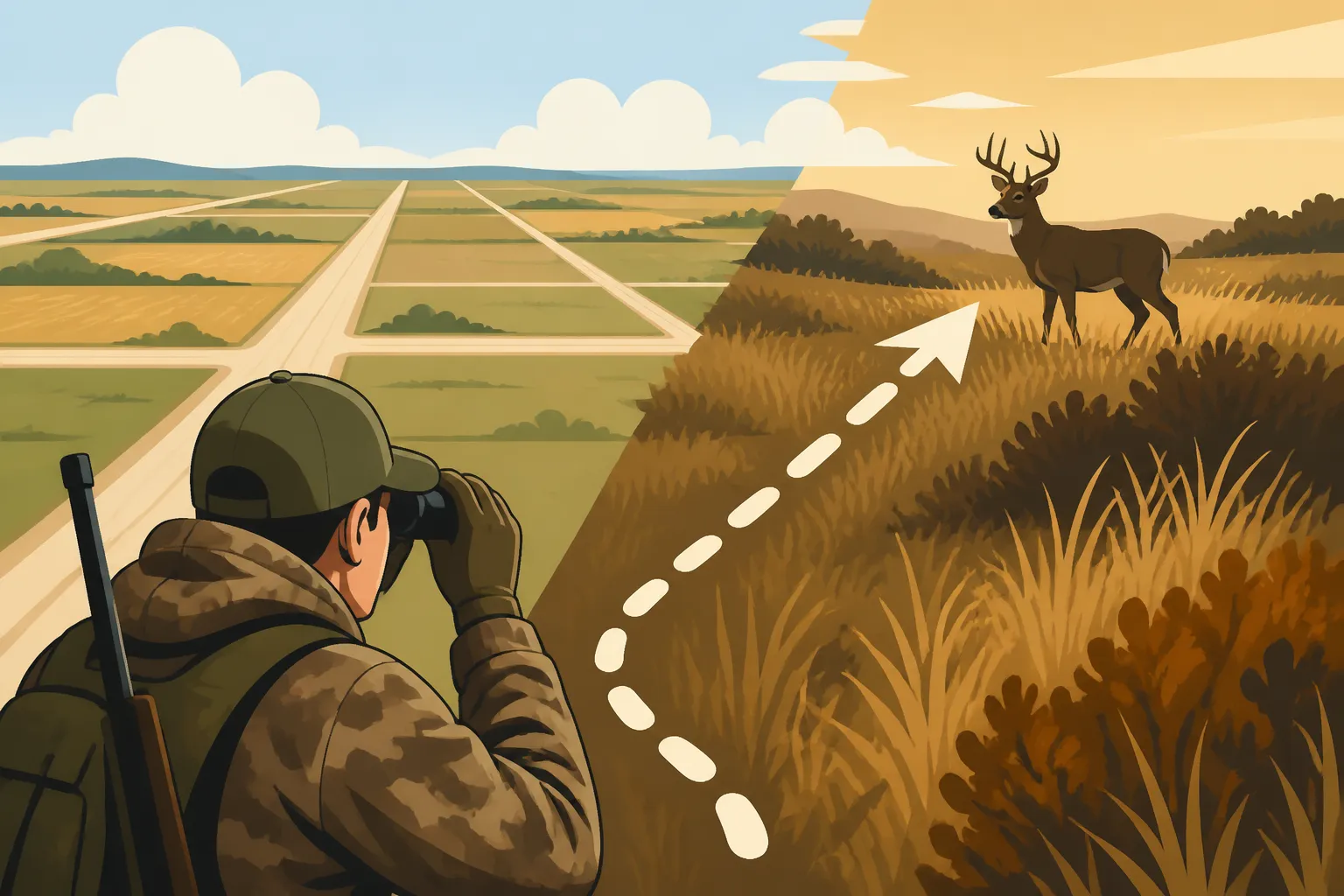
You've driven down a Saskatchewan grid road, eyes scanning the ditches and field edges, and you see it – fresh tracks, a rub line, maybe even a glimpse of a deer vanishing into the bush. The temptation to just hop out and start still-hunting is real, but experience tells us that those roadside animals are usually educated, and the real opportunities often lie further in. This guide is all about helping you figure out just how far you need to walk to leave the road noise and human pressure behind, and truly get into undisturbed hunting country in Saskatchewan.
Why Getting Off the Grid Road Is Essential
It's a common scenario for many hunters, especially those of us chasing whitetails or even mule deer in the more accessible parts of Saskatchewan. You pull over, glass an inviting field edge or a promising bluff just off the gravel, and your gut tells you there's game there. And you'd be right – there often is. However, the catch is that any animal within easy earshot or eyesight of a main thoroughfare is likely highly conditioned to human presence and the constant rumble of vehicles. These aren't the relaxed, unpressured animals we dream of encountering.
Understanding Hunting Pressure and Its Impact
Think about it from a deer's perspective. Every truck, every car, every quad that passes by is a potential threat. They associate the sound and sight of vehicles with people, and people often mean danger. Even if a hunter isn't actively pursuing them, the sheer volume of traffic creates a constant low-level stress. This constant pressure pushes mature bucks, in particular, deeper into cover, making them more nocturnal or forcing them into areas where they feel genuinely safe. They learn quickly, becoming masters of evasion right where we least expect them.
The immediate vicinity of a grid road, say within a quarter-mile, often acts as a buffer zone. While you might jump a deer, it's far more likely to be a young buck or a doe, and they'll be gone in a flash. The deer that consistently evade hunters, the ones that grow old and big, are the ones that have learned to put distance and cover between themselves and easy access points. This is why just pulling over and stepping into the ditch often leads to disappointment – you're still in that zone where the animals are on high alert. To truly increase your odds, you need to break that psychological barrier the animals have established.
The Role of Cover and Topography
Saskatchewan's landscape, while often appearing flat or open, has incredible nuances in its cover and topography that can hold game surprisingly close to human activity, yet provide excellent concealment. A small bluffy rise, a willow-choked slough, or a winding coulee might be a stone's throw from a grid road, but offer enough visual and sonic dampening to make a deer feel secure. However, even in these pockets, the biggest challenge is often human scent and foot traffic. Every hunter who walks that same little bluff edge is leaving a trail, and deer are masters at detecting it.
This is where moving further comes into play. By putting some serious distance between yourself and the road, you're not just getting away from vehicle noise; you're also leaving behind the scent cones of countless other hunters. You're entering areas that might see significantly less human intrusion, simply because it requires more effort to reach them. A deer bedded a mile from the road, deep in a willow run or a bush pocket, is far less likely to have caught your scent or the scent of the last five guys who drove by. It's about finding those hidden sanctuaries that take genuine effort to access. Hunting a Saskatchewan Bush Bluff and Hunting a Prairie Coulee Bottom are great examples of where animals might tuck away.
Determining "Far Enough" for Your Hunt
So, how far is "far enough"? Unfortunately, there's no single magic number, no universal rule that applies to every situation. It's a dynamic calculation based on a combination of factors: the species you're hunting, the type of terrain, the time of year, weather conditions, and, perhaps most importantly, the level of existing hunting pressure in that specific Wildlife Management Zone (WMZ). It's a judgment call you'll get better at with experience.
Species Specifics and Preferred Habitat
Different game animals have different thresholds for human disturbance. A wily whitetail buck in a high-pressure zone, for instance, might require you to push much further into the thick stuff than, say, a sharp-tailed grouse that's more accustomed to sporadic human presence in agricultural fields.
- Whitetail Deer: These are perhaps the most sensitive to pressure. In farmland or aspen parkland zones, a quarter-mile might be enough to get away from most casual hunters, but to find truly unpressured deer, especially older bucks, you might need to stretch that to half a mile, or even a full mile, into dense bluffs, willow thickets, or creek bottoms. They'll use every fold in the land and every bit of cover to their advantage. Hunting Whitetails in Saskatchewan's Forest Fringe often means getting off the beaten path.
- Mule Deer: Often found in more open prairie environments, mule deer in Saskatchewan's southwest can still be highly sensitive to pressure, especially if they're holding in smaller coulees or isolated pockets of cover. While they might tolerate more distant human activity, getting into their core bedding areas might require walking a mile or more across open country to access deeper coulee systems. They tend to use elevation and distance as their primary defense.
- Moose and Elk: In areas where moose have moved into farmland or elk graze the edges of fields, they can become quite habituated to vehicles, but will still seek refuge in dense bush or large slough systems once pressured. If you're hunting them on public land near a grid road, getting at least half a mile, or even a mile, into larger bush blocks is usually necessary. They are big animals and need significant cover to feel secure.
- Upland Birds: While grouse and partridge can hold tight, even in relatively open country, their response to hunting pressure is different. You might be able to find them within a few hundred yards of a grid road along a shelterbelt, but to find coveys that haven't been busted repeatedly, venturing deeper into larger blocks of native prairie, extensive willow bluffs, or untouched treelines will often yield better results.
Terrain, Cover, and Concealment
The physical landscape itself plays a massive role. A grid road running through wide-open stubble fields with minimal cover means deer might be pressured to move much further to find security in distant treelines or a distant river valley. Conversely, a grid road bordering a massive block of dense bush, or paralleling a deep, winding coulee system, might mean animals can find seclusion much closer to the road, as long as the cover itself is extensive and difficult to penetrate without serious effort.
Consider the visual and sound barriers. A dense stand of aspens or a deep, steep-sided coulee will muffle road noise and hide movement much better than sparse willows. If you're looking at a map, identify those large, continuous blocks of cover or intricate topographical features that extend far from easily accessible points. These are often the arteries that lead to unpressured bedding and feeding areas. Using tools like onX Hunt or GoHunt to layer satellite imagery and topographic maps can show you these hidden gems, allowing you to plan your approach to stay downwind and out of sight as you penetrate deeper. Scouting With Satellite Imagery in Saskatchewan is a game-changer for this.
| Game Species | Typical Roadside Tolerance | Minimum Suggested Walking Distance (Low Pressure) | Minimum Suggested Walking Distance (High Pressure) | Key Terrain Features to Seek Deeper |
|---|---|---|---|---|
| Whitetail Deer | Low (especially mature bucks) | 0.25 – 0.5 miles | 0.5 – 1+ miles | Dense bluffs, river breaks, deep sloughs |
| Mule Deer | Moderate | 0.5 – 0.75 miles | 0.75 – 1.5+ miles | Extensive coulee systems, hill pockets |
| Moose | Moderate (can be habituated) | 0.5 – 1 mile | 1 – 2+ miles | Large bush blocks, peat bogs, dense willow runs |
| Elk | Moderate | 0.5 – 1 mile | 1 – 2+ miles | Extensive forest, rolling hills, large pastures |
| Upland Birds | Moderate to High | 0.1 – 0.25 miles | 0.25 – 0.5+ miles | Dense shelterbelts, native grass, thick bush rows |
| Black Bear | Low (avoid roads generally) | 0.5 – 1+ miles (into boreal) | 1 – 2+ miles (into undisturbed forest) | Dense forest, cutlines, remote areas |
Time of Year and Weather Conditions
The season and weather also influence how far you need to walk. In the early archery season, with lush foliage, deer might feel comfortable closer to roads, hidden by the dense green. However, as the rut approaches and pressure mounts, or during the late season when cover is sparse and temperatures drop, deer become incredibly wary and will seek out the most secluded, often deepest, cover they can find. Hunting the Rut in Early to Mid November often means being willing to sit still in deep cover.
Winter snow cover is a huge factor. Fresh snow reveals every track, making it easy to see where animals are moving, but also where other hunters have been. In deep snow, deer will often yard up in specific areas, which might be further from roads. Cold weather, especially extreme cold, can sometimes make deer less likely to move far, but they'll still be looking for thermal cover in the most sheltered spots. If you're out Hunting Whitetails at Thirty Below, you'll find deer seeking the densest stands of evergreens or the deepest, most sheltered river bottoms, which often means a good hike in.
Strategies for Deeper Access and Success
Knowing that you need to get further in is one thing; actually doing it effectively is another. It takes preparation, the right tools, and a commitment to minimizing your own impact while maximizing your time in prime habitat.
Utilize Mapping and GPS Technology
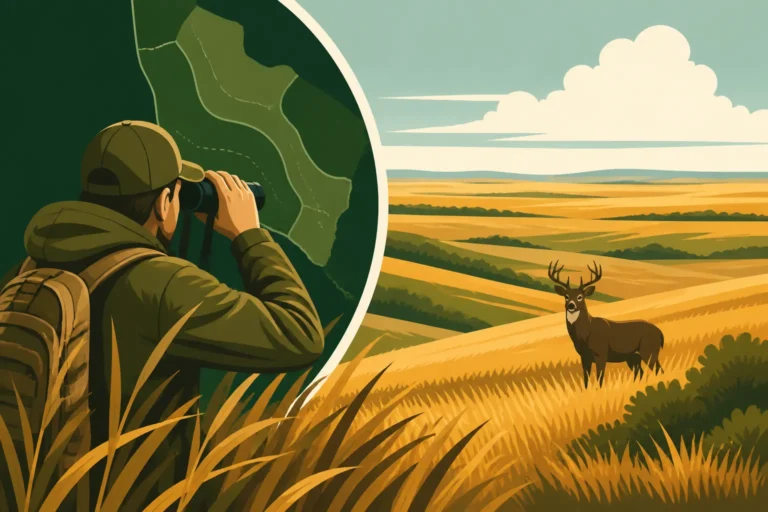
Before you even leave your truck, you should have a good idea of what lies beyond the road. This is where modern mapping apps like onX Hunt are invaluable. They allow you to overlay satellite imagery with land ownership boundaries (crucial for Hunting Saskatchewan's Crown Land Access vs. private land) and topographical maps. You can identify potential pinch points, bedding areas, and travel corridors that are a half-mile, a mile, or even further in.
Look for features that funnel game, like narrow strips of bush connecting larger blocks, a specific high spot with good visibility, or a deep bend in a creek that offers sheltered bedding. Plan your route to these areas, considering wind direction, terrain, and how quietly you can move. Don't just pick a spot on the map; plan your entire approach and exit. Using GPS to mark your truck's location and key waypoints as you walk ensures you don't get disoriented, especially in unfamiliar or dense bush. Reading a Saskatchewan WMZ Map Before You Go is your first step.
Boots on the Ground and Minimizing Your Scent
There's no substitute for walking. While a quick look from the road might give you clues, the real intelligence comes from putting boots on the ground. However, this needs to be done strategically. If you're scouting, try to do it outside of prime hunting hours or during a time when your scent is less likely to spook game (e.g., strong winds, rain). When hunting, always approach from a downwind direction, or with a crosswind that carries your scent away from where you expect game to be.
The further you walk, the more critical scent control becomes. Wear clean hunting clothes, use scent-eliminating sprays, and store your gear properly. The less human odor you leave behind, the more likely game is to use those areas after you've passed through, and the less likely they are to detect you when you're still-hunting or sitting in a stand. Remember, every step you take and every branch you brush against leaves a scent signature. Go slowly, observe, and move as if you expect an animal around every bend.
Accessing Private Land Responsibly
Even if you're hunting private land with permission, the "how far to walk" principle still applies. Just because you have permission doesn't mean the deer are unpressured right next to the farmer's yard or the gravel road. In fact, many savvy landowners will direct hunters to deeper, less accessible parts of their property precisely because that's where the mature animals are holding up. Always ask the landowner where they suggest you hunt and what areas receive less pressure. Knocking on Doors in Saskatchewan Farm Country can open up a lot of opportunities if you show respect and ask the right questions.
If you have permission to hunt a large quarter section, don't just hunt the field edge nearest the road. Look at your maps and identify the largest, densest piece of cover, whether it's a bush bluff, a deep slough ring, or a winding coulee that cuts through the property. Often, those deeper parts of the land are where the animals feel most secure. Hunting a Saskatchewan Quarter Section requires thinking beyond the easy access points.
Weighing Effort Against Reward
The decision of how far to walk often boils down to a personal balance of effort, physical capability, and desired outcome. It's easy to say "walk further," but for some, a mile in is a significant physical challenge, especially if you then have to drag a deer out.
Knowing Your Physical Limits
Be honest with yourself about your physical conditioning. A long hike into a remote area with a pack full of gear is one thing; the return trip with a deer on your back or pulling a deer sled is another entirely. If you're not up to a multi-mile trek, adjust your strategy. Focus on areas that offer excellent cover but might only be a half-mile in, perhaps targeting mid-day when other hunters have retreated, or concentrating on specific wind conditions that make these closer spots more productive.
Consider bringing a game cart or deer sled if you anticipate success in a more remote area. These tools can make a world of difference for extracting an animal and turn a potentially exhausting and risky recovery into a manageable task. When scouting, always visualize how you would get an animal out of a specific spot – it can influence how far you're willing to go in. Getting a Deer Out on a Frozen Trail can be tough, but proper planning makes it easier.
The Payoff: Unpressured Game and Quality Experiences
While it might sound like a lot of work, the reward for consistently pushing further than most hunters is significant. You'll encounter animals that are less jumpy, more natural in their movements, and often larger. These unpressured deer are more likely to respond to calling, might hold still for a better shot, and generally offer a much more satisfying hunting experience. The deeper you go, the more you leave the competitive crowds behind, increasing your chances of finding that truly special animal.
You're not just looking for a deer; you're looking for a quality hunting experience. That often means quiet woods, undisturbed sign, and the thrill of knowing you've outsmarted an animal on its own turf, far from the easy access points. It’s about finding Hunting Saskatchewan Ground Others Drive Past and making it your own.
Planning Your Approach and Exit
Once you've decided on your distance, plan your exact route. Look for natural funnels, cover to stay hidden, and potential hazards like swamps or steep terrain. Always have a backup plan. What if you get in and realize the wind has shifted? What if you jump a deer too early? How will you get out efficiently and safely, especially if you're successful and the light is fading? Sitting All Day in a Saskatchewan Blind becomes much more effective when you've planned your entry and exit routes meticulously to avoid disturbing the area.
Consider carrying a headlamp, even for a daytime hunt, and extra layers of clothing, especially if you're out during colder seasons. The further you are from your vehicle, the more self-sufficient you need to be. A good quality backpack, plenty of water, snacks, and a first-aid kit are essential when you're venturing deep into Saskatchewan's wilderness. Hunting Saskatchewan Winter Weather Safely emphasizes the importance of being prepared for changing conditions, particularly when you're far from the road.
Disclaimer
This article is for general informational purposes only and does not constitute professional advice. Laws, prices and regulations vary by location and change over time. Consult a qualified professional for guidance on your specific situation.