Hunting a Burned Block Three Years On
There's a natural curiosity, and frankly, a lot of questions, about how a forest fire impacts hunting opportunities in Saskatchewan. Many hunters wonder if a block that's been scorched is simply a write-off for years to come, and I can tell you, that's not always the case. In fact, if you know what to look for, a burned area around the three-year mark can transform into an incredible magnet for big game, offering unique and often highly productive hunting experiences if you know what to expect and how to approach it. This guide will walk you through understanding these dynamic landscapes and how to hunt them effectively.
The Ecology of a Burn: What Happens After a Forest Fire in Saskatchewan?
A forest fire, as devastating as it seems, is a natural part of many ecosystems, particularly in the boreal forest and aspen parkland regions of Saskatchewan. While the immediate aftermath can look like a wasteland, it sets the stage for a remarkable ecological transformation. Understanding this process is key to knowing when and how to hunt these areas.
Immediate Aftermath: The First Year
Right after a major wildfire rips through a block, the scene is often one of stark devastation. Standing timber might be completely consumed, or it might be left as a ghostly skeleton of blackened trunks. The forest floor, once covered in duff and undergrowth, is often reduced to ash. For hunters, the first year after a fire is generally not a time of high expectation for big game. The immediate impact on wildlife is significant; many animals are displaced, some perish directly in the fire, and others struggle with the sudden loss of food and cover.
Food sources are scarce, with most vegetation burned away. What little might remain is often bitter or charred, offering no nutritional value. More critically, the essential security and thermal cover that animals like deer, moose, and bear rely on is gone. This leaves them vulnerable to predators and the harsh Saskatchewan weather. Game that does return quickly tends to be sparse, cautious, and usually just passing through, seeking the edges of the burn where unburnt habitat might offer some reprieve. It's a tough environment for survival, and consequently, a tough environment to hunt successfully.
The Rebirth: Year Two's Green Shoots
As the snow melts and the sun warms the earth in the second year post-fire, the burned landscape begins its incredible journey of regeneration. This is where you start to see the first whispers of life returning, and it's truly amazing to witness. Pioneer species, like fireweed, various grasses, and early successional shrubs, are often the first to sprout, pushing through the ash-enriched soil. These hardy plants are often designed to colonize disturbed ground quickly.
You'll notice splashes of green amidst the black, especially in areas where the burn wasn't as intense, or where moisture content was higher. While still far from a mature forest, this new growth provides an initial wave of forage that begins to attract smaller animals, insects, and birds. For larger game, it's still early days, but they might start cautiously exploring the edges, nibbling on the new, tender shoots. These early greens, while sparse, are incredibly palatable and nutrient-rich, offering a vital food source that was previously unavailable. Think of it as nature's first buffet after a long famine.
Prime for Wildlife: The Three-Year Sweet Spot
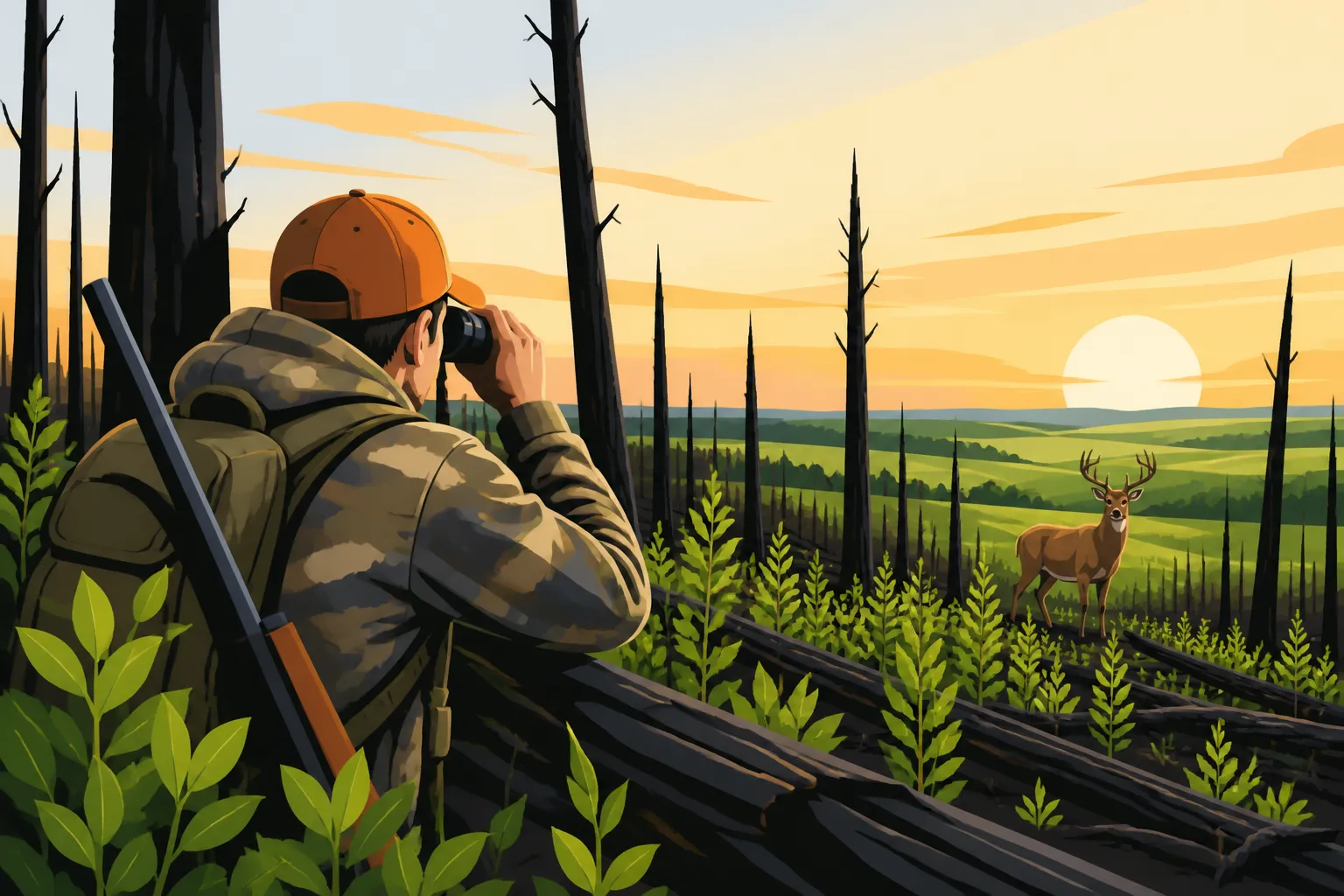
This is where the magic really starts to happen, and why "Hunting a Burned Block Three Years On" becomes such a compelling prospect. By the third year, that initial surge of pioneer vegetation has exploded. What was sparse growth is now often a dense, nutrient-rich buffet that is absolutely irresistible to many of Saskatchewan's big game species. Aspen, willow, and various berry bushes, like saskatoons and cranberries, can be flourishing. This isn't just a little bit of browse; it's often a significant, expansive food source.
Critically, at the three-year mark, while the food sources are abundant, the protective cover is still in an ideal stage for hunting. The regenerating forest is usually thick enough to provide security for animals, giving them places to bed down and feel safe, but not so dense that it becomes impenetrable for hunters to navigate or spot game. This balance of abundant, high-quality forage and manageable cover creates a perfect storm for wildlife concentration. Animals are actively feeding in these areas, and the new growth structure often funnels them into predictable travel corridors, making them a fantastic location for Why Burned Ground Grows Big Bulls and other large game.
Scouting a Three-Year-Old Burn Block for Big Game
Scouting a burned block, especially one that's three years into regeneration, requires a different approach than traditional scouting. The landscape has changed dramatically, and you need to understand how game animals are adapting to it.
Identifying Key Features in a Regenerating Burn
When you look at a three-year-old burn, it's not just a homogenous field of new growth. There are always nuances. Start by looking for unburned pockets. These are often small islands of timber, denser bush, or riparian zones (areas along creeks or rivers) that the fire skipped over. These pockets become critical thermal cover and security cover for game, especially during harsh weather or if there's hunting pressure. Animals will often stage in or near these areas before moving out to feed.
Pay close attention to the edges of the burn, too. Where the regenerating burn meets untouched forest, agricultural land, or other established habitat, these transition zones become natural travel corridors. Animals will use these edges for cover while moving into the burn to feed. Using tools like onX Hunt or GoHunt with satellite imagery can be incredibly helpful here. You can identify the clear burn boundaries from space and often pick out those surviving pockets or transition zones before you even step foot on the ground. Once you're on the ground, look for fresh tracks, rub lines on regenerating saplings, and well-used game trails that indicate consistent movement. Scouting With Satellite Imagery in Saskatchewan is invaluable for this type of terrain.
Locating Food Sources and Thermal Cover
As mentioned, by year three, food sources are often abundant. Your goal is to pinpoint the most preferred food sources in that particular burn. Is it a dense patch of regenerating saskatoon berries? A field of fireweed that moose love? Or young aspen shoots that deer are hammering? Spend time observing what's being browsed. Look for clipped stems, stripped bark (especially on aspen and willow for moose), and fresh droppings.
Alongside food, game needs cover. While the regenerating growth provides some security cover, animals, particularly in colder weather or during snow, will seek out thermal cover. This might be denser patches of new growth that offer wind breaks, or it could be those unburned pockets of conifers or thicker brush you identified earlier. During daylight hours, especially as hunting pressure mounts, deer, moose, and elk will often bed down in the densest available cover within or immediately adjacent to the burn. Understanding these bedding-to-feeding patterns is crucial. You can also gain a lot of insight into current movement patterns by Reading Sign After Fresh Saskatchewan Snow.
Planning Your Approach and Hunting Strategy
Hunting a burn requires careful planning. First, consider the wind. The altered landscape can create different wind currents than a traditional forest, so be extra diligent with your scent control and wind checks. Second, be prepared for silent movement. Burned areas can be full of crunchy debris, downed timber, and brittle new growth. Every step needs to be deliberate to avoid spooking game.
The openness of some burned areas can be a blessing and a curse. It often provides excellent visibility, allowing for long-range glassing. If you're hunting open areas, take your time, use quality optics, and glass thoroughly before moving. However, this same openness means animals can see you from a long way off too. Utilize any remaining standing timber, large downed logs, or thick patches of regeneration for concealment as you move. Patience is absolutely paramount. Animals can appear and disappear quickly in the varied landscape of a burn.
Hunting Strategies for Saskatchewan Burn Blocks
The regenerating habitat of a three-year-old burn attracts a variety of Saskatchewan's big game, each requiring slightly different hunting approaches.
Whitetail and Mule Deer in a Burn
Whitetail deer, in particular, will quickly colonize these areas. They are drawn to the explosion of new, tender browse. You'll often find them feeding actively along the edges where the burn meets untouched timber, or in the denser pockets of regeneration within the burn itself. Mule deer, while more typically found in open prairie or coulee country, will also utilize burns if they are adjacent to their traditional habitat, often for the fresh forage.
For whitetails, still-hunting the transition zones where the burn meets thicker bush can be highly effective. They'll use these areas for security, ducking in and out to feed. Setting up on an elevated position (if terrain allows) or using a treestand on a burn's edge that overlooks a prime feeding area can give you a significant advantage. Look for fresh rubs on young poplars and willows, indicating a buck's presence. During the rut, these regenerating areas can be hotbeds of activity as bucks cruise for does drawn to the abundant food.
Mule deer, especially those on the fringe of the boreal or aspen parkland, might be found in more open sections, leveraging the new growth. Spot-and-stalk tactics, using the undulating terrain and patches of regenerating cover, can work well. The key for both species is understanding their movement between the abundant food and developing cover.
Moose and Elk: The Bounty of New Growth
Moose are absolute bulldozers when it comes to browse, and they thrive in burned areas. The profusion of young aspen, willow, and other deciduous growth provides exactly what they need for rapid weight gain. You'll find them actively stripping bark and browsing on shoots in the denser, wetter areas of the burn, particularly near sloughs or low-lying sections. Moose Hunting Saskatchewan's Farmland and Forest highlights how important these food sources are to them.
Elk, being grazers and browsers, also benefit tremendously from the new growth of grasses and forbs, alongside the tender browse. They tend to prefer more open areas within the burn, where they can feed and still maintain visibility. Bugling for elk in these areas during the rut can be incredibly exciting, as the open timber often allows sound to carry well. For both moose and elk, extensive scouting to identify their primary feeding corridors and bedding zones is essential. Look for large tracks, fresh droppings, and significant browse lines on the regenerating vegetation. Covering a lot of ground, often on foot, is key to success.
Black Bear Opportunities
Black bears are omnivores, and by the third year, a burn can offer a smorgasbord of food for them. Berry crops – saskatoons, raspberries, chokecherries – often flourish in the sun-drenched, ash-rich soil of a regenerating burn. Bears will actively seek out these dense berry patches. If legal in your zone, setting up a bait site on the edge of a burn can be effective, drawing bears from greater distances into a predictable location. Setting a Bear Bait Site in Saskatchewan details the nuances of this strategy.
Alternatively, spot-and-stalk methods around large berry patches or along game trails within the burn can be productive. Be extremely cautious and aware of your surroundings, as bears can be camouflaged in the dense undergrowth. Look for fresh bear scat (often full of berries), overturned rocks, or claw marks on trees. Bear hunting in these zones can be incredibly rewarding due to the abundant food sources attracting healthy, active bears.
General Hunting Considerations and Safety
Hunting a burn block presents unique challenges. The terrain can be difficult and uneven, with countless hidden stumps, downed timber, and holes covered by new growth. Sturdy, ankle-supporting boots are non-negotiable. Always carry a comprehensive first-aid kit and ensure you have reliable communication, whether it's a satellite messenger, a GPS device with emergency functions, or an understanding of where cell service might be available.
Visibility can be highly variable. Some sections might be wide open, while others are choked with dense new growth. Be acutely aware of your hunting partners if hunting in a group, and always identify your target clearly. Blaze orange requirements are in place for good reason. If you're hunting late in the season, Hunting Saskatchewan Winter Weather Safely becomes even more critical, as burns offer less natural shelter from the wind and cold. Staying hydrated and fueled is also essential, as you'll likely be covering more challenging terrain and distances.
Gear and Tools for Hunting a Burned Block
Having the right gear is paramount when venturing into a recovering burn block. The unique environment demands specific tools and considerations to ensure both success and safety.
Essential Optics and Navigation
In a landscape that has been dramatically altered, your eyes are your most valuable tool, and good optics extend their reach. High-quality binoculars (10×42 or 10×50 are often ideal) are absolutely essential for thoroughly glassing large areas of regenerating growth. They allow you to pick apart the new vegetation, identify game movement, and spot animals that might otherwise blend in perfectly. If you find yourself in more open sections of the burn, a spotting scope can be incredibly beneficial for identifying and assessing game at very long distances, helping you decide whether a stalk is worthwhile. A reliable laser rangefinder is also a must, as the altered terrain can play tricks on your depth perception, making judging distances accurately a challenge.
For navigation, a GPS device or a robust mapping app on your smartphone is non-negotiable. Tools like onX Hunt or GoHunt are incredibly powerful. They allow you to pre-scout the area from home, identifying burn boundaries, unburned pockets, and potential travel corridors using satellite imagery. Once in the field, they provide real-time location tracking, helping you navigate through potentially featureless or confusing terrain. You can mark waypoints for game sightings, fresh sign, or even your vehicle, which is crucial if you venture deep into a large burn block where familiar landmarks might be gone. Always download offline maps before you go, as cell service can be spotty or non-existent in remote burn areas.
Clothing and Footwear Considerations
Your choice of clothing and footwear can make or break your hunt in a burned block. The terrain is often uneven, full of downed timber, jagged stumps, and thick, thorny regeneration. You need durable clothing that can stand up to constant snagging and brushing against rough surfaces. Quiet fabrics are also important, as the brittle nature of some deadfall and new growth can make every step noisy. Layers are key, as the temperature can fluctuate dramatically between periods of intense activity (stalking) and long periods of stillness (glassing).
For footwear, prioritize sturdy, waterproof boots with excellent ankle support. The uneven ground means a twisted ankle is a real risk. Look for boots with aggressive tread patterns for traction on slick ash, loose dirt, and potentially wet ground. Many hunters prefer a stiffer sole for stability when navigating over logs and through thick brush. Consider gaiters to keep debris, small sticks, and snow out of your boots, which can quickly lead to discomfort.
Firearm and Shot Placement
The unique nature of a regenerating burn means you might encounter a variety of shooting scenarios. In more open sections, you might have opportunities for longer shots across clearings or over patches of shorter new growth. Conversely, in denser areas of regeneration, shots could be quick and at close quarters as an animal busts out of cover.
Whatever your preferred firearm, be it a rifle, shotgun with slugs, or archery equipment, practice shooting from various positions: standing, kneeling, and even from an improvised rest using a log or backpack. This prepares you for the unpredictable nature of the shots a burn might offer. Always ensure you have a clear understanding of your backstop. The chaotic nature of downed timber can sometimes obscure a clean shot or create deflections. Ethical shot placement, as always, is paramount, and familiarity with your equipment and its capabilities in varied conditions will contribute greatly to your success.
Pros and Cons of Hunting a Burn at Different Stages
Here's a quick look at the advantages and disadvantages of hunting a burn as it recovers:
| Stage of Burn Recovery | Pros for Hunting | Cons for Hunting | Primary Game Attracted |
|---|---|---|---|
| Year 1 | Minimal hunter competition, good visibility | Very low game density, lack of food/cover, difficult terrain | Primarily passing through game, small predators |
| Year 2 | First signs of new growth, emerging food sources | Still low game density, minimal cover, challenging terrain | Small game, initial cautious deer/moose exploration |
| Year 3-5 (Optimal) | Abundant, nutrient-rich forage; manageable cover | Increased hunter pressure, tricky navigation, unpredictable winds | Whitetail deer, mule deer, moose, elk, black bear, predators |
| Year 6-10 | Mature browse, denser cover | Cover becoming very thick, harder to spot game, less 'new' food | Deer, moose, bear, as cover matures |
| Year 10+ | Returning to mature forest dynamics | Less unique draw than earlier stages, becomes like regular bush | General forest game, depending on regeneration type |
Disclaimer
This article is for general informational purposes only and does not constitute professional advice. Laws, prices and regulations vary by location and change over time. Consult a qualified professional for guidance on your specific situation.