Reading Sign After Fresh Saskatchewan Snow
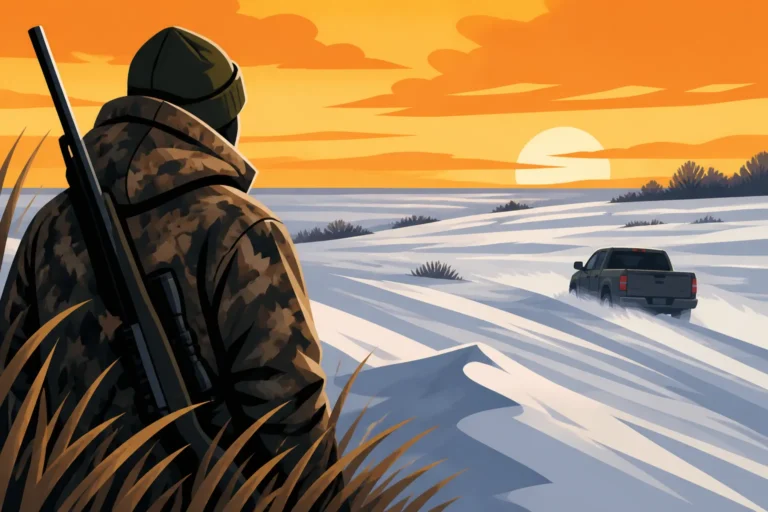
Oh, the crisp bite of a Saskatchewan winter morning, with fresh snow blanketing the landscape – it’s a scene many hunters dream of. But let's be honest, while beautiful, it can also feel utterly daunting, making you wonder where on earth the game might be hiding. The good news is, a fresh blanket of white is actually one of the most powerful tools a hunter has, if you know how to read its secrets. This guide is all about equipping you to interpret those subtle, fleeting clues in Saskatchewan's fresh snow, transforming a potentially frustrating hunt into a highly strategic and rewarding experience.
The Transformative Power of Fresh Snow for Hunters
There’s a common misconception that hunting in snow is inherently harder, but seasoned hunters often tell a different story. While deep drifts can certainly impede travel and extreme cold brings its own set of challenges, a light, fresh snowfall, especially after a period of bare ground, is an absolute game-changer. It’s like the land suddenly prints out a detailed map of every animal’s recent movements, telling a story that was completely hidden just hours before. The frustration of staring at endless fields or dense bush, wondering if any game is even present, can melt away when you see that first crisp track.
Why New Snow Is a Hunter's Best Friend
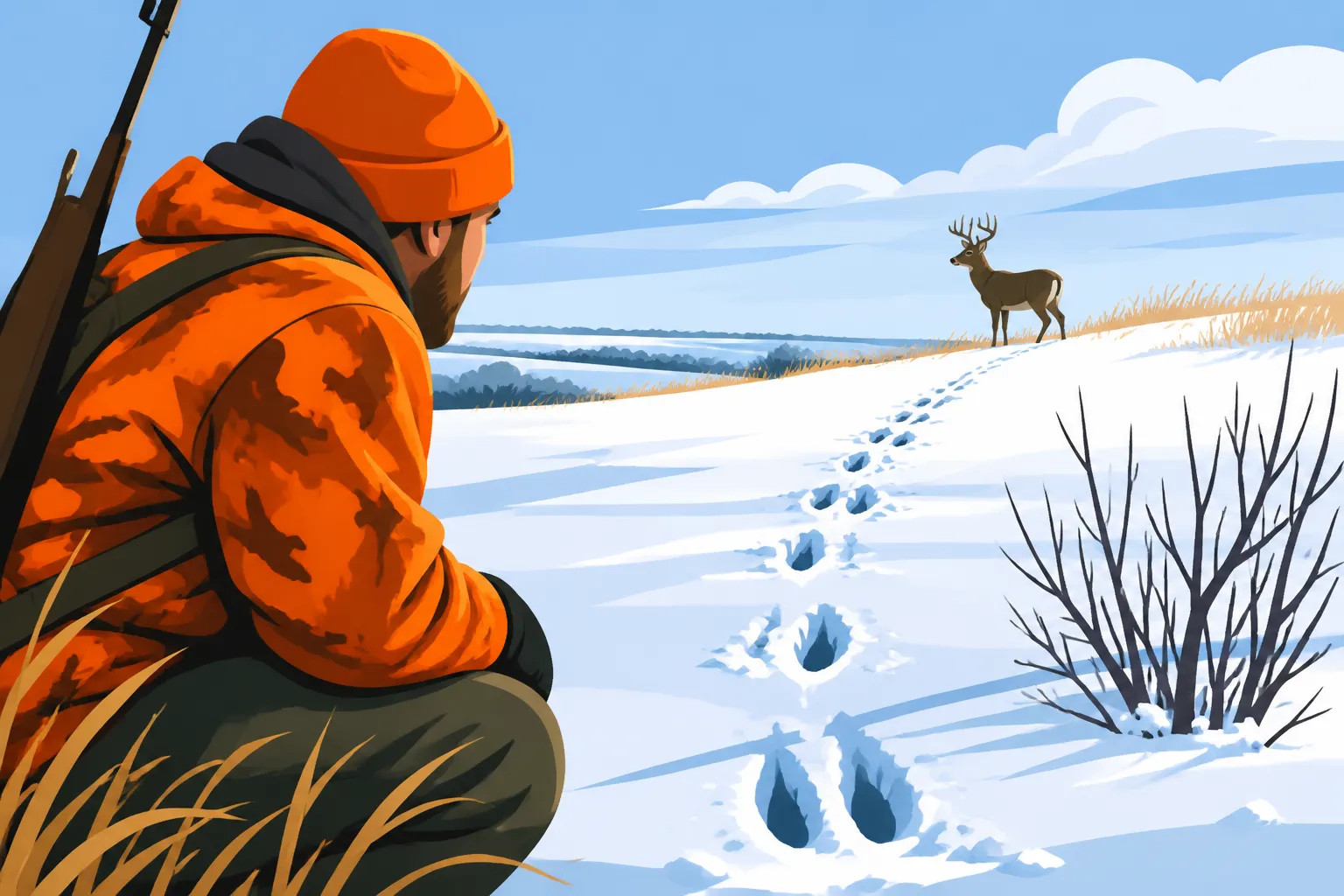
Think about it: fresh snow acts as a pristine canvas, recording every step, every pause, every subtle interaction an animal has with its environment. Without snow, an animal could have walked through a thick willow run an hour ago, and you'd be none the wiser. With snow, that trail is laid bare, signaling recent activity and a prime opportunity. It shows you not just that an animal was there, but when it was there, how it was moving, and what it was doing. This immediate feedback loop is invaluable. It cuts down on aimless wandering and allows you to focus your efforts where game is actively moving and feeding. You can quickly eliminate unproductive areas and key in on high-traffic zones, saving precious time and energy on those short, cold winter days. It’s also a powerful equalizer, giving even less experienced hunters a clear visual aid that often escapes the naked eye on bare ground.
Overcoming the Initial Challenges of Snow Hunting
While new snow is fantastic, it's not without its challenges, and anyone who has spent a day tracking knows this. One of the biggest frustrations can be the sheer amount of sign – sometimes it feels like a tangled spaghetti bowl of tracks, making it hard to discern fresh from old, or deer from coyote. This can lead to wasted time following cold trails, or worse, pushing game out of an area without realizing it. Another challenge is the weather itself; hunting in deep cold, or during a blizzard, demands extra preparation and careful consideration for safety. Your visibility might be reduced, and the wind can quickly erase subtle signs. However, with the right techniques, you can sort through the chaos. Learning to discern subtle differences in track freshness, understanding local game patterns, and using tools like a good mapping app can turn these challenges into opportunities. Remember, the animals are facing the same conditions, and often, fresh snow pushes them to more predictable feeding and bedding patterns, making their movements easier to anticipate once you learn to read the signs.
Deciphering Tracks in Saskatchewan's Snow
The most obvious and direct form of sign in fresh snow is, of course, tracks. But not all tracks are created equal, and simply seeing a deer track doesn't tell you the whole story. The real art lies in interpreting these prints to understand the animal's identity, its state of mind, and how recently it passed. This is where the detective work truly begins, allowing you to build a mental picture of the animal's behavior.
Identifying Different Game Species by Their Tracks
Before you can interpret a track, you need to know what animal made it. In Saskatchewan, you'll primarily be looking for whitetail deer, mule deer, moose, elk, and various predators like coyotes or wolves. Each species leaves a distinct calling card. Whitetail tracks tend to be heart-shaped, with pointed toes and often showing dewclaws only in deeper snow or when running. Mule deer tracks are typically blunter, rounder, and larger than whitetails, often splayed a bit more, and their dewclaws are more frequently visible due to their heavier build and different gait.
Moose tracks are huge, unmistakable, and look like a much larger, elongated deer track, often reaching 5-7 inches in length. Elk tracks are also large, but more rounded than moose, though still significantly bigger than deer. Predators like coyotes and wolves leave oval-shaped tracks with visible claws, and often exhibit a direct register gait where their hind foot lands almost directly in the print of their front foot, creating a straighter, narrower line of travel compared to deer. Pay attention to the overall size, shape, and whether dewclaws or claw marks are consistently present. This initial identification is your first critical step.
Interpreting Speed, Gait, and Age of Tracks
Once you've identified the species, the next step is to understand what the tracks are telling you about the animal's behavior.
- Speed and Gait: A deer walking calmly will leave a distinct, evenly spaced pattern. If the tracks are widely spaced with splayed hooves and deeply dug-in toes, especially with dewclaws showing prominently, the animal was likely running or bounding. A series of deep indentations with dirt kicked up suggests a rapid escape. Observing the spacing between tracks (stride length) and the depth can indicate if the animal was leisurely strolling, trotting, or in full flight. For instance, a long, rhythmic stride might suggest a buck on the move during the rut, actively searching.
- Age of Tracks: This is perhaps the most critical factor. Fresh tracks will have crisp, sharp edges, with any displaced snow or ice looking recently disturbed. As time passes, wind and sun will begin to melt and soften these edges, making them appear rounded or fuzzy. If snow has fallen after the tracks were made, it will partially fill them in, a clear sign they're not fresh. If you see tracks that are filled with a layer of undisturbed fresh snow, you know the animal passed before the last snowfall. This requires a keen eye and understanding of the local weather patterns. A good rule of thumb is that if the track looks like it was just made, within the last hour or two, it’s prime for a productive follow. GoHunt's satellite imagery can sometimes help you identify recent weather events that might clue you into track age, though it's no substitute for on-the-ground observation.
Here's a quick reference table for interpreting track characteristics:
| Characteristic | Fresh Track | Older Track | Running Track | Walking Track |
|---|---|---|---|---|
| Edges | Crisp, sharp, well-defined | Rounded, softened, eroded by wind/sun | Deeply dug-in, snow often kicked up | Shallower, even impression |
| Displaced Snow | Appears newly disturbed, often still loose | Settled, sometimes refrozen or packed | Significant displacement, splayed hooves | Minimal displacement, hooves together |
| Frost/Ice | Absence of frost/ice within the track | May have frost or ice crystals settled in the bottom | – | – |
| Dewclaws | Often visible, especially in deeper snow | May or may not be visible, depending on depth | Almost always visible, deeply impressed | Only visible in soft or deep snow, or uphill |
| Stride | Consistent spacing, often shorter for whitetail | Less useful for age, more for gait | Long, irregular strides, sometimes bounding | Shorter, even, deliberate strides |
| Bottom | Smooth impression of hoof pad | May show melting, refreezing, or debris | – | – |
Reading Whitetail and Mule Deer Specifics
Saskatchewan is renowned for its deer hunting, and distinguishing between whitetail and mule deer sign in the snow can be incredibly insightful. As mentioned, mule deer generally have larger, blunter, more rounded tracks, and their dewclaws are more often visible due to their weight and bounding gait. When mule deer "lope" or "stot" (all four feet pushing off the ground at once), they leave a distinctive pattern of all four tracks often landing relatively close together in a tight group. This unique gait is a dead giveaway for a mule deer, especially when they are moving at speed. If you are Glassing a Saskatchewan Coulee for Mule Deer, this gait will be very clear.
Whitetails, on the other hand, typically move with a more deliberate walk or trot, and when they run, they often exhibit a "bounding" gait where their hind feet land in front of their front feet. Their tracks in general appear more streamlined and pointed. Look for consistency in these patterns. If you find a series of tracks showing the "stotting" pattern, you can be fairly confident it's a mule deer, even if the individual print isn't perfectly clear. Conversely, the more delicate, pointed tracks, often with consistent stride length in a walk or trot, point strongly to a whitetail. These differences, subtle as they may be, become second nature with practice and can help you target your efforts depending on the species you're pursuing.
Beyond Tracks: Other Crucial Snow Sign
While tracks are undeniably important, focusing solely on them would be a mistake. Game animals leave a wealth of other information in the snow that can reveal their daily routines, their preferred resting spots, and their feeding habits. These additional signs paint a more complete picture of what the animals are doing, and more importantly, where they might be headed next.
Bedding Areas and Day Rests
Finding a fresh bed in the snow is like striking gold. It tells you exactly where an animal chose to lay down, often indicating a safe, comfortable spot with good cover and an escape route. Fresh beds will show a clear impression of the animal's body, possibly with melted snow around the edges from its body heat, and often bits of hair. The snow inside the bed might even still be soft or slightly melted. Old beds, by contrast, will be filled with fresh snow, or the impression will be hardened and refrozen.
Look for beds in sheltered areas – the lee side of hills, thick bush, under low-hanging evergreens, or in dense willow thickets. In the deeper cold, game animals will often seek out the densest thermal cover available, especially during the day. If you find multiple fresh beds in an area, it could indicate a social group or a preferred bedding location. These spots are prime areas to return to for future hunts, as animals are creatures of habit. If you’re familiar with Where Saskatchewan Whitetails Bed in Snow, you’ll know these bedding areas are often found in thick cover adjacent to food sources.
Feeding Sign and Foraging Patterns
Snow can also reveal exactly what and where animals are eating. Deer will paw through snow to access cached forages like clover or remnants of crops. Look for disturbed snow with bits of grass, leaves, or crop stubble exposed. If you find areas where deer have been browsing, you'll see clipped twigs and branches, especially on woody browse like willow, dogwood, or aspen regeneration. The height of the browse line can give you a clue to the size of the deer, with taller browsing potentially indicating moose or elk.
In harvested fields, tracks leading into and out of stubble fields, particularly pea or lentil fields, suggest animals are gleaning leftover grains. If you're Hunting a Standing Canola Field Edge or a stubble field, the snow will highlight exactly where the deer have been working. Fresh droppings (scat) in these feeding areas are another excellent indicator of recent activity. The color, consistency, and freshness of the droppings (warmth, steaming) provide clues about how recently the animal was there. Understanding these foraging patterns is essential for predicting where animals will be moving during low light hours.
Rubs, Scrapes, and Post-Rut Activity
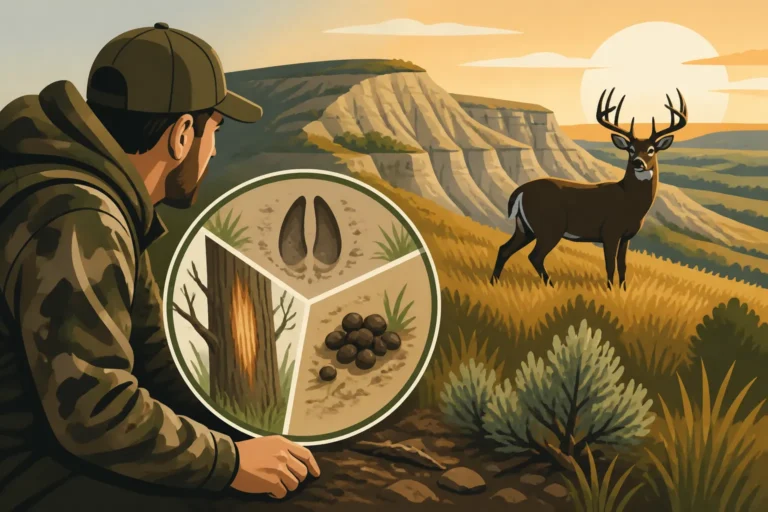
While rubs and scrapes are primarily associated with the rut, fresh snow can reveal how long certain rutting signs have been active, or if they’re being revisited post-rut. A fresh rub on a tree will have exposed wood, and you might even see fresh antler velvet or hair caught in the bark. If snow has fallen into the rub and melted or refrozen, it's older. Similarly, a scrape that has been recently pawed open will have fresh earth exposed, free of snow, surrounded by tracks. If the scrape is filled with snow, it hasn't been used since the last snowfall.
Even after the peak of the Hunting the Rut in Early to Mid November, bucks will often revisit scrapes, especially in areas with persistent doe activity, though less intensely. Fresh sign on these post-rut rubs and scrapes indicates an active buck in the area, often still seeking out does. Finding these renewed signs can be a huge motivator and a key piece of the puzzle, directing you towards areas where a buck is still regularly moving. Keep an eye out for these subtle indicators, as they can lead you straight to a late-season trophy.
Using Topography and Cover with Snow Sign
Saskatchewan's landscape is diverse, from open prairies and rolling parkland to the dense boreal forest fringe. Understanding how game animals utilize these varied terrains in conjunction with snow cover is crucial. Snow doesn't just record movement; it often amplifies the natural funneling effects of topography and dense cover, making game movement even more predictable.
Following Game Through Saskatchewan's Unique Landscapes
Whether you're hunting the rolling hills of the Missouri Coteau or the dense bush of the forest fringe, snow sign helps you understand how game navigates. In open prairie or parkland country, where cover might be sparse, deer and moose will often stick to the edges of bluffs, shelterbelts, or willow runs. Hunting a Willow Run for Whitetails becomes much more effective when you can see fresh tracks funneling into its protective cover. Fresh tracks along these linear features clearly show travel patterns between bedding and feeding areas. Animals are trying to conserve energy and stay out of the wind, so they'll often opt for the path of least resistance or the most sheltered route.
In the forest fringe, snow reveals how animals use the transition zones between open fields and dense woods. Tracks will often lead from timbered areas into harvested fields at dusk, and back into the cover at dawn. Pay attention to how tracks interact with natural contours – animals will often travel along benches or the tops of ridges, offering them a vantage point. When you are Hunting the Forest Fringe for Big Bucks, understanding these travel routes becomes paramount. Fresh snow makes these preferred travel lanes starkly visible.
Connecting the Dots: Travel Corridors and Funnels
Snow is exceptional at highlighting natural travel corridors and funnels that might otherwise be invisible. Think about a narrow pinch point between two fields or a small draw connecting two larger blocks of cover. These are prime areas where game animals, especially deer, will funnel through. Fresh tracks converging into such a feature, and then diverging on the other side, scream "travel corridor!"
River valleys, creek bottoms, and even dense fence lines can act as natural highways for animals. In snowy conditions, animals will often choose the path of least resistance, especially if it offers protection from the wind or deep snow. A frozen slough crossing can also be a popular path. If you're Hunting a Frozen Slough Crossing, fresh tracks across the ice or snow-covered banks confirm its active use. By identifying these funnels through fresh tracks, you can position yourself strategically. A good mapping application, such as the one offered by GoHunt, can help you identify these topographical features before you even set foot in the field, allowing you to combine digital scouting with on-the-ground track reading for maximum effectiveness. You can mark these points, noting where the freshest sign leads, and refine your approach for future hunts.
Strategic Hunting Based on Fresh Snow Intel
Once you’ve mastered the art of reading fresh snow sign, the next step is to translate that knowledge into effective hunting strategies. This isn’t just about finding game; it’s about understanding their current behavior and using that insight to put yourself in the best position for a shot.
Adjusting Your Approach to Game Movement
The information gleaned from fresh snow is incredibly dynamic. If you find tracks made within the last hour or two, it means the animal is close, likely still in its bedding area or moving towards one. This dictates a more immediate, aggressive approach, perhaps a cautious stalk. If the tracks are slightly older – say, from before dawn – it tells you where the animal was, but it's likely moved on. In this scenario, you might want to set up an ambush along a probable travel route leading from that area to a known bedding or feeding location.
Snow also shows you the direction of travel. If you're following tracks leading into a thick bush patch from a feeding area, you can infer the animal is heading to bed. This helps you determine which side of the cover to approach from, keeping the wind in your favor and avoiding detection. For example, if you're trying to figure out Hunting a Poplar Bluff at First Light, fresh tracks showing deer moving into the bluff from a nearby field indicate they're bedding there. You can then plan your approach to intercept them before they're fully settled, or strategically position yourself to catch them exiting later in the day. The ability to react and adapt your hunting plan based on these real-time clues is what makes snow hunting so exciting and often productive.
The Art of the Fresh-Track Stalk
This is perhaps the ultimate challenge and reward of hunting in fresh snow. Once you find truly fresh tracks, especially of a mature animal, the opportunity to embark on a fresh-track stalk presents itself. This isn't for the faint of heart; it requires immense patience, quiet movement, and an acute awareness of wind direction. The fresh snow allows you to walk almost silently, but it also means the animal can hear any crunching you make.
The key to a successful stalk is to stay on the downwind side of the tracks, constantly checking the wind and moving slowly, using every piece of cover available. Pay attention to how the tracks behave: if they suddenly become more erratic, or if you see a fresh bed, the animal might be very close. Look ahead, not just at the tracks, scanning the cover for any flicker of movement or a subtle outline. When following tracks through areas like Hunting a Prairie Coulee Bottom or a dense bush, expect the animal to be bedded in the thickest part, likely facing its back trail to catch any approaching danger. This is where your ability to visualize the animal's behavior comes into play. A successful fresh-track stalk in Saskatchewan snow is a testament to a hunter's skill and patience.
Essential Gear and Mindset for Snow Hunting
Hunting in Saskatchewan's winter conditions demands more than just skill in reading sign; it requires proper preparation, the right gear, and a resilient mindset. The cold can be unforgiving, and being unprepared can quickly turn a promising hunt into a miserable, even dangerous, experience.
Staying Warm and Prepared in Winter Conditions
First and foremost, staying warm is paramount. Layering is not just a suggestion; it's a necessity. Start with a moisture-wicking base layer, add insulating mid-layers like fleece or down, and top it with a windproof and waterproof outer shell. Focus on extremities: warm insulated boots that can handle deep snow (and a good pair of wool socks!), insulated gloves or mitts, and a warm hat are non-negotiable. Chemical hand and foot warmers can be a lifesaver, especially when sitting still for extended periods.
Carry extra layers in your pack. Temperatures can drop rapidly, or your activity level might change, requiring adjustments. A thermos of hot coffee, tea, or soup can provide a much-needed morale and warmth boost. Don't forget high-energy snacks; your body burns more calories staying warm. Hydration is also crucial, even in the cold. Beyond personal warmth, a small survival kit with fire-starting materials, a first-aid kit, and an emergency blanket is always a good idea when you're out in the elements. If you are reading about Hunting Saskatchewan Winter Weather Safely, you’ll see many of these recommendations reinforced.
Utilizing Technology for Enhanced Scouting
Modern hunting technology has transformed how we approach scouting, and it's particularly useful when dealing with fresh snow. Satellite imagery and topographical maps, like those available on the GoHunt platform, can be incredibly valuable. Before you even leave the truck, you can use these tools to identify potential funnels, bedding areas (like thick stands of evergreens), and feeding grounds. This allows you to create a preliminary plan, pinpointing areas where fresh tracks are most likely to lead.
Once in the field, a GPS or a hunting app on your phone can help you mark fresh sign, track your own movements, and navigate complex terrain. This is especially helpful when Scouting With Satellite Imagery in Saskatchewan. You can mark where you found a fresh track, a hot feeding area, or a promising bedding thicket. This digital record helps you build a detailed picture of game movement over time, which becomes invaluable for future hunts, even when there's no snow on the ground. Just remember to have portable chargers for your devices, as cold weather can drain batteries quickly. Technology is a powerful supplement, but it’s always secondary to your on-the-ground observation and interpretation skills.
Disclaimer
Hunting is an inherently risky activity. Always prioritize safety, understand and adhere to all Saskatchewan hunting regulations and licensing requirements, and respect private property. Consult the official Saskatchewan hunting guide for the most current rules and ensure you have proper landowner permission before hunting on private land. This guide is for informational purposes only and does not replace professional instruction or local regulations.