Hunting a Section of Standing Crop
There's nothing quite like the sight of a big Saskatchewan whitetail or mule deer disappearing into a vast sea of standing crop, leaving you wondering if you'll ever lay eyes on them again. It’s a common frustration for hunters in our province, particularly when deer seem to vanish into thin air, finding perfect sanctuary in those tall, dense fields that haven't been harvested yet. This guide is all about understanding why deer love standing crop, how to navigate the challenges it presents, and most importantly, how to successfully hunt these elusive animals when they're using these agricultural havens.
Why Standing Crop is an Irresistible Sanctuary for Deer
For any deer species, be it a whitetail buck or a mule deer doe, standing crop isn't just a place to hide; it's a five-star resort offering everything they need: food, water (often), thermal cover, and incredible security. When you drive past a massive field of standing canola, corn, or even tall sunflowers, it's easy to see why.
Abundant Food Source
Imagine a buffet that never closes, packed with high-energy grains or nutrient-rich plants. That's what standing crop represents to deer.
Whitetails, in particular, are creatures of convenience, and if they can eat where they sleep, they absolutely will. A corn field, for instance, offers a phenomenal calorie source, especially as colder weather approaches and deer need to pack on fat reserves. They'll browse on the lower leaves, pull down ears, and generally just gorge themselves. In fields like lentils or peas, they're getting protein-rich forage. This constant food supply means they have little reason to leave the security of the crop during daylight hours, making them notoriously hard to pin down. You might be watching the field edges intently, completely unaware that a trophy buck is happily munching away a hundred yards into the standing rows, completely invisible to your eyes.
Unparalleled Security and Cover
One of the biggest draws of standing crop is the sheer security it offers. A mature cornfield, with stalks reaching eight to ten feet high and densely planted, creates an almost impenetrable jungle. A deer can disappear into it with barely a ripple, and once inside, it’s virtually impossible to spot them unless they’re moving directly in front of you. This dense cover provides an incredible sense of safety from predators, including us hunters. How Deep Snow Moves Deer Into Cover explains how deer instinctively seek out dense cover, and standing crop offers that in spades, even before the snow flies.
For a mature buck, this security is paramount. They know they can bed down deep within the crop, virtually undetected, and only emerge under the cloak of darkness to continue feeding or move to other areas. This is why you often see deer emerging from fields right at last light, like ghosts materializing from the shadows.
Thermal Regulation and Weather Protection
Beyond food and cover, standing crop offers excellent thermal regulation. In the early fall, when temperatures can still be quite warm, the dense canopy of a corn or sunflower field provides welcome shade, keeping deer cooler during the heat of the day. The stalks break up any breezes, creating a calmer microclimate within the field.
Conversely, as late fall and early winter set in, and those biting Saskatchewan winds pick up, standing crop acts as a fantastic windbreak. This is especially true for tall, dense crops like corn or certain varieties of canola. It helps deer conserve energy by protecting them from the elements, allowing them to remain bedded and warm without expending extra calories to maintain body heat. A large buck might feel perfectly comfortable weathering an early season cold snap deep inside a standing crop field, rather than exposing itself on a windy bluff.
Navigating the Challenges of Hunting Standing Crop
Hunting standing crop is not for the faint of heart. It requires meticulous planning, a deep respect for landowners, and a good dose of patience. Ignoring these critical steps will almost certainly lead to frustration and empty handed returns.
The Absolute Necessity of Permission
Let's be brutally honest here: if you're hunting any kind of standing crop in Saskatchewan, you must have permission from the landowner. Most standing crops are on private land, and trespassing is not only illegal but also severely damages hunter-landowner relations. Farmers work incredibly hard to grow these crops, and entering their fields without explicit consent is unacceptable. Saskatchewan Posted Land Sign Rules are clear, and even if a field isn't explicitly posted, the expectation for permission remains.
My advice is always to approach landowners well in advance, long before hunting season opens. Explain your intentions clearly, offer to help with anything they need, and make sure you understand the exact boundaries and any specific rules they might have (e.g., stay off machinery tracks, don't drive on wet ground). Showing that respect upfront can open doors for years to come. Many hunters find success with a simple knock on the door, building relationships the old-fashioned way.
Scouting Smart: Digital Tools and Field Observation
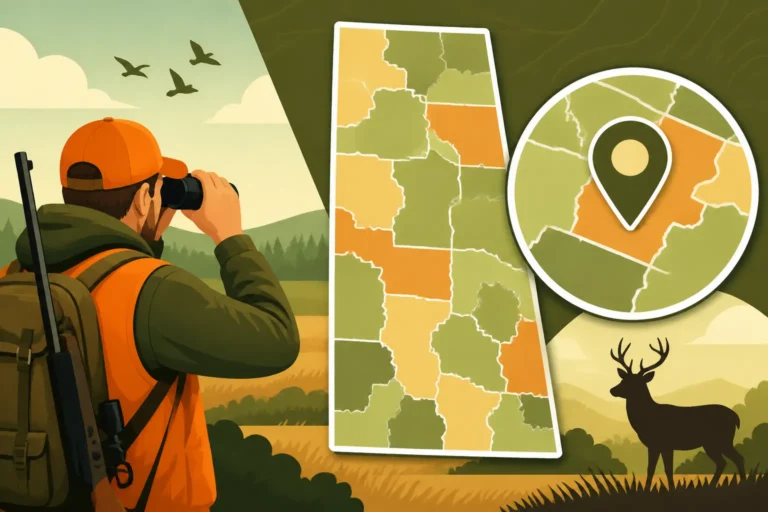
Scouting standing crop presents unique challenges because you can't see into it easily. This is where modern tools become invaluable. I highly recommend using satellite imagery and mapping apps like onX Hunt. Before you even leave your house, you can pour over aerial views to identify key features:
- Field Edges: Where does the crop meet bush, a shelterbelt, a slough, or another field? These transition areas are natural travel corridors.
- Irregularities: Are there any natural draws, low spots, sloughs, or small treed islands within the crop? Deer will gravitate to these for bedding.
- Access Points: Where are the approaches for vehicles or walking in?
Using onX Hunt, you can mark potential entry points, identify the property lines, and even get a sense of the topography. Scouting With Satellite Imagery in Saskatchewan can give you more tips on how to use these digital aids effectively. Once you've done your digital homework, boots-on-the-ground scouting is still essential, even if it means walking the perimeter to look for tracks, rub lines, or entry points into the crop. Look for "tunnels" where deer are consistently entering and exiting.
Safety First: Visibility and Shooting Lanes
Safety is paramount when hunting in or around standing crop. The reduced visibility is a major concern, both for you and for other hunters in the area. Always wear plenty of blaze orange, even more than the legal requirement. You want to be seen.
Shooting lanes are another critical consideration. You might jump a deer at close range, but if you can't get a clear, safe shot through the dense stalks, you can't take it. This means your effective range is significantly reduced, and you need to be prepared for very close encounters. Be absolutely certain of your target and what's beyond it. Never take a risky shot that could result in a wounded animal disappearing deeper into the crop or, worse, endanger another person.
Effective Strategies for Hunting Standing Crop
Since deer spend so much time inside the crop, your strategies need to be specifically tailored to get them to show themselves or to intercept them when they do.
Still Hunting the Edges and Internal Features
One of the most effective ways to hunt standing crop is to patiently still hunt its edges, especially during low-light periods. Deer are most likely to be moving in and out of the crop at dawn and dusk. Find a good vantage point, perhaps a small rise or the edge of an adjacent bush, where you can watch a significant portion of the crop's perimeter. This is where Sitting All Day in a Saskatchewan Blind could come into play, allowing you to patiently observe.
Pay close attention to points where the crop meets other types of cover, like a Hunting a Shelterbelt Between Two Fields or a small bluffy area. These are often funnel points. Move slowly, using binoculars to pick apart every shadow and movement along the edge. If you have permission to enter a specific part of the field, especially where you’ve identified internal features like a low spot or a clump of trees using onX Hunt, still hunting inside the crop can work. However, this is incredibly difficult, requires a very slow pace, and demands an acute awareness of wind direction and scent control. Think ultra-slow, step-by-step movement, scanning every gap and lane you can find.
The Calculated Push: Driving Standing Crop
For those with a hunting party and proper communication, a calculated push through a standing crop field can be highly effective, especially for mule deer or whitetails that are known to bed down deep. This isn't a haphazard run-and-gun approach; it needs to be carefully planned.
Assign "blockers" to strategic exit points, such as where the crop meets a road, a treeline, or a natural funnel. The "pushers" then move slowly and methodically through the crop, walking with the wind if possible, trying to encourage deer to move towards the blockers. Communication is key; walkie-talkies or handheld radios are essential for safety and coordination. Always ensure everyone knows the safe zones of fire and stick to your plan. The dense nature of the crop means deer might only move a short distance and then try to sneak out the sides, so the push needs to be wide and thorough. This tactic is often best reserved for larger fields or specific pockets of cover within a field.
Elevated Stands and Vantage Points
If you have permission to set up a stand, positioning it overlooking a key transition zone or a heavily used deer trail leading into or out of the crop can be incredibly productive. Tree stands or elevated ground blinds offer a better vantage point over the tall stalks, allowing you to see deer approaching or just emerging.
Place your stand downwind of expected deer movement, ideally where the wind will carry your scent away from the main entry/exit points. Think about bottlenecks—places where deer are funneled by terrain or other cover types before they enter the wide-open expanse of the crop. A stand strategically placed near a field of Hunting a Lentil Field Edge or Hunting a Field of Standing Corn can give you an invaluable advantage, allowing you to intercept deer as they transition between bedding and feeding. Even small changes in elevation can make a big difference, offering you that slight edge to spot a flicker of antler or an ear flicking in the rows.
Responsible Hunting Practices in Agricultural Landscapes
Hunting in agricultural settings, especially around standing crop, comes with added responsibilities. Our actions directly impact our ability to hunt these lands in the future.
Respecting the Harvest Schedule
Always remember that for the farmer, this standing crop represents their livelihood. Be incredibly mindful of harvest schedules. Do not hunt in a field that is actively being harvested or that is about to be. That combines safety risks with serious financial implications for the farmer if you damage equipment or delay their work. What might be a prime hunting spot one day could be off-limits the next as combines roll in.
It’s a good idea to chat with the landowner about their expected harvest dates. Sometimes, once a field is partially harvested, the remaining standing sections become even more attractive to deer, concentrating them in smaller areas. However, this also means less cover, making them easier to spot but potentially more skittish. Understanding the landowner's timeline is part of being a respectful hunter.
Retrieval and Tracking in Dense Cover
The moment of truth: you take a shot, and the deer runs into the standing crop. This is where the real work begins, and it's absolutely crucial to track and retrieve that animal. Wounded game disappearing into thick cover is a heartbreaking and frustrating reality, and it's our ethical responsibility to make every effort to find it.
If you suspect you've hit an animal, give it time. If it’s a gut shot, waiting several hours (or even overnight if conditions allow) can be the difference between finding it 50 yards away or pushing it for miles. Mark the spot of the shot carefully, then methodically grid-search the area where you last saw the animal. Look for blood, broken stalks, or disturbed ground. If you have a tracking dog (where legal and permitted), this is their moment to shine. Using a GPS on your phone (like with onX Hunt or even general GPS apps) to mark your search pattern can help ensure you cover the area thoroughly. Losing an animal in standing crop is one of the toughest challenges, so make every effort to ensure a clean shot and be prepared for a difficult tracking job. Meat Care in Saskatchewan's Cold Snaps is an important consideration for any retrieved game, especially if tracking takes time.
Wildlife Management and Ethical Considerations
Hunting standing crop ties directly into broader wildlife management. When deer are heavily concentrated in agricultural fields, they can cause significant crop damage. Hunters play a vital role in managing these populations and mitigating such damage. However, this also means understanding and adhering to bag limits and specific zone regulations.
Always carry your valid hunting licence and any required tags. Saskatchewan Hunting Licences and What They Cost covers the basics you need to know. Ethical hunting means taking responsible shots, respecting the land, and being a good ambassador for hunters everywhere. We are guests on these lands, and our actions reflect on the entire hunting community. Being considerate, cleaning up after yourself, and leaving the land better than you found it will help ensure these opportunities remain for generations to come.
Comparing Crop Types and Their Hunting Implications
Different types of standing crops offer varying challenges and opportunities for hunters. Here's a quick overview of some common ones you might encounter in Saskatchewan:
| Crop Type | Typical Height | Density | Cover Quality | Food Value | Visibility Impact | Hunting Strategy Consideration |
|---|---|---|---|---|---|---|
| Corn | 8-10 feet | Very Dense | Excellent | High Calorie | Extremely Low | Best for pushes, still hunting internal pockets, elevated stands on edges. |
| Canola | 3-5 feet | Moderate | Good | Moderate | Moderate to Low | Good for still hunting, often has natural lanes, deer might be visible on top. |
| Flax | 2-3 feet | Moderate | Fair | Low | Moderate | Deer might use for quick concealment, but not for prolonged bedding. Easier to spot movement. |
| Lentils/Peas | 1-2 feet | Low-Moderate | Poor to Fair | High Protein | Moderate to High | Deer typically only use for feeding at night or quick dips. Watch edges closely. |
| Sunflowers | 6-10 feet | Moderate | Good | High Calorie Seed | Low | Similar to corn, but stalks are thinner. Deer love the seeds. Good for still hunting lanes. |
This table illustrates that while all standing crops provide some level of cover and food, the specific type greatly influences how deer will use it and, consequently, how you should approach your hunt.
Disclaimer
This article is for general informational purposes only and does not constitute professional advice. Laws, prices and regulations vary by location and change over time. Consult a qualified professional for guidance on your specific situation.