How Deep Snow Moves Deer Into Cover
When the snow really starts to pile up across Saskatchewan, it changes everything for deer hunters. That beautiful, fluffy white stuff can quickly become a brutal barrier, impacting how whitetails and mule deer move, where they feed, and ultimately, where you’ll find them. This guide will dive deep into exactly how significant snowfall alters deer behavior and what you, as a hunter, need to understand to adapt your approach and stay successful.
The Immediate Impact of Deep Snow on Deer Habits
It's easy to look at a fresh blanket of snow and just see a pretty picture, but for deer, it's a monumental shift in their daily lives. The moment those flakes start to accumulate past a certain depth, their priorities change from simply foraging to pure survival. This isn't just about finding food; it's about conserving energy and staying safe from predators, including us hunters.
Energy Conservation Becomes Paramount
Imagine trying to walk through knee-deep snow for miles, all day long. That's essentially what deer face when the drifts get serious. Every step becomes an effort, burning precious calories that are already scarce in the winter landscape. As a result, deer become incredibly efficient with their movements. They're not going to be wandering around nearly as much as they would during a mild fall. Their home range often shrinks dramatically, focusing on areas where food and cover are closest together, minimizing the energy expenditure of travel. This is why you'll often find game trails become packed highways through the snow, as deer choose the path of least resistance, following in each other's footsteps to save energy. When you're out there, look for these well-used routes. They are direct indicators of where deer are moving between bedding and feeding, offering crucial insight into their compressed patterns.
Reduced Visibility and Increased Vulnerability
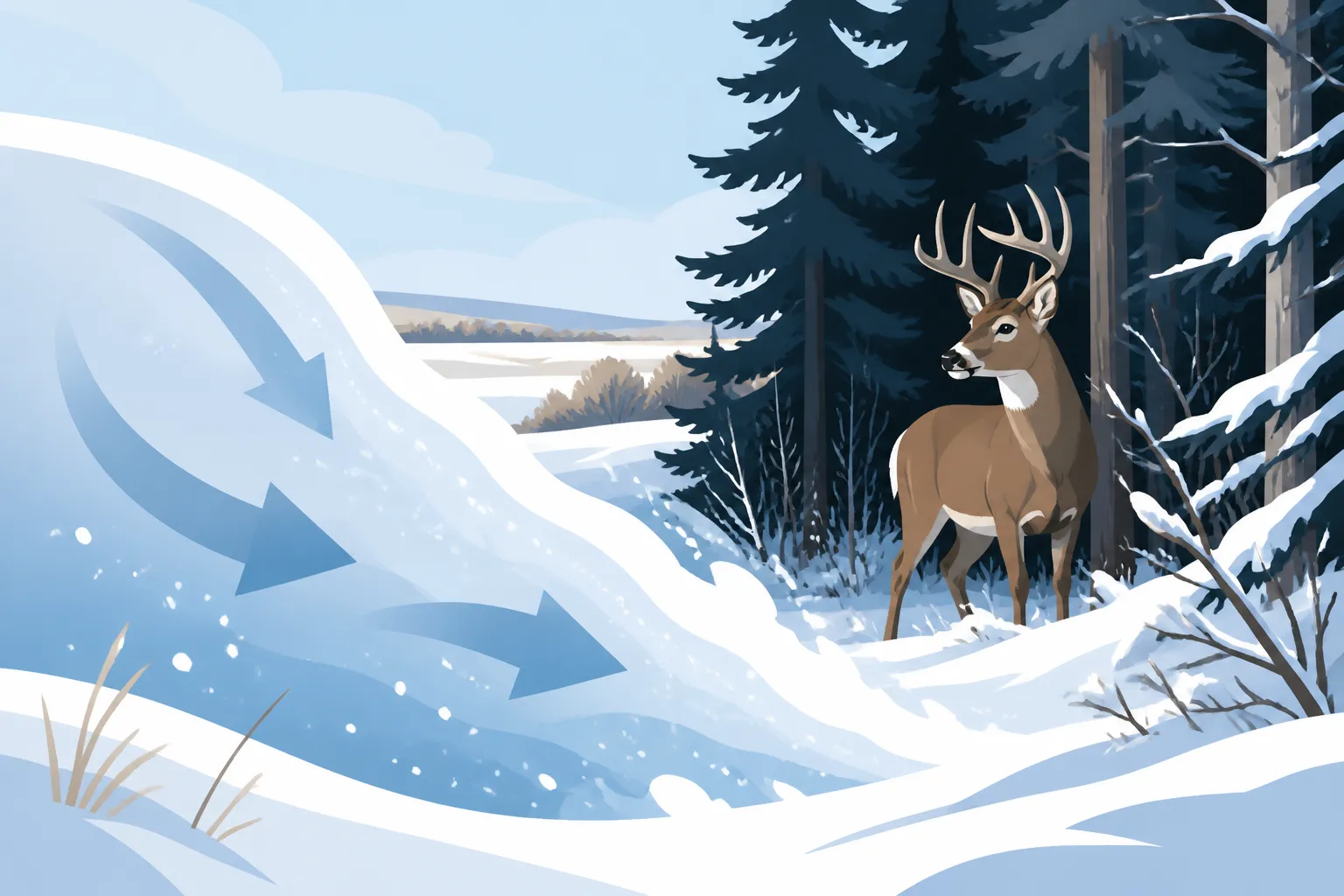
While deep snow can make it harder for deer to move, it can also paradoxically offer them a sense of security. The landscape changes, and familiar sightlines are altered. However, deep snow also highlights their presence. Tracks are impossible to miss, and the crisp, cold air can carry sounds further. Deer might feel exposed in open areas where their dark bodies contrast sharply with the white backdrop. This often pushes them into thicker cover, where the visual clutter of dense trees, brush, and uneven terrain helps them blend in. For hunters, this means shifting your focus from wide-open fields to those thick, gnarly spots that might have been less appealing earlier in the season. Utilizing mapping tools like those offered by GoHunt can help identify these pockets of cover even before you step foot in the snow.
Key Cover Types That Attract Deer in Winter
When the snow gets deep, deer aren't just looking for any cover; they're looking for specific types that offer maximum protection from the elements and predators, while still providing access to whatever food sources are available. Understanding these key areas is vital for successful winter hunting in Saskatchewan.
Dense Conifer Stands and Bush Bluffs
This is the classic winter deer haven. Stands of spruce, pine, or fir, often found in the northern forest fringe or as isolated blocks within the aspen parkland, are goldmines when the snow flies. The dense canopy intercepts much of the falling snow, creating shallower snow depths underneath. This makes movement much easier for deer. Beyond that, the thick branches offer a physical barrier against biting winds and provide excellent thermal cover, trapping some warmth. You'll often find deer literally yarded up in these areas, especially during prolonged cold snaps or blizzards. A Hunting a Saskatchewan Bush Bluff or even a Hunting a Poplar Bluff at First Light in conjunction with conifer cover can be highly effective. They'll bed down in these areas, only venturing out for short periods to feed. When you encounter a big track heading into a thick stand of evergreens in deep snow, chances are good that buck isn't going far. It's a prime spot to slow down, still-hunt, or set up for a patient watch.
Willow Thickets and River Bottoms
While conifers are ideal, deer will also heavily utilize thick willow patches, especially in river valleys, coulees, and around sloughs. Willows, even though deciduous, grow incredibly dense and provide excellent windbreaks. The thick brush offers visual security, and the network of stems can hold some snow off the ground, creating easier travel lanes. River bottoms are natural travel corridors and often have a mix of dense cover types, including willows, alders, and mixed timber, along with exposed southern slopes that catch more sun. Deer will follow the contours of the valley, seeking areas of less snow and easier navigation. A Hunting a Saskatchewan River Valley offers a great look into how to navigate these linear havens. The banks and benches within these valleys can be surprisingly productive, offering sheltered bedding sites and access to browse along the edges.
Standing Crops and Shelterbelts
Don't underestimate agricultural areas, even in deep snow. A field of standing corn, for instance, provides incredible thermal cover and a ready food source, even when buried under snow. Deer will literally live in these fields for days or weeks. Even after harvest, if there's enough residue, they might use the stubble for cover if the snow isn't too deep, but when it really piles up, it’s the standing stuff that becomes critical. Shelterbelts, those lines of trees planted by farmers, also become incredibly important. A thick, multi-row shelterbelt between two fields can act like a linear sanctuary, breaking the wind and accumulating less snow underneath, creating an ideal travel and bedding corridor. If you're Hunting a Shelterbelt Between Two Fields, pay close attention to the thicker sections and where deer might enter and exit. These narrow strips of cover can concentrate deer movement in a profound way, especially in vast, snowy landscapes. Scouting these areas with an app like GoHunt can show you where these critical windbreaks are located.
Adjusting Your Hunting Strategy for Deep Snow Conditions
Deep snow isn't just a physical obstacle; it's a mental one for hunters too. It demands patience, careful planning, and a willingness to adapt. What worked in October might be completely useless in January.
Still-Hunting and Tracking
This is where still-hunting truly shines. When deer are concentrated in specific cover types and their movements are limited, a slow, methodical approach becomes incredibly effective. The quiet cushion of snow underfoot can be your ally, dampening sound, but you need to move at a snail's pace, pausing frequently to glass and listen. Look for subtle movements, a flick of an ear, a patch of brown against the white. Following fresh tracks in deep snow can be an exciting, albeit challenging, endeavor. Reading Sign After Fresh Saskatchewan Snow becomes an essential skill. Focus on the freshest tracks heading into dense cover, and assume that deer is nearby, trying to minimize movement. This isn't about covering ground quickly; it's about covering it intelligently, step by silent step, knowing the deer are likely tucked in tight.
Utilizing Funnels and Pinch Points
With deer movement restricted, they will inevitably use the easiest paths available. This creates natural funnels and pinch points that are excellent ambush sites. Look for saddles between ridges, narrow strips of timber connecting larger blocks of cover, or points where dense cover meets an open field. A Hunting a Frozen Slough Crossing can be a classic example, as deer will often prefer to cross a frozen body of water at its narrowest, most protected point. Any landscape feature that naturally channels deer movement will be intensified by deep snow. They won't expend extra energy to go around obstacles; they'll use the path of least resistance. Spend time studying your maps (a tool like GoHunt can highlight these features) and then get out there to verify these spots on the ground.
Longer Stands and Patience
When the temperatures drop and the snow gets deep, deer tend to move less frequently during daylight hours. This means short sits might not be productive. If you're committed to hunting these conditions, prepare for longer periods in your stand or blind. Dress warmly, with layers designed for extreme cold. Consider heated blinds if available, especially if you're Sitting All Day in a Saskatchewan Blind. Patience is your most valuable asset. Deer might only move for an hour or two at dawn and dusk, or perhaps a quick browse in the middle of the day during a lull in weather. Being in your spot and ready when they do move is critical. This strategy pairs well with focusing on those thermal cover areas where deer are concentrated, understanding that their bursts of activity will be brief and localized.
Navigating the Challenges of Winter Deer Hunting
Winter hunting in Saskatchewan, especially with deep snow, offers unique rewards but also presents significant challenges. It's not just about finding the deer; it's about being prepared for the conditions and prioritizing your safety.
Dressing for the Cold and Staying Warm
This cannot be stressed enough: the cold in Saskatchewan in deep winter is no joke. Frostbite and hypothermia are real dangers. Layers are your best friend, starting with a good wicking base layer, insulating mid-layers, and a waterproof/windproof outer shell. Hand and foot warmers are practically necessities. When you're sitting still for hours, cold seeps in quickly. Pay special attention to your extremities. Insulated, waterproof boots rated for extreme cold are crucial. Read up on strategies for Staying Warm in a Saskatchewan Stand or consider specific gear like insulated ground pads. Your comfort directly impacts your ability to stay focused and effective in the field. Don't cheap out on winter gear; your life literally depends on it.
Travel and Accessibility Issues
Deep snow dramatically impacts how you can access hunting areas. Roads that were perfectly passable in the fall can become impassable drifts. Snowmobiles or track-equipped ATVs might be necessary in some areas, but even then, conditions can be tough. Always inform someone of your route and expected return time. A Winter Truck Kit for a Saskatchewan Hunt should be mandatory, including shovels, tow straps, extra fuel, and emergency supplies. Be realistic about how far you can walk and how difficult it will be getting a deer out with a quad or on foot if you are successful. Consider hunting closer to established roads or areas with reliable access. Always check weather forecasts and road conditions before heading out, and have a backup plan.
Game Recovery and Meat Care
Successfully harvesting a deer in deep snow is only half the battle. Recovering that animal can be incredibly strenuous. If you're fortunate enough to make a clean shot and the deer doesn't run far, the snow can actually help create a blood trail. However, if the animal travels, pushing through deep drifts to track it can be exhausting. Once you have the deer, field dressing quickly is important. The cold temperatures are excellent for preserving meat, but you still need to get the animal out of the elements and into proper storage. Meat Care in Saskatchewan's Cold Snaps is a critical skill. Have a plan for extraction, whether that involves a sled, a vehicle, or calling in help. Consider quartering the animal in the field if it's too heavy to drag out whole. The deep snow conditions amplify every aspect of the hunt, making thorough preparation even more vital.
Disclaimer
This article is for general informational purposes only and does not constitute professional advice. Laws, prices and regulations vary by location and change over time. Consult a qualified professional for guidance on your specific situation.