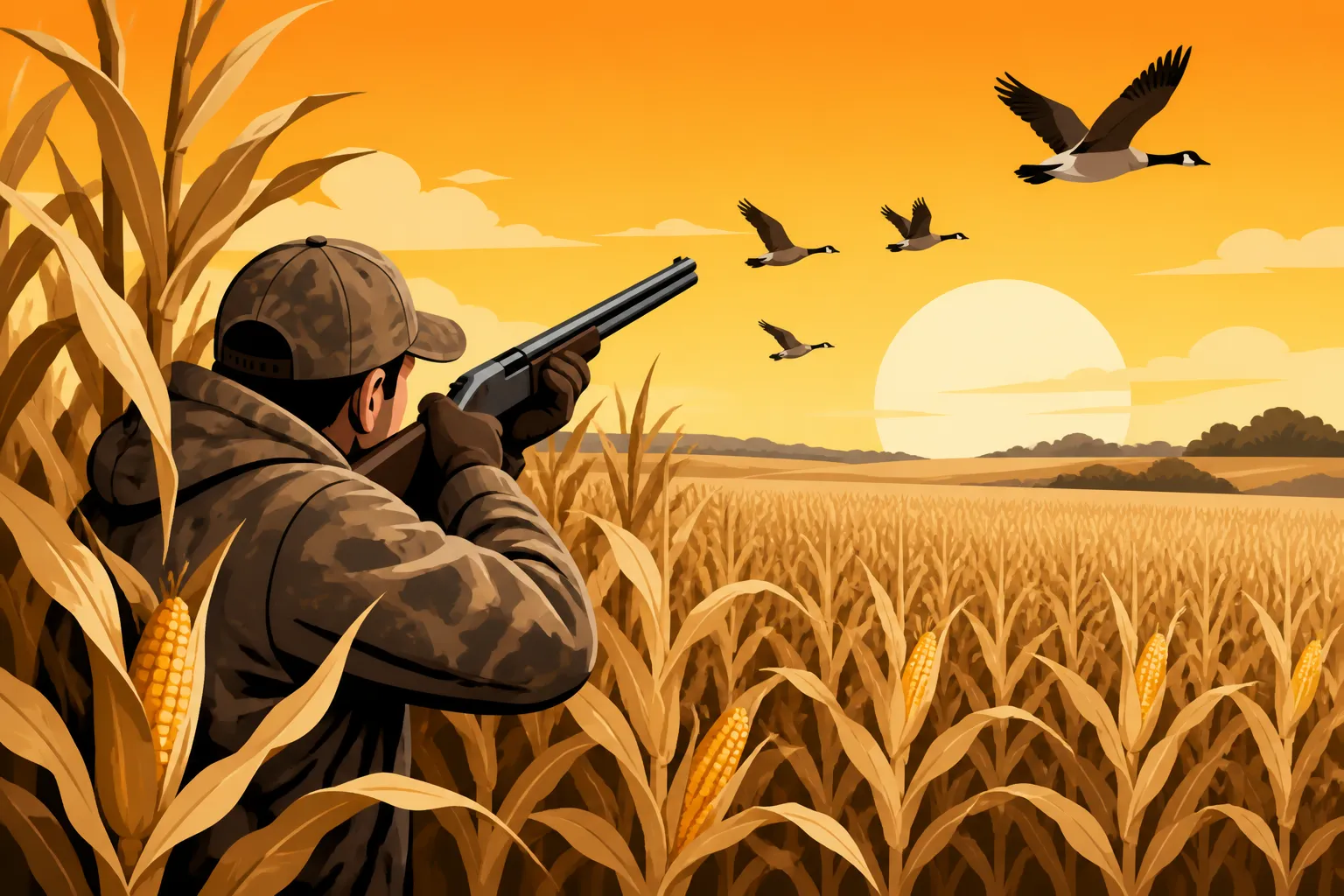
Hunting a Field of Standing Corn
Hunting a field of standing corn in Saskatchewan can feel like searching for a needle in a haystack, a vast green labyrinth where deer vanish as if swallowed by the earth. Many hunters get frustrated, knowing the deer are there, likely bedded down, but unable to locate or even get a glimpse of them. This guide will meticulously break down how to effectively approach, scout, and hunt these challenging yet incredibly productive areas, turning a potential headache into a successful hunt.
The Unique Challenge of Standing Corn for Hunters
There’s something about a field of standing corn that just screams "deer paradise." It offers cover so thick you can barely see your hand in front of your face, shelter from the biting winds, and, of course, a readily available, high-energy food source. But for hunters, this very appeal turns into a formidable obstacle. You know they’re in there, sometimes dozens of them, but how do you get them out, or even get a shot?
Why Corn is Both a Haven and a Headache
From a deer's perspective, standing corn is the ultimate sanctuary. It provides an almost impenetrable wall of stalks, allowing them to move freely and undetected within its confines. They can bed down, feed, and escape predator pressure, including us hunters, with remarkable ease. The rustling leaves and towering height offer incredible auditory and visual camouflage, making them incredibly difficult to pinpoint. It’s like a five-star resort for deer, complete with room service. The consistent food source means they don't have to venture far, concentrating deer activity within the field itself, making traditional stand hunting on field edges less effective if they never step out.
For us, however, it’s a headache. The density of the corn makes visibility almost zero, rendering optics nearly useless for anything beyond a few yards. Tracking a wounded animal can quickly become a nightmare in the dense stalks. Sound carries strangely, and the wind swirls unpredictably within the rows, making scent control a constant battle. Add to that the sheer size of many Saskatchewan cornfields – some stretching for hundreds of acres – and you’re looking at a monumental task. The biggest frustration is often the knowledge that you're so close to your quarry, yet completely unable to engage.
Understanding Deer Movement in Standing Corn
Deer don't just randomly wander through standing corn. They establish patterns, much like they would in a dense forest or brushy river bottom. Within a standing cornfield, deer will create "tunnels" or pathways by repeatedly moving through the same rows. These aren't always perfectly straight; they often zigzag, follow slight depressions, or connect thicker pockets of cover. They use these internal highways to travel from bedding areas to feeding zones, or to move between different parts of the field without ever exposing themselves to the outside.
Identifying these internal travel lanes is critical. You might find distinct trails where the corn stalks are bent or broken, and sometimes even bare earth is exposed beneath the canopy. They also use the edges of sloughs, treelines, or waterways that might run through or alongside a cornfield as natural funnels. During the day, deer will often bed deep within the corn, especially on sunny or windy days, where the stalks provide shade and a break from the elements. As dusk approaches, they'll often move to the outer edges of the field, or to areas where the corn is less dense, before venturing into adjacent stubble fields or forest fringes for more diverse feeding. Understanding these subtle internal movements is the first step to unlocking the secrets of a standing corn hunt.
Scouting Strategies for Standing Corn
Effective scouting is paramount when tackling standing corn. Without it, you’re simply wandering blind. You need to gather as much intelligence as possible before you ever step foot in the field with your weapon. This involves a combination of aerial analysis and painstaking on-the-ground work.
Pre-Season Aerial Reconnaissance
Before the season even begins, or at the very least, before the corn gets too tall, utilizing satellite imagery is incredibly effective. Tools like GoHunt can provide invaluable insights into the layout of a cornfield and its surroundings. Look for natural funnels: sloughs, willow runs, treelines, or even slight elevation changes that might run through or alongside the corn. These are often indicators of deer travel corridors. Pay close attention to how the cornfield connects to adjacent cover, such as a Saskatchewan's Aspen Parkland Bluffs or a Hunting a Shelterbelt Between Two Fields. Deer will use these transition areas to enter and exit the corn.
During the growing season, a quick drone flight (where legal and ethical, and always with landowner permission) can also reveal patterns that are invisible from the ground. You might spot internal trails, areas of flattened corn (indicating bedding), or preferred entry/exit points. While this isn't always feasible, even a high-resolution satellite map accessed through an app like GoHunt can highlight key topographical features or changes in vegetation density that suggest deer activity. Remember, early season scouting, even without a drone, can show you where deer are crossing shorter corn before it gets completely grown in. Check out Scouting With Satellite Imagery in Saskatchewan for more tips on leveraging technology.
On-the-Ground Sign Reading
Once you have a general idea from your aerial scouting, it’s time to get your boots on the ground. This needs to be done meticulously and quietly, ideally during the off-season or well before your intended hunt, to avoid disturbing the deer. Walk the perimeter of the cornfield first. Look for obvious trails leading into and out of the corn, especially where it meets other cover or food sources. Pay attention to fence crossings, muddy areas, or low spots that deer prefer.
Once you find clear entry points, venture just inside the edge, if permitted and practical, to confirm heavy usage. Look for fresh tracks, droppings, and browse. Scrapes and rubs near the edges are gold – they tell you bucks are actively marking their territory there. Don’t go too deep into the corn unless you plan a full-field push, as you risk contaminating the area with your scent and educating the deer. Focus on reading the signs that indicate where deer enter, exit, and travel along the outer fringes. You'll often find that deer use specific "doors" to enter their corn sanctuary. Recognizing these entry points is key to successful ambushes. Pay attention to how the deer might be using a nearby Hunting a Slough Edge for Whitetails as a transition zone.
Effective Hunting Tactics for Standing Corn
Hunting standing corn effectively requires a shift from traditional open-country strategies. You're dealing with extremely close quarters and limited visibility, which means your tactics need to be precise, patient, and often collaborative.
The Art of the Still Hunt
Still hunting a standing cornfield is perhaps the most challenging, yet potentially rewarding, method. It demands extreme patience and stealth. This isn't about covering ground quickly; it's about moving so slowly and deliberately that you become part of the environment. Think of it as stalking, but through a dense maze.
Here's how to approach it:
- Wind is King: You absolutely must hunt with the wind in your favor. Swirling winds within the corn can be tricky, so try to choose a day with a steady, predictable breeze. Walk into the wind.
- Slow, Slower, Slowest: Take a step, stop, listen, look. Repeat. You should spend far more time standing still and observing than you do moving. Look for subtle movements: a twitch of an ear, a flicker of a tail, a slight sway in the stalks that isn't wind-induced.
- Listen Intently: The rustling corn can make hearing difficult, but also provides cover for your own movement. Listen for deer snorting, rustling as they bed or feed, or the distinct sound of hooves crunching on dried stalks.
- Follow the Tunnels: If you've identified internal deer trails during scouting, stick to them. These are pathways deer are comfortable with, and you're more likely to encounter them here. Move along these routes.
- The "Push" for One: If you're hunting solo, you can do a mini-still hunt and then a small, slow "push." Instead of trying to cover the whole field, focus on a smaller, denser section. Move slowly, making just enough noise to encourage deer to move, but not bolt. Be ready to shoot if one breaks cover or presents a shot as it moves away. This can be particularly effective in smaller pockets or when hunting a Hunting a Field of Standing Corn.
Strategic Stand Placement
While hunting inside the corn is tough, setting up stands on the edges can be very effective, especially if you understand deer patterns. The key is to intercept deer as they enter or exit the field.
- Corner Ambush: The corners of cornfields are often natural funnels. Deer may feel safer entering or exiting from a corner where they can quickly disappear into another cover.
- Transition Zones: Look for where the cornfield borders a woodlot, a river bottom, or a patch of thick brush. Deer will use these transition points heavily, especially during dawn and dusk. This is a classic setup for Hunting the Forest Fringe for Big Bucks.
- Internal Stands (Carefully!): If permitted by the landowner and you've found a particularly active internal trail or an isolated patch of thicker cover within the corn (like a small clump of trees or a dense weed patch), you might consider an internal stand. This is much riskier due to limited visibility and scent control challenges, but if a clear shooting lane can be cut (again, with permission), it can put you right in the thick of the action. However, access and exit will need to be meticulously planned to avoid spooking deer.
- Overlooking Low Spots: Deer often travel the path of least resistance. If there's a low spot, a slight ditch, or a natural depression running through the cornfield, deer will likely follow it. Set up a stand overlooking such a feature on the edge.
- Consider a Ground Blind: While treestands are great, a ground blind can be highly effective on a cornfield edge. It offers excellent concealment and helps contain your scent. Place it well in advance to allow deer to get used to its presence.
Remember to follow all local regulations regarding Hanging a Stand on a Saskatchewan Bush Edge and always prioritize safety.
Driving and Pushing Tactics
When dealing with large cornfields or multiple hunters, a strategic drive or "push" can be the most effective way to move deer and create shooting opportunities. This is a group effort and requires careful planning and communication.
- The "Blocker" Strategy: Station hunters (blockers) silently on the downwind side of the cornfield, covering known exit points. These hunters should be in elevated stands or well-concealed ground blinds, ready to take a shot as deer attempt to escape.
- The "Driver" Line: A line of hunters (drivers) then walks through the corn, moving in a coordinated fashion, making noise, and systematically pushing the deer towards the blockers. The drivers should walk at a consistent pace, maintaining their line to avoid deer slipping back through.
- Communication is Key: Use radios (if permitted and quiet) or pre-arranged signals to ensure everyone knows where the line is and what's happening. Safety is paramount here; all hunters must know exactly where other hunters are located to prevent accidents.
- Pacing and Pressure: The drivers don't need to run. A steady, purposeful walk is usually enough to get deer moving. Too much pressure, and deer might bust through the line or simply lay down and let drivers pass over them. Too little, and they might just casually filter out.
- Partial Pushes: Instead of pushing an entire quarter section of corn, focus on smaller, manageable sections or pockets of thicker cover within the field. This can be less intimidating and more effective. You might find this tactic useful when Hunting a Swathed Grain Field at Dusk as well, though the cover is different.
No matter the tactic, always ensure you have explicit Saskatchewan Landowner Permission Law for any land you hunt. Without that, no tactic is viable.
Essential Gear and Safety Considerations
Hunting standing corn presents unique challenges, making certain gear and safety precautions more critical than ever. Being prepared can make all the difference between a successful, safe hunt and a frustrating or dangerous experience.
Must-Have Equipment
Given the dense environment and potential for close-quarter encounters, your gear choices are important:
- Optics: While binoculars are generally less useful inside the corn, a good pair of compact binos or a rangefinder can still be invaluable for glassing the edges or checking distant openings.
- Firearm/Bow: Accuracy at close range is key. A shotgun with slugs, a lever-action rifle, or a handgun in a suitable deer calibre, or a bow, can be excellent choices. Ensure your weapon is sighted in for closer shots, as long-range opportunities are rare. Make sure your setup adheres to Legal Firearms and Bows for Big Game regulations.
- Clothing: Durable, quiet clothing is essential. Layers are always a good idea, as exertion can quickly warm you up, but sitting still will cool you down. Blaze orange is not just a recommendation but often a legal requirement in Saskatchewan during specific seasons; wear more than the minimum, especially during a drive.
- Navigation: A GPS device or a smartphone with a reliable hunting app like GoHunt, loaded with satellite imagery and property lines, is absolutely critical. It's incredibly easy to get disoriented and lost in standing corn, especially if it’s a large field. Mark your entry point, and frequently check your position.
- Communication: Two-way radios are invaluable, especially during group hunts, but even for solo hunters to maintain contact with a designated "safety person" outside the field. Ensure they are quiet and reliable.
- First Aid and Survival: Always carry a basic first-aid kit, a whistle, a knife, a fire starter, and some emergency food and water. Getting lost, injured, or stuck overnight is a real possibility in dense cover.
- Tracking Aid: A bright flashlight or headlamp is crucial for tracking a wounded animal, even during daylight hours in the dense corn. Glow sticks or reflective tape can be helpful to mark blood trails.
Prioritizing Safety in the Thick Stuff
Safety cannot be overstated when hunting standing corn. The low visibility, the potential for multiple hunters, and the nature of the terrain create inherent risks.
- Identify Your Target: This is the cardinal rule of hunting, but it becomes even more critical in standing corn. You must be 110% certain of your target and what's beyond it. Never take a shot at movement, sound, or a "flash" of brown. Wait for a clear, ethical shot.
- Communicate Constantly (Group Hunts): If you’re hunting with others, clear communication is non-negotiable. Establish safe shooting lanes and zones, and never deviate. Continuously update each other on your positions. Avoid Rules on Hunting From a Vehicle when pushing, and ensure all walkers are clearly visible.
- Blaze Orange Visibility: Wear as much blaze orange as legally required, and then some. Consider a blaze orange hat, vest, and even a backpack cover. If doing a drive, every person should be highly visible.
- Know Your Location: As mentioned, GPS is vital. In a group hunt, ensure everyone knows the boundaries of the field and where other hunters are positioned. Understanding Reading a Saskatchewan WMZ Map Before You Go is essential for any hunt, but especially when visibility is limited.
- Respect Property Lines: Always be aware of property boundaries, especially if adjacent landowners are also hunting or if there are roads nearby. Your GoHunt app will show these, helping you avoid accidental trespass.
- No Alcohol/Drugs: The mental focus required for hunting standing corn is intense. Avoid anything that impairs judgment.
- Buddy System: Consider hunting with a partner, even if you’re still hunting. Having an extra set of eyes and ears, and someone to help track or assist in an emergency, is invaluable.
Hunting a field of standing corn can be challenging, but with the right preparation, tactics, and an unwavering commitment to safety, it can lead to one of the most exciting and rewarding hunts you’ll experience in Saskatchewan.
Comparison of Standing Corn Hunting Tactics
| Tactic | Best For | Pros | Cons | Ideal Conditions |
|---|---|---|---|---|
| Still Hunting | Solo hunters, small fields, careful approach | High stealth, intimate experience, target selective | Extremely slow, physically demanding, very low visibility, easy to get lost, low success rate | Light wind, quiet stalks, ample time, patient hunter |
| Stand Placement | Ambushing deer entering/exiting | Good visibility of edges, scent control from elevation, less physical | Deer may never leave corn, wind shifts can ruin hunt, limited shooting lanes | Known travel routes, consistent wind direction, dawn/dusk |
| Driving/Pushing | Large fields, multiple hunters, moving deer | Effective at displacing deer, creates multiple shot opportunities, exciting | Requires coordination, communication, high safety risk, less target selective, deer may slip through | Group of hunters, clear roles, good communication, any time of day |
Disclaimer
Hunting is a demanding activity that requires skill, knowledge, and adherence to regulations. This guide provides general information and recommendations. Always consult the official Saskatchewan hunting regulations, obtain the necessary licenses, and prioritize safety. The author and publisher are not responsible for any accidents, injuries, or legal issues that may arise from hunting activities. Always respect wildlife, landowners, and the environment.