Hunting a Saskatchewan Wildlife Refuge Boundary
It's a common scenario: you're out hunting in Saskatchewan, glassing a distant field or bush line, and there they are—a group of deer, maybe even a monster buck, just tantalizingly out of reach. The frustration builds as you realize they've stepped into what looks like a wildlife refuge or protected area, a place where hunting isn't allowed. Understanding exactly where those lines are drawn, what they mean for your hunt, and how to legally and ethically hunt near them is crucial. This guide will walk you through the ins and outs of navigating these protected boundaries so you can make the most of your hunting opportunities without running afoul of the law.
Understanding What a Wildlife Refuge Boundary Means in Saskatchewan
When we talk about "wildlife refuge boundaries" in Saskatchewan, it's not always a single, straightforward definition. This province is vast and diverse, and with that comes a variety of land designations, some of which limit or prohibit hunting. Hunters often grapple with the confusion of knowing exactly where they can and cannot legally pursue game, especially when boundaries aren't always crystal clear on the ground. It's truly one of the most frustrating aspects of hunting: seeing game you can't touch because an invisible line has been crossed.
Types of Protected Areas and Refuges
Saskatchewan is home to several different classifications of land that restrict hunting activity, either partially or entirely. These aren't just limited to what might be explicitly called a "wildlife refuge" but also include areas like provincial parks, some federal lands, and specific municipal bylaws. Understanding the nuance between these can save you a world of trouble and help you pinpoint legal hunting opportunities. Often, these areas are established to protect specific species, critical habitat, or simply to provide a safe haven for wildlife in high-use recreational zones.
A prime example might be a federal migratory bird sanctuary, where waterfowl are protected from disturbance, or a provincial park that prohibits hunting within its borders to ensure public safety for other users. There are also designated wildlife habitat protection lands under the Wildlife Habitat Protection Act (WHPA), often managed by the Fish and Wildlife Development Fund (FWDF). While some FWDF lands permit hunting, others might have specific restrictions or be bordered by areas that do not, creating complex edges. The key is that these boundaries are intentionally designed to give wildlife a break, and often, the animals know it.
Why Boundaries Attract Game
It's no secret among hunters that wildlife often congregates near these protected boundaries. Why? Because it offers them sanctuary. Animals quickly learn where they are safe from hunting pressure. This creates a fascinating, albeit challenging, dynamic for hunters. You'll often see deer, moose, or even bears feeding just inside a refuge, only to bed down a short distance into the no-hunting zone. This behavior is a direct result of consistent pressure on surrounding lands, driving them to seek respite where they feel unthreatened.
This behavior, while maddening for a hunter, also presents a unique opportunity. If you understand how game uses these safe zones, you can anticipate their movements out of the refuge into huntable land. They're not just staying put; they're often moving in and out to access food, water, or to seek mates during the rut. Your challenge is to intercept them legally and ethically when they leave the sanctuary. This requires meticulous planning, precise mapping, and an intimate understanding of the game's daily patterns around these edges.
Legalities and Regulations: What You MUST Know
Navigating the legal landscape around wildlife refuge boundaries is paramount. Ignorance of the law is never an excuse, and crossing these lines, even inadvertently, can lead to severe penalties, including hefty fines, loss of hunting privileges, and confiscation of equipment. The onus is entirely on the hunter to know exactly where they are at all times. This can be especially tricky in vast, unmarked areas of Saskatchewan's diverse landscape.
Identifying No-Hunting Zones
The first and most critical step is to accurately identify all no-hunting zones in your chosen Wildlife Management Zone (WMZ). This isn't just about looking for "no hunting" signs, as many boundaries might not be physically marked on the ground, especially in remote areas or where land ownership changes frequently. Your primary resources will be official government hunting guides, WMZ maps, and reputable digital mapping tools.
These maps will delineate provincial parks, national parks, wildlife refuges, migratory bird sanctuaries, and other restricted areas. Pay close attention to the legends and specific regulations for each type of land. Some areas may allow hunting for certain species during specific times, while others are absolute no-go zones year-round. Always cross-reference with the latest regulations, as boundaries and rules can occasionally shift. For instance, Reading a Saskatchewan WMZ Map Before You Go is absolutely essential, not just good practice.
| Type of Restricted Area | General Hunting Status | Key Considerations for Hunters |
|---|---|---|
| National Parks | Generally NO Hunting | Strict federal regulations. |
| Provincial Parks | Generally NO Hunting | Check specific park regulations, some exceptions might exist but are rare. |
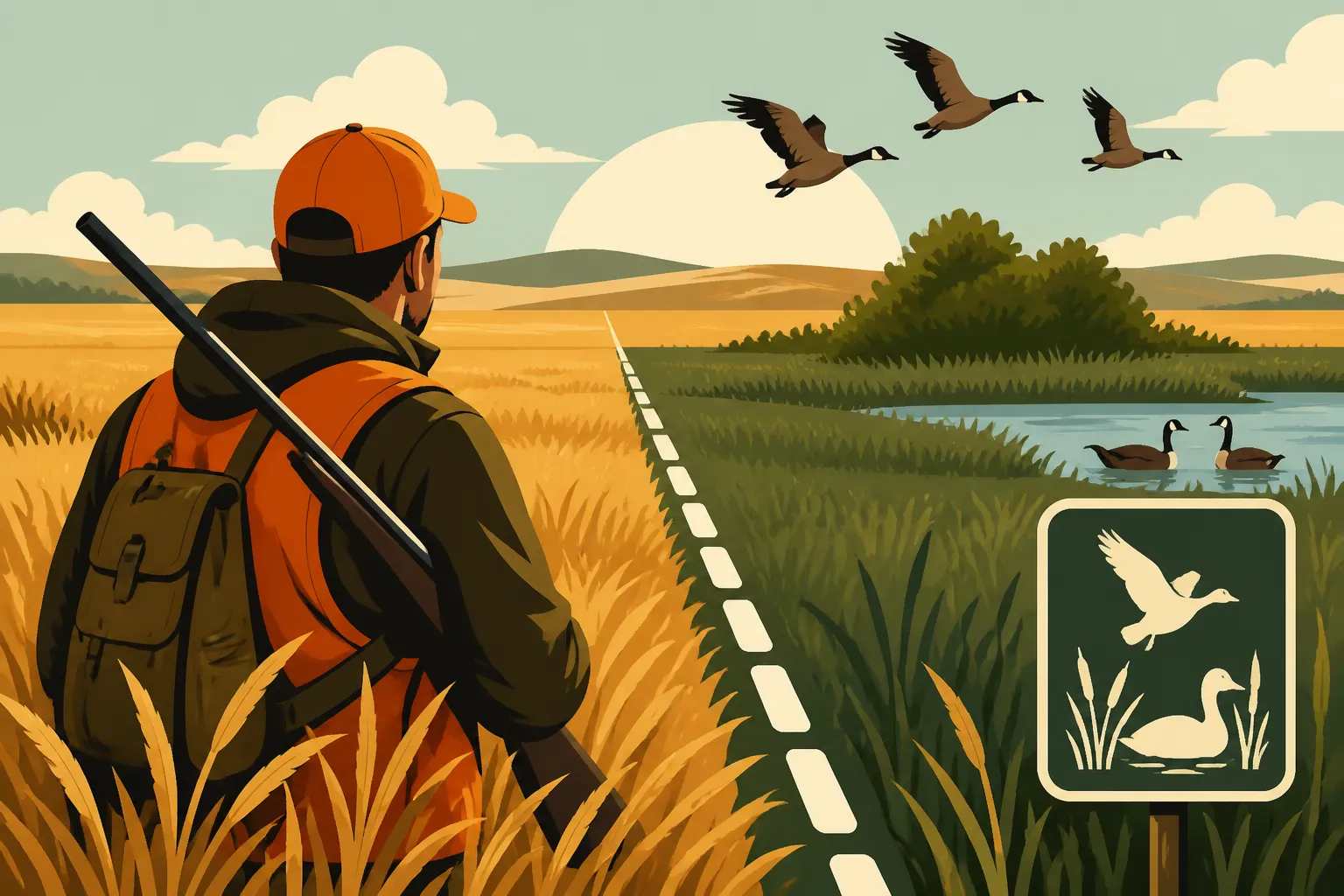
| Migratory Bird Sanctuaries | Waterfowl Hunting Prohibited | Often allow big game hunting, but check specific boundaries and species rules. |
| Federal Community Pastures | Access Varies | Requires permission from pasture manager; specific hunting seasons/rules apply. |
| Provincial Crown Land (WHPA/FWDF) | Often ALLOWS Hunting, but CHECK | Some specific areas may be restricted or have unique rules. Verify before hunting. Hunting an FWDF Parcel Without Permission is usually not allowed. |
| Private Land (Posted) | NO Hunting Without Permission | Must have explicit permission. What Saskatchewan's Posted Signs Must Say is important to understand. |
| Municipal Bylaw Zones | Hunting Often Prohibited | Check local bylaws around towns/cities or recreational areas. |
Consequences of Boundary Violations
The penalties for hunting illegally in a restricted area or trespassing can be severe. It’s not just about a slap on the wrist. Violations can range from significant monetary fines to forfeiture of your weapon, vehicle, and even the game harvested. You could also face a temporary or permanent ban from hunting in Saskatchewan. This can be devastating for a passionate hunter and reflects the seriousness with which wildlife authorities treat these regulations.
Furthermore, a violation can impact your ability to acquire hunting licenses in other jurisdictions, both within Canada and internationally. It's a stain on your hunting record that can follow you. Beyond the legal ramifications, there's the ethical consideration. Respecting these boundaries is fundamental to being a responsible hunter and ensuring the continued support for hunting as a conservation tool. Always err on the side of caution; if you're not 100% sure, don't take the shot, and don't cross the line. Saskatchewan Trespass Penalties for Hunters are no joke.
Scouting and Strategy for Refuge Edge Hunting
Hunting near a wildlife refuge boundary isn't about charging in blindly. It's about precision, patience, and a deep understanding of animal behavior. The strategy here differs significantly from hunting vast, open areas. You're working with a known "safe zone" that dictates much of the game's movement, and your job is to predict when and where they'll expose themselves on huntable land. This requires methodical scouting and a keen eye for detail.
Using Technology to Define the Edge
In today's hunting world, digital mapping applications are your best friend for hunting refuge boundaries. Tools like onX Hunt and GoHunt provide highly detailed satellite imagery layered with property lines, land ownership information, and various public and restricted land designations. You can literally see the boundaries of a wildlife refuge, a provincial park, or even private land that might border Crown land. This precision allows you to know, almost to the foot, where the line is drawn.
Before you even step foot in the field, use these apps to study the terrain bordering the refuge. Look for natural funnels, pinch points, draws, or creek beds that lead into or out of the protected area. Identify food sources (like crop fields or specific browse) just outside the refuge that might draw animals out at dusk or dawn. Pinpoint bedding areas within the refuge and consider the most likely travel routes to adjacent feeding or watering spots. Scouting With Satellite Imagery in Saskatchewan is incredibly powerful for this kind of specific boundary work.
Reading Sign Along the Perimeter
Once you've done your digital homework, it's time for boots on the ground. Walk the perimeter of the refuge on the legal side. Look for fresh tracks, rub lines, scrapes, and feeding sign that indicate animals are moving in and out. Pay particular attention to trails that lead directly to and from the refuge boundary. Are they heavily used? Are there multiple trails? Which direction do they seem to be heading most often?
Consider the time of year. During the rut, bucks might be more inclined to chase does out of the refuge. In early season, they might be focused solely on food sources. Late season often sees animals prioritizing cover and food to survive the cold, which means they might utilize the denser cover of a refuge during the day and only venture out for a quick feed at night. Reading Whitetail Sign in Saskatchewan Bluffs or around any dense cover near these boundaries is key to understanding daily movements. The more time you spend scouting, the better your chances of intercepting game.
Practical Tips for Hunting Near a Refuge Boundary
Hunting the edge of a sanctuary requires a blend of tactics, patience, and unwavering ethical commitment. You're trying to outsmart animals that have learned exactly where they're safe, so you need to be at the top of your game. This isn't just about setting up a stand; it's about understanding wind, light, and animal movement with surgical precision.
Strategic Stand Placement and Entry/Exit
Your stand or blind placement is absolutely critical when hunting a refuge boundary. You need to position yourself in a way that allows you to see the boundary, cover likely travel routes, and remain undetected. Think about prevailing winds – you absolutely cannot afford to have your scent blowing into the refuge, alerting animals before they even cross the line. Always approach your stand with the wind in your face, and plan your exit route to avoid spooking animals that might be moving in or out.
Look for natural ambush points: a narrow strip of timber between the refuge and a crop field, a sharp bend in a creek that animals follow, or a fence line crossing. If allowed and safe, consider setting up a ground blind at an advantageous point, especially if the terrain offers good natural cover. Remember, the goal is to intercept animals after they've legally exited the refuge, not to call them out of it. Patience is crucial; animals might spend hours just inside the boundary before making a move.
Ethical Considerations and Shot Placement
Hunting near a refuge boundary brings heightened ethical responsibilities. First and foremost, you must be absolutely certain of your shot and the backdrop. Missing a shot and having a wounded animal run into the refuge is every hunter's nightmare. Not only is it unethical to leave a wounded animal, but retrieving it from a restricted area can be a complex and often impossible legal challenge. Always ensure you have a clear, ethical shot at an animal that is firmly on huntable land.
If you do wound an animal and it crosses into a refuge, stop immediately. Do not pursue it. Your first call should be to the Ministry of Environment's Turn In Poachers (TIP) line or the local conservation officer. They are the only ones who can advise on the legal procedure for retrieving game from a protected area, and in some cases, it may simply not be possible. Always remember, Retrieving Game From Private Land in Saskatchewan or protected land without explicit permission can land you in serious trouble. Your ethical responsibility extends to making sure you have no doubts about where the animal is when you take the shot.
Time Your Hunt Wisely
Game often uses refuge boundaries as a safety net, venturing out primarily during low light conditions or when hunting pressure is minimal. This means the first and last hours of legal hunting light are often your most productive. Many animals will spend the daylight hours bedded down deep within the sanctuary, only emerging at dusk to feed in adjacent fields or access water sources like a Hunting a Saskatchewan Dugout at Dusk. Similarly, they'll be heading back into the refuge at first light.
Consider hunting during weekdays if possible, when general pressure might be lower. Also, weather can play a huge role. A cold snap, a fresh snowfall, or a significant change in temperature can trigger increased movement as animals seek food or cover, potentially drawing them further from the immediate safety of the boundary. By understanding these patterns and adjusting your timing, you can significantly increase your chances of success on these highly pressured but often productive edges.
Disclaimer
This article is for general informational purposes only and does not constitute professional advice. Laws, prices and regulations vary by location and change over time. Consult a qualified professional for guidance on your specific situation.