Whether Outfitters Take US Dollars
One of the biggest questions that often pops into a non-resident hunter's mind when planning that dream trip to Saskatchewan, beyond what trophy they might hang on the wall, is the practical matter of money. Specifically, many wonder, "Will my outfitter accept US dollars, or do I need to convert everything to Canadian?" This guide will break down the currency conundrum, offering insights and practical advice to ensure your financial planning for your Saskatchewan hunt is as smooth as your shot placement.
Understanding Currency Exchange for Your Saskatchewan Hunt
Heading north for a hunt is an exciting prospect, but the practicalities of international travel, especially currency, can feel a bit daunting. You’ve got enough on your mind with gear lists, travel arrangements, and anticipating the hunt itself without worrying about how to pay for it all. Let's demystify the currency aspect.
The Canadian Dollar: Your Hunting Currency
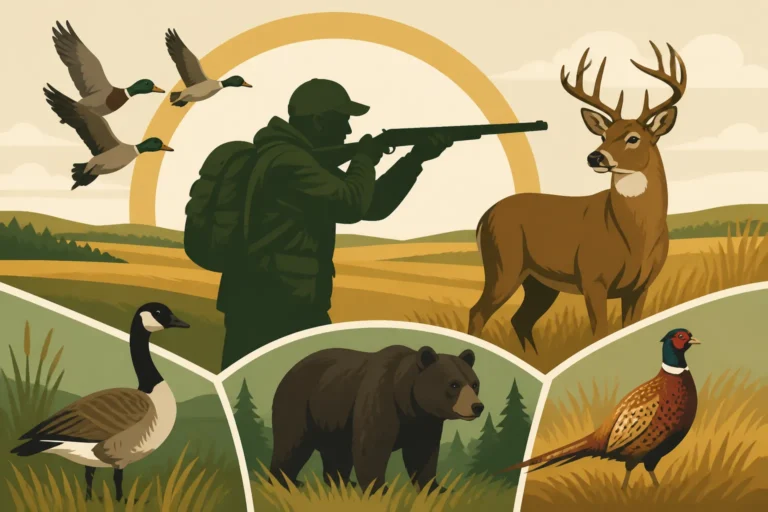
First and foremost, it's crucial to understand that Canada's official currency is the Canadian Dollar (CAD). This might seem obvious, but it sets the baseline for all transactions within the country, including those with hunting outfitters. When an outfitter quotes you a price for a Whitetail Hunting in Saskatchewan package, a Saskatchewan Black Bear Hunt or a Saskatchewan Waterfowl Hunt, that price is universally understood to be in Canadian dollars, unless explicitly stated otherwise. This is the legal tender, the currency in which their books are kept, and the money they use to pay their guides, fuel their trucks, and buy groceries for camp.
Imagine running a business where clients pay in various foreign currencies; it's a constant headache of conversions and fluctuating values. For most outfitters, simplifying this by sticking to CAD makes their lives, and ultimately their business operations, much smoother. They rely on predictable income in their local currency, so while they might offer some flexibility, their core operations are priced and managed in CAD. This also extends to smaller purchases once you're in Saskatchewan, like gas, restaurant meals, or souvenirs, all of which will be priced and charged in CAD.
Why US Hunters Need to Plan for Exchange Rates
For American hunters, the exchange rate between the US Dollar (USD) and the Canadian Dollar (CAD) is a significant factor. This rate is constantly in flux, changing daily, even hourly. What might seem like a small difference on a currency converter can add up to hundreds, or even thousands, of dollars over the course of a hunting package that costs several thousand. Ignoring this can lead to unwelcome surprises when the final bill comes due.
Think about it this way: if your hunt package is quoted at $8,000 CAD and the exchange rate is 1.35 CAD to 1 USD, you'd effectively be paying about $5,925 USD. But if the rate shifts to 1.40 CAD to 1 USD, that same $8,000 CAD would now cost you approximately $5,714 USD. That's a saving of over $200 USD just from a rate change. Conversely, if the Canadian dollar strengthens, your US dollars will buy less. Monitoring these fluctuations and timing your payments can sometimes work to your advantage, or at least help you budget accurately. Many hunters find it useful to keep an eye on financial news or use online currency converters leading up to their payment dates. It's an important part of Planning a Saskatchewan Hunting Trip effectively.
Common Payment Methods Accepted by Outfitters
Saskatchewan outfitters, like most businesses, accept a range of payment methods. The most common include:
- Bank Transfers (Wire Transfers): This is often preferred for larger payments, such as deposits and final balances. It’s secure and provides a clear record of the transaction. However, both your bank and the outfitter's bank might charge fees for international wire transfers, so be sure to factor those in. It’s also important to confirm the exact banking details with your outfitter to avoid any errors.
- Credit Cards: Many outfitters accept major credit cards like Visa and MasterCard. This offers convenience and often buyer protection. However, credit card companies typically charge a foreign transaction fee, usually around 2.5% to 3.5% of the transaction amount. These fees can add up quickly on a multi-thousand-dollar hunt. It's wise to check with your credit card provider about their foreign transaction fees before you travel or make a payment.
- Cash: For smaller expenses, incidentals, and certainly for tips, Canadian cash is king. While some outfitters might accept USD cash for larger payments, it's generally best to have Canadian currency on hand. We'll delve into the specifics of direct USD payments shortly, but carrying a reasonable amount of CAD ensures you're ready for anything, from grabbing a coffee on the drive up to paying for a souvenir. When considering Tipping a Saskatchewan Guide, cash is almost always the preferred method.
Navigating Payment Options with Saskatchewan Outfitters
So, you're ready to book, and you've got your hard-earned US dollars. How do you actually make that transaction work with your Saskatchewan outfitter? It’s all about communication and understanding the options.
Direct US Dollar Payments: Is It an Option?
Some Saskatchewan outfitters, recognizing that a significant portion of their clientele comes from the United States, might be willing to accept direct US dollar payments. However, this is rarely at the prevailing bank exchange rate. More often than not, if an outfitter accepts USD, they will use an exchange rate that is less favourable to the hunter. Why? Because the outfitter then has to take those US dollars to their bank and convert them to Canadian dollars, and their bank will charge them a fee for this service, plus apply their own exchange rate spread. To cover their costs and ensure they receive the full Canadian dollar value of their hunt package, they will typically build a buffer into the exchange rate they offer you.
This means that while it might seem convenient to pay in USD, you're almost certainly going to pay more than if you converted your money to CAD yourself through your bank or a reputable currency exchange service. Always ask your outfitter directly about their policy on accepting USD, and if they do, inquire about the specific exchange rate they will apply. Compare this rate to what your bank or an online converter shows. You’ll often find it more cost-effective to convert your funds to CAD before making the payment. This is a critical question to ask when you are Questions to Ask Before Booking an outfitter.
The Role of Online Booking Platforms
In today's digital age, many hunters turn to online platforms to find and book their dream hunts. Sites like BookYourHunt and GoHunt are popular resources for connecting hunters with outfitters across North America, including Saskatchewan. These platforms often simplify the payment process, especially for international transactions.
When you book through a platform like BookYourHunt, they typically facilitate the payment directly. This often means you can pay in your home currency (USD, in this case), and the platform handles the currency conversion on their end. They will display the price in CAD and then show you the equivalent in USD based on their internal exchange rate, often with a small service fee built-in. This can be incredibly convenient, as it takes the guesswork out of the exchange rate for the hunter. You see the total USD amount you'll be charged upfront. Similarly, GoHunt might offer services or partnerships that streamline international payments. While convenient, it’s still important to compare the exchange rate offered by the platform to what you might get from your own bank to ensure you're getting a fair deal. Always read the fine print regarding fees and exchange rates on these platforms.
Planning for Cash Payments and Tips
Even if your main hunt package is paid via bank transfer or credit card, you'll inevitably need some cash for your trip. This could be for souvenirs, meals on the road, or most importantly, for tips. Guides, cooks, and camp staff often prefer tips in cash, and Canadian currency is always appreciated. It saves them the hassle of converting foreign currency and potentially losing money on exchange rates or fees.
Before you travel, it’s a good idea to estimate how much cash you might need for incidentals and tips. Then, convert that amount to Canadian dollars at your bank or a reputable currency exchange service before you leave home. You generally get better rates doing this at your home bank than at an airport kiosk or small-town bank in Canada. While ATMs are widely available in larger Saskatchewan towns, some remote areas or small communities near hunting camps might have limited access, or the ATMs might charge higher fees. Having a stash of Canadian "loonies" ($1 coins), "toonies" ($2 coins), and smaller bills is always a smart move for a smooth, stress-free experience. When thinking about What a Saskatchewan Guided Hunt Costs, remember that tips are an additional, customary expense.
Best Practices for Managing Your Hunting Budget
Effective financial planning isn't just about finding the cheapest option; it's about transparency, minimizing unexpected costs, and ensuring you get the most value for your money. Here are some best practices when dealing with currency and payments for your Saskatchewan hunting adventure.
Always Clarify Currency and Exchange Rates Upfront
The absolute golden rule of international payments is clear communication. Before you send any money, especially a significant deposit or the full balance, have an explicit discussion with your outfitter about:
- The quoted price: Confirm it's in CAD.
- Accepted payment methods: Which ones do they prefer? Are there any methods they absolutely do not accept?
- Currency for payment: Will they accept USD? If so, what exchange rate will they use, and is there a fee associated with it?
- Fees: Are there any bank transfer fees, credit card processing fees, or other charges you should be aware of?
Getting these details in writing, perhaps in your booking contract or an email, is always a good idea. This prevents misunderstandings down the road. It also helps you understand Saskatchewan Deposit and Cancellation Terms related to currency.
Monitoring Exchange Rates Before Your Trip
The foreign exchange market can be unpredictable, but monitoring the CAD/USD rate can help you make informed decisions. If you have several months between your deposit and final payment, keep an eye on the rates. If the Canadian dollar is weakening against the US dollar, your USD will go further, and it might be a good time to make a payment or exchange a larger sum of money. Conversely, if the Canadian dollar is strengthening, you might want to hold off if possible, or accept that the cost in USD will be higher.
There are many free online tools and apps that provide real-time exchange rates. While you won't get the exact bank rate, these tools give you a good benchmark. Remember, banks and credit card companies will always have a slight spread on the interbank rate (the rate banks charge each other), but you can still use the trends to your advantage.
Using Credit Cards and Bank Transfers Wisely
Both credit cards and bank transfers have their pros and cons for international payments.
- Credit Cards: As mentioned, foreign transaction fees are a common drawback. However, some premium credit cards offer no foreign transaction fees, which can be a huge saver on a big hunt. If you have such a card, it might be your most cost-effective option for larger payments to the outfitter. Always pay your credit card bill in full to avoid interest charges that could quickly negate any savings. Additionally, credit cards offer a level of fraud protection that cash or wire transfers do not.
- Bank Transfers: While they usually involve transfer fees, these fees are often a fixed amount, meaning they become a smaller percentage of the total as the amount transferred increases. For very large sums, a wire transfer might be more economical than a credit card with foreign transaction fees. The exchange rate you get from your bank for a wire transfer is typically more favorable than what an outfitter would offer if they accepted USD directly. When Booking a Saskatchewan Hunt a Year Ahead, you'll likely use bank transfers for your deposits and final payments.
| Payment Method | Typical Currency Accepted | Pros | Cons | Recommendation |
|---|---|---|---|---|
| Canadian Cash | CAD only | Widely accepted, no fees, ideal for tips | Must convert beforehand, risk of carrying large sums | Essential for tips & small purchases. Convert before travel. |
| US Cash | USD (possibly) | Convenient (if accepted) | Unfavorable exchange rate from outfitter, conversion hassle for outfitter | Avoid for large payments; use CAD for cash needs. |
| Credit Card | CAD | Convenient, fraud protection, sometimes good rates | Foreign transaction fees, potentially higher interest rates | Use a card with no foreign transaction fees if possible. |
| Bank Transfer | CAD (convert before send) | Secure, good exchange rates (from your bank) | International transfer fees, takes time, can be complex | Best for deposits & large balances after converting to CAD. |
| Online Platform (e.g., BookYourHunt) | USD (converted) | Simplified process, upfront USD cost | Platform exchange rate & service fees may apply | Compare platform rate to your bank's rate for best value. |
Ultimately, the best approach is to operate in Canadian dollars for all significant transactions. This means taking the initiative to convert your US dollars to CAD through your bank or a trusted currency exchange service before you make payments to your outfitter. It might seem like an extra step, but it ensures you understand the true cost of your hunt, minimizes unexpected fees, and shows respect for the local economy and your outfitter’s business. Don't forget to factor in the cost of Saskatchewan Hunting Licences and What They Cost and What Tags and Licences Add to the Bill in your overall budget, as these will also be in CAD.
Disclaimer
This article is for general informational purposes only and does not constitute professional advice. Laws, prices and regulations vary by location and change over time. Consult a qualified professional for guidance on your specific situation.