Hunting Mule Deer After a Snowfall
Hunting mule deer in Saskatchewan can often feel like searching for ghosts on the wide-open prairie. These intelligent animals are masters of using the sparse cover to their advantage, making them incredibly challenging to locate and approach. But then, the snow falls, transforming the landscape and often, your luck. This guide dives deep into how a fresh blanket of snow changes the game for mule deer hunting, giving you practical strategies to turn those elusive ghosts into a real opportunity.
Understanding Mule Deer Behavior After a Fresh Snowfall
A fresh snowfall doesn't just paint the prairie white; it fundamentally alters the world for mule deer, and understanding these shifts is key to successful hunting. Their survival instincts kick into overdrive, but those same instincts can also make them more predictable.
Immediate Reactions to First Snow
When the first significant snow of the season blankets Saskatchewan's open country, mule deer often have an immediate, noticeable reaction. Initially, they might seem a bit disoriented or even agitated. That first dusting makes everything look and feel different. They become extra cautious, often sticking to thicker cover or bedding down in the most sheltered spots they can find, like deep coulees or dense willow pockets. Their primary concern is warmth and finding readily accessible food without expending too much energy. This initial period, especially in the first 12-24 hours, can be tricky. They're not moving much, and if they are, it's generally from one safe haven to another.
However, once they adjust to the new conditions, their patterns can become surprisingly readable. The fresh snow often brings colder temperatures, which means their caloric needs go up. This increased need for energy dictates much of their behavior moving forward. They'll focus on feeding efficiently and conserving energy, which can mean more predictable movements between bedding and feeding areas. This is where you, as a hunter, can truly start to gain an advantage. Remember that not all snow is equal; a light, fluffy snow might not impact them as much as a heavy, wet blanket that makes movement difficult.
How Snow Impacts Feeding and Bedding
Snow significantly influences where and how mule deer feed and bed. Before snow, they might be scattered across vast fields or coulee edges. After a snowfall, especially a deep one, their options become more limited. Food sources that were easily accessible, like standing crop fields or browse on low-lying shrubs, might now be buried or harder to reach. This forces them to concentrate on areas where food is still exposed or where they can paw through lighter snow cover. Think about south-facing slopes in coulees where the sun melts snow quicker, exposing grass and browse. Or, they might target standing corn or pea fields where the stalks hold food above the snow.
Bedding choices also change dramatically. Instead of bedding on open knobs where they can see everything, they'll seek out thermal cover to escape the cold and wind. This often means deeper into willow thickets, the bottom of a steep coulee, or on the leeward side of a hill. They're looking for natural windbreaks and places where the snow insulates them. If the snow is really deep, they might even yard up in areas with dense trees, creating communal trails to minimize energy expenditure when moving between their beds and food. When you are scouting, pay close attention to areas that offer both food and immediate thermal cover, as these become prime locations.
Reading the Landscape: Sign and Tracks in the Snow
Snowfall doesn't just change mule deer behavior; it also lays out a perfect canvas for you to read their movements, almost like a detailed map of their daily lives. Learning to interpret this fresh sign is paramount to finding success.
Interpreting Fresh Tracks and Trails
Nothing beats fresh tracks in the snow. They tell a story, and you're learning to read the chapters. When you find tracks, the first thing to note is their freshness. Are the edges sharp and defined, or are they starting to soften and melt? Are there fine snow crystals still visible in the bottom of the print? This indicates recent passage. Pay attention to the size and stride of the tracks. Large, widely spaced tracks often indicate a mature buck moving with purpose. If the tracks are meandering, with frequent stops, it suggests feeding or general movement.
Look for a pattern: are they moving in a straight line, which might indicate traveling between known areas, or are they zig-zagging, indicating feeding? If you find a trail, follow it slowly and deliberately. This is where mapping tools like GoHunt become invaluable, allowing you to mark tracks and trails as you go, helping you visualize the deer's path and potential destinations. Remember that mule deer often move along natural travel corridors like fence lines, treelines, or the bottoms of coulees, especially in snowy conditions. These features offer both cover and easier travel. Learning how to identify and follow these trails is a critical skill for Hunting Mule Deer in Prairie Coulees.
Locating Bedding Areas and Rubs
With snow on the ground, finding bedding areas becomes much easier, as the deer leave clear depressions where they've rested. Look for beds in sheltered spots, typically on south-facing slopes for warmth, or in dense cover like willows or evergreens to block the wind. Fresh beds will still have a faint warmth to them, or the snow around the edges will be slightly melted or disturbed. Note the direction the deer was facing when it bedded—usually into the wind, or with the wind at its back allowing it to watch its backtrail.
Rubs and scrapes also take on new significance after a snowfall. While scrapes might be less obvious if buried, fresh rubs on small trees or shrubs will be highly visible against the white background. Bucks will continue to rub their antlers to mark territory, especially as the rut progresses through late November. Finding a line of fresh rubs can indicate a buck's preferred travel route or an area where he feels secure. Don't overlook these; they are direct messages from the deer themselves. A buck rubbing vigorously in a certain area tells you he's present and active there. This kind of detailed scouting is essential for Reading Sign After Fresh Saskatchewan Snow.
Effective Hunting Strategies Post-Snowfall
Once the snow hits, your hunting approach needs to adapt. The rules of the game change, and successful hunters are those who can capitalize on the new conditions.
Spot-and-Stalk in a Snowy Landscape
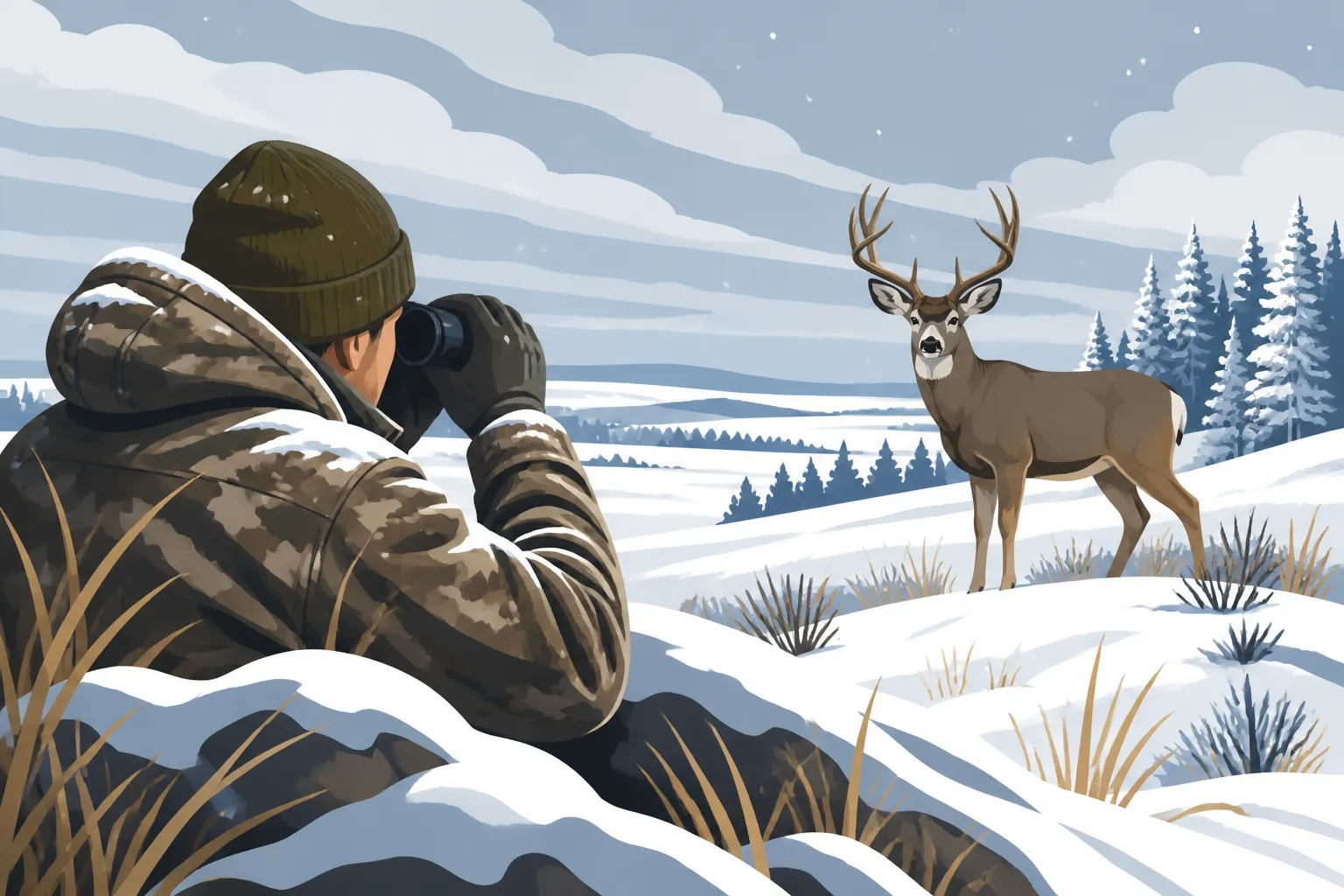
Snow can be both a blessing and a curse for spot-and-stalk hunting. The good news is that deer often contrast sharply against the white background, making them easier to spot from a distance. The bad news is that your approach can be noisier, and you'll leave a very clear trail. Therefore, the key is maximizing your glassing efforts and making extremely deliberate stalks. Spend ample time glassing hillsides, coulees, and shelterbelts, especially during prime feeding hours in the early morning and late afternoon. A high-quality spotting scope is your best friend here.
Once you spot a deer, meticulously plan your stalk using terrain features like coulee bottoms, ridges, and even standing crops to conceal your movement. Move slowly and deliberately, paying close attention to the sound your boots make on the snow. Soft, fresh snow is generally quieter than crusted, icy snow. Use a mapping app like GoHunt to mark the deer's location and identify potential approach routes, noting wind direction carefully. A successful stalk often means walking a long, circuitous route to get into position without being seen or heard. This patient approach is crucial for Stalking Mule Deer in Open Prairie.
Leveraging Weather and Time of Day
The weather conditions after a snowfall are critical. A light, consistent snowfall or a strong, steady wind can provide excellent cover for your movement and muffle sounds. Deer are often less alert during these conditions. Conversely, a clear, calm day with crunchy snow can make stalking almost impossible, forcing you to rely more on long-range glassing and ambush tactics. Consider hunting during the periods just after a storm breaks, or during a light snow flurry, when deer may be more active and your approach is concealed.
Time of day also takes on increased importance. After a cold, snowy night, mule deer will often move to sunny, south-facing slopes to warm up and feed during the mid-morning. Conversely, they might bed down early in the afternoon to conserve energy before moving out to feed again as dusk approaches. This means adjusting your schedule; don't just hunt dawn and dusk. Mid-day can be incredibly productive, especially if you're focusing on warming spots. Early morning hunts often mean finding them still feeding, or just moving towards their bedding areas, while late afternoon finds them emerging for their evening meal.
Gear and Safety Considerations for Winter Mule Deer Hunting
Hunting after a snowfall, especially in Saskatchewan, means dealing with potentially extreme cold and challenging conditions. Your gear choices and safety protocols are not just about comfort; they're about survival.
Essential Clothing and Footwear
Staying warm and dry is absolutely non-negotiable when hunting in Saskatchewan's winter. Layering is your best friend. Start with a moisture-wicking base layer (merino wool or synthetic, never cotton) to pull sweat away from your body. Add insulating mid-layers like fleece or down for warmth. Your outer layer needs to be waterproof and windproof to protect against the elements. A good quality parka and insulated bibs or pants are crucial. Pay special attention to your extremities: a warm hat (or two), insulated gloves or mitts, and a neck gaiter or balaclava are vital for heat retention.
For footwear, you need heavily insulated, waterproof boots that are rated for extreme cold. Look for boots with 800-gram or higher thinsulate insulation, and make sure they are waterproof to handle slush and deep snow. Consider sizing up half a size to allow for thick wool socks and to ensure good circulation, which is key to preventing frostbite. Gaiters are also a smart addition to keep snow out of your boots, especially when walking through deep drifts or breaking trail. Having the right boots is crucial when you are trying to be stealthy for Hunting Mule Deer After a Snowfall.
Winter Safety and Emergency Preparedness
Saskatchewan winters are no joke, and complacency can be deadly. Always inform someone of your hunting plans, including your route and expected return time. Carry a reliable GPS device, a satellite communication device (like a Garmin inReach or Zoleo) for areas without cell service, and a fully charged cell phone. Even with mapping apps like GoHunt, a dedicated GPS is a critical backup. Pack an extensive emergency kit that includes fire-starting materials, a first-aid kit, extra high-energy food, water, a space blanket or emergency bivy, and hand warmers.
Be mindful of the weather forecast, as conditions can change rapidly. Wind chill can drop temperatures to dangerously low levels, increasing the risk of frostbite and hypothermia. Know the signs of these conditions and how to treat them. If you're using a vehicle, ensure it's in top condition and carry a Winter Truck Kit for a Saskatchewan Hunt complete with blankets, a shovel, traction aids, and extra fuel. Getting stuck, especially in remote areas, can quickly become a life-threatening situation. Always hunt with a buddy if possible, and if you are alone, err on the side of caution. For detailed advice, consult Hunting Saskatchewan Winter Weather Safely.
Table: Mule Deer Behavior Shifts Post-Snowfall
| Behavior Aspect | Pre-Snowfall (Typical) | Post-Snowfall (Common) | Hunter's Opportunity |
|---|---|---|---|
| Movement | Dispersed, wide-ranging, harder to predict. | More concentrated, linear travel between food/bedding, often in sheltered corridors. | Easier to pattern, tracks provide clear travel routes. |
| Feeding | Varied food sources, may graze open fields. | Focused on exposed browse, standing crops, south-facing slopes; pawing through lighter snow. | Target specific, limited food sources. |
| Bedding | Open knobs, various sheltered spots for visibility/wind break. | Thermal cover paramount: dense willows, coulee bottoms, leeward hillsides; often facing into wind. | Look for obvious beds in defined, sheltered pockets; easier to locate. |
| Visibility | Blends well with dry grass, brush, difficult to spot. | Contrasts sharply against white snow; easier to spot from a distance. | Great for glassing; deer stand out even in sparse cover. |
| Noise & Scent | Dry conditions, scent travels far, quiet movement possible. | Snow can muffle or amplify sound; strong thermal currents in cold air. | Use wind and ambient noise (light snow, wind) for stalk; scent can be tricky in cold, calm air. |
| Energy Output | Normal, can move freely. | Increased energy expenditure for movement and warmth. | Deer prioritize efficiency; more predictable travel and feeding patterns to conserve energy. |
Ethical Considerations and Game Care in Winter
Beyond the hunt itself, the conditions of a snowy Saskatchewan winter bring additional responsibilities, particularly regarding ethics and meat care.
Responsible Hunting Practices in Snow
With the landscape transformed by snow, it's more important than ever to practice ethical hunting. Visibility can be both a blessing and a curse; while deer are easier to spot, so are other hunters. Always confirm your target and what's beyond it. Be absolutely certain of the animal's sex and antler characteristics before taking a shot, especially if antlerless tags are restricted or if you're looking for a specific caliber of buck. The last thing you want is a mistaken identity in challenging conditions.
Tracking a wounded animal can be easier in snow, as blood trails are typically more apparent. However, extreme cold can also freeze a blood trail quickly, making it harder to follow. If you make a questionable shot, give the animal ample time before pursuing, especially if it's a gut shot. In cold weather, game meat can freeze rapidly, which can make field dressing a challenge. Work efficiently, and always be prepared to follow a trail for a long distance, often over difficult terrain. Remember, your responsibility doesn't end until the animal is recovered and cared for.
Field Dressing and Meat Care in Freezing Temperatures
After the shot, quick and proper field dressing is essential, especially when temperatures plummet below freezing. While the cold helps preserve meat, it also makes the task physically demanding. Your fingers will get cold quickly, so quality insulated gloves are a must, along with a sharp knife. Get the deer gutted as quickly as possible to allow the body heat to dissipate. If you leave the organs in too long, the internal heat can spoil the meat, even in cold ambient temperatures.
Once field dressed, the challenge becomes protecting the meat from freezing solid too quickly, which can make processing difficult later. If you're going to haul the deer out immediately to a processor, that's ideal. However, if you need to hang it for a period, try to do so in a sheltered, cool (but not brutally cold) spot, like a garage or shaded area, where temperatures are stable and above freezing for a few days to allow for proper aging. Many hunters will wrap the carcass in game bags to keep dirt and scavengers off. For comprehensive advice on preserving your harvest, refer to Meat Care in Saskatchewan's Cold Snaps. It's a vital part of the hunting process, ensuring no part of your harvest goes to waste.
Disclaimer
The information provided in this guide is for general informational purposes only. Hunting regulations and conditions can change rapidly. Always consult the official Saskatchewan hunting regulations and local authorities before planning any hunting trip. Safety should be your top priority in all hunting endeavors.