Hunting Farmland Moose Around Saskatchewan Sloughs
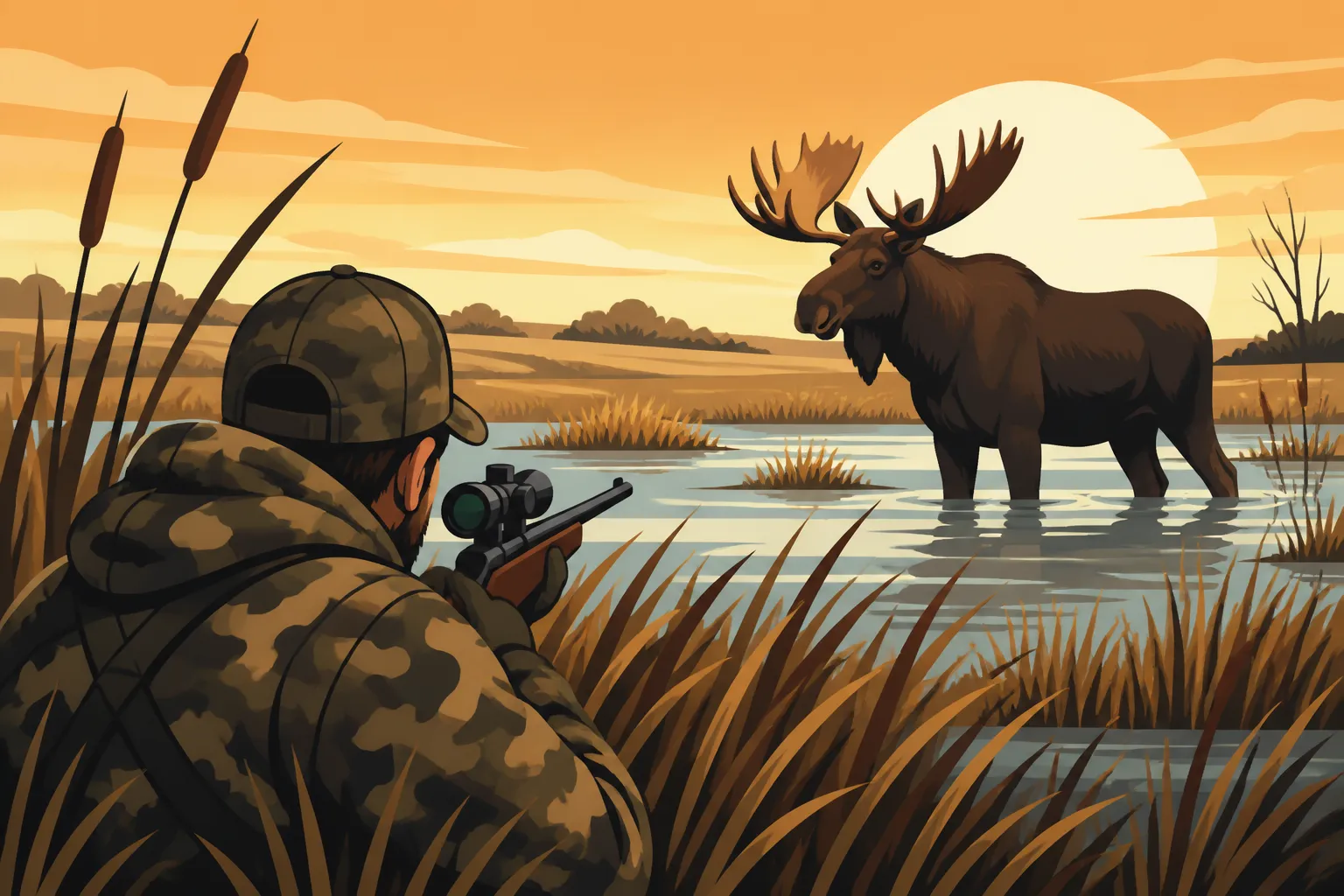
Hunting moose in Saskatchewan's vast farmlands can be incredibly rewarding, but it often presents a unique challenge: these massive animals aren't always tucked away in dense forests. Instead, they cleverly adapt to the more open agricultural landscape, frequently seeking refuge and sustenance around the many sloughs, willow rings, and bluffs that dot the fields. This guide will walk you through understanding these elusive farmland giants and mastering the art of hunting them effectively in and around Saskatchewan's slough country.
Understanding Farmland Moose Habits
When most people picture moose hunting, they imagine deep boreal forests, thick brush, and rugged terrain. But Saskatchewan, with its patchwork of forests and farms, offers a different experience, especially when it comes to moose that have adapted to agricultural areas. These animals behave differently than their bush-dwelling cousins, and understanding these nuances is critical for a successful hunt.
Why Moose Choose Farmland Sloughs
It might seem counterintuitive for a large browser like a moose to frequent open farmland, but there are very compelling reasons. Firstly, farmland often offers an abundant and diverse food source. While they'll still munch on willows and other browse in the slough bottoms, they also capitalize on spilled grain, alfalfa, and other agricultural crops, especially in the late season. This high-calorie diet can contribute to impressive body size and antler growth. Secondly, sloughs, even small ones, provide essential cover. These wet depressions, often ringed with dense willows, aspens, and even some spruce, offer excellent thermal cover, protection from the elements, and a place to bed down undisturbed. They also provide water, which is always a draw for any animal. Moose are particularly fond of the boggy margins and the dense vegetation within and around these wetlands, allowing them to feel secure even in relatively open country.
These areas, though seemingly isolated, act as crucial pockets of habitat. A single slough or a chain of sloughs connected by drainage ditches or willow runs can form a mini-ecosystem that supports a resident moose population. They provide sufficient seclusion from human activity, particularly when the surrounding fields are quiet after harvest or during the depths of winter. Recognizing these patterns and understanding that moose prioritize security and food is the first step in successful hunting.
Daily and Seasonal Movements of Farmland Moose
Farmland moose typically establish patterns of movement between bedding areas and feeding areas, much like deer, but on a larger scale. Their bedding sites are almost invariably within or very close to sloughs, dense willow thickets, or small bush bluffs, where they can escape the wind and feel hidden. From these havens, they will often venture out into adjacent crop fields, particularly at dawn and dusk, to feed. These movements can sometimes cover surprising distances, especially if preferred food sources are a little further away. During the rut, however, these patterns can become erratic and unpredictable as bulls actively search for cows.
Seasonal changes also dictate their movements. In the spring and summer, when crops are green and cover is abundant, they might be harder to pinpoint. As fall progresses and crops are harvested, leaving behind open stubble fields, the sloughs and willow pockets become even more critical as the only remaining significant cover. During the deep cold of winter, the thermal protection offered by dense willow and spruce within a slough becomes absolutely paramount. Understanding these shifts helps you predict where to focus your efforts throughout the various hunting seasons in Saskatchewan. If you're planning for a specific time, it's a good idea to check out topics like When Saskatchewan's Moose Rut Peaks to fine-tune your approach based on their seasonal behavior.
Scouting Farmland Moose Habitat
Successful hunting, especially for an animal like a moose that thrives on seclusion, hinges on thorough and intelligent scouting. In the Saskatchewan farmland, this means moving beyond the traditional notion of vast forests and focusing on specific, often smaller, habitat features. This is where modern tools and old-fashioned legwork truly shine.
Utilizing Satellite Imagery and Mapping Tools
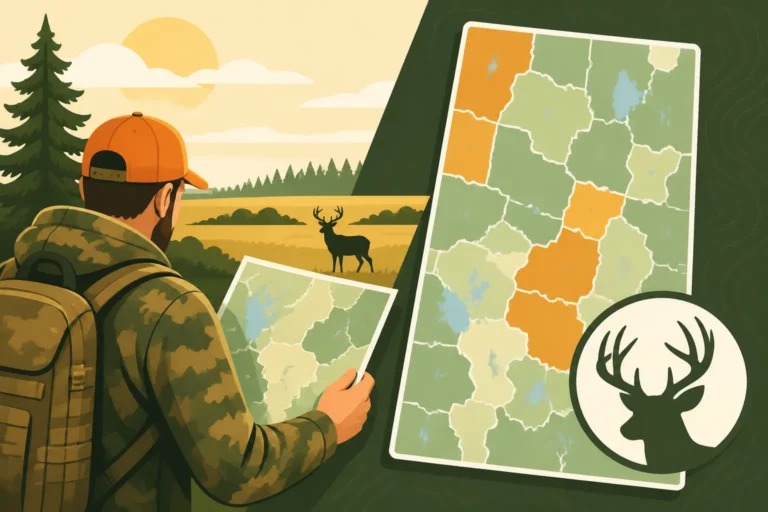
Before you even set foot in the field, satellite imagery and advanced mapping tools are your best friends. Platforms like GoHunt allow you to zoom in on potential hunting areas and identify sloughs, shelterbelts, bush pockets, and even fence lines that might funnel moose movement. Look for dense pockets of cover within or bordering open fields, paying close attention to the size and density of the vegetation around sloughs. Willow rings, cattail marshes, and even small stands of trembling aspen or spruce within a slough can be key indicators. You can often trace subtle drainage lines or old creek beds that connect multiple sloughs, forming natural travel corridors for moose.
Using these tools, you can pre-plan your approach routes, identify potential blind locations, and even anticipate escape routes for the animal. It’s also crucial to identify land ownership using the same mapping applications. Always remember that getting Knocking on Doors in Saskatchewan Farm Country for permission is a vital step, even if you’ve spotted what looks like prime habitat from a map. This initial digital reconnaissance saves countless hours of aimless wandering and helps focus your physical scouting efforts on the most promising areas.
Reading Sign Around Sloughs and Field Edges
Once you've identified promising areas on a map, it's time to hit the ground. When scouting around farmland sloughs, you're looking for classic moose sign. The most obvious, of course, are tracks. Moose tracks are unmistakable – large, blunt, and often deeply impressed, especially in soft, muddy ground around slough edges. Look for fresh tracks coming out of the slough into adjacent fields, indicating recent feeding activity. Droppings are another clear indicator, often found near bedding areas within the slough's cover or along trails leading to feeding grounds.
Beyond tracks and droppings, look for browse lines. Moose are browsers, meaning they strip leaves and twigs from woody plants. Willows, red osier dogwood, and aspen around sloughs will often show signs of heavy browsing, especially in winter. You might see rubbed trees or saplings, where a bull has raked his antlers, particularly during the rut. These rubs will be higher up than deer rubs. Well-used game trails leading into or out of the dense cover of a slough are also significant. These trails are often deeply worn, reflecting repeated use by heavy animals. Pay attention to how the moose are using specific features of the slough, like a narrow crossing point or a particular patch of dense cover, as this will inform your stand placement. For more scouting tips, understanding Reading Whitetail Sign in Saskatchewan Bluffs can also offer transferable skills.
| Slough Feature | What Moose Use It For | Sign to Look For | Ideal Hunting Strategy |
|---|---|---|---|
| Dense Willow Ring | Thermal cover, bedding, browsing | Heavy browse lines, deep tracks, droppings | Still-hunting the edges, elevated stand overlooking trails |
| Cattail Marsh | Seclusion, water source, some browse | Tracks at water's edge, broken cattails | Spot and stalk from a distance, or ambush points |
| Aspen/Spruce Pocket | Windbreak, bedding, visual cover | Rubs (bulls), bedding craters, debarked trees | Set up downwind of approach trails, calling |
| Muddy Edges/Seeps | Water, mineral licks | Fresh tracks, wallows | Ambush point near water at dawn/dusk |
| Connecting Drainage | Travel corridor between sloughs | Well-worn trails, fresh tracks | Stands overlooking pinch points or crossings |
Effective Hunting Strategies for Farmland Moose
Once you've done your homework and found promising slough country that holds moose, it's time to plan your hunt. Farmland moose hunting requires a blend of patience, stealth, and adapting traditional tactics to the unique landscape. The key is to capitalize on their need for cover and their feeding patterns.
Still-Hunting and Spot-and-Stalk
Given the fragmented nature of cover in farmland, still-hunting and spot-and-stalk can be incredibly effective. Still-hunting involves moving very slowly and deliberately through or along the edges of dense slough cover, pausing frequently to glass ahead and listen. You're trying to move silently enough to spot a moose before it spots you, often in its bedding area. This requires extreme caution, especially when the wind is swirling or conditions are noisy. Walk into the wind or with a crosswind, constantly scanning for movement, an antler tip, or the dark shape of a moose blending into the willows.
Spot-and-stalk, on the other hand, involves using elevated vantage points—like a slight rise, a grain bin, or even the roof of your vehicle (from a safe distance)—to glass distant sloughs and field edges at prime feeding times. This is where your GoHunt scouting pays off, knowing where to expect them. If you spot a moose feeding in a field or entering a slough, the stalk begins. This requires using terrain features, fence lines, or even standing crops (where permissible and safe) to remain concealed as you approach. Patience is key; a stalk might take hours, waiting for the animal to move behind a rise or into a dip, allowing you to close the distance undetected. This method can be particularly effective during archery season or Hunting Saskatchewan's September Archery Opener.
Ambush Hunting Near Travel Corridors
Moose, despite their size, are creatures of habit. They will often use the same trails to move between their secure bedding areas in sloughs and their feeding grounds in adjacent fields. Identifying these travel corridors and setting up an ambush point is a highly productive strategy. Look for pinch points—narrow strips of cover, a fence line crossing, or the neck of a slough—where moose are funneled into a predictable path.
Setting up a ground blind or a tree stand (if suitable trees are available and permitted) downwind of these trails, especially near where a slough meets a field edge, can be incredibly effective. Be there well before first light and stay until well after dark, as moose can move at any time, though dawn and dusk are prime. Consider using calls during the rut; a cow call or grunt can sometimes draw a curious bull out of cover, especially during Hunting the Rut in Early to Mid November. Remember that moose are big, so ensure you have clear shooting lanes and that your setup allows for a safe shot opportunity.
Calling Farmland Moose
Many hunters associate calling moose with deep wilderness, but it can be surprisingly effective in farmland environments, especially during the rut. The sounds of a lonely cow or a challenging bull can travel well across open fields, potentially drawing in an interested animal. A deep, drawn-out cow call, mimicking an estrus female, can be very enticing to a bull looking for a mate. As mentioned in Calling a Bull Moose in the Rut, timing and technique are crucial.
When calling in farmland, consider the acoustics of the landscape. Sounds carry far, so you don't necessarily need to be right on top of a moose to get its attention. Set up in a location where you have good visibility, preferably with dense cover at your back, and where the wind is in your favor. Combine calling with grunts or even raking a small tree to mimic a bull rubbing its antlers. Be patient, as a bull might take a long time to respond and approach cautiously. Sometimes, a silent approach after an initial call might be best, letting the moose wonder where the sound came from.
Gear and Safety for Farmland Moose Hunting
Hunting farmland moose in Saskatchewan isn't just about understanding the animal; it's also about being prepared for the environment. The weather can change in an instant, and being properly equipped for both the hunt and potential emergencies is paramount.
Essential Gear for the Hunt
Your gear needs to stand up to Saskatchewan's unpredictable weather and the demands of hunting a large animal. Warm, layered clothing is non-negotiable, especially during the colder late seasons. Think technical base layers, insulating mid-layers, and a waterproof, windproof outer shell. Good quality boots are critical – waterproof, insulated, and comfortable for long hours of walking through varying terrain, from muddy sloughs to stubble fields. A pair of chest waders might even be advisable if you anticipate crossing wet areas or retrieving game from a slough.
Optics are your best friend in open country. High-quality binoculars (10×42 or 12×50) are essential for spotting moose at long distances and for picking apart dense cover. A spotting scope can also be beneficial. Don't forget a reliable rangefinder; judging distance accurately in open fields can be tricky. A good backpack capable of carrying emergency supplies, extra layers, water, and food is a must. For firearms, a powerful, accurate rifle suitable for big game, like a .30-06, .300 Win Mag, or .338 Win Mag, is recommended, ensuring clean kills at potentially longer ranges. Always carry a first-aid kit, knife, headlamp, fire starter, and a communication device (satellite messenger or two-way radio if cell service is unreliable, which it often is in many rural parts).
Safety Precautions in Farmland
Hunting in farmland comes with its own set of safety considerations that differ from deep bush hunting. Landowner permission is paramount. Always obtain explicit permission before entering private land, and respect their property and rules. Ensure you understand Saskatchewan Landowner Permission Law to avoid any issues. Always know your hunting zone boundaries and where you are in relation to them using your GoHunt app or GPS.
Be acutely aware of other people and livestock. Farmland means houses, barns, and working farm equipment, so always identify your target and know what's beyond it before taking a shot. Avoid shooting near buildings or populated areas. Wear blaze orange as required by Saskatchewan regulations, making yourself visible to other hunters. For more on this, check Saskatchewan Blaze Orange Rules. Lastly, be prepared for severe weather. Saskatchewan winters can be brutal, and being caught unprepared can be dangerous. Carry emergency supplies in your vehicle, and let someone know your hunting plans, including your exact location and expected return time. Understanding Hunting Saskatchewan Winter Weather Safely is essential for any late-season hunt.
Managing Your Harvest
Successfully harvesting a moose in Saskatchewan's farmland is a fantastic achievement, but the work isn't over yet. Getting this massive animal from the field to your freezer requires proper planning and execution.
Field Dressing and Transporting a Moose
A moose is a truly large animal, and field dressing one can be a significant undertaking, especially alone. The goal is to cool the meat down as quickly as possible to prevent spoilage. This typically involves gutting the animal where it falls. If you can, quartering the moose in the field will make it much more manageable to move. Having a sharp, sturdy knife, a bone saw, and game bags is essential. Work quickly and cleanly. If the weather is warm, getting the hide off is critical for cooling.
Transporting a moose out of a slough or a muddy field can be the biggest challenge. A quad or side-by-side is incredibly useful here, but always ensure you're aware of Quad and Side-by-Side Rules on Crown Land and private land restrictions. If you're on foot, breaking the animal down into quarters is often the only realistic option. Consider bringing a heavy-duty sled or game cart. Plan your extraction route beforehand, especially if you're deep in a slough system. Remember to properly tag your animal immediately after harvest, as per Saskatchewan regulations. This will include validating your tag.
Meat Care and Processing
Once you've field-dressed and transported your moose, proper meat care is vital to ensure you enjoy every bit of it. In colder weather, hanging the quarters to air cool can work well, provided temperatures remain consistently low. In milder conditions, getting the meat into a cooler with ice (ensuring the ice doesn't directly contact the meat) or to a local butcher as quickly as possible is crucial. Many rural areas in Saskatchewan have excellent butcher shops that specialize in wild game.
Beyond the meat, don't forget the antlers and cape if you plan to have a trophy mounted. Protect these from dirt and damage during transport and get them to a taxidermist promptly. Always be aware of CWD Testing on an Outfitted Saskatchewan Hunt rules and mandatory testing zones. Even if you're not on an outfitted hunt, familiarizing yourself with Saskatchewan's CWD Testing Rules is important for any moose hunter in the province.
Disclaimer
Hunting is a challenging and rewarding activity that carries inherent risks. Always prioritize safety, respect wildlife, and adhere to all local, provincial, and federal hunting regulations. The information provided in this guide is for informational purposes only and should not replace official hunting regulations or professional guidance. It is the hunter's responsibility to be fully informed and prepared.