Stalking Pronghorn Across Open Ground
There’s nothing quite like the sight of a beautiful Saskatchewan pronghorn buck, standing proud against the prairie horizon. But if you've ever tried to hunt them, you know the immense frustration of their legendary eyesight and the wide-open spaces they call home. It often feels like they see you long before you even consider drawing a bead. This guide is all about equipping you with the strategies and mindset you need to successfully stalk these incredible animals across Saskatchewan's vast, unforgiving, yet breathtaking open ground.
Understanding Pronghorn Behavior and Senses
Before you even think about crawling on your belly across a stubble field, you need to deeply understand the animal you're pursuing. Pronghorn are not deer; they are in a league of their own, designed for survival on the open prairie. Their entire existence revolves around detecting danger at extreme distances and evading it with blistering speed. Ignoring these fundamental characteristics is a surefire way to go home empty-handed.
The Pronghorn's Superpower: Eyesight
The single most dominant factor in pronghorn hunting is their vision. It's often said they have eyesight equivalent to an 8x binocular, and honestly, after years of chasing them, I believe it. Their large eyes are set far back on their head, providing a wide field of view, and they have an incredible ability to detect movement, even slight twitches, from truly astonishing distances. They also possess superior peripheral vision, meaning they can often see what's happening to their sides without even turning their head. This means your approach must be meticulously planned to avoid being silhouetted or moving too quickly in their line of sight. Wind direction is key, but so is understanding their vantage points. Often, a buck will bed on a slight rise, giving it a commanding view of its surroundings, a natural defense against predators like coyotes and, of course, hunters.
Keen Hearing and Smell
While their eyesight is paramount, don't discount a pronghorn's hearing and sense of smell. They might not be as finely tuned as a whitetail's nose or a mule deer's ears in thick cover, but on the open prairie, where sounds carry and thermals can swirl, these senses still play a crucial role. A sudden gust of wind carrying your scent can send a herd scattering just as quickly as a visible mistake. Similarly, crunching through dry grass or rattling a tripod leg can alert them, especially if they are relaxed and feeding. Always consider the wind, and move as quietly as possible, even when you think you're well out of their sight. Remember, a slight shift in wind can betray you in an instant, making it imperative to factor scent control into your strategy, just as you would for other big game species.
Daily Routines and Preferred Habitat
Pronghorn in Saskatchewan's southwest grassland country have fairly predictable routines. They are creatures of habit, often following the same paths to water, food, and bedding areas. You'll typically find them feeding in the early mornings and late afternoons, grazing on grasses, forbs, and sometimes even browsing on sagebrush. Midday, especially during warmer weather, they'll often be bedded down in a slight depression or against a low rise, facing into the wind to better catch scents and observe their surroundings.
Their preferred habitat includes vast expanses of short-grass prairie and agricultural edges, particularly in areas like the Great Sand Hills or along the Missouri Coteau. These areas provide the wide-open visibility they crave. Understanding these patterns is critical for a successful stalk. If you can locate a herd feeding or watering, you can often predict their next move, giving you an advantage in planning your approach. Pay close attention to how Pronghorn on Saskatchewan's Southwest Grassland utilize the subtle terrain features. Knowing their preferred bedding spots can help you plan an approach when they are less mobile, but also when they are most alert.
Essential Gear for Stalking Pronghorn
Stalking pronghorn is a gear-intensive endeavor, not because you need a ton of stuff, but because the right gear makes an impossible task possible. Skimping here is like trying to drive a nail with a screwdriver – it just won't work well. Precision and patience are the hallmarks of a good pronghorn hunter, and your gear needs to reflect that.
Optics are King
If there's one area where you absolutely cannot compromise, it's optics. A high-quality pair of 10x or 12x binoculars is non-negotiable for spotting animals from a distance and evaluating their size. But for serious pronghorn hunting, a good spotting scope (20-60x or higher) on a sturdy tripod is even more critical. This allows you to stay far back, observe the animals for extended periods, and pick apart the terrain for potential stalking routes without spooking them. You can judge a buck, monitor its behavior, and watch how it interacts with the herd. A brand like Maven or Vortex offers excellent performance and durability, which are crucial for the rugged prairie environment. Use your optics constantly to scan, not just for pronghorn, but for any subtle changes in topography that could offer cover. GoHunt often features articles on selecting the best long-range optics for Western hunting, and their advice applies perfectly to Saskatchewan's open country.
Camouflage and Footwear
Forget the heavy insulated gear you might wear for Rifle Hunting Saskatchewan's Whitetail Rut. Pronghorn season, typically in September and October, often means warm, dry weather on the prairie. Light, breathable, and quiet camouflage is key. Patterns that blend with the dry, muted tones of prairie grass, stubble fields, and exposed earth are ideal. Think arid patterns or subtle greens and browns. More importantly, your clothing needs to be quiet. Even the slightest swish of fabric can carry far on a still prairie morning.
Footwear is equally important. You'll be walking, kneeling, and crawling for miles, often over rough ground, stubble, and cacti. Choose lightweight, comfortable, and durable boots with good ankle support. Silence is crucial, so opt for boots with soft soles that won't crunch loudly on dry grass or gravel. If you're going to be army crawling for significant distances, knee pads are an absolute lifesaver.
Rangefinders and Ballistics
Pronghorn hunting often involves longer shots than other species due to the lack of cover. A reliable laser rangefinder is absolutely essential. Practice with it extensively so you can get a quick, accurate reading under pressure. Knowing your exact distance to the animal is only half the battle; you also need to know your rifle's ballistics inside and out. Dialing for distance or holding over requires confidence and practice. Many successful pronghorn hunters use a ballistic app like one from GoHunt, paired with their rangefinder, to get precise dope for their specific rifle and ammunition combination. This takes the guesswork out of those critical long-range shots.
Mastering the Stalk: Techniques for Open Prairie
This is where the rubber meets the road. Successful pronghorn stalking isn't about speed or brute force; it's about meticulous planning, immense patience, and an almost intuitive understanding of the landscape. It’s an exercise in humility, as you’ll likely fail more often than you succeed. But when it all comes together, it’s one of the most rewarding hunts out there.
Reading the Landscape
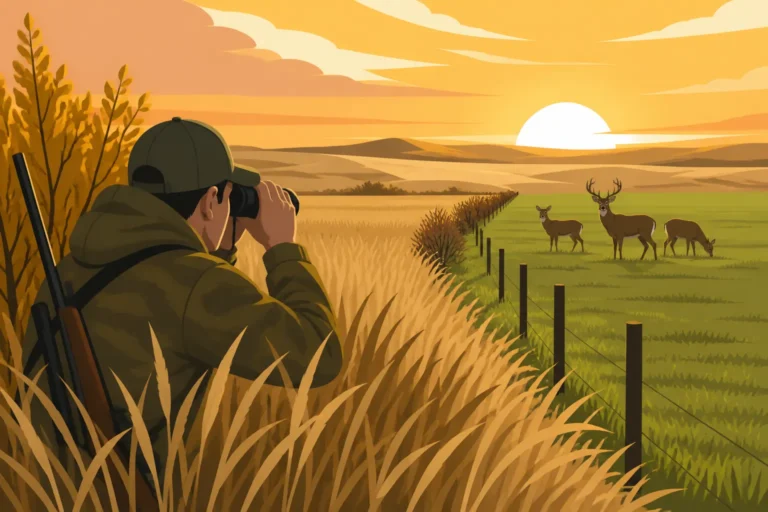
The Saskatchewan prairie, while seemingly flat, is actually full of subtle undulations, coulees, and depressions that can offer crucial cover. You need to train your eyes to see these features as stalking lanes and hiding spots. Before you even start moving, spend a long time glassing the area with your spotting scope. Identify where the pronghorn are, where they might move, and, most importantly, identify every potential bit of cover between you and them.
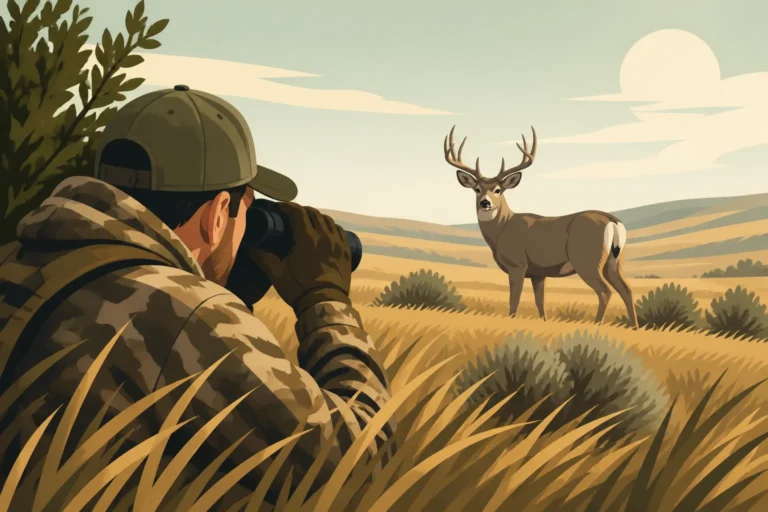
Look for a slight rise you can belly over, a dried-up creek bed, a fence line, or even just a change in vegetation height. Sometimes, the only cover available might be the opposite side of a barely perceptible swell in the ground. The key is to stay out of sight, always. If you can see the pronghorn, they can often see you. This mental game of using the terrain to break up your silhouette and hide your approach is the essence of Stalking Mule Deer in Open Prairie, and it applies doubly to pronghorn. Utilize features like a Hunting a Prairie Coulee Bottom or even a Hunting a Native Grassland Pasture to conceal your approach.
Wind Direction is Non-Negotiable
This sounds obvious, but many hunters rush a stalk and forget this fundamental rule. Pronghorn have a decent sense of smell, and on the open prairie, swirling winds are common. Always approach with the wind in your face or quartering into it. Never, ever, allow your scent cone to drift towards the animals. If the wind changes mid-stalk, you might have to backtrack and start over, or simply abandon the stalk. It’s frustrating, but it’s better than blowing the whole setup. Carry a wind checker (a small bottle of powder or a handheld anemometer) and use it frequently. The nuances of wind movement over open ground are different from in a dense forest, so observe how local thermals behave, especially in the mornings and evenings.
The Art of Slow and Low
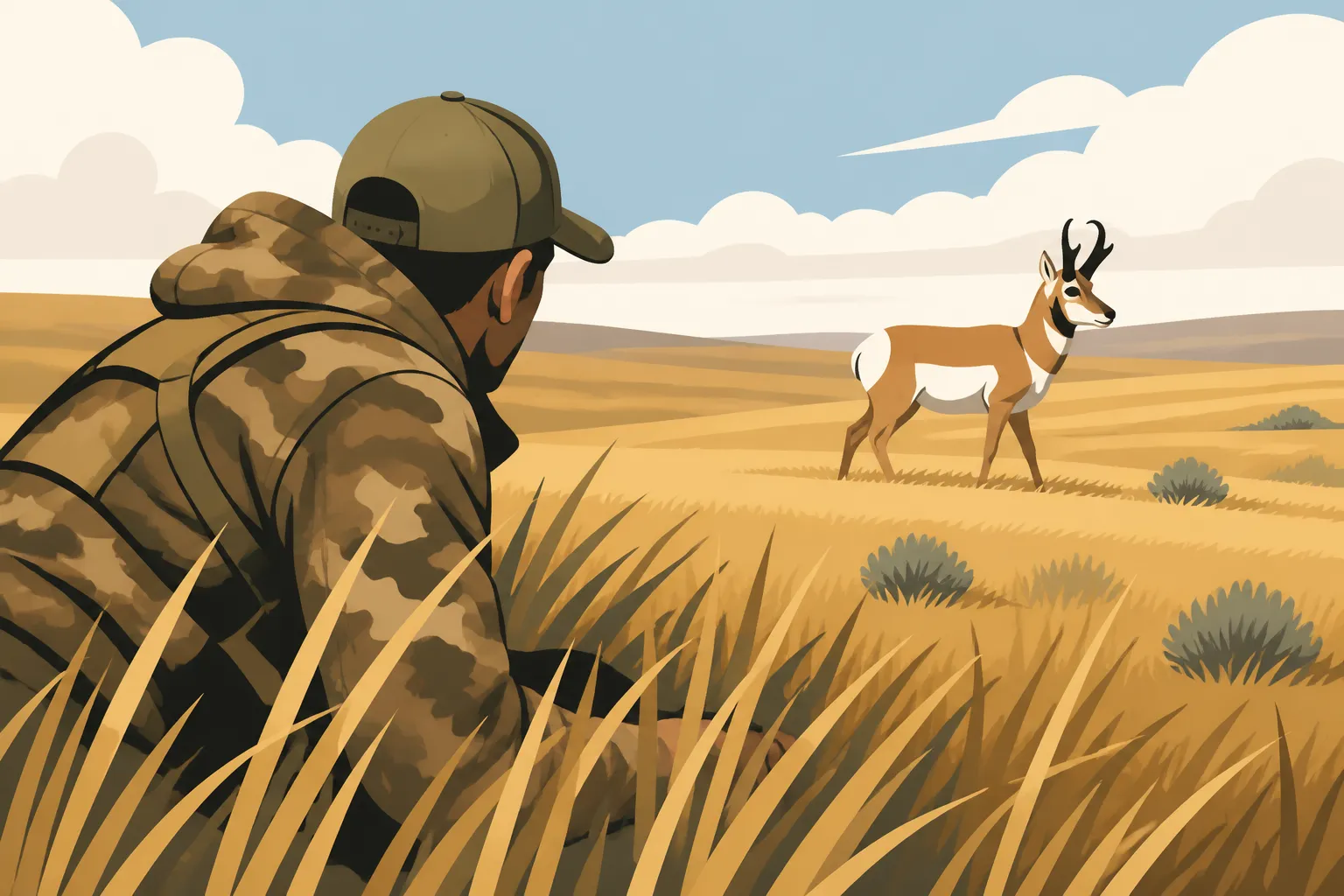
This is where your patience will be tested. Once you've identified your stalking route, commit to moving slowly. Every step must be deliberate. If you have to crawl, do it. Often, this means an army crawl, keeping your body as low to the ground as possible. This is why those knee pads are so important! You might spend an hour covering a few hundred yards. Take frequent pauses to glass the animals again, re-evaluate their position, and check your wind.
When you do move, try to do so when the pronghorn's heads are down feeding, or when they are looking away. They have incredible vision, but they can't look in all directions at once. When their heads snap up, freeze. Be prepared to hold still for minutes, sometimes longer, until they relax again. Remember, the goal is to get within comfortable shooting range, ideally 300-400 yards for most rifle hunters, though some may push it further. For archers, this means getting significantly closer, often under 80 yards, which is an even more extreme challenge.
Anticipating Pronghorn Movement
Pronghorn are often on the move, even when feeding. They might drift across a field, towards a waterhole, or to new grazing. Try to predict their next move. If they’re feeding uphill towards a saddle, can you intercept them there? If they’re heading towards a Hunting Pronghorn Near a Prairie Water Hole, can you get ahead of them?
Sometimes, a successful stalk isn't about getting closer to where they are, but getting to where they will be. This requires a good understanding of their routines and excellent map-reading skills, perhaps using an app like GoHunt to mark potential travel corridors and water sources. Sometimes you might need to make a huge circle, perhaps even using a vehicle on distant roads if legal and feasible, to get far ahead and then approach from a new, more advantageous direction. This "looping" strategy can be physically demanding but often pays off when direct approaches are impossible.
Common Stalking Challenges and Solutions
No pronghorn hunt is without its challenges. The prairie environment, combined with the animals' natural defenses, means you'll face unique hurdles. Being prepared for these can turn a potential failure into a hard-earned success.
Heat and Hydration
Saskatchewan's early fall can still bring significant heat, especially on the open prairie with little shade. You’ll be doing a lot of walking and crawling, so proper hydration is crucial. Carry more water than you think you’ll need. Electrolyte packets can also be a game-changer. Sunscreen, a wide-brimmed hat, and sunglasses are non-negotiable for protection against the relentless sun. Dehydration and sunstroke aren't just uncomfortable; they impair your judgment and can put you in a dangerous situation. Your focus and stamina will diminish rapidly without proper hydration, making a successful stalk nearly impossible.
The "Ghost" Pronghorn
It happens all the time: you spot a buck, commit to a stalk, crawl for an hour, only to pop up and find it's gone. Pronghorn seem to disappear into thin air. This can be incredibly demoralizing. The best defense is persistent glassing. Use your optics to frequently check on the animals, even mid-stalk. If you lose sight of them, don't panic. Get back on your scope and methodically grid-search the area where you last saw them and the surrounding terrain. They might have just shifted a short distance, bedded down, or moved over a rise. Being familiar with How Pronghorn Survive a Prairie Winter or other seasonal movements can help predict where they might have gone. Sometimes, they just stand up and walk to the next quarter section, leaving you with nothing but dust. This is where patience truly comes into play.
Avoiding Busting the Herd
Busting a herd is when you make a mistake, they spot you, and they bolt. It's frustrating, but it's part of the game. If you bust a herd, don't chase them immediately. They can easily outrun you. Instead, observe their direction of travel with your optics. They usually don't run endlessly; they'll often stop a mile or two away to look back and assess the threat.
Sometimes, if you're lucky, they might run over a rise and out of sight, giving you a chance to circle wide and try a new approach. Other times, they’re gone for good. The key is to learn from the mistake. What did you do wrong? Was it the wind? Did you move too fast? Were you silhouetted? Analyzing your errors will make you a better hunter for next time. It's a humbling experience, but it’s how you truly learn the intricacies of Why Fences Are Hard on Pronghorn or any other subtle factor affecting their movement.
Table: Pronghorn Stalking Considerations
| Factor | Description | Key Action |
|---|---|---|
| Eyesight | Incredible long-distance vision, detects minute movement. | Stay low, move slow, use terrain for concealment, avoid silhouetting. |
| Wind | Moderate sense of smell, crucial on open prairie. | Always approach into the wind; use a wind checker frequently. |
| Cover | Sparse, subtle terrain features are paramount. | Meticulously glass for every dip, rise, or vegetation change. |
| Speed | Extremely fast runners, difficult to catch. | Anticipate movement, position yourself for an intercept, avoid chasing. |
| Patience | Stalks are often long, slow, and challenging. | Be prepared for hours of crawling and waiting; don't rush. |
| Gear | High-quality optics, quiet camo, durable boots, rangefinder. | Invest in top-tier gear, especially optics, to gain an advantage. |
| Hydration | Open prairie sun and exertion can lead to dehydration. | Carry ample water and electrolytes, wear sun protection. |
Remember, mastering the stalk on these incredible creatures is a journey, not a destination. Each hunt offers new lessons, and with persistent effort and a deep respect for the animals, you'll eventually find success. Don't be discouraged by failed stalks; they are simply part of the learning curve for a true Saskatchewan pronghorn hunter.
Disclaimer
Hunting involves inherent risks, and it is the responsibility of each individual to understand and comply with all federal, provincial, and local hunting regulations. Always prioritize safety, ethical hunting practices, and respect for wildlife and private property. This guide is for informational purposes only and should not replace proper hunter education or professional guidance. Ensure you have the necessary Saskatchewan Hunter Education Requirements and all valid licences before heading afield.