Calling Coyotes at First Light
There’s a certain magic to the pre-dawn stillness of a Saskatchewan morning, that quiet anticipation as the world slowly wakes up. For coyote hunters, this isn't just a picturesque moment; it's a critical window of opportunity. Many hunters struggle to consistently bring in wary coyotes, often calling at the wrong times or with ineffective strategies. This guide is dedicated to unlocking the secrets of calling coyotes successfully at first light, transforming those frustrating no-shows into memorable encounters in the crisp, early hours.
Why First Light is Prime Time for Saskatchewan Coyotes
Coyotes, those wily prairie wolves of the open fields and bush fringes, are creatures of habit, but also opportunists. Understanding their daily patterns, especially as the sun begins its ascent, is the first step to consistently bringing them into range. First light isn't just a good time to hunt; it’s often the best time, especially in Saskatchewan's diverse landscapes, from the sprawling southern prairies to the aspen parkland fringes.
The Nocturnal to Diurnal Transition
Think about a coyote's life cycle. They've spent the night actively hunting small rodents, perhaps chasing deer or patrolling their territory under the cloak of darkness. As the first hint of grey appears on the eastern horizon, their activity doesn't simply cease. Instead, it transitions. This crepuscular period – dawn and dusk – is when many animals, including coyotes, are most active. They're moving from their nocturnal hunting grounds back to their bedding areas, or perhaps making one last pass for an easy meal before settling down for the day. This movement makes them more visible and, crucially, more receptive to calls.
During these hours, the world is still quiet, the air is often still and crisp, and visibility is low, offering both hunter and coyote a degree of concealment. A coyote that might ignore a call later in the day, when the landscape is bustling with human activity and the sun is high, is often far more curious or aggressive in the low light. They might be looking for a lost pack member, defending territory against an intruder, or simply hoping to capitalize on a distressed animal before the full light of day exposes them. It's a prime window to catch them off guard, still in their hunting mindset but perhaps a bit less cautious than they'd be later on. This is where having a good understanding of their patterns, possibly gleaned from scouting notes or even insights from a hunting app like GoHunt, can really pay off in predicting their movements.
Increased Confidence and Reduced Pressure
The low light of dawn offers a significant psychological advantage for coyotes. They are naturally wary animals, having survived countless generations by avoiding detection. In the pre-dawn and early morning hours, the world feels safer to them. The long shadows, the muted colours, and the general lack of human activity mean they move with greater confidence. They're less likely to detect your subtle movements, your scent, or the glint of your rifle scope. This reduced perceived threat makes them more willing to investigate a sound that suggests either an easy meal or a territorial challenge.
Furthermore, competition from other predators, including humans, is often lower during this specific timeframe. Most casual hunters are just getting out of bed, grabbing coffee, or making their way to their spots. The serious coyote callers who are set up and ready to go before first light are tapping into a resource that is less pressured. This means the coyotes haven't yet been educated by other calls or encounters, giving you a cleaner slate. In a heavily hunted area, this early window might be your only real chance to fool a seasoned Saskatchewan coyote. Understanding Saskatchewan Shooting Hours for Big Game also gives insight into legal shooting light, which directly applies to coyotes as well, ensuring you're only targeting them when it's safe and legal.
Mastering Your Calling Sequence for Saskatchewan Coyotes
Calling coyotes is as much an art as it is a science. It's about telling a story with sound, mimicking the drama that unfolds in the wild. At first light, your sequence needs to be carefully chosen and executed to capitalize on the coyotes' early morning mindset.
The Power of the Howl and Locator Calls
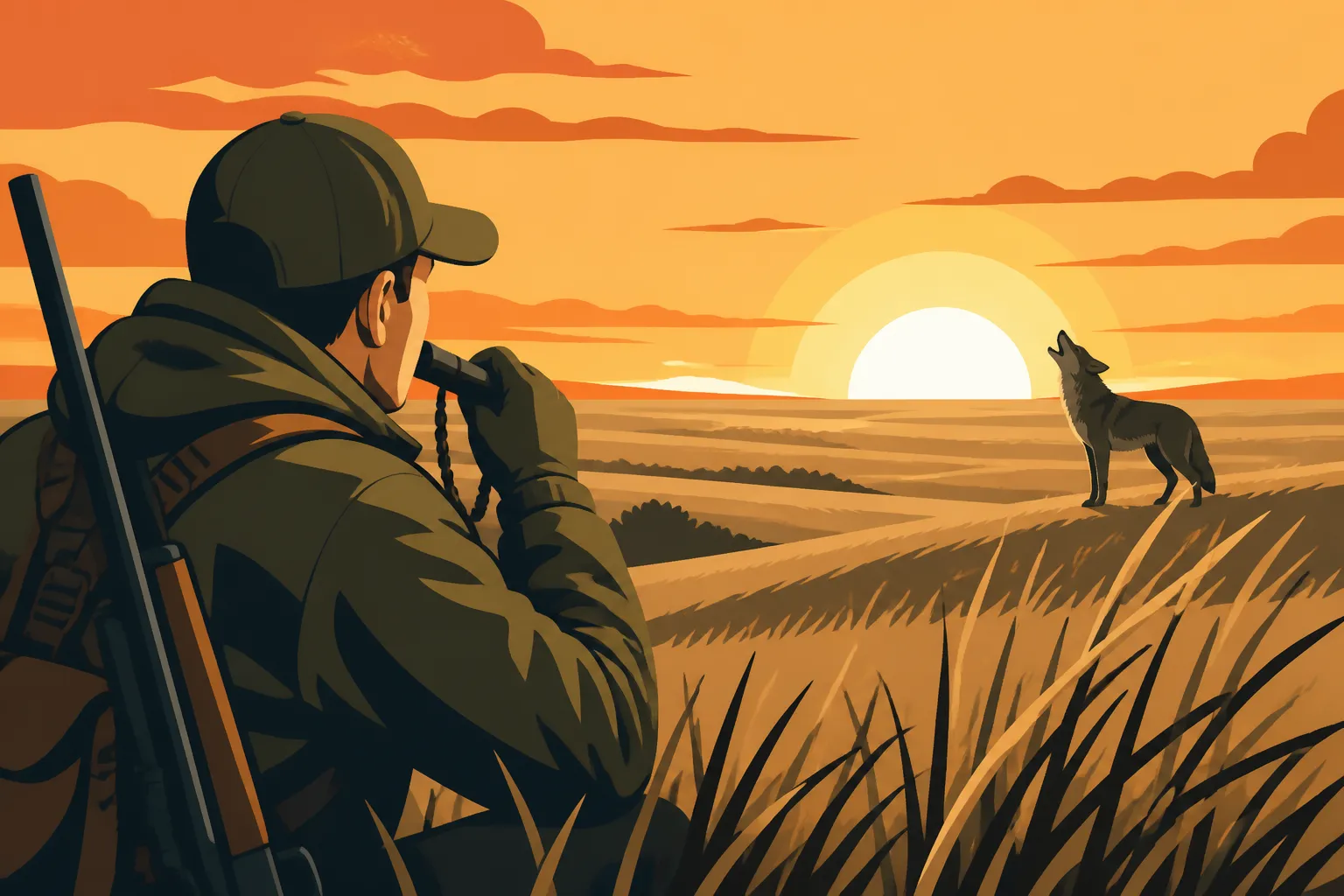
Starting your first light stand with a series of howls can be incredibly effective. Howls serve multiple purposes: they can locate coyotes, establish your presence as a potential competitor or lost pack member, and often elicit a response from nearby animals, letting you know exactly where they are. In the still, crisp morning air of Saskatchewan, a well-executed howl can travel for miles, cutting through the silence and stirring curiosity or aggression.
I often start with a lone howl, deep and mournful, letting it echo across the fields or through the bush. Then, after a minute or two of silence, I might follow up with a series of shorter "challenge" howls, as if a rival coyote has just entered the territory. Sometimes, you'll hear an immediate response—a chorus of howls, barks, or yips from a distant pack. Other times, silence is your answer, but don't be fooled; a silent approach is a common coyote tactic. This initial calling phase is purely for locating and intriguing. Pay close attention to the wind, as even a slight breeze can carry their scent directly to you if they circle downwind. Always consider the terrain, too; a deep prairie coulee or a dense willow run might hold coyotes that are harder to pinpoint, making your locator calls even more crucial.
Distress Calls: When and How to Deploy Them
Once you've located a coyote or two, or if you're hunting a blind stand in a known coyote hotspot, it's time to switch to distress calls. These are the bread and butter of coyote calling, triggering their innate predatory response. For first light, I lean heavily on pup distress and various rabbit distress calls, as these mimic common prey animals that are active in the early morning hours.
A pup distress call, especially when combined with a subtle female howl, can be incredibly potent. It taps into a coyote's territorial instincts and protective nature. They might think a rival has attacked their young, or that a lost pup is an easy meal. I'll usually start with a few short bursts of pup distress, followed by a period of silence (usually 1-3 minutes), then repeat. As the light begins to improve, transitioning to a more urgent rabbit distress can often seal the deal. Imagine a cottontail or jackrabbit caught off guard as dawn breaks, its frantic cries echoing across a stubble field. That sound tells a coyote "easy meal" loud and clear. Remember, variety is key. Don't be afraid to experiment with different rabbit sounds – there are many available on electronic callers like those from Foxpro, or through various mouth calls. Keep your sequences relatively short, 30-60 seconds of calling followed by longer periods of silence (3-5 minutes) to allow coyotes to approach undetected.
The Role of Electronic Callers vs. Mouth Calls
Both electronic callers and traditional mouth calls have their place, especially at first light. Electronic callers, such as those from Foxpro, offer a vast library of sounds, from individual howls and barks to a wide array of distress calls and even "coyote vocals" that replicate entire conversations. Their ability to project sound at various volumes and from a distance (using a remote) can be a game-changer when trying to reach coyotes scattered across vast Saskatchewan landscapes. You can place the caller upwind of your position, drawing the coyote's attention away from your hiding spot. However, they require batteries, and extreme cold can affect performance, so always carry spares if you're out Hunting Whitetails at Thirty Below.
Mouth calls, on the other hand, offer unparalleled realism and nuance. A skilled caller can mimic the subtle inflections of a real animal, which can be critical for convincing a wary coyote. They're also less prone to battery issues and are completely silent to carry. Many hunters swear by a combination: an electronic caller for initial locator howls and broad distress sounds, and a mouth call for precise, close-range finishing calls or when a coyote hangs up just out of range. Whichever you choose, practice is paramount. You want your calls to sound natural, not like a broken recorder. Using a platform like GoHunt to mark your calling locations from previous successful hunts can help you replicate successful strategies for future first-light endeavors.
Optimal Setups and Tactics for Early Morning Coyote Hunts
Calling coyotes at first light isn't just about making the right sounds; it's about positioning yourself for success before the show even begins. The way you approach your spot, set up, and manage the elements can make all the difference between a successful hunt and a cold, silent wait.
Playing the Wind and Sun
In coyote hunting, the wind is your absolute master. No matter how good your calls are, a coyote will almost always try to circle downwind to scent check the sound source. This is their primary defense mechanism, and at first light, when they're moving with less caution, they're still going to employ it. Your setup must account for this. Always approach and set up with the wind in your face or quartering. This allows your scent to blow behind you, away from the direction you expect coyotes to approach.
The sun, as it rises, also plays a crucial role. If you can, position yourself so the rising sun is either at your back or to your side, ideally not shining directly into your eyes. More importantly, try to have the sun in the coyote's face as they approach. This can make it harder for them to pick you out of the shadows, especially with the glare, giving you an extra edge in concealment. In Saskatchewan, where open fields can mean long shots, even a slight visual disadvantage for the coyote is a huge advantage for you. On a clear morning, you might notice them squinting or pausing more frequently if they're looking into the light. This is where scouting with tools like GoHunt can help you visualize the sunrise angles and terrain before you even leave your truck.
Utilizing Cover and Terrain Features
Saskatchewan offers incredible diversity in its hunting landscapes, and each terrain type presents unique opportunities for concealment and ambush. Whether you're in the rolling prairie, the aspen parkland, or the forest fringe, maximizing your use of natural cover is non-negotiable for first-light coyote calling. In the wide-open prairie, a slight rise, a stand of tall stubble, or even a small prairie coulee bottom can provide enough concealment. When Hunting Mule Deer in Prairie Coulees, hunters learn the art of using these natural depressions, and the same principles apply to coyotes. The key is to break up your silhouette. Don't stand on a skyline; always be below it or against a natural backdrop.
In the aspen parkland, shelterbelts, bluffs, and willow rings around sloughs are prime areas. A shelterbelt between two fields offers an excellent ambush point. You can set up inside the tree line, calling into the open fields, knowing that coyotes will likely try to approach along the tree line or cut across the field. Bluffs, like those you might find while Hunting a Saskatchewan Bush Bluff, provide elevation and often denser cover, giving you a commanding view while remaining hidden. Always consider the coyote's approach; they will use the same cover and terrain features to sneak in, so identify their likely travel corridors and set up accordingly. This might mean having a partner positioned to cover a different angle, especially if you anticipate a wide circle.
The Silent Approach and Entry
The hunt for first-light coyotes begins long before you make your first call. Your approach to your chosen setup spot must be as silent and stealthy as possible. Coyotes have exceptional hearing, and even the crunch of frost-covered grass or the clatter of gear can alert them long before you're in position. Plan your entry route in the dark. Use a headlamp with a red or green filter to preserve your night vision and minimize your visible light signature.
Walk slowly, picking your footing carefully. Avoid any unnecessary noise. If you're walking across a stubble field, try to stick to the paths of previous vehicle tracks where the ground might be harder and less noisy. If you've used a mapping app like GoHunt to mark your chosen setup spot, you can use its navigation features to guide you directly to your ambush point, even in pitch black conditions, minimizing wandering and noise. Get into position at least 30-45 minutes before legal shooting light begins. This allows you ample time to settle in, get comfortable, adjust your gear, and let the landscape return to its natural quiet state after your presence. Any coyotes in the vicinity that might have been spooked by your approach will have a chance to settle back down.
Gear Essentials for First Light Coyote Calling
Hunting coyotes at first light in Saskatchewan demands specific gear to ensure comfort, stealth, and success. The conditions can be unforgiving, from bitter cold to the deceptive calm of a pre-dawn stillness. Having the right tools makes a huge difference.
Layered Clothing and Cold Weather Gear
Saskatchewan mornings, especially during the prime coyote hunting months of fall and winter, can be brutally cold. Sitting still for extended periods while calling requires serious insulation. The key is layering. Start with a moisture-wicking base layer to manage sweat, followed by insulating mid-layers like fleece or wool, and topped with a windproof and water-resistant outer shell. Make sure your camouflage pattern blends with the dormant fields or snowy landscapes you'll be hunting.
Don't forget the extremities. A warm hat that covers your ears is essential, as are insulated gloves or mittens. Many coyote hunters use thin liner gloves for dexterity with their calls and rifle, then slip larger, warmer mittens over top during periods of waiting. Chemical hand warmers and foot warmers are also highly recommended to combat the chill. Nothing cuts a hunt short faster than numb fingers or toes. If you're planning on Hunting Saskatchewan Winter Weather Safely, robust cold-weather gear is non-negotiable. Remember, even if the thermometer isn't plummeting, the dampness of morning dew or frost can make it feel much colder.
Optics for Low Light Conditions
With first light being the focus, quality optics that perform well in low light are paramount. Your rifle scope should have a large objective lens (e.g., 50mm or 56mm) and good quality glass to gather as much available light as possible. Variable power scopes (e.g., 3-9x, 4-12x) are versatile, allowing you to scan on lower power and dial up for precise shots. Ensure your scope is sighted in properly and you're familiar with its reticle, especially if it has any illumination or holdover points.
Binoculars are equally important. A good pair of 8×42 or 10×42 binoculars with excellent low-light performance will help you scan distant treelines, field edges, and coulees for subtle movements without having to constantly raise your rifle. Many coyotes will appear as mere specks in the distance, and the ability to confirm their identity and assess their direction of travel with binoculars can prevent missed opportunities or unnecessary movement. Consider bringing a rangefinder, too, as judging distances in low light and open terrain can be tricky. Accurate range finding will ensure you make ethical shots.
Calls, Decoys, and Other Accessories
Beyond your rifle and optics, your calling setup will be critical. If using an electronic caller, ensure it's fully charged and you have extra batteries. Familiarize yourself with its remote control in the dark, so you're not fumbling with it when a coyote appears. Mouth calls should be kept warm to prevent freezing, which can affect their sound. Some hunters carry a small hand warmer pouch specifically for their calls.
Motion decoys, such as a feathered top on a stick, can add a visual element that draws a coyote's eye, especially if they hang up at a distance. The subtle movement can distract them from your position and make your distress calls seem more realistic. Lastly, consider a small, comfortable ground pad or seat cushion. Sitting directly on cold, hard ground for prolonged periods can be uncomfortable and make it harder to remain still. A good game vest or backpack to carry your gear, keeping it organized and accessible, is also a must. And always, always bring plenty of water, even in the cold; staying hydrated is key to staying alert.
| Calling Sequence Component | Purpose | Suggested Duration | Key Considerations |
|---|---|---|---|
| Locator Howl | Identify coyote presence, stir curiosity. | 30-60 seconds, then 1-2 min silence | Use deep, mournful tones initially. Listen carefully for responses. |
| Challenge Howl/Bark | Elicit territorial response, challenge nearby coyotes. | 20-30 seconds, then 1-2 min silence | More aggressive, shorter bursts. Watch for immediate approaches. |
| Pup Distress | Mimic vulnerable young, trigger protective/predatory instinct. | 30-60 seconds, then 2-4 min silence | Combine with subtle female howls for added realism. |
| Rabbit Distress (Faint) | Soft, initial cries to pique distant interest. | 30-45 seconds, then 3-5 min silence | Mimic a struggling, but not yet frantic, small animal. |
| Rabbit Distress (Urgent) | Simulate a caught animal, trigger aggressive closer approach. | 45-75 seconds, then 2-3 min silence | Increase volume and urgency as coyotes approach. |
| Vole/Mouse Squeak | Final close-range lure, if coyote is hanging up. | Short bursts (5-10 sec), then wait | Very subtle, for within 50-75 yards. |
Disclaimer
Hunting involves inherent risks. Always prioritize safety, adhere to all local and provincial hunting regulations in Saskatchewan, and obtain proper licensing. This guide provides general information and recommendations, but individual hunting situations can vary. Always confirm current regulations with official sources.