Ptarmigan Hunting in the Far North
For many hunters in Saskatchewan, the allure of big game or the roar of a waterfowl spread dominates their season, often leaving the unique challenge and profound solitude of ptarmigan hunting in the far north overlooked. It's a different kind of hunt altogether—one that demands specific knowledge, meticulous preparation, and a willingness to venture into truly remote and unforgiving landscapes, often feeling inaccessible to the average hunter. This comprehensive guide will delve deep into the world of ptarmigan hunting in Saskatchewan's northern reaches, covering the fascinating species, their unique habitats, effective hunting methods, and essential gear, equipping you for a truly remote and unforgettable adventure far beyond the grid roads.
Understanding Saskatchewan's Ptarmigan Species and Their Habitat
When you think of upland birds, perhaps sharp-tailed grouse or Hungarian partridge come to mind, but Saskatchewan also offers a fantastic opportunity for ptarmigan in its far northern reaches. These hardy birds are a testament to the rugged beauty and incredible wildlife diversity of our province's most remote regions. It's a different kind of bird hunting, one where the vastness of the landscape truly humbles you.
Willow Ptarmigan vs. Rock Ptarmigan: Identification and Range
Saskatchewan is home to both Willow Ptarmigan (Lagopus lagopus) and Rock Ptarmigan (Lagopus muta), though the Willow Ptarmigan is far more common and widely distributed across the northern boreal forest and tundra regions. Differentiating them can be a fun challenge, especially during their various plumage changes throughout the year.
- Willow Ptarmigan: These are the slightly larger of the two, and in summer, they boast a reddish-brown plumage, making them blend seamlessly with the willows and dwarf birch of their habitat. However, it's their winter attire that makes them truly iconic: a pristine, snow-white coat, save for black tail feathers. Males, particularly, often have a striking red comb above their eyes during breeding season. You'll generally find them more associated with denser willow thickets along river courses, lake edges, and in the transition zone between forest and tundra. Their call is a distinctive, almost goose-like "go-back, go-back, go-back" sound, which can be surprisingly loud in the quiet northern air.
- Rock Ptarmigan: These birds are a bit smaller and typically prefer higher, rockier, and more barren tundra environments, often at higher elevations or on exposed ridges where vegetation is sparse. Their summer plumage is greyer and more barred, offering camouflage against rocks and lichen. In winter, they also turn white, but males will often retain a black eye-stripe, a key differentiator from the pure white face of the male Willow Ptarmigan. Their call is a harsher, more guttural croak. While present in Saskatchewan's extreme north, finding Rock Ptarmigan requires an even more specific habitat search, often pushing you into areas with less vegetative cover and more exposed geology.
Understanding the subtle differences in their calls, preferred cover, and appearance throughout the seasons is key to successful hunting. You'll find that Willow Ptarmigan are often more approachable, perhaps due to their reliance on thick cover, while Rock Ptarmigan might be skittish in their exposed habitat.
The Tundra and Northern Forest Fringe: Prime Ptarmigan Country
The far north of Saskatchewan is a mosaic of habitats, transitioning from the dense boreal forest into the vast, open expanses of the subarctic tundra. This transition zone, often referred to as the "forest fringe," is an absolute paradise for ptarmigan. It's a land of endless lakes, intricate river systems, stunted spruce, dwarf birch, and, crucially, miles of willow carrs and low-lying scrub.
Imagine stepping out of a bush plane onto an ancient rock outcrop, surrounded by miles of low-lying vegetation that barely reaches your knees. This is their kingdom. The willow thickets, particularly along creeks and low-lying areas, provide crucial cover from predators like gyrfalcons and arctic foxes, as well as protection from the biting northern winds. These areas also offer a consistent food source—buds, twigs, and berries that are essential for their survival in a harsh environment. When considering Hunting Saskatchewan's Boreal North, it’s this unique blend of environments that makes it so special for ptarmigan.
Beyond the forest fringe, as you move further north into the true tundra, the trees disappear almost entirely, replaced by lichens, mosses, sedges, and sparse ground cover. This is where Rock Ptarmigan are more likely to be found, seeking out rocky ridges and eskers that offer elevated vantage points and escape routes. Hunting in these areas means navigating vast, often boggy or rocky terrain, where every step can be a challenge. The sheer scale of the landscape can be overwhelming, making detailed scouting and navigation tools like the ones available through platforms like GoHunt absolutely invaluable. Knowing where the willows thin out and the rocks begin will define whether you're targeting Willow or Rock Ptarmigan.
Timing Your Ptarmigan Hunt in Saskatchewan's Far North
The changing seasons in Saskatchewan's far north dictate everything, especially for ptarmigan hunting. These birds are masters of camouflage, adapting their plumage to match their surroundings, making the timing of your hunt a critical factor in both success and the sheer visual spectacle of the experience.
Early Season Opportunities: Transitioning Plumage
The early season for ptarmigan usually kicks off in late August and runs through September, coinciding with the peak of fall colours in the boreal forest. This is a truly spectacular time to be in the north, with the leaves turning vibrant reds, oranges, and yellows against the deep green of the spruce. During this period, ptarmigan are still in their summer plumage, a mottled brown and grey that blends perfectly with the tundra vegetation before the snow flies.
Hunting in the early season offers several advantages. Firstly, the weather, while still northern, is generally more forgiving. You'll encounter fewer extreme cold snaps, making travel and camping more comfortable. Secondly, the birds haven't fully transitioned to their pure white winter coats, and while they can still be incredibly difficult to spot, they're not quite as invisible as they become later on. As their plumage begins to shift, you might catch a flash of white amidst the browns, offering a fleeting target. This transitional phase is really fascinating to observe, showcasing the birds' incredible adaptation, and understanding their Ptarmigan Colour Change Through the Season can give you a significant advantage.
Another benefit of early season is that the birds may not have fully grouped into their larger winter coveys yet, offering more scattered opportunities. They are often found in smaller family groups, foraging actively before the deep freeze sets in. Access to some areas might also be easier, as lakes and rivers are still open for float plane access, and ground can be less boggy than in spring. However, expect mosquitoes and black flies to still be present, so robust insect repellent is a must-have item in your pack.
Mid to Late Season: Snowy Camouflage and Group Dynamics
As October rolls into November and beyond, the far north of Saskatchewan transforms into a pristine, snow-covered wonderland. This is when ptarmigan don their iconic, pure white winter plumage, becoming virtually invisible against the snowy backdrop. This mid to late season offers a distinct hunting experience, demanding a different approach and a higher level of preparedness for extreme cold. The specific Ptarmigan Season in the Far North typically extends through these colder months.
In the depths of winter, ptarmigan tend to gather in larger coveys, often seeking shelter in dense willow thickets or under the snow. While they are harder to spot individually, finding a larger group can lead to more opportunities once flushed. The challenge becomes identifying the subtle irregularities in the snow-covered landscape that betray their presence. A slight bump, a shadow that doesn't quite match, or a sudden eruption of white from under the snow are all clues.
This time of year demands serious attention to gear and safety. Temperatures can plummet to -30°C (-22°F) or colder, and blizzards can roll in quickly. Proper layering, insulated boots, and reliable shelter are not just recommended, they're absolutely essential. When planning for Hunting Saskatchewan Winter Weather Safely, ptarmigan hunting in the deep north exemplifies the ultimate test of preparedness. While the conditions are harsher, the reward of hunting these "snow grouse" in their natural, pristine environment is an unparalleled wilderness experience, offering a profound sense of solitude and connection to the raw power of nature.
Essential Gear and Preparations for a Northern Ptarmigan Expedition
Hunting in Saskatchewan's far north isn't like a day trip to the local quarter section. This is true wilderness, where self-reliance and meticulous preparation are paramount. The gear you choose can literally be the difference between a successful, safe hunt and a dangerous situation.
Clothing, Footwear, and Shelter for Arctic Conditions
When heading into the subarctic, your clothing system needs to be robust, adaptable, and designed for extreme cold and potential wet conditions. Layering is not just a suggestion; it’s a critical strategy.
- Base Layers: Start with high-quality merino wool or synthetic base layers that wick moisture away from your skin. Avoid cotton at all costs, as it loses its insulating properties when wet and takes forever to dry. Think of a lightweight set for active movement and a heavier set for sitting or sleeping.
- Mid-Layers: Fleece jackets, puffy vests, or lightweight down sweaters provide warmth. Multiple thinner layers are always better than one thick one, as they allow for better temperature regulation.
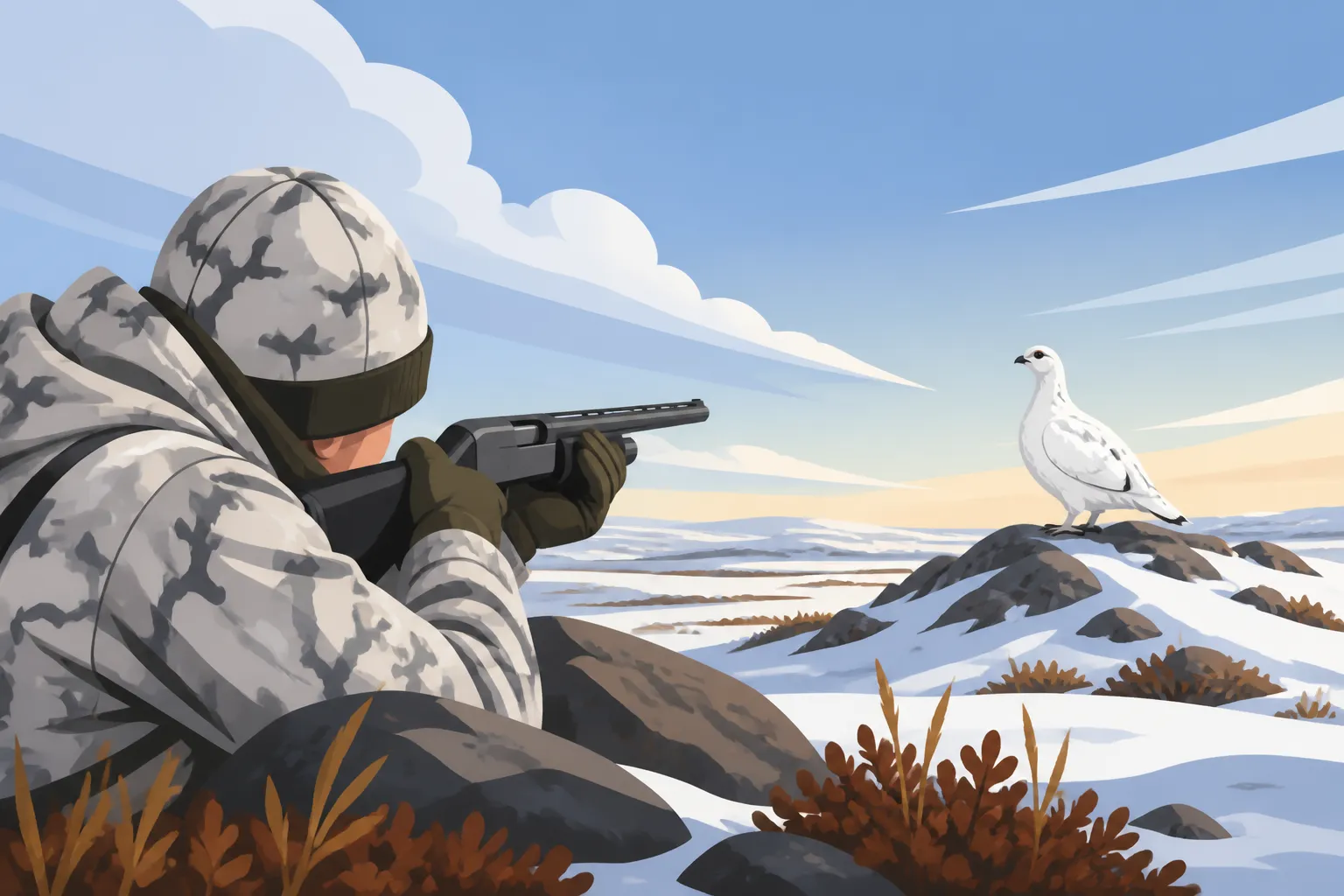
- Outer Layers: Your shell layers need to be windproof and waterproof. A good quality Gore-Tex or similar material jacket and pants will protect you from blustery winds, snow, and freezing rain. Ensure they are generously sized to accommodate your multiple inner layers without restricting movement. Camouflage patterns that blend with winter snow (white or snow camo) can be extremely effective if you're hunting late season.
- Footwear: This is where many hunters make a mistake. You need serious insulation. Pac boots with removable liners, rated for extreme cold (e.g., -40°C or colder), are ideal. Make sure they are waterproof and worn with good quality wool or synthetic socks. Bring several pairs of socks to change frequently. Overshoes or gaiters can also be beneficial to keep snow out of your boots and prevent moisture buildup.
- Headwear and Handwear: A warm toque (beanie) is essential, as you lose a lot of heat through your head. Consider a balaclava or neck gaiter for added face protection from wind and frostbite. For hands, a layering system also works best: thin liner gloves for dexterity, covered by warm, insulated mittens or heavier gloves. Mittens generally offer more warmth than gloves.
- Shelter: If you're not staying in an outfitter's lodge, a robust four-season tent capable of withstanding strong winds and heavy snow is a must. A portable wood stove for heating a wall tent can be a game-changer for warmth and drying gear, though this adds significant weight and logistical complexity. For simpler trips, a compact, durable tent is fine, but you'll need a high-quality sleeping bag rated for temperatures well below what you expect to encounter.
Firearms, Ammunition, and Navigation Tools
Your choice of firearm and reliable navigation are crucial elements that contribute to both success and safety in such a remote environment.
- Firearm: For ptarmigan, a 12 or 20 gauge shotgun is ideal. You'll be shooting at flushing birds, often within close range. Choose a reliable pump-action or semi-automatic that can handle the cold. Make sure to pattern your shotgun with your chosen ammunition before the hunt. A lighter gun will be appreciated after miles of walking.
- Ammunition: #6 or #7.5 shot are excellent choices for ptarmigan. These smaller shot sizes provide a dense pattern without over-damaging the birds, which are relatively small. Bring plenty, as opportunities can be frequent once a covey is located. Factor in potential practice shots and unforeseen circumstances.
- Navigation: In the vastness of the far north, getting lost is a serious concern. A reliable GPS unit (like a Garmin inReach or similar satellite communication device) loaded with detailed topographical maps is absolutely non-negotiable. Don't rely solely on your phone, as battery life diminishes rapidly in the cold, and cellular service is non-existent. Always carry a traditional compass and paper maps as a backup. Platforms like GoHunt and their mapping features are incredibly useful for pre-scouting and on-the-ground navigation, allowing you to mark waypoints, track your movements, and understand the terrain. Make sure to download maps for offline use before you leave, as you won't have internet connectivity.
- Other Essentials: A quality pair of binoculars can help you spot birds at a distance. A good game bag or vest to carry birds is also practical. A first-aid kit, fire-starting materials (waterproof matches, lighter, fire starter), a headlamp with spare batteries, a multi-tool, and a repair kit for your gear should always be in your pack.
Remote Travel and Safety Considerations
Accessing Saskatchewan's far north usually involves significant logistical planning. Most hunters rely on bush planes to reach remote lakes and outpost camps, which means you're often hundreds of miles from the nearest road or settlement.
- Transportation: Flying in with a reputable air charter service is the most common way to access prime ptarmigan country. Coordinate pick-up and drop-off times precisely, and have contingency plans for weather delays. Be aware of weight restrictions on bush planes.
- Communication: A satellite phone or a two-way satellite messenger (like a Garmin inReach or Zoleo) is not just a convenience, it’s a life-saving device. These allow you to communicate with loved ones, get weather updates, or call for emergency help. Regular cell service is non-existent.
- Wildlife Encounters: While ptarmigan are the target, you're in bear and wolf country. Carry bear spray, know how to use it, and consider an air horn. Be aware of your surroundings, especially around game carcasses or when camping. Hunting Wolves in the Northern Bush is a separate pursuit, but understanding their presence is part of hunting in this ecosystem.
- Contingency Planning: Always have extra food, fuel, and supplies for at least an extra two to three days in case of unforeseen delays (e.g., weather grounding your plane). Share your itinerary with someone responsible back home and establish check-in times. Understand that help can be many hours, if not days, away. If you find yourself in a situation where you're What to Do If You Get Stuck in the Bush, having planned ahead can make all the difference. This includes bringing a robust winter truck kit if you're driving as far north as possible, though for ptarmigan, flying is often the only real option.
Effective Hunting Methods for Ptarmigan
Hunting ptarmigan is often described as a blend of still hunting, jump shooting, and traditional upland bird hunting, all rolled into one physically demanding package. The key to success lies in understanding their behaviour, habitat preferences, and how they react to pressure.
Walking Up Birds in Rolling Tundra
The most common and often most effective method for ptarmigan hunting in the far north is simply walking them up. This is an active pursuit that requires covering a lot of ground, often across challenging terrain.
Imagine a vast expanse of rolling tundra, dotted with low-lying willows and dwarf birch. Your strategy is to move systematically through this cover, paying close attention to any irregularities. Ptarmigan are masters of holding tight, relying on their camouflage to avoid detection. They will often not flush until you are almost on top of them, sometimes literally within a few feet. This can be startling, but also exhilarating.
Walk at a steady, deliberate pace, scanning ahead and to the sides. Focus on the edges of willow thickets, draws, and any areas that offer a slight change in elevation or denser cover. These are often the spots where birds will roost or feed. As you move, be prepared for sudden flushes. Keep your gun ready, safety on, and be prepared to swing quickly. In open country, a flushed covey might fly a short distance and re-land, often just over a rise, giving you an opportunity to follow and try for another flush. This makes knowing the topography and using available mapping resources, perhaps through a GoHunt app on your device, critical for planning your next move. It helps to walk into the wind, as this can muffle your approach and help carry your scent away from the birds, giving you a slight edge in getting closer.
Using Dogs for Ptarmigan: A Northern Challenge
While many upland bird hunters rely heavily on dogs, using them for ptarmigan in Saskatchewan's far north presents its own unique set of challenges and rewards. It's not for every dog or every hunter.
- Challenges: The terrain is often rugged, with sharp rocks, dense brush, and boggy sections that can be tough on a dog's paws and endurance. The sheer vastness of the landscape means a dog with too wide a range can quickly disappear. Extreme cold can also be a major factor, requiring booties for paw protection and insulated vests for short-haired breeds. Freezing water in sloughs and rivers can also pose a risk.
- Rewards: A good pointing dog, especially one trained for close-working upland birds, can significantly improve your success rate. Their superior scenting ability can pinpoint birds that would otherwise be walked past, especially when the ptarmigan are holding tight or camouflaged in the snow. They can also aid in retrieving downed birds in thick cover, which is invaluable.
- Best Dog Breeds: Close-working pointers or flushers are often preferred. Breeds like Brittanys, English Setters, or even certain Labrador Retrievers with a strong upland drive can excel. Regardless of breed, the dog must be well-conditioned, have excellent recall, and be trained to work within a reasonable range in this open environment.
If you plan to bring a dog, ensure they are physically fit for the strenuous terrain and cold. Carry plenty of water and food for them, and have a first-aid kit specifically for your canine companion. Using a bright-coloured vest on your dog can also improve visibility in the sparse landscape or against the snow.
Stalking Flocks in Willow Thickets and Open Areas
Ptarmigan are not always going to be scattered singles waiting to be walked up. Especially later in the season, they often congregate in larger flocks, seeking the shelter and food offered by dense willow thickets or shallow depressions in the open tundra. This is where a more deliberate stalking approach can pay dividends.
When you spot a flock from a distance, or after a covey has flushed and re-landed, observe their behaviour. Are they feeding? Are they hunkered down? Plan your approach, using available cover like low ridges, rock outcrops, or denser patches of vegetation to break up your silhouette. Move slowly and deliberately, paying attention to wind direction to avoid spooking them.
Willow thickets are prime areas for stalking. Ptarmigan will often retreat into the densest parts of these bushes. Instead of crashing through, try to circle downwind and approach from an unexpected angle. Sometimes, a well-placed rock or a stomp of your boot near the edge of a thicket can cause birds to flush out the other side, giving you a shot. This requires teamwork if hunting with a partner, with one person acting as a blocker.
In more open areas, stalking might involve a low crawl or using the subtle undulations of the tundra to get within range. This method is particularly useful when hunting the very exposed areas favored by Rock Ptarmigan. Patience is key. A flock that seems to have vanished might just be hunkered down, waiting for you to pass. Take your time, glass the area thoroughly, and be ready to move quickly once a bird is identified or flushes. This is hunting at its most primal, a true test of your fieldcraft against one of nature's most camouflaged creatures.
Navigating the Logistics of a Far North Saskatchewan Hunt
A successful ptarmigan hunt in Saskatchewan’s far north isn't just about shooting skills; it's about mastering the logistical puzzle of remote travel, adhering to regulations, and ensuring proper care of your harvest in challenging conditions. This is where detailed planning truly shines.
Accessing Remote Areas: Bush Planes and Outpost Camps
The vast majority of prime ptarmigan habitat in Saskatchewan lies beyond the reach of conventional roads. This means that accessing these areas requires specialized transportation, primarily bush planes. Reputable air charter services operate out of northern towns like La Ronge, Stony Rapids, or Points North Landing, providing vital lifelines to remote regions.
Booking a bush plane isn't like buying a commercial airline ticket. You'll need to communicate clearly about your group size, gear weight, and desired drop-off and pick-up locations. Most operators fly small float planes in summer and fall, switching to ski-equipped planes once the lakes freeze over. Be prepared for potential weather delays; fog, high winds, or whiteout conditions can ground planes for days, highlighting the importance of those extra supplies. When you're flying into Hunting Saskatchewan's Northern Lake Country, patience is definitely a virtue.
Many hunters choose to utilize outpost camps offered by outfitters. These are typically rustic cabins on remote lakes, providing basic shelter, heating, and sometimes even cooking facilities. They can significantly simplify the logistics of a remote hunt, offering a base of operations from which to daily hunt the surrounding areas. Some outfitters might also provide a guide who understands the local terrain and ptarmigan movements, which can be invaluable, especially for a first-time northern hunter. Discuss all options, including fully guided, semi-guided, or unguided outpost camp experiences, well in advance. Make sure your outfitter is fully licensed and has a good reputation.
Licensing and Regulations for Northern Species
Before you even pack your bags, understanding the licensing and regulatory framework for hunting ptarmigan in Saskatchewan is paramount. These rules are in place to ensure sustainable populations and safe hunting practices.
- Licensing: As a resident hunter, you'll need a valid Saskatchewan Wildlife Habitat Certificate and an upland game bird licence. Non-residents, whether Canadian or international, will have specific requirements, often involving an outfitter. Always check the current year's Saskatchewan Hunters' and Trappers' Guide, available from the Ministry of Environment, or through the online HAL (Hunting, Angling and Trapping Licence) system. Pay close attention to season dates, bag limits, and possession limits, as these can vary by zone and year. For more information on specifics, search for details on Saskatchewan Upland Bird Seasons.
- Wildlife Management Zones (WMZ): Saskatchewan is divided into numerous WMZs, each with its own regulations. Ensure you know which zone you will be hunting in and are familiar with its specific rules. The far north generally falls into specific northern zones with unique considerations.
- Firearm Regulations: Ensure your firearm is legally registered and transported according to Canadian laws. Non-residents bringing firearms into Canada must complete a Non-Resident Firearm Declaration Form (RCMP 5589) and have it confirmed by a Canadian Border Services Agency officer upon entry.
- Aboriginal Rights: It's important to recognize and respect Indigenous hunting and trapping rights in the north. Be aware that you may encounter Indigenous hunters exercising these rights, and always act courteously and respectfully.
Always err on the side of caution and double-check all regulations well before your trip. Ignorance of the law is never an excuse.
Meat Care and Transport in a Remote Environment
Successfully harvesting ptarmigan in the far north is only half the battle; properly caring for the meat and transporting it back home is the other critical component, especially given the remote nature of the hunt.
- Field Dressing: As soon as a bird is harvested, field dress it promptly. This involves removing the guts to allow the carcass to cool down quickly. In cold northern temperatures, this process is generally easier than in warmer climates, but still crucial to prevent spoilage. You can often pluck the breast feathers and remove the breast meat immediately, leaving behind the rest of the carcass.
- Cooling and Storage: Once field dressed, cool the birds completely. In the far north, this is usually not an issue due to ambient temperatures. Store them in breathable game bags to protect them from insects and dirt, while allowing air circulation. Avoid piling birds in a warm, unventilated container. If you have an outpost camp, a cool storage area is beneficial.
- Packing for Transport: For the bush plane journey and subsequent travel, the birds will need to be packed properly. Freezing the birds solid is the best option if possible. Many outpost camps have freezers, or you can use a combination of dry ice and high-quality coolers. Ensure your coolers are well-insulated and can keep the birds frozen for the duration of your trip home. Double-bagging the birds (e.g., in Ziploc freezer bags) before placing them in coolers helps prevent freezer burn and keeps things tidy.
- Evidence of Sex/Species: Always be aware of any regulations regarding evidence of sex or species that must remain on the bird during transport. While less common for upland birds than big game, it's always worth confirming in the current regulations to avoid any issues during inspection. For example, if you're exploring Meat Care in Saskatchewan's Cold Snaps for larger animals, many of the same principles of rapid cooling and protection apply, scaled down for game birds.
By meticulously planning your gear, understanding the local regulations, and preparing for the unique challenges of meat care in a remote northern environment, you ensure that your ptarmigan hunting adventure is not only successful but also safe and responsible, allowing you to savour the wild flavours of Saskatchewan's far north long after your return.
| Ptarmigan Species Comparison Table | Willow Ptarmigan | Rock Ptarmigan |
|---|---|---|
| Size | Larger | Smaller |
| Preferred Habitat (Summer) | Willow thickets, dwarf birch, forest fringe | High, rocky tundra, sparse vegetation |
| Winter Plumage | Pure white, black tail feathers | White, often with black eye stripe on males, black tail feathers |
| Summer Plumage | Reddish-brown | Greyer, barred |
| Call | Goose-like "go-back" | Harsher, guttural croak |
| Distribution in SK | More widespread in northern boreal and tundra transition | Extreme far north, higher elevations/barren areas |
| Hunting Challenge | Difficult to spot, often hold tight | Very difficult to spot, can be more skittish |
Disclaimer
Please remember that hunting regulations, season dates, and access rules can change. Always consult the most current Saskatchewan Hunters' and Trappers' Guide, available from the Saskatchewan Ministry of Environment, or check the provincial government's official website before planning any hunting trip. This article is for informational purposes only and does not constitute legal advice. It is the hunter's responsibility to know and follow all applicable laws and regulations.