Using a Pointing Dog on Saskatchewan Prairie
There's nothing quite like the boundless skies and endless horizons of the Saskatchewan prairie, but these same features that make it breathtaking also present a real challenge for upland bird hunters. Trying to cover miles of grass and stubble on foot, hoping to flush a wily covey of Hungarian partridge or a scattered group of sharp-tailed grouse, can quickly leave you exhausted and disheartened. This guide is all about how bringing a well-trained pointing dog to the prairie can transform your hunt, turning those frustrations into incredibly rewarding experiences.
Why a Pointing Dog Excels on Saskatchewan Prairie
Hunting upland birds across the vast, often subtle terrain of Saskatchewan's prairie can be incredibly demanding. Unlike dense bush hunting, where birds might hold tight, prairie birds often run or flush wild, making them hard to pinpoint. This is where a good pointing dog doesn't just help; it becomes an indispensable partner, elevating your hunting experience from a grueling hike to a finely tuned collaboration.
Covering Ground and Finding Hidden Birds
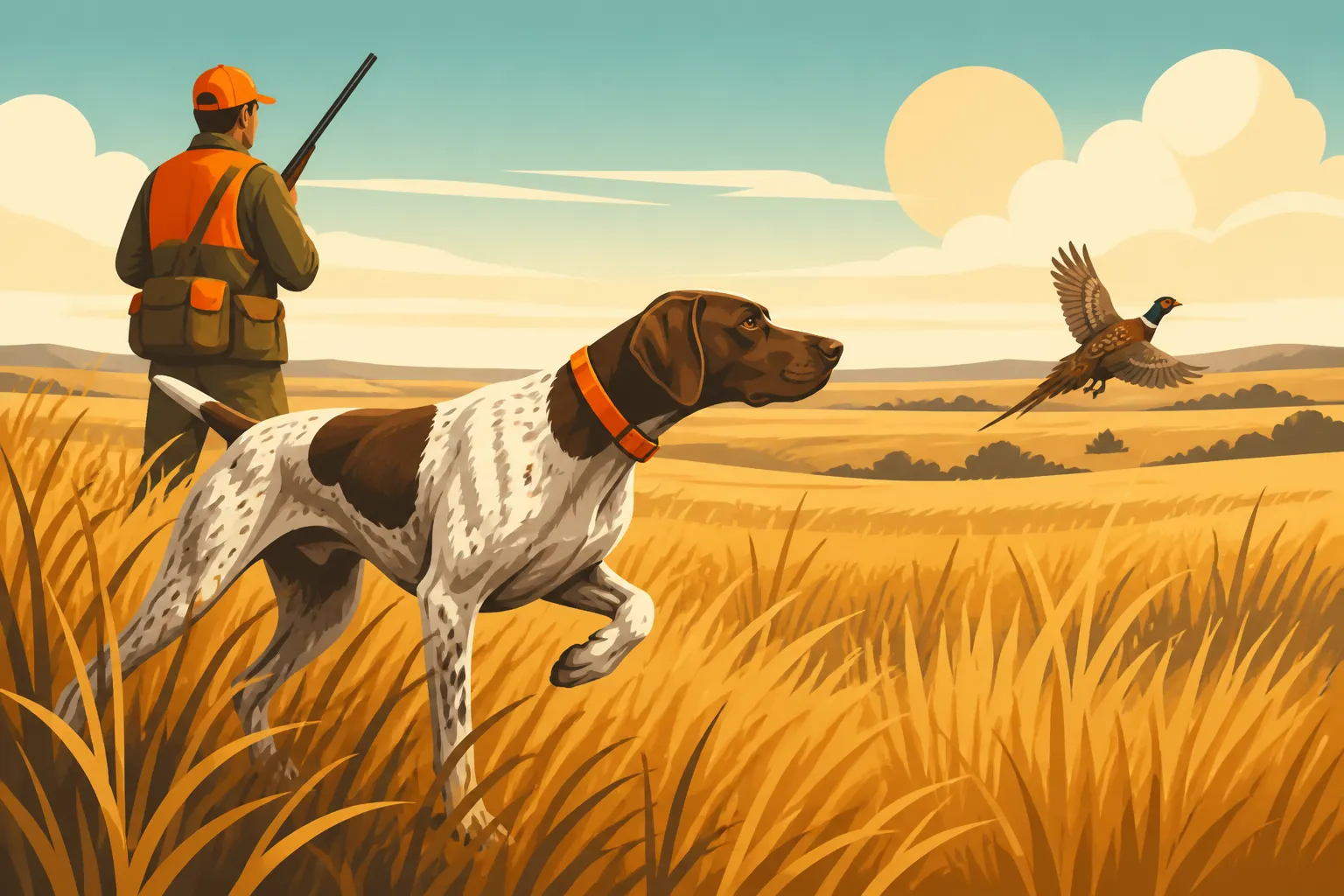
The sheer scale of Saskatchewan's prairie means covering ground is paramount. A pointing dog, with its incredible endurance and superior scenting abilities, can work far more effectively and efficiently than a human hunter. Imagine walking through a seemingly empty stubble field, your eyes scanning the horizon for any movement. A dog, on the other hand, is quartering into the wind, systematically searching for the subtle scent cone of birds. They can cover significantly more territory, and do so with a focus that no human can truly match. When birds are scattered or holding tight in sparse cover, that nose is your best asset, picking up fainter traces and leading you directly to where the action is. This broad coverage means you're not just stumbling into birds; you're actively seeking them out, maximizing your chances in areas that might otherwise seem devoid of life.
The Advantage in Spotting Game
It’s often said that a good pointing dog has a "nose for game," but their intelligence and visual cues are just as important. When a dog goes on point, it’s not just holding a position; it's communicating directly with you. That rigid stance, tail high, nose directed, is an unmistakable signal that birds are present. This visual communication is crucial on the prairie, where cover can be minimal, and birds, especially sharp-tailed grouse, can be incredibly camouflaged. Without a dog, you might walk right past a covey of huns tucked into a low swale or a lone sharptail hunkered down in a patch of buckbrush. The dog’s point gives you the exact location, allowing you to approach methodically, prepare for the flush, and take an ethical shot. This direct interaction and the thrill of watching a dog work is a huge part of the prairie hunting experience.
Conserving Hunter Energy
Let's be honest, walking all day in heavy boots through uneven fields, battling the wind and sometimes mud, is tough work. A well-conditioned pointing dog, while also exerting itself, effectively saves you countless steps and wasted effort. Instead of blindly crisscrossing fields, you follow your dog’s lead, moving with purpose towards a known bird location. This means less aimless wandering and more strategic movement. Conserving your energy allows you to stay in the field longer, enjoy the hunt more, and maintain your focus when the critical moment of the flush arrives. Plus, it means you're not as wiped out at the end of the day, ready to do it all again tomorrow. This efficiency is especially appreciated when you're Hunting Saskatchewan's September Archery Opener or facing crisp fall days that demand sustained effort.
Training Your Dog for Saskatchewan's Unique Landscape
Saskatchewan's prairie presents its own set of training challenges for a pointing dog. It's not just about finding birds; it's about navigating vast, often exposed terrain, dealing with unpredictable weather, and being steady around game that can be flighty. Generic field training might not cut it; you need to tailor your approach to the specific environment.
Building Stamina and Range for Vast Spaces
Prairie hunting demands exceptional stamina from your dog. On an average day, your dog might cover many times the distance you do, tirelessly quartering fields. Building this endurance requires consistent, structured exercise that mimics hunting conditions. Long runs in open country, even without birds, help build muscle and cardiovascular fitness. Gradually increase the duration and intensity. Think about incorporating uphill climbs if you have access to any varied terrain, as this strengthens key muscle groups. Off-leash obedience in these open spaces is also critical. You need a dog that will hunt out, but also check back in, respond to commands from a distance, and not simply disappear over the next rise. Practicing "here" and "whoa" commands with increasing distance and distraction is vital. A strong recall is non-negotiable for safety and efficiency in such expansive environments. Many hunters use mapping apps like GoHunt to track their dog's distance and speed during training, giving them valuable data on their conditioning progress.
Steadiness and Handling Distractions
The prairie is a place of endless possibilities, which also means endless distractions. From deer running across a distant field to raptors circling overhead, or even just the scent of coyotes, your dog needs to maintain focus on the task at hand: finding birds. Steadiness to wing and shot is paramount. You don't want a dog breaking point and chasing a flushed bird, potentially pushing other coveys out of range. Intensive work with live birds and blank ammunition is necessary. Start in controlled environments, gradually introducing more distractions. Practice having your dog hold a point while you flush the bird, then fire, and then command them to retrieve only when given the signal. This discipline ensures ethical hunting and prevents lost birds. Remember, hunting sharp-tailed grouse in Saskatchewan grassland often means birds will flush quickly, and your dog needs to remain rock-steady.
Water and Extreme Weather Preparedness
Saskatchewan weather can be notoriously unpredictable. A beautiful, mild morning can turn into a blustery, cold afternoon with surprising speed. Your dog needs to be prepared for it all. This includes heat management in early season hunts, where access to water is crucial. Always carry plenty of water for your dog and offer it frequently. Look for natural water sources like sloughs, but don't rely on them as they can be seasonal or contaminated. In colder weather, appropriate dog vests can offer protection, and understanding the signs of hypothermia is vital. Acclimatizing your dog to different temperatures during training helps. Also, dogs often encounter wet conditions, whether from morning dew, a brief rain shower, or crossing small creeks. Ensure their coat is healthy, and consider quick-drying vests if hunting in damp conditions to prevent chilling.
Essential Gear and Management for Prairie Hunts
Successful prairie hunting with a pointing dog isn't just about training; it's also about having the right tools and knowing how to manage your canine partner in the field. This can make the difference between a frustrating day and a truly productive, enjoyable experience.
GPS Tracking and E-Collars
In the vast openness of Saskatchewan prairie, a dog can quickly disappear from sight, especially if it's a wide-ranging pointer. This is where modern technology becomes your best friend. A high-quality GPS collar system is practically non-negotiable. Brands like Garmin and SportDOG offer excellent systems that not only show you your dog's location on a handheld device but can also track their movement, speed, and even indicate if they're on point. This allows you to confidently let your dog work at a distance, knowing you can always locate them.
E-collars, or electronic collars, are also invaluable tools for long-distance communication and safety. Used properly and humanely, they can reinforce commands like "whoa" or "recall" when your voice simply won't carry over the wind or distance. They are not punishment devices, but rather an extension of your voice, providing a consistent reminder. Familiarize yourself thoroughly with the operation of any e-collar and use it during training long before you ever step foot in the field for a real hunt. Understanding your specific Saskatchewan Hunter Education and Firearms Safety responsibilities includes knowing how to use all your equipment safely and ethically.
Hydration, Nutrition, and Canine First Aid
Your dog is an athlete, and like any athlete, needs proper care. On a long day of hunting, especially in warmer conditions, dehydration is a serious risk. Always carry more water than you think you'll need, along with a portable water bowl. Offer water frequently, even if your dog doesn't seem to be asking for it. High-quality, high-energy dog food is essential to fuel their strenuous activity. Consider feeding a larger meal the night before and a smaller, easily digestible snack in the morning if your dog tolerates it.
A canine first aid kit should always be part of your gear. This isn't just a suggestion; it's a necessity. It should include items like antiseptic wipes, bandages, medical tape, tweezers for thorns or burrs, paw salve for cracked pads, and a pair of pliers or side cutters for removing porcupine quills – a real danger on the prairie. Knowing basic canine CPR and how to handle common injuries like cuts, sprains, or heatstroke can be life-saving. After a long day, inspect your dog's paws for cuts or excessive wear and check for ticks, which are prevalent in many prairie areas.
| Essential Dog Gear for Prairie Hunting | Purpose | Notes |
|---|---|---|
| GPS Collar System | Tracking location, distance, and point detection | Rechargeable, good range, mapping features |
| E-Collar | Long-distance command reinforcement, safety | Learn proper use, choose reliable brand (e.g., SportDOG) |
| Water & Portable Bowl | Hydration for active dogs | Carry ample supply, offer frequently |
| High-Energy Dog Food / Snacks | Sustained energy, quick boosts | Feed appropriate amounts, consider field-friendly snacks |
| Canine First Aid Kit | Addressing injuries and emergencies | Includes antiseptic, bandages, paw care, quill removers |
| Protective Dog Vest | Visibility, thorn protection, warmth | Blaze orange for safety, rip-resistant material |
| Whistle | Long-distance communication, commands | Consistent tone, reliable for various conditions |
| Leash and Collar | Control outside of hunting | Sturdy, comfortable |
| Dog Bell | Audible tracking in heavy cover | Especially useful for dense patches or tall grass |
Reading the Wind and Your Dog's Body Language
Successfully working a pointing dog on the prairie relies heavily on understanding the wind. Birds rely on their scent for survival, and your dog relies on the wind to pick up that scent. Always try to work your dog into the wind (or crosswind) to allow them to effectively "scent cone" the birds. This means you might need to zig-zag across a field, constantly adjusting your line of travel. Mapping tools like GoHunt can help you visualize wind direction and adjust your approach.
Equally important is learning to read your dog's body language. A subtle change in tail action, a sudden pause, or a quick turn of the head can all be early indicators that your dog is winding a bird long before they go on a hard point. Paying attention to these subtle cues allows you to anticipate the action, adjust your pace, and be ready when the point solidifies. This non-verbal communication is built through countless hours in the field and strengthens the bond between hunter and dog. Understanding these nuances makes you a better handler and a more successful hunter.
Targeting Upland Birds with Your Pointer
Saskatchewan's prairie is home to two primary upland game birds that offer fantastic opportunities for pointing dog work: sharp-tailed grouse and Hungarian partridge. While their habitats often overlap, each species presents unique challenges and requires slightly different tactics.
Hunting Sharp-Tailed Grouse on Grasslands
Sharp-tailed grouse, often simply called "sharptails," are true birds of the prairie. They prefer expansive native grasslands, sagebrush coulees, and the edges of cultivation, often gravitating towards areas with taller grass for cover and insect foraging. When hunting sharptails with a pointing dog, focus on these types of habitats. Your dog should work a wider, faster pattern, covering ground efficiently. Sharptails tend to run more than huns before flushing, so a dog with a strong, confident point is essential. They might hold a bird for a considerable time as it runs, requiring you to move quickly to get in position.
The thrill of a sharptail hunt often comes from the sudden, explosive flush of a covey you didn't even know was there. Your dog's point will guide you to these hidden pockets. After a covey flushes, mark where the individual birds land. Sharptails often scatter but will typically land within a reasonable distance, giving your dog a chance to relocate and point singles. This "working singles" phase is where a well-trained dog truly shines, methodically picking up each bird. Early season, they may hold tighter, while later in the fall, they can be incredibly wary.
Pursuing Hungarian Partridge Near Farmland
Hungarian partridge, or "huns," are birds of agricultural landscapes. They thrive in fields of stubble, along shelterbelts, in ditches, and near field edges where they can find grit and seeds. When targeting huns with your pointing dog, concentrate on these areas. Huns are smaller than sharptails and tend to hold tighter in cover, making a dog's keen nose absolutely invaluable. A good pointer will lock up on a covey of huns, allowing you to walk in for the flush.
Unlike sharptails, huns often covey up tightly and flush as a unit, creating an exciting, rapid-fire shooting opportunity. After the covey flushes, similar to sharptails, keep an eye on where they land. Huns will often regroup relatively quickly, but a good dog can still help you pick up individual stragglers. You might find them in unexpected places, like a small willow run or a patch of weeds bordering a lentil field. Hunting Hungarian Partridge on Saskatchewan Farms often means working closely with landowners, so always secure permission well in advance. These birds offer fast-paced action and are a true test of a dog's steadiness.
Recognizing Other Opportunities
While sharptails and huns are the main draw, don't overlook other potential upland bird opportunities, especially if you're venturing into different parts of the province or if you happen upon specific habitats. For instance, in areas with suitable habitat, Whether Saskatchewan Has Wild Pheasants is a question that sometimes comes up. While not widespread, some localized populations exist, and a pointing dog would certainly be effective on them. If you hunt closer to forested areas or river valleys, you might also encounter ruffed grouse or spruce grouse, though these often require a different hunting approach, perhaps more suited to a flushing dog as described in Using a Flushing Dog in Thick Cover. Always check the specific regulations for the Wildlife Management Zone you're hunting in, as season dates and limits can vary.
Best Practices for a Successful and Ethical Hunt
Hunting with a pointing dog is a partnership, and like any good partnership, it thrives on mutual respect, preparedness, and a shared understanding of ethical conduct. Beyond just finding birds, there are crucial elements that ensure a safe, successful, and responsible hunt for both you and your canine companion.
Pacing Yourself and Your Dog
It's easy to get caught up in the excitement of the hunt and push too hard, especially on the vast prairie. However, a burnt-out dog (or hunter!) is an ineffective one. Learn to read your dog's signals for fatigue: a lagging tail, slower pace, less enthusiastic quartering, or even seeking shade. Take frequent short breaks to allow both of you to rehydrate and catch your breath. On warmer days, prioritize hunting early mornings and late afternoons, allowing for a longer midday rest.
Similarly, pace yourself. Don't try to cover too much ground too quickly. Focus on thoroughly working promising cover rather than just covering miles. A good rule of thumb is to hunt smarter, not harder. This often means returning to the truck for a break, refilling water, and assessing the conditions, especially if you're trying to hunt multiple fields in a day. Understanding your body and your dog's limits is key to enjoying the hunt over the long term.
Respecting Landowner Rules and Posted Land
Saskatchewan is predominantly private land, and much of the best upland hunting occurs on these agricultural properties. Gaining landowner permission is not just a courtesy; it's the law. Always ask for permission before you hunt. A simple knock on the door, a polite conversation, and a clear explanation of your intentions (including that you'll be hunting with a dog) can go a long way. Many farmers appreciate hunters who respect their property and livestock.
Pay close attention to "Posted" signs, which clearly indicate where hunting is not permitted. Even if you have permission for one field, don't assume it extends to others. Clarify boundaries. Be mindful of livestock; keep your dog under close control around cattle or horses, and never allow it to harass them. Close gates, don't drive off established trails, and leave no trash behind. Being a respectful hunter builds goodwill and helps ensure continued access for everyone. You can find more details on Saskatchewan Landowner Permission Law and Saskatchewan Posted Land Sign Rules in other guides.
Post-Hunt Care and Off-Season Conditioning
The hunt doesn't end when the birds are in the bag. Proper post-hunt care is critical for your dog's health and readiness for the next day. This includes a thorough inspection for burrs, thorns, cuts, and ticks, especially between the paw pads. Clean any minor wounds and apply paw balm if pads are dry or cracked. Provide a good, high-quality meal and fresh water. A comfortable, dry place to rest is also important. If you’re hunting in cold weather, make sure your dog has a warm, insulated spot, perhaps a dog bed or crate lined with blankets in a heated area. If you've been Hunting Saskatchewan Winter Weather Safely, ensure your dog hasn't been overexposed to the cold.
Off-season conditioning is just as important as in-season care. Don't let your dog become a couch potato in the months leading up to hunting season. Maintain a consistent exercise regimen, gradually increasing intensity as the season approaches. This prevents injuries, maintains muscle tone, and ensures your dog is physically prepared for the demands of prairie hunting when opening day arrives. Regular vet check-ups are also crucial to catch any potential health issues early. Remember, your pointing dog is more than just a tool; it's a valued member of your hunting team and deserves the best care you can provide.
Disclaimer
Hunting is an activity with inherent risks. This guide provides general information and recommendations. Always consult the official Saskatchewan hunting regulations, local laws, and qualified professionals for specific advice and safety guidelines. It is the responsibility of each hunter to ensure they are compliant with all regulations and prioritize safety.