Legal Rifle Calibres for Big Game
It can be incredibly frustrating and even a little nerve-wracking trying to navigate the myriad of hunting regulations, especially when it comes to something as fundamental as your rifle calibre. You want to be sure that the equipment you're relying on for an ethical harvest is actually legal, and frankly, the rules aren't always crystal clear at first glance. This guide is here to cut through that confusion, giving you a detailed breakdown of the legal rifle calibres for big game in Saskatchewan, so you can hunt with confidence and peace of mind.
Understanding Saskatchewan's Big Game Calibre Regulations
When you're out in the Saskatchewan bush or across the vast prairies, the last thing you want is to second-guess if your chosen rifle calibre meets the provincial regulations. The Ministry of Environment sets these rules with ethical hunting in mind, ensuring that hunters use firearms capable of a clean, humane kill on big game animals. It’s not just about what can take down an animal, but what should be used to do so effectively and responsibly.
The Minimum Energy and Bullet Diameter Rule
Saskatchewan’s regulations are quite straightforward, thankfully, relying on a minimum standard rather than listing out dozens of approved calibres. For big game hunting – and this covers everything from a majestic bull moose to a cunning whitetail buck – your rifle must be capable of delivering at least 1,400 foot-pounds of energy at the muzzle. That's a critical baseline. But it's not just about the punch; the bullet itself needs to have a minimum diameter of 6 mm, which translates to approximately 0.243 inches. These two factors work hand-in-hand to ensure that the projectile has both the mass and the force to penetrate sufficiently and disrupt vital organs.
The reasoning behind these seemingly arbitrary numbers is actually quite sound. A certain amount of energy is required to overcome the animal's hide, bone, and tissue resistance, while a minimum bullet diameter helps create a sufficiently large wound channel to ensure a quick and humane harvest. Smaller calibres, even if they sometimes push the energy limits, often lack the diameter for consistent, ethical performance on larger big game. This is why you won't see rimfire rifles, despite their common use for small game, making the cut for deer, elk, or moose. The rules aim to minimize suffering and promote responsible hunting practices, and adhering to them is a fundamental part of the hunting ethic.
Prohibited Calibres and Ammunition Types
While the regulations are primarily focused on minimums, it’s also crucial to understand what is outright prohibited for big game hunting in Saskatchewan. First and foremost, any firearm that uses a rimfire cartridge is absolutely not permitted for big game. This means your .22 LR, .17 HMR, or even the more powerful .22 WMR are strictly for varmints and small game, not a trophy whitetail or a massive bull moose. Beyond the calibre itself, specific ammunition types are also off-limits. Full metal jacket (FMJ) bullets, often referred to as "ball ammunition," are explicitly prohibited for big game. These bullets are designed to penetrate with minimal expansion, which can lead to superficial wounds and a reduced chance of a humane kill, increasing the risk of a wounded animal escaping.
Similarly, any tracer, incendiary, or explosive ammunition is completely banned for hunting of any kind. These types of specialized rounds pose significant safety risks, particularly fire hazards in dry conditions, and are wholly inappropriate for ethical hunting. Stick to conventional, expanding projectiles designed for hunting big game, such as soft points, hollow points, or various bonded and monolithic hunting bullets. Always double-check your ammunition box to ensure it’s clearly marked for hunting purposes and doesn't contain any prohibited bullet types. This attention to detail ensures you're compliant and ready for your hunt, whether you're stalking a Hunting the Rut in Early to Mid November whitetail or calling a bull moose.
Common Legal Calibres for Saskatchewan Big Game
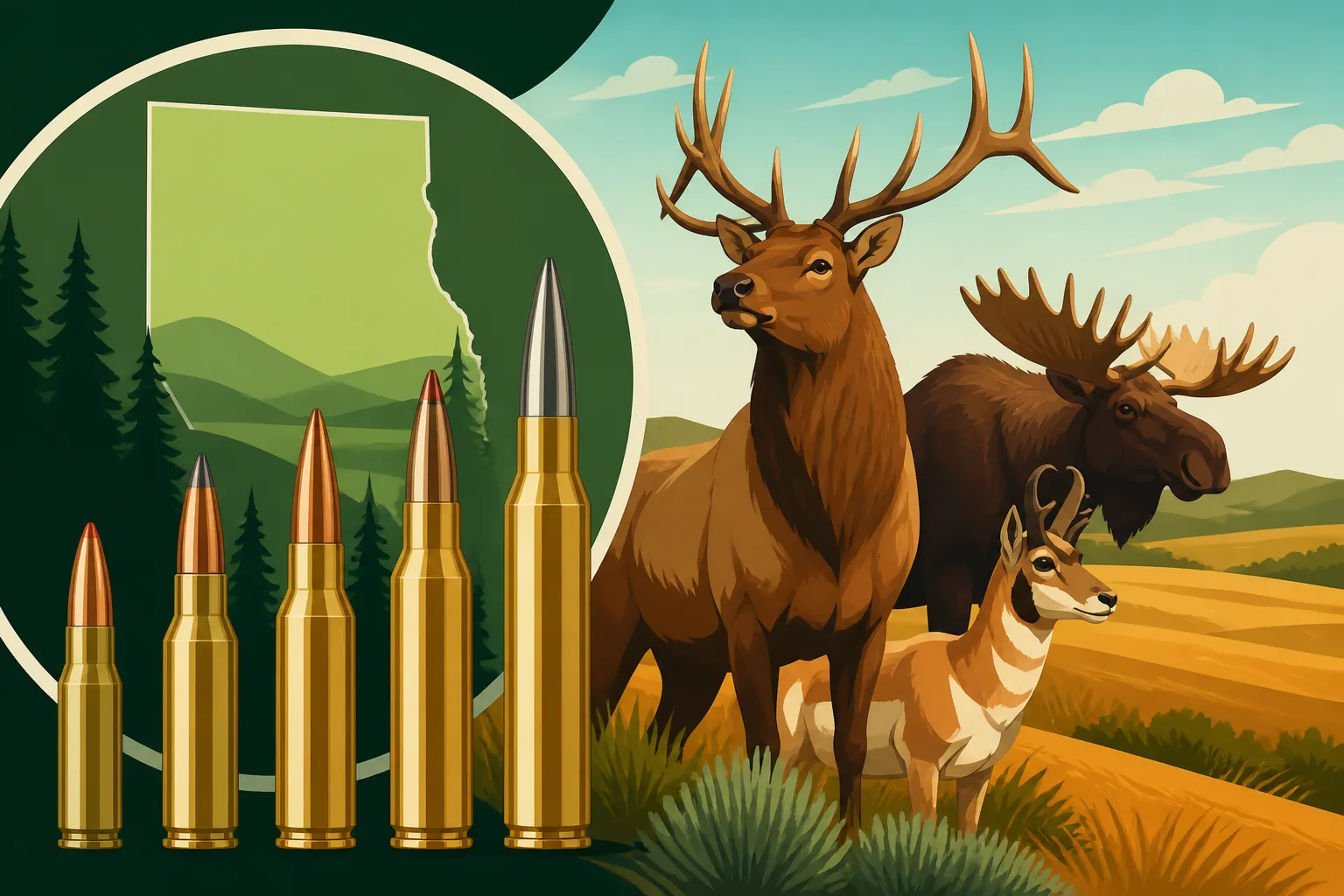
Now that we understand the legal framework, let's talk about the calibres that actually meet these requirements and are widely used by successful hunters in Saskatchewan. The good news is, you have a vast array of excellent choices, each with its own advantages depending on the game you're pursuing and your personal preferences. The key is to select a cartridge that you can shoot accurately and confidently.
Whitetail Deer and Mule Deer Favorites
For Saskatchewan's plentiful whitetail and mule deer, many popular calibres easily clear the 1,400 foot-pounds and 6mm diameter hurdles. The venerable .270 Winchester is a fantastic choice, known for its flat trajectory and ample power for deer-sized game. The .30-06 Springfield, a classic workhorse, offers even more versatility, capable of handling anything from deer to larger animals if loaded appropriately. The .308 Winchester is another incredibly popular option, known for its accuracy, manageable recoil, and effectiveness on deer, especially in shorter, handier rifles. And let's not forget the 6.5 Creedmoor; it's gained immense popularity for its tack-driving accuracy and ballistic efficiency, proving to be a highly effective deer cartridge, easily meeting the minimum requirements.
When choosing a calibre for deer, consider your hunting environment. If you're Hunting Whitetails in Saskatchewan's Forest Fringe where shots might be closer and through thicker cover, a heavier bullet from a .30-06 or .308 can be advantageous. If you're glassing wide-open prairie for Spot-and-Stalk Mule Deer in Saskatchewan, the flatter shooting characteristics of a .270 or 6.5 Creedmoor might be more appealing. Many hunters use resources like GoHunt to research ballistic coefficients and terminal performance of various bullet types for their chosen deer calibres, ensuring optimal effectiveness in the field.
| Calibre | Typical Bullet Diameter (in.) | Muzzle Energy (ft-lbs) | Effective on (Primary) | Common Bullet Weight (gr) | Recoil Level |
|---|---|---|---|---|---|
| .243 Winchester | 0.243 | ~1,900-2,000 | Whitetail, Mule Deer | 80-100 | Low-Medium |
| 6.5 Creedmoor | 0.264 | ~2,200-2,400 | Whitetail, Mule Deer | 120-147 | Medium |
| .270 Winchester | 0.277 | ~2,700-3,000 | Whitetail, Mule Deer | 130-150 | Medium |
| .308 Winchester | 0.308 | ~2,600-2,800 | Whitetail, Mule Deer | 150-180 | Medium |
| .30-06 Springfield | 0.308 | ~2,800-3,000 | Whitetail, Mule Deer, Elk, Moose | 150-180 | Medium-High |
| .300 Winchester Magnum | 0.308 | ~3,500-4,000 | Elk, Moose, Bear | 165-200 | High |
| .338 Winchester Magnum | 0.338 | ~4,000-4,500 | Elk, Moose, Bear | 200-250 | Very High |
Note: Muzzle energy can vary significantly based on specific load, barrel length, and bullet weight. The values above are approximate for common hunting loads.
Moose and Elk Powerhouses
When you step up to larger game like moose and elk, you need a calibre that not only meets but comfortably exceeds the minimum energy requirements, ensuring deep penetration and reliable expansion on a much larger animal. While a well-placed shot with a .30-06 can certainly take down a moose, many experienced hunters prefer a bit more horsepower for these magnificent beasts. Calibres like the .300 Winchester Magnum are incredibly popular for a reason; they offer significantly more kinetic energy and a flatter trajectory, which can be invaluable when you're targeting a distant bull elk in an open field or trying to penetrate the dense musculature of a bull moose.
Stepping up even further, the .338 Winchester Magnum is a true powerhouse, often considered a top-tier choice for the largest North American game. It delivers tremendous energy and uses heavier bullets, providing superior penetration. For those who venture into bear country or simply want maximum stopping power, the .375 H&H Magnum is another formidable option. When considering a calibre for these larger animals, think about the What a Bull Moose Weighs in the North or What a Bull Elk Weighs in Saskatchewan and select a cartridge and bullet combination that provides the confidence you need for a quick, ethical harvest. Again, resources like GoHunt can provide detailed comparisons of these heavier calibres, helping you make an informed decision for your next big game adventure.
Pronghorn and Bear Considerations
Pronghorn hunting often involves longer shots across open prairie, making flat-shooting calibres highly desirable. Many of the same calibres suitable for deer, such as the .270 Win, 6.5 Creedmoor, or even a .243 Winchester (which meets minimums with many loads), are excellent choices for pronghorn. The key here is accuracy and selecting a bullet that performs well at extended ranges without over-penetrating the lighter frame of a pronghorn. The relatively light body mass of a pronghorn means you don't need excessive power, but precision is paramount.
For black bears, which are found throughout Saskatchewan's boreal forest, the equation changes slightly. While a well-placed shot with a .30-06 or .308 is often sufficient, bears have thick hide, heavy bone structure, and a surprising amount of fat and muscle, especially larger boars. Many hunters prefer calibres with a bit more punch and heavier bullet weights to ensure deep penetration and reliable expansion. The .300 Win Mag is a very popular choice for bear, providing that extra margin of error. Bullet construction is particularly important for bear; you want a bullet that holds together well and penetrates deeply to reach vital organs, even through a shoulder blade. Calibres chosen for Black Bear Hunting in Saskatchewan often lean towards those with good stopping power, offering a blend of velocity and bullet mass.
The Importance of Bullet Construction and Shot Placement
While selecting a legal and appropriately powerful calibre is the first crucial step, the story doesn't end there. The effectiveness of your hunt hinges equally on the quality of your ammunition's bullet construction and, most critically, your ability to place that bullet precisely where it needs to go. A legal calibre with a poorly constructed bullet or a poorly placed shot is a recipe for a lost animal and ethical failure.
Beyond Calibre: The Role of Bullet Design
Modern bullet technology has come a long, long way, offering hunters an incredible array of choices. It's not just about the diameter of the bullet, but what it's made of and how it's designed to perform upon impact. For big game, you generally want an expanding bullet. This means the bullet is designed to mushroom out after hitting tissue, creating a larger wound channel and transferring more energy to the animal, leading to a quicker, more humane kill. Common types include soft-point bullets, which have an exposed lead tip that promotes expansion; hollow-point bullets, with a cavity in the nose designed for rapid expansion; and bonded or monolithic bullets.
Bonded bullets feature a lead core chemically bonded to a copper jacket, helping the bullet retain its weight and penetrate deeply even after expanding, often performing exceptionally well on larger, tougher game. Monolithic bullets, usually made entirely of copper, expand reliably and retain nearly 100% of their weight, providing excellent penetration. When hunting a Why Saskatchewan Bucks Grow So Large or any other big game, matching your bullet's construction to the animal's size and expected shot distance is paramount. For instance, a rapidly expanding varmint bullet, while legal in diameter, would be disastrous on a moose, whereas a tough, deep-penetrating bullet is ideal. Always research and test different bullet types with your chosen calibre to find what performs best in your rifle.
Ethical Hunting Practices and Shot Placement
Let's be unequivocally clear: no matter how powerful or expensive your rifle and ammunition are, they are absolutely no substitute for proper shot placement. An ethical hunter understands that their responsibility is to make the quickest, most humane kill possible. This means aiming for the vital organs – typically the heart and lungs – which lie within a relatively small kill zone on any animal. Knowing the anatomy of the animal you're hunting is fundamental. Spend time studying diagrams and understanding where these organs are located, from different angles.
Even with a perfectly legal and powerful calibre, a poorly placed shot can wound an animal, leading to a long, arduous tracking job, or worse, a lost animal. This is where Saskatchewan Hunter Education and Firearms Safety comes into play. The courses teach not just safety, but also ethical considerations and animal anatomy critical for successful hunting. Remember, the goal isn't just to hit the animal, it's to hit it in the right spot, every single time. This commitment to precision is the hallmark of a responsible hunter and truly defines success in the field.
Practicing with Your Chosen Calibre
Knowing your rifle's capabilities and, more importantly, your own, is absolutely critical. This isn't just about zeroing your scope; it's about being intimately familiar with how your rifle handles, how different ammunition types perform, and how you perform under varying conditions. Regular practice at the range is non-negotiable. Don't just shoot from a bench; practice shooting from various field positions – standing, kneeling, sitting, and even mimicking shots you might take from a treestand or ground blind. Understand your rifle's trajectory at different distances. If you're using an app like GoHunt for ballistic data, use it to inform your range practice, confirming actual bullet drop at 100, 200, and 300 yards.
Practice shooting quickly and accurately under a bit of self-imposed pressure, simulating the adrenaline of a real hunting scenario. Knowing how your chosen calibre performs in your hands is the final, essential piece of the puzzle for a successful and ethical hunt. This diligence pays dividends, not just in securing your game, but in upholding the highest standards of our hunting heritage. If you're preparing for a late season hunt, consider how your practice regime might change when Hunting Saskatchewan Winter Weather Safely, perhaps practicing with heavier clothing layers.
Disclaimer
This guide provides general information about Saskatchewan's rifle calibre regulations for big game. While every effort has been made to ensure accuracy, hunting regulations can change. It is the hunter's sole responsibility to consult the most current Saskatchewan Hunters' and Trappers' Guide, published by the Ministry of Environment, or visit the official Saskatchewan hunting regulations website before every hunting season to confirm all current rules and regulations. This content is for informational purposes only and not a substitute for official legal advice or regulations.