Saskatchewan’s Record Mule Deer Buck
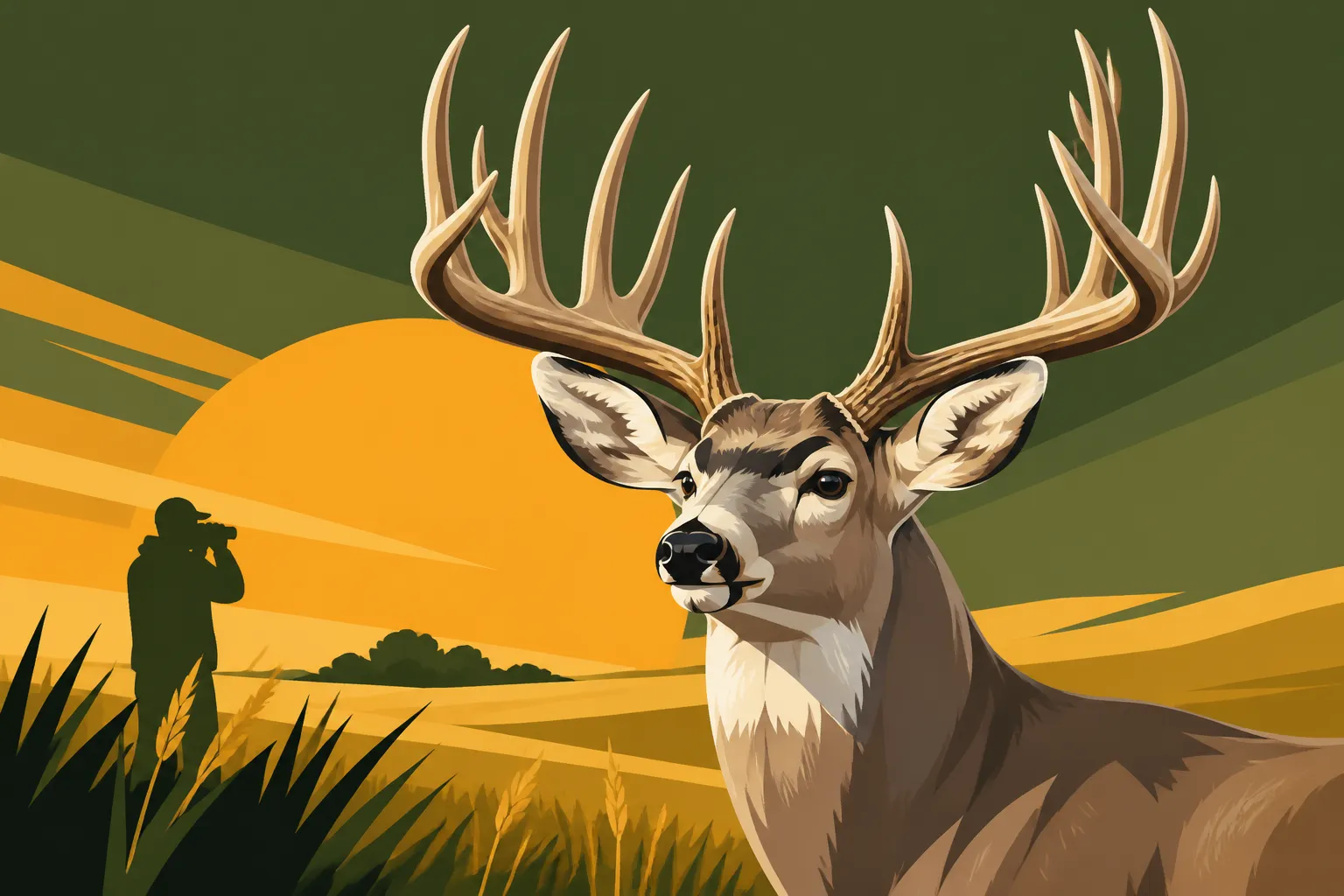
Chasing the dream of a true monarch of the prairie, a record-book mule deer buck, is a pursuit that lights a fire in the heart of many hunters. Saskatchewan, with its vast coulees, rugged badlands, and fertile farmland edges, has long been whispered about as a place where such legends reside, but actually finding and harvesting one is a monumental challenge that goes far beyond just pulling a trigger. This guide dives deep into what makes a Saskatchewan mule deer a contender for the record books, how to increase your chances of finding one, and the realities of this demanding hunt.
The Allure of Saskatchewan's Mule Deer Country
Saskatchewan has an undeniable mystique when it comes to trophy mule deer. It's a province that, for those who truly understand its unique landscape, offers the potential for once-in-a-lifetime encounters. But what is it about this place that nurtures such impressive animals?
Why Saskatchewan Produces Giants
It's not just luck that some of the largest mule deer bucks ever recorded have called Saskatchewan home. The combination of genetics, nutrition, and habitat is a perfect storm for antler growth. Our landscape, particularly in the southwestern reaches, blends agricultural abundance with rugged, untouched coulee systems. This means deer have access to high-protein crops like alfalfa, peas, and various grains for much of the year, providing the critical nutrients needed for body growth and, subsequently, impressive antler development.
Beyond the dinner plate, the cover is just as vital. The deep, brushy coulees, interspersed with pockets of aspens and dense willows, offer refuge from harsh weather and hunting pressure. These areas allow bucks to mature, giving their antlers more years to grow and express their full genetic potential. Unlike some more heavily pressured regions, certain parts of Saskatchewan offer enough space and solitude for these wise, old bucks to live long enough to become true giants. This combination of factors contributes to Why Saskatchewan Bucks Grow So Large across species, including mule deer.
Understanding Mule Deer Biology and Habitat in the Province
To hunt these magnificent animals effectively, you really need to understand how they live here. Mule deer in Saskatchewan are creatures of habit and terrain, and they differ quite a bit from their whitetail cousins in their preferred haunts. While whitetails might stick to the denser bush and river bottoms, mule deer thrive in the more open, broken country of the prairie and parkland.
Their diet is varied but heavily influenced by what's available in their semi-arid to mixed-grass prairie ecosystems. They'll browse on shrubs like sagebrush, willow, and various forbs, complementing this with native grasses and, critically, agricultural crops when accessible. This rich food source directly impacts antler mass and overall size. Knowing what mule deer eat through a prairie winter can also give you clues as to their seasonal movements and preferred bedding areas when the snow flies. They often seek out south-facing slopes in coulees where snow melts faster, exposing valuable forage. They use these coulees not just for food but for travel corridors and bedding down, especially when facing strong winds or seeking thermal cover.
The Elusive Search for Record Book Mule Deer
The term "record book" often conjures images of massive antlers, and while that's certainly part of it, there's a specific science and history behind what truly qualifies a mule deer for the prestigious record books.
What Constitutes a "Record Book" Mule Deer
When we talk about "record book" mule deer, we're generally referring to animals that qualify for organizations like Boone and Crockett Club or Pope and Young Club (for archery harvests). These organizations have stringent scoring systems that measure various aspects of the antler, not just overall size. For typical mule deer, symmetry is key. Measurements include main beam length, total points, circumference measurements at specific locations, and inside spread. Deductions are made for differences between corresponding measurements on each side.
Non-typical mule deer, on the other hand, embrace uniqueness. While basic measurements like main beam length and circumference are still taken, "abnormal" points (those that don't fit the typical antler growth pattern) are added to the score rather than deducted. This means a deer with numerous sticker points, drop tines, or unusual growth can achieve a higher non-typical score. Achieving minimum scores for either category is a significant accomplishment and represents a truly exceptional animal. It's not just about a wide spread or tall tines; it's about the entire architecture of the rack.
Historical Context: Saskatchewan's Place in Mule Deer Records
Saskatchewan has a proud history of producing world-class mule deer. While specific current records shift and are meticulously tracked by various organizations, the province has consistently ranked among the top regions for both typical and non-typical mule deer. The rugged southwest, with its deep river valleys, coulee systems, and vast tracts of native prairie, has historically been a hotspot. Hunters have pulled some truly incredible animals from these areas over the decades.
This reputation isn't just folklore; it's backed by the combination of factors we discussed earlier: rich feed, minimal human encroachment in certain pockets, and the genetic predisposition for large antler growth within its mule deer herds. While much of the attention here often goes to our world-class whitetails, seasoned trophy hunters know that Saskatchewan offers some of the best opportunities for mule deer as well. The names of certain geographic regions are whispered among those in the know, places where the odds, while still incredibly long, feel just a little bit better for finding that giant. The consistent quality of Saskatchewan's deer herd makes it a magnet for hunters from all over North America, often booking with outfitters years in advance or applying in the province's draw for a chance.
Strategies for Pursuing a Saskatchewan Trophy Mule Deer
So, you've decided to chase that dream mule deer buck in Saskatchewan. It's a challenging endeavor, but with the right approach, dedication, and a bit of luck, it's absolutely within reach. Success often hinges on meticulous preparation and smart hunting tactics.
Scouting and Preparation for Big Bucks
Pre-season scouting is paramount when targeting trophy mule deer. These animals are often elusive and savvy, especially the older, larger bucks. Your boots, binoculars, and a good mapping system will be your best friends. Start long before opening day, ideally in the summer months, glassing potential areas from high vantage points. Look for distinct bedding areas, preferred feeding grounds, and the travel corridors that connect them. Mule deer in prairie environments often use the terrain to their advantage, disappearing into coulees and draws with incredible speed.
Utilize modern mapping tools, like the ones offered through GoHunt, to identify promising habitat features: deep coulees, uncultivated blocks, south-facing slopes, and areas with good browse. These tools allow you to study contours and cover from afar, helping you narrow down your physical scouting efforts. Pay close attention to water sources as well, especially in drier years. When you're out there, bring a high-quality spotting scope and spend hours picking apart hillsides and coulee bottoms. That's where you'll find those tell-tale signs: big tracks, fresh rubs on larger bushes, and most importantly, the deer themselves. Glassing a Saskatchewan Coulee for Mule Deer effectively is a skill that takes practice but is invaluable. You'll want to focus on early mornings and late evenings when deer are most active, but also scan during the day for bedded animals.
Hunting Tactics for Trophy Mule Deer
When the season finally opens, your scouting efforts will inform your hunting strategy. For mule deer, the spot-and-stalk method is often the most productive. It involves locating deer from a distance, planning an approach that uses the terrain to conceal your movement, and then making a careful stalk into shooting range. This requires immense patience, a good understanding of wind direction, and the ability to move quietly and deliberately.
Often, you'll find success by getting to a high point before first light and watching for deer moving from their feeding areas to their bedding grounds. Once a buck is spotted, especially a trophy-class animal, the real work begins. You'll need to use every wrinkle, every bush, and every elevation change to stay out of sight. A common mistake is rushing the stalk; take your time, observe the deer's behavior, and be prepared for them to move. Understanding Stalking Mule Deer in Open Prairie can be the difference between a successful hunt and a deer disappearing over the next ridge. In the late season, after a fresh snowfall, mule deer can sometimes be more concentrated, offering opportunities to find them in more predictable areas, as detailed in Hunting Mule Deer After a Snowfall.
Gear and Equipment for Success
Hunting a record-book mule deer in Saskatchewan demands reliable gear that can withstand the province's often unforgiving weather and vast terrain. Your optics are arguably your most important tools:
- Binoculars: High-quality 10x or 12x binoculars are essential for hours of glassing.
- Spotting Scope: A 60-80mm objective spotting scope with a tripod is critical for picking apart distant hillsides and for Judging a Mule Deer Buck at Distance before committing to a stalk.
- Rifle: A flat-shooting rifle in a common big-game caliber (.270, .30-06, .300 Win Mag, 7mm Rem Mag, etc.) is advisable, as shots can sometimes be long across open prairie. Practice at various ranges.
- Clothing: Layering is key. Saskatchewan weather can change dramatically in a day, especially during the fall. Be prepared for cold mornings, warm afternoons, wind, rain, and snow. Good quality, scent-controlled outer layers are beneficial.
- Footwear: Comfortable, waterproof, and well-broken-in hiking boots are a must. You'll be covering a lot of ground.
- Backpack: A sturdy pack capable of carrying your optics, water, extra layers, and potentially quarters of a deer is invaluable.
| Gear Item | Purpose | Key Considerations |
|---|---|---|
| High-Quality Optics | Locating and evaluating deer from a distance | Binoculars (10x-12x), Spotting Scope (60-80mm), Tripod |
| Rifle & Ammunition | Ethical harvest at varying ranges | Flat-shooting, appropriate caliber, practice at distance |
| Layered Clothing | Adapting to rapidly changing weather conditions | Moisture-wicking base, insulating mid, waterproof outer |
| Comfortable Footwear | Covering vast distances over varied terrain | Waterproof, ankle support, good traction, broken-in |
| Backpack | Carrying essentials and potentially game meat | Comfortable, good capacity, capable of hauling weight |
| Mapping System (GoHunt) | Navigation, identifying prime habitat, marking sightings | Offline capabilities, public/private land overlays |
| Wind Checker | Determining wind direction for stalks | Essential for staying downwind of keen mule deer senses |
The Challenges and Realities of Trophy Hunting
While the dream of a record-book mule deer in Saskatchewan is powerful, it's crucial to approach it with a realistic understanding of the challenges involved. This isn't a hunt for the faint of heart, and success is far from guaranteed.
Understanding Draw Odds and Access
One of the biggest hurdles for any hunter, particularly non-residents, is simply gaining the opportunity to hunt prime mule deer areas. Many of the zones renowned for producing trophy mule deer are part of Saskatchewan's Big Game Draw, meaning you need to be successful in a lottery system to even get a tag. Some of these zones have very poor draw odds, especially for trophy antlered mule deer. It can take years, even decades, to accumulate enough priority to draw a coveted tag.
Even if you draw a tag, securing access to land is another significant challenge. While there is Crown Land available, much of the best mule deer habitat is on private property. Getting Private Land Permission in Saskatchewan requires respect, persistence, and often building relationships with landowners. For non-residents, the rules are even stricter, as they are generally required to hunt with a licensed outfitter, which adds significantly to the cost and requires advance booking. Services like GoHunt can sometimes assist in identifying publicly accessible lands, but private land remains a key component of success for many trophy hunters. Exploring options for Hunting Mule Deer in Prairie Coulees on private or public land requires careful planning.
Environmental Factors Affecting Mule Deer Populations
Mule deer populations, and specifically the number of mature, trophy-class bucks, are heavily influenced by environmental factors. Saskatchewan's climate can be harsh, and winter kill events can significantly impact herd numbers, especially among younger and older deer. A severe winter with deep, persistent snow and extreme cold can lead to high mortality, reducing the number of bucks that live long enough to become true giants. Understanding Saskatchewan's Winter Kill and Game Numbers is vital for assessing the health of the herd in any given year.
Drought conditions can also play a role, impacting forage quality and water availability, which in turn affects overall deer health and antler growth. While mule deer are resilient, prolonged environmental stress can set back a population's trophy potential for years. Furthermore, predation from coyotes and, in some areas, wolves can also impact fawn survival and overall herd health. These natural ebbs and flows mean that while Saskatchewan's potential is undeniable, every year presents its own unique set of challenges and opportunities for those pursuing the ultimate prairie buck. The dynamic nature of Why Mule Deer Numbers Rise and Fall means consistent scouting and adaptation are critical.
Disclaimer
This article is for general informational purposes only and does not constitute professional advice. Laws, prices and regulations vary by location and change over time. Consult a qualified professional for guidance on your specific situation.