Lynx and the Snowshoe Hare Cycle
Anyone who spends time in Saskatchewan's northern forests, whether hunting, trapping, or just exploring, can't help but feel the pulse of the wild. But there's one particular rhythm that truly fascinates – the mysterious, almost choreographed dance between the lynx and the snowshoe hare. It's a relationship so intertwined that the population fluctuations of one directly dictate the fortunes of the other, creating a cycle that can leave a trapper scratching their head one year and celebrating the next. This guide delves deep into this ecological phenomenon, exploring how these two species thrive, decline, and recover in Saskatchewan's diverse landscapes.
The Classic Predator-Prey Dance: Understanding the Cycle
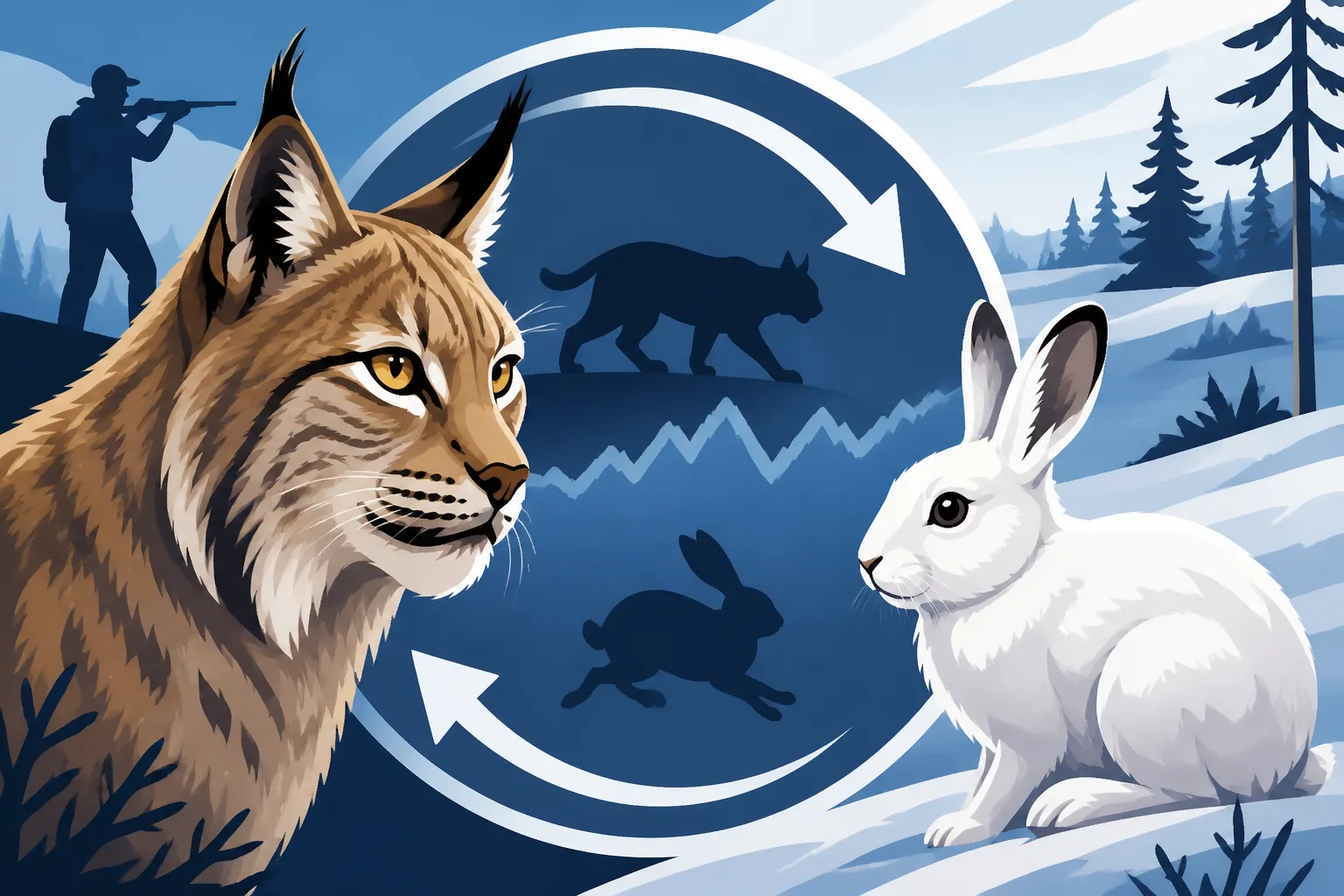
The snowshoe hare and the Canada lynx share one of the most iconic predator-prey relationships in the natural world. It’s a textbook example of how two species can be so interdependent that their population dynamics mirror each other in a seemingly endless cycle of boom and bust. Understanding this dance is key to appreciating the intricate balance of our boreal ecosystems.
The Snowshoe Hare's Boom and Bust
Snowshoe hares, with their large, fur-covered hind feet designed to act like snowshoes, are truly creatures of the northern forests. They’re masters of camouflage, changing their coat from mottled brown in summer to brilliant white in winter, allowing them to blend seamlessly into their surroundings. These hares are primarily herbivores, feasting on a wide variety of plants, shrubs, and even tree bark during the harsh winter months. You'll often see the tell-tale clipped twigs and stripped bark low to the ground, especially after a fresh snowfall, signaling their presence.
What's truly remarkable about snowshoe hares is their incredible reproductive capacity. When conditions are right, their populations can explode. A single female can produce multiple litters in a year, with several young in each litter. This rapid breeding allows their numbers to soar, transforming a quiet bush into a hopping, munching wonderland. For a few years, it feels like they are everywhere, leaving tracks crisscrossing every trail and cutline. This abundance provides a feast for many predators, but none benefit more directly than the lynx. However, this boom can't last forever. As populations peak, resources become scarcer, disease can spread more easily, and predation pressure reaches its maximum. Suddenly, almost without warning, the numbers crash. It can feel like one winter the forest is teeming with hares, and the next, you're lucky to see a single track. This dramatic decline can be quite stark, sometimes falling by as much as 90% or more. This is the "bust" phase, a natural, albeit sometimes harsh, part of their existence. If you've ever found yourself wondering where all the hares went, you're observing this part of the cycle firsthand. For more on this, check out Snowshoe Hare and Its Ten Year Cycle.
Lynx: The Specialized Hunter
Now, imagine being a predator so finely tuned to hunting one primary prey species that your very existence hinges on its availability. That's the Canada lynx. These magnificent cats are unmistakable with their tufted ears, short bobbed tails, and incredibly large, padded paws – even larger than the snowshoe hare's, making them supreme hunters in deep snow. They possess an almost ethereal grace, moving silently through the dense boreal forest.
Lynx are highly specialized hunters, and their survival is inextricably linked to the snowshoe hare population. While they will occasionally take other prey, such as voles, mice, birds, or even deer fawns if desperate, studies have shown that snowshoe hares can make up anywhere from 70% to 90% of their diet, especially during the winter. This means that as hare numbers rise, lynx populations also begin to climb, albeit with a slight delay. More food means more successful breeding, larger litters, and better survival rates for young lynx. You might even start seeing more lynx tracks or even fleeting glimpses of the elusive cats themselves as their numbers swell. Conversely, when the hare population inevitably crashes, lynx numbers soon follow. It's a brutal reality of nature: fewer hares mean starvation for many lynx, especially the young. Breeding success plummets, and the overall population declines sharply. This lag in the lynx population's response to the hare cycle is what creates the distinct, oscillating pattern seen in trapping records and scientific studies for centuries. It's a testament to the immense pressure they exert on each other.
Saskatchewan's Boreal Realm: Where the Cycle Unfolds
Saskatchewan, often thought of as purely prairie, boasts a significant and wild boreal forest in its central and northern regions. This vast expanse of evergreen and mixedwood forest provides the perfect backdrop for the snowshoe hare and lynx cycle to play out, largely away from human development.
Key Habitats for Lynx and Hare in Saskatchewan
For both lynx and snowshoe hares, the ideal habitat in Saskatchewan is the dense, regenerating boreal and mixedwood forest. Think of areas rich in young conifers like black spruce, jack pine, and balsam fir, intermixed with trembling aspen and white birch. These thick stands provide crucial cover from predators like wolves and coyotes for hares, and also offer excellent ambush cover for lynx. The dense undergrowth provides an abundance of forage for hares year-round.
In Saskatchewan, you'll find these conditions in spades across the entire northern half of the province, from the Hunting Saskatchewan's Boreal North all the way down to the Hunting Saskatchewan's Forest Fringe around communities like Candle Lake, Hudson Bay, and Meadow Lake. These areas, characterized by their mosaic of forest types, wetlands, and small clearings, create a patchwork of prime habitat. The hares benefit from the diverse vegetation for food and shelter, while the lynx rely on the dense cover to stalk their prey effectively. Looking at topographical maps or using a tool like GoHunt can help you identify these specific areas of dense forest and thickets, often bordering muskegs or old cut blocks, where both species are likely to be found. Understanding these habitat preferences is crucial for anyone interested in observing or trapping these animals.
Factors Influencing the Cycle Beyond Just Each Other
While the lynx and hare are the stars of this particular show, their dynamic isn't entirely isolated. Other environmental factors and biological interactions also play significant roles in modulating the cycle, sometimes intensifying it, and other times mitigating its effects.
One major influence is weather patterns. Deep, persistent snow can actually be beneficial for hares to a certain point, providing cover and allowing them to access browse higher up on shrubs and young trees. However, extremely harsh, prolonged winters can lead to higher mortality rates due to exposure and reduced forage. For lynx, deep snow, particularly fluffy snow, makes hunting other prey more difficult but gives them an advantage over hares with their large paws. Conversely, mild winters might mean less snow, making hares more vulnerable to predators and potentially shifting the timing or intensity of population peaks.
Disease can also sweep through hare populations, especially when their numbers are at their highest and they are stressed by overcrowding and resource scarcity. Parasites and bacterial infections can decimate a large portion of a hare population, contributing to the "bust" phase. While not as common for lynx, they too can be affected by disease, though usually secondary to starvation during hare lows.
Furthermore, other predators are always in the mix. Coyotes, wolves, red fox, great horned owls, and various raptors all prey on snowshoe hares. While these generalist predators don't specialize in hares to the same extent as lynx, their cumulative pressure can certainly influence hare numbers. During the hare peak, these other predators also benefit, but they don't crash as hard when hare numbers decline because they have other food sources. This means that even when lynx numbers are low, hares still face significant threats. Even species like Black Bear Hunting in Saskatchewan can influence the ecosystem balance.
Finally, human impact, though less direct in remote boreal areas, still plays a role. Trapping, for instance, removes a certain number of lynx, which can slightly reduce predation pressure on hares. However, trapping generally works in concert with the natural cycle; trappers are more active and successful during high lynx populations and less so during lows. Habitat alteration, such as forestry operations creating clearcuts or regenerating stands, can temporarily change local hare and lynx dynamics. While clearcuts might initially reduce habitat, regenerating areas can become prime hare habitat in time, eventually drawing lynx back in.
What This Means for Hunters and Trappers
For those who spend their seasons in Saskatchewan's northern forests, understanding the lynx and snowshoe hare cycle isn't just academic; it's practical knowledge that can inform scouting, hunting, and trapping strategies.
Observing the Signs: Reading the Landscape
As a hunter or trapper, learning to read the subtle signs of the forest is paramount. When it comes to the snowshoe hare cycle, keen observation can tell you a lot about where the populations are in their boom or bust. During the "boom" years, you'll see hare tracks everywhere after a fresh snowfall – a literal maze of trails through the thickets. You'll notice browse lines on young aspen and willow, where hares have been feeding heavily. Your dog might even flush more hares than usual when you're out Ruffed Grouse Hunting Saskatchewan's Bush Trails or looking for other game.
When you start to see these abundant hare signs, it’s a good indicator that lynx activity will likely pick up too, or perhaps already has. Look for lynx tracks – they are surprisingly large and round, often with no claw marks visible, unlike a coyote's. They tend to follow game trails or old cutlines. You might find areas with lynx scat or even, if you're lucky and very quiet, catch a glimpse of one of these elusive cats. Using an app like GoHunt for mapping can help you identify dense cover, old clearcuts, and other likely hotspots for both species, allowing you to focus your scouting efforts. If you notice a sudden drop in hare sign from one season to the next, be prepared for a corresponding dip in lynx sightings. This natural fluctuation means that success rates for lynx trappers, for example, will vary considerably year to year. Knowing what to look for and adapting your approach is part of the challenge and reward of hunting and trapping in these dynamic environments.
Trapping Opportunities and Regulations
The snowshoe hare cycle has a profound impact on trapping opportunities for furbearers in Saskatchewan, particularly for lynx. When hare numbers are high, lynx populations are robust, and this translates directly into increased trapping success. Trappers often eagerly await these peak years, knowing that their efforts are more likely to be rewarded with prime lynx pelts. It’s a busy time on the trapline, checking sets and processing valuable furs. For those interested in Trapping Prairie and Boreal Furbearers, lynx can be a significant part of their annual take.
However, when hare numbers crash, lynx trapping becomes incredibly challenging, if not impossible, for most. With very few hares to sustain them, lynx populations dwindle, and trappers will either find very few lynx or none at all in their traditional territories. This is when patience and long-term planning come into play. Trappers understand that these lean years are part of the natural cycle and are crucial for the ecosystem to reset and regenerate. Regulations for lynx trapping are carefully managed by the province, ensuring sustainable harvests that account for these population fluctuations. It's always essential to be aware of the current Saskatchewan Trapping Season Dates and to obtain the proper Getting a Saskatchewan Trapping Licence before heading out. Responsible trapping helps ensure that the lynx and snowshoe hare cycle can continue for generations to come, providing both economic opportunities and ecological balance. Understanding the timing of these cycles can also help trappers decide when to focus their efforts on other furbearers that might not be as directly impacted by the hare population.
The Future of the Cycle in a Changing Landscape
The lynx and snowshoe hare cycle, while deeply rooted in natural history, is not immune to the pressures of a changing world. As our environment undergoes shifts, so too might the delicate balance of this ancient predator-prey relationship.
Climate Change and Habitat Shifts
One of the most significant long-term factors that could impact the snowshoe hare and lynx cycle in Saskatchewan is climate change. Hares are uniquely adapted to snowy environments. Their large feet are designed for locomotion in deep snow, and their seasonal coat change provides essential camouflage against a white backdrop. As winters potentially become shorter, warmer, or less snowy in parts of their range, hares could face increased predation risk due to mismatched camouflage or reduced mobility in wet, slushy conditions. This could, in turn, affect their ability to reach peak population levels, leading to less dramatic "booms."
For lynx, a reduction in the abundance of snowshoe hares would be catastrophic, given their specialized diet. Additionally, habitat shifts caused by climate change – such as changes in forest composition, increased frequency of wildfires, or the northward march of more southerly species – could fragment or alter the dense boreal forests that both species rely on. For example, if the mixedwood forest types that support abundant hares begin to shift, or if drought conditions become more prevalent, it could stress both populations. These changes might not eliminate the cycle, but they could alter its amplitude, frequency, or even geographic extent within Saskatchewan, potentially leading to less predictable patterns for future generations of hunters and trappers. It's a complex puzzle, and only time will tell how resilient these species truly are.
Conservation and Management
Given the intrinsic value of the lynx and snowshoe hare cycle, both ecologically and culturally, ongoing conservation and management efforts are vital. Saskatchewan, through its wildlife agencies, actively monitors furbearer populations, including lynx. This monitoring helps inform trapping regulations, ensuring that harvest levels are sustainable and do not exacerbate natural declines during low points in the cycle. This careful approach acknowledges the interconnectedness of these species and the broader ecosystem.
Furthermore, habitat preservation is paramount. Protecting large, contiguous blocks of boreal and mixedwood forest ensures that both hares and lynx have the necessary cover, food, and space to thrive through their natural cycles. This includes responsible forestry practices that consider wildlife habitat in regeneration plans. Public education also plays a role, helping people understand the importance of these species and their unique ecological relationship. While the lynx and snowshoe hare cycle is a powerful natural phenomenon that largely manages itself, human stewardship ensures that future generations will continue to witness and appreciate this fascinating dance in Saskatchewan's wild northern reaches. Using mapping tools like GoHunt can help conservationists and land managers track habitat changes over time, aiding in these critical long-term efforts.
Disclaimer
This article is for general informational purposes only and does not constitute professional advice. Laws, prices and regulations vary by location and change over time. Consult a qualified professional for guidance on your specific situation.