Wolverine in Saskatchewan’s North
For many of us who spend countless hours traversing Saskatchewan's vast northern reaches, the wolverine often feels more like a mythical creature than a tangible inhabitant. You hear whispers, maybe an old trapper's tale, but a genuine sighting? That’s gold dust. It’s frustrating when you dedicate so much time to exploring the bush, hoping for a glimpse of something truly wild, only to come up short. This comprehensive guide aims to pull back the curtain on this incredibly elusive animal, detailing where they live in Saskatchewan’s North, what signs they leave behind, and why they remain such a mystery to most of us.
The Ghost of the Boreal Forest: Understanding Wolverine Presence
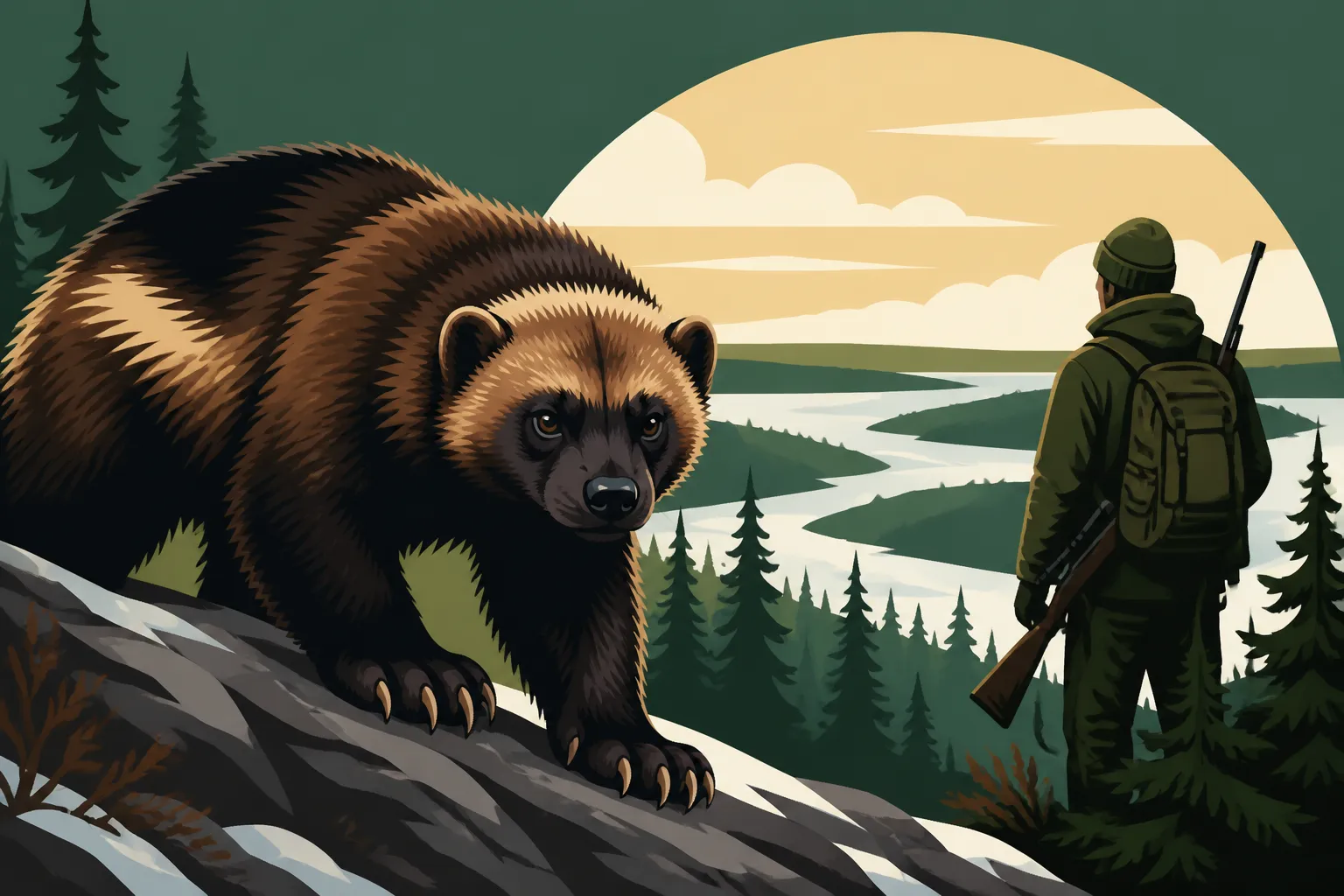
The wolverine, often called the "skunk bear" or "glutton," embodies the rugged spirit of the northern wilderness. They are creatures of extremes, thriving in environments that would send most other animals (and certainly most people!) scurrying for warmth and comfort. In Saskatchewan, their presence is almost exclusively confined to the deep boreal forest and tundra regions of the far north, areas characterized by vast, unbroken wilderness, sparse human population, and severe winter conditions.
Understanding Wolverine Habitat in Saskatchewan
When we talk about wolverine habitat in Saskatchewan, we're really talking about a specific kind of country: remote, rugged, and often snow-covered for much of the year. They need vast territories, which the northern boreal forest provides in spades. Think dense spruce and pine forests, expansive muskeg, rocky outcrops, and areas with significant snow accumulation. These aren't animals you'll bump into while Hunting Whitetails on Saskatchewan Farmland. Their preference for deep snow is a critical factor, as they often use snow dens for rearing young, and their large feet are well-adapted for traversing soft snow, giving them an advantage over other predators. They are particularly drawn to areas with diverse prey availability, even if that prey is widely scattered. This means a mosaic of mature forest, some younger stands, and open bogs, all contributing to a healthy ecosystem that supports their demanding lifestyle.
The challenging landscape of northern Saskatchewan—with its intricate network of lakes, rivers, and impenetrable bush—is exactly what makes it suitable for wolverines. These are places where human disturbance is minimal, where logging roads might be few and far between, and where the silence is only broken by the wind and the calls of other wild creatures. They thrive in country that makes most of us feel utterly insignificant, a true testament to their tenacity.
Why They're So Hard to Spot
Let's be real: seeing a wolverine isn't like spotting a whitetail deer or a moose browsing on a cutline. It’s an incredibly rare occurrence, even for seasoned bushmen and trappers. Their elusive nature stems from a combination of factors, primarily their incredibly low population density. These animals maintain enormous individual territories, meaning there just aren't many of them in any given area. A single wolverine might range over hundreds, sometimes even over a thousand, square kilometers. This vast roaming makes chance encounters incredibly unlikely.
Beyond their low numbers, wolverines are naturally solitary and exceptionally wary of humans. They are masters of stealth, using the dense cover of the boreal forest to their advantage. They move with purpose and discretion, often traveling at night or during the twilight hours, further reducing their visibility. If a wolverine detects human presence, it will almost certainly detour and remain unseen. They're not going to stand around for a photo opportunity; they're going to vanish as quietly as they appeared, leaving you to wonder if you ever truly saw anything at all. This deep-seated wariness is a survival mechanism honed over millennia in harsh, competitive environments.
Interpreting the Silent Clues: Signs of Wolverine Presence
While a direct sighting might be a once-in-a-lifetime event, wolverines do leave behind tell-tale signs for those who know what to look for. Think of it as reading a secret language written in the snow, mud, and forest floor. These clues are often subtle, demanding a keen eye and a deep understanding of the northern environment. For hunters and outdoors enthusiasts exploring the far north, knowing these signs can turn a seemingly empty landscape into a narrative of wildlife activity.
Tracks and Scat
Wolverine tracks are one of the most definitive pieces of evidence you can hope to find. They are surprisingly large for an animal of their body size, typically around 4-5 inches long, showing five distinct toes with prominent, non-retractable claws. The front paws are usually larger than the hind paws. Their gait is often a bounding pattern, especially in snow, where they leave deep, powerful impressions. In deep snow, their tracks can sometimes be mistaken for a small bear or a large coyote, but the five-toed pattern and the sheer power of the print are usually distinguishing features. They often follow lines of least resistance, like frozen lake edges, traplines, or Hunting an Old Logging Road in the North, but their wanderings can take them anywhere.
Scat, while less common to find, can also offer clues. Wolverine scat is typically large for a furbearer, often dark and rope-like, usually containing fur, bone fragments, and sometimes teeth from their varied diet. It’s an indicator of their carnivorous habits and their incredible digestive power. Finding either tracks or scat is like finding a hidden treasure map; it confirms that you are in wolverine country and that these elusive creatures are indeed using the landscape. For those using mapping tools like GoHunt, marking such finds can help build a pattern of where these animals might be active, even if you never see them directly.
Den Sites and Food Caches
Wolverines are known for their incredible strength and persistence, traits that extend to how they create dens and, more notably, how they cache food. Den sites are typically in very secure, secluded locations, often in snow drifts, under fallen timber, within rock crevices, or in underground burrows. These dens are crucial for protection from predators and for raising young, especially the deep snow dens that offer insulation and camouflage. Finding an active den is extremely rare and usually happens incidentally by trappers or researchers.
Their food caching behaviour is perhaps more frequently encountered, though still a rare sight. Wolverines are notorious for their habit of "storing" food, often burying large pieces of carcass under snow, dirt, or logs. They possess immense strength and can move surprisingly heavy objects to conceal their bounty. They will often return to these caches over time, sometimes weeks or even months later. These caches are usually marked by an area of disturbed snow or earth, and if you’re lucky, you might find scraps of fur or bone nearby. These caching spots show their foresight and their ability to survive in lean times, always planning for the future.
Remote Camera Traps and Incidental Sightings
In today's world, remote trail cameras are becoming an invaluable tool for observing wildlife that historically evaded human eyes. For the wolverine, this holds especially true. Many of the verified "sightings" in Saskatchewan's North come not from direct human encounters, but from a flash of movement on a memory card. Setting up cameras on well-used game trails, traplines, or even around a Baiting Black Bear in Saskatchewan site (though wolverines are not typically attracted to bear bait in the same way, they are opportunistic) can sometimes capture a fleeting image. These cameras often reveal their nocturnal wanderings and their surprisingly quick, powerful movements through the underbrush.
Incidental sightings, while rare, do happen. It might be a momentary glimpse crossing a remote winter road, a dark shape disappearing into the treeline from a float plane, or a quick dash across a frozen lake. These are often so brief and unexpected that you question what you saw, adding to the wolverine's legendary status. These fleeting moments highlight just how much untouched wilderness they command in Saskatchewan’s northern zones. Tools like GoHunt can be extremely useful for mapping out potential remote camera locations, especially when identifying old cutlines or topographic features that might funnel wildlife through a particular area, increasing the odds of capturing a photograph of these elusive creatures.
Wolverine Ecology and Conservation in Saskatchewan
Understanding the wolverine goes beyond just trying to spot them; it involves appreciating their critical role in the northern ecosystem and the challenges they face in a changing world. They are more than just a furbearer; they are an ecological indicator, a symbol of true wilderness, and a powerful force in the food chain. Their continued presence signifies a healthy, robust northern environment.
Diet and Hunting Habits
The wolverine is a formidable predator and scavenger, known for its opportunistic diet. They are true omnivores, though their preference leans heavily towards meat. Their incredibly powerful jaws and teeth allow them to crush bone and frozen meat with ease, giving them access to resources many other predators cannot utilize. Their diet in Saskatchewan’s North includes everything from small rodents like voles and mice, to snowshoe hare, porcupines, and even larger prey such as caribou, deer, and moose calves. They are not above scavenging from wolf kills or winter-killed animals, playing a vital role as nature's clean-up crew.
Their hunting strategy often involves relentless pursuit and sheer brute force. While they might not be as fast as a wolf, their endurance and aggression allow them to wear down prey, especially in deep snow where their large paws give them an advantage. Do Wolves Affect Saskatchewan Moose Numbers? is a question often asked, and wolverines play a similar, albeit smaller, role in the predation dynamics of the northern forest. They will stalk, ambush, and relentlessly chase, using every ounce of their compact, muscular bodies to overcome prey much larger than themselves. This adaptability in hunting and scavenging is key to their survival in the challenging northern climate.
Population Status and Threats
Wolverine populations in Saskatchewan's North, like much of their range across North America, are considered stable but at very low densities. They are not an endangered species in Saskatchewan, but they are a species of special concern due to their sensitivity to habitat fragmentation and human disturbance. One of the primary threats they face is climate change, specifically the reduction of persistent snow cover. Wolverines rely on deep, stable snowpacks for their denning sites, which provide protection and insulation for their young. As winters become shorter and less severe, these crucial denning habitats are increasingly at risk.
Habitat fragmentation from industrial development, such as forestry, mining, and oil and gas exploration, also poses a threat. While northern Saskatchewan is vast, linear features like roads and seismic lines can increase human access into previously undisturbed areas, which wolverines tend to avoid. Furthermore, their large home ranges mean they are particularly vulnerable to any reduction in suitable habitat. Maintaining large, contiguous blocks of undisturbed boreal forest is crucial for their long-term survival in the province.
The Role of Trappers and Researchers
For generations, trappers in Saskatchewan's North have had the most consistent, albeit still rare, interactions with wolverines. Their intimate knowledge of the land, their ability to read subtle signs, and their deep understanding of furbearer behaviour often make them the best source of information about wolverine presence. A trapper spending weeks on a line might encounter a wolverine track where no one else ventures, or even catch one occasionally. These encounters, while often accidental, provide invaluable data points that contribute to our understanding of this species. Trapping Prairie and Boreal Furbearers is a tradition that has a long history here, and the knowledge passed down is essential.
In addition to traditional knowledge, scientific research plays a crucial role in monitoring wolverine populations and guiding conservation efforts. Researchers employ methods like remote camera traps, snow tracking surveys, and genetic analysis from hair samples to estimate populations, track movements, and assess habitat use. These studies help us understand their ecology, reproductive success, and how they respond to environmental changes. This collaborative effort between local knowledge holders and scientific communities is vital to ensuring that the wolverine, the indomitable ghost of the boreal, continues to roam Saskatchewan's wild North for generations to come.
| Characteristic | Wolverine | Grey Wolf | Coyote | Badger |
|---|---|---|---|---|
| Track Size (Length) | 4-5 inches | 4-5 inches | 2.5-3 inches | 2-3 inches |
| Toe Count | 5 toes (distinct claw marks) | 4 toes (distinct claw marks) | 4 toes (often symmetrical) | 5 toes (long, straight claws) |
| Gait | Bounding, powerful | Direct register, trotting | Direct register, trotting | Shuffling, waddling |
| Habitat Preference | Remote boreal, deep snow | Forest, prairie, open country | Prairie, farmland, forest | Open prairie, grasslands |
| Scat Content | Fur, bone, often dark | Fur, bone, often twists | Fur, berries, common | Insect parts, small bones |
| Elusiveness | Extremely High | High | Moderate | Moderate |
Disclaimer
This article is for general informational purposes only and does not constitute professional advice. Laws, prices and regulations vary by location and change over time. Consult a qualified professional for guidance on your specific situation.