Where Saskatchewan’s Woodland Caribou Stand
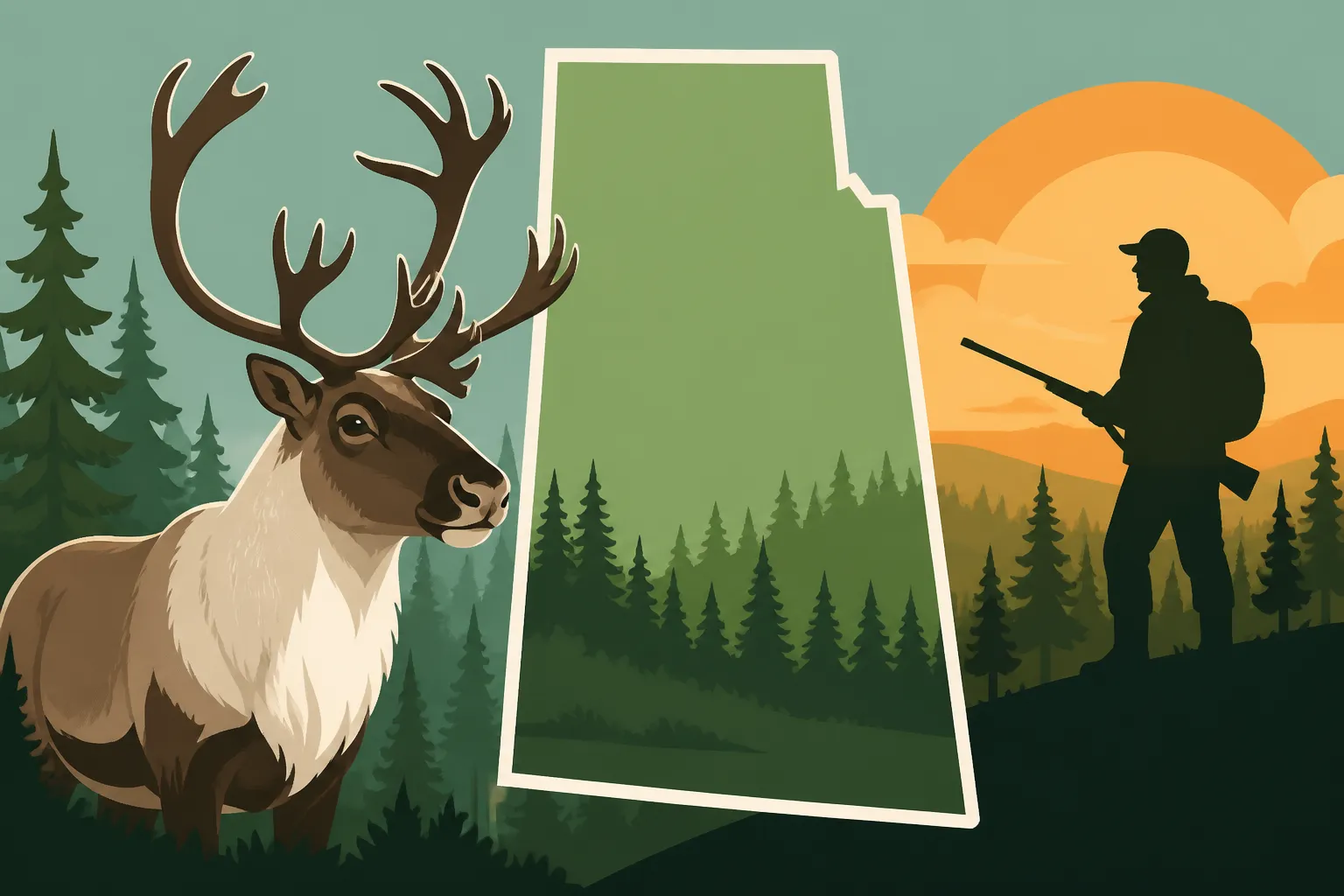
It's easy to picture the vast, wild stretches of northern Saskatchewan, but sometimes what lies within those remote landscapes remains a mystery, even for those of us who cherish our wild spaces. For many, the Woodland Caribou symbolizes the untamed spirit of the boreal forest, yet their silent struggle often goes unnoticed. There's a deep concern among wildlife enthusiasts about their numbers, and understanding their current situation can be complex. This guide aims to shed light on exactly where these magnificent animals stand today, covering their unique habitat, population trends, and the critical conservation efforts underway to secure their future in our province.
Understanding Woodland Caribou in Saskatchewan: Range, Habitat, and Unique Characteristics
For many of us who dream of Saskatchewan's wilder corners, the Woodland Caribou holds a special, almost mythical place. They’re not your typical big game animal you'd pursue with a licence; rather, they represent the very essence of our northern wilderness, a barometer of its health. When we talk about "where they stand," we're not just asking about their physical location on a map, but also their ecological standing, their struggle for survival against a changing landscape. It’s a complex picture, and one that resonates deeply with anyone who cares about the future of our provincial wildlife.
The Boreal Wilderness: Caribou's Last Stronghold
Saskatchewan's Woodland Caribou primarily inhabit the vast, often impenetrable expanses of our boreal forest. This isn't the open prairie or the aspen parkland; this is truly wild country, a mosaic of dense conifer stands, vast peatlands, muskegs, and numerous lakes and rivers. Think north of the agricultural belt, past the forest fringe, deep into the domain of black spruce, jack pine, and tamarack. It’s a challenging environment for humans to navigate, which historically offered caribou a degree of protection. Their range stretches across the northern half of the province, from the Manitoba border in the east to Alberta in the west, primarily within the Mid-Boreal Upland and Boreal Shield ecozones.
These animals are specialists, highly adapted to this specific environment. Unlike other deer species that thrive on agricultural edges, caribou rely on older growth forests, especially those with abundant arboreal lichens—the "old man's beard" that hangs from trees. This lichen is a crucial winter food source, incredibly digestible and vital for their survival in deep snow and bitter cold. They're built for it, with large hooves that act like snowshoes, distributing their weight and allowing them to move across soft snow and spongy muskeg where other animals would flounder. It’s a fragile balance, and changes to this delicate ecosystem have profound effects on their ability to find food and evade predators.
When you're looking at a satellite map, perhaps with tools like GoHunt or other advanced mapping systems, you'll see large, contiguous tracts of this specific forest type. These are the areas where caribou should be, and where conservation efforts are most focused. For anyone studying or tracking wildlife, understanding these vast, often unmarked landscapes is critical, and detailed mapping platforms, including those like GoHunt, offer unparalleled perspectives on terrain and vegetation crucial for caribou survival. However, even within these vast areas, specific patches are more critical than others. They often prefer higher ground in winter, where snow isn't quite as deep, or areas with an abundance of older trees. In the summer, they might spread out more, moving into wetlands to escape insects and access different forage. Their lives are truly tied to the health and integrity of this immense northern forest. Hunting Saskatchewan's Boreal North offers more insight into this rugged environment.
Unique Adaptations and Why They Need Specific Habitat
Woodland Caribou are distinctly different from other members of the deer family you might encounter further south, like white-tailed deer or moose. For starters, both male and female caribou grow antlers, although the males' are typically larger and more impressive. Their coats are dense and insulating, a perfect adaptation for the harsh northern winters. But it’s their reliance on old-growth forest and their unique foraging strategies that truly set them apart and make them particularly vulnerable to habitat disturbance.
Their primary food source, especially in winter, isn't browse like willow or aspen shoots. It's terrestrial and arboreal lichens. These lichens grow very slowly, often taking decades, if not a century, to reach sufficient abundance to support caribou herds. This means caribou need mature to old-growth forests, undisturbed by logging or widespread fires, to sustain themselves. When you see clear-cuts or extensive areas of younger, regenerating forest, you's looking at habitat that simply cannot support caribou for many, many years to come. This slow-growing food source is a major reason why their populations are so slow to recover once disturbed.
Furthermore, caribou employ a unique anti-predator strategy: they spread out. Unlike deer that might yard up in winter, caribou disperse across vast landscapes. This makes it harder for predators like wolves to find concentrated prey. However, this strategy only works if there's enough contiguous, undisturbed habitat to allow for this dispersal. Linear disturbances like seismic lines, old logging roads, or pipelines can act as travel corridors for wolves, inadvertently making caribou more accessible. Understanding these intricate relationships between caribou, their food, and their predators is critical to truly grasp the challenges they face, and it highlights why simply having "forest" isn't enough; it has to be the right kind of forest. Hunting a Boreal Muskeg Edge and Hunting an Old Logging Road in the North can give you a sense of how these habitat features are utilized.
Population Status and Trends: A Precarious Balance
The question of "where Saskatchewan's Woodland Caribou stand" isn't just about their physical range; it’s critically about their numbers and whether those numbers are stable, increasing, or, more often than not, declining. Unfortunately, for many caribou populations across Canada, including some in Saskatchewan, the trend has been a cause for significant concern. These aren't creatures that bounce back quickly from setbacks, and their populations are particularly sensitive to cumulative impacts on their habitat.
Declining Numbers and Regional Variability
Across Saskatchewan, Woodland Caribou populations are generally considered to be stable to declining, with some herds showing more significant declines than others. The province is home to several distinct caribou ranges or populations, each facing its own unique set of pressures. Historically, caribou were likely found further south than they are today, but habitat fragmentation and human development have pushed them deeper into the boreal interior. Current estimates, which can be difficult to obtain accurately for such elusive and wide-ranging animals, often point to a need for vigilant monitoring and proactive management.
What complicates the picture is that not all caribou herds are facing the exact same fate. Some localized populations might be relatively stable, especially in the most remote, undisturbed corners of the province, far from roads and industrial activity. However, populations closer to human activity or within areas undergoing resource development often show more pronounced drops. This variability highlights the critical importance of understanding specific range conditions. It’s not just about a provincial average; it’s about the health of each individual herd and the integrity of its particular habitat. When we discuss Saskatchewan's Small Game and Northern Species, we touch on the broader context of northern wildlife, but caribou stand out due to their particular vulnerability.
Monitoring and Assessment Challenges
Counting Woodland Caribou is no easy feat. They live in vast, rugged, and often inaccessible terrain, making direct observation challenging. Wildlife biologists employ a variety of methods to estimate population sizes and track trends, but each comes with its own set of limitations. Aerial surveys are common, especially in winter when caribou stand out against the snow, but even these can be difficult in dense canopy and require specific weather conditions. Telemetry, using satellite collars on individual animals, provides invaluable data on movement patterns, habitat use, and survival rates, but collaring efforts are expensive and can only track a small sample of the total population.
The data gathered from these efforts is crucial for informing conservation strategies. It allows wildlife managers to identify critical habitat, understand migration routes, and assess the impact of various disturbances. However, the slow reproductive rate of caribou means that population declines are often only evident after many years, and recovery can take even longer. This delay in detecting trends and the slow response time of the animals themselves create a challenging scenario for effective conservation. It requires a long-term vision and a commitment to protecting habitat before populations reach critically low levels. Where Saskatchewan Game Surveys Are Flown illustrates the vastness and the difficulty of accessing these remote areas for monitoring. When scientists or resource managers are trying to overlay different datasets – say, caribou GPS points with forest disturbance maps – they often rely on robust digital tools. Visualizing these complex layers, identifying potential conflicts or crucial intact habitat, is a key analytical step. This is where platforms, including those from GoHunt, can assist in providing the detailed geographical context needed for effective planning and assessment.
Threats to Woodland Caribou: A Web of Challenges
The precarious standing of Saskatchewan's Woodland Caribou isn't due to a single factor but a complex interplay of human-caused disturbances and natural processes. Understanding these threats is the first step toward effective conservation, revealing why these animals are often considered an "umbrella species"—protecting caribou means protecting the health of the entire boreal ecosystem.
Habitat Loss and Fragmentation
Perhaps the most significant threat to Woodland Caribou is habitat loss and fragmentation. As mentioned, caribou are old-growth specialists, and activities like conventional forestry, mining, and oil and gas exploration lead to the removal or alteration of this critical habitat. When mature forests are logged, not only is the slow-growing lichen food source removed, but the regenerating younger forests often support higher densities of other ungulates, like white-tailed deer and moose. These animals, in turn, can attract more predators, especially wolves, into areas where caribou once had a relative refuge.
Linear features, such as seismic lines, logging roads, pipelines, and utility corridors, are another major contributor to habitat fragmentation. While these might seem minor on a large map, they act as pathways, or "highways," for predators. Wolves can travel more efficiently through dense forest using these cleared lines, increasing their encounter rates with caribou. These disturbances also change snow conditions and vegetation patterns, further impacting caribou foraging and movement. Even though caribou aren't hunted, understanding Hunting a Pipeline Right-of-Way shows how human infrastructure can alter wildlife movement. Saskatchewan Wildfire and Road Closures also demonstrate how large-scale disruptions can impact vast swathes of habitat.
Increased Predation and Human Disturbance
A direct consequence of habitat fragmentation and alteration is often an increase in predation pressure on caribou, primarily from wolves. As deer and moose populations increase in fragmented areas (due to more browse in regenerating forests), wolf populations can also increase. When their primary prey is abundant, wolves can incidentally prey on caribou, whose anti-predator strategy of spreading out becomes less effective when linear features make them easier to track. It's a classic example of "apparent competition," where human activity indirectly benefits one prey species (deer/moose) at the expense of another (caribou).
Human activities also bring direct disturbance. Noise from industrial operations, increased human presence, and vehicle traffic can displace caribou from important feeding or calving areas. While caribou are not directly hunted by general hunters in Saskatchewan, the cumulative effects of other human activities in their range are profound. Even carefully planned activities, if not executed with caribou conservation in mind, can chip away at their ability to survive and thrive. This is why careful planning and mitigation are so important for any development occurring within caribou range. Hunters exploring the northern regions, perhaps even while Camping on Saskatchewan Crown Land, should be mindful of staying informed about these delicate ecosystems.
Conservation Efforts and Management: A Path Forward
Given the challenges, a lot of dedicated effort goes into trying to secure the future of Saskatchewan's Woodland Caribou. This isn't a simple task, and it involves a multi-faceted approach, often requiring collaboration between government, industry, Indigenous communities, and conservation groups. The goal is not just to maintain current numbers, but ideally, to reverse declines and facilitate recovery.
Habitat Protection and Restoration Initiatives
At the core of caribou conservation is habitat. Protecting existing undisturbed boreal forest is paramount. This includes identifying and safeguarding critical habitat areas, such as calving grounds and winter feeding sites, from further industrial development. Mechanisms like protected areas, conservation easements, and land-use planning are all tools used to achieve this. Saskatchewan's Northern Road Network illustrates the vastness of this area and how complex it is to manage.
Beyond protection, habitat restoration is also a key component. This involves rehabilitating degraded caribou habitat, particularly by decommissioning and re-naturalizing linear features like old seismic lines and legacy logging roads. Techniques might include planting native vegetation, creating physical barriers to restrict access, or even mounding earth to mimic natural terrain. The idea is to break up those predator travel corridors and restore the forest's natural structure over time. It's a long-term investment, as the boreal forest heals slowly, but it's essential. Think of the work involved in Hunting a Burned Block Three Years On – it takes time for natural succession, and restoration aims to accelerate that healing process for caribou. Understanding How Wildfire Changes Northern Game Range is also vital to effective restoration planning.
Science-Based Management and Collaboration
Effective caribou conservation relies heavily on robust science and ongoing monitoring. This means continuous population assessments using methods like aerial surveys and telemetry, as discussed earlier. Understanding caribou movement, predator dynamics, and how different disturbances affect them is crucial for adaptive management. Wildlife agencies, often working with academic institutions, conduct research to refine our understanding of caribou ecology and the most effective conservation interventions. This is where platforms, including those from GoHunt, can assist in providing the detailed geographical context needed for effective planning and assessment.
Furthermore, collaboration is absolutely vital. No single entity can solve the caribou challenge alone. Industry partners are encouraged to adopt best management practices that minimize their footprint and mitigate impacts on caribou habitat. Indigenous communities, with their deep traditional knowledge of the land and its wildlife, play an indispensable role in co-managing caribou populations and ensuring conservation strategies are culturally appropriate and effective. Environmental non-governmental organizations advocate for stronger protections and often contribute to fieldwork and public education. It's a shared responsibility to safeguard these iconic animals for future generations.
Woodland Caribou Status Summary
| Characteristic | Description | Impact on Caribou (if threat) |
|---|---|---|
| Primary Habitat | Old-growth boreal forest, extensive peatlands, muskegs. | Loss leads to food scarcity and increased predation. |
| Key Food Source | Terrestrial and arboreal lichens (slow-growing). | Requires decades for habitat recovery after disturbance. |
| Anti-Predator Strategy | Dispersal across vast, undisturbed landscapes. | Fragmented habitat allows easier predator access, negating dispersal benefits. |
| Population Trend | Generally stable to declining in Saskatchewan, with regional variability. | Slow recovery rates, sensitive to cumulative impacts. |
| Major Threats | Habitat loss & fragmentation (logging, industrial development), increased predation (wolves). | Direct mortality, displacement, reduced reproductive success. |
| Conservation Focus | Habitat protection, restoration (linear feature deactivation), science-based management, collaboration. | Aims to reverse declines and promote long-term sustainability. |
Disclaimer
This article is for general informational purposes only and does not constitute professional advice. Laws, prices and regulations vary by location and change over time. Consult a qualified professional for guidance on your specific situation.