Calling Moose in Saskatchewan’s Bush
One of the most thrilling and challenging aspects of hunting in Saskatchewan's vast northern bush is the intricate dance of calling a bull moose. It's a skill that can feel incredibly daunting, like you're trying to speak a language you barely understand, often resulting in long hours of silence and frustration. Many hunters venture into the dense forest, armed with calls, only to find themselves whispering into the void, wondering if they're doing it wrong, or if the moose are even there. This comprehensive guide will peel back the layers of mystery surrounding moose calling in Saskatchewan's wild bush country, giving you the knowledge and confidence to engage these magnificent animals on their home turf.
Understanding Saskatchewan Moose Behavior in the Bush
Before you even think about putting a call to your lips, you need to understand the animal you're trying to communicate with. Moose are creatures of habit and environment, and their behavior shifts dramatically with the seasons and the specific characteristics of the boreal forest. Their world is one of dense cover, water, and specific forage, all of which influence when and how they respond to calls.
Seasonal Rut Phases and Vocalizations
The moose rut in Saskatchewan is a magical, albeit intense, time for hunters. Generally, the rut for moose in Saskatchewan truly begins to heat up in late September and continues through much of October, though some activity can be observed earlier and later. Understanding when Saskatchewan's moose rut peaks is paramount for successful calling. Early in the rut, bulls might be more hesitant, perhaps still sizing up the competition or not yet fully committed to breeding. They'll be listening, but might not respond aggressively. As the rut progresses into its peak, typically the first two to three weeks of October, their testosterone levels surge, and they become much more vocal and responsive to both cow calls and challenging bull grunts. This is when you want to be out there, often hearing a symphony of grunts, groans, and antler raking echoes through the quiet bush.
During this period, cows are also vocalizing, emitting long, drawn-out bawls that signal their readiness to breed. Bulls, in turn, respond with deep, guttural grunts, often followed by the smashing sound of antlers against brush as they vent their frustrations or display their dominance. Learning to distinguish these different calls, and understanding the subtle nuances of urgency or challenge in each, is key. Outside of the rut, moose are generally much quieter. A cow might let out an alarm bark if startled, or a calf might bleat for its mother, but the intense, responsive vocalizations you rely on for calling are largely confined to the breeding season.
Habitat Preferences and Movement Patterns
Saskatchewan's bush moose are not just wandering aimlessly; they are incredibly attuned to their environment. They thrive in areas that offer a mosaic of dense cover for security and bedding, coupled with access to water and abundant forage. Think of areas like beaver ponds, swampy muskegs, and dense stands of willow and poplar within the mixed boreal forest. These aren't just good places for them to live; they're prime locations for you to set up your calling sequence. Moose are primarily browsers, and knowing what moose eat through the year can help you pinpoint their preferred dining spots. In the fall, they'll be keying in on willow, aspen, red-osier dogwood, and various aquatic plants.
Moose movements are often dictated by these needs. They will travel between bedding areas in thick timber to feeding grounds and water sources, often following well-worn trails that can be excellent places to intercept them. During the rut, bulls will actively search for cows, covering significant ground. They often use old logging roads, cutlines, and natural corridors like ridge tops or creek bottoms as travel lanes. When you're out there, look for fresh tracks, broken branches, and rubbed trees – clear indicators of recent moose activity. Understanding these patterns, perhaps even scouting with satellite imagery in Saskatchewan, can dramatically increase your chances of calling success. A bull that's already on the move and actively searching is far more likely to respond to a call than one simply bedded down in a secure area.
The Impact of Weather on Moose Activity
Weather plays an undeniable role in moose behavior, directly influencing how and when they'll respond to your calls. Moose are creatures of the cold; they are built for harsh winters with their thick coats and long legs. Hot, sunny days, especially during the early rut, can make them lethargic and less inclined to move or vocalize. They might bed down in shaded, cool, or wet areas, conserving energy. In these conditions, calling might be less effective, or you might need to adjust your strategy, perhaps calling more softly and patiently.
Conversely, cooler temperatures, overcast skies, and even light rain or snow can really get moose moving and responsive. These conditions mask human scent and sound, and the moose feel more comfortable being active. A crisp, cool morning with a light breeze is often ideal. Strong winds, however, can be a double-edged sword. While they can help carry your calls further, they also make it harder for you to hear a distant response, and for the moose to pinpoint your location. In high winds, moose might also seek shelter in denser timber, making them less visible and potentially less responsive. Always consider the forecast and how it might affect the moose's willingness to play along with your calling.
Essential Gear for Bush Moose Calling
Successful moose calling in the Saskatchewan bush isn't just about technique; it's also about having the right tools to complement your efforts. From the calls themselves to the optics and the clothing on your back, every piece of gear plays a role in your ability to draw in and effectively harvest a moose.
Types of Calls and Their Uses
The market is flooded with various moose calls, and figuring out which ones to use can be overwhelming. Fundamentally, you'll need a good quality grunt tube, often made from plastic, birch bark, or even flexible materials like rubber. These tubes are essential for projecting your cow calls and bull grunts. A longer tube generally provides a deeper, more resonant sound, which can be crucial for reaching distant bulls. Some tubes come with reeds, while others rely on your own vocal cords and breath control. Experiment with different types to find what feels most comfortable and effective for you.
Beyond the basic grunt tube, many callers incorporate external aids. A birch bark call, for instance, can produce incredibly realistic cow bawls and can be manipulated to mimic different vocalizations. Some hunters prefer mouth diaphragms for specific sounds, allowing for hands-free operation. Another critical "call" isn't vocal at all: a shoulder blade from a moose (if you can find one legally from a previous harvest or shed) or a sturdy paddle can be used for "raking." Raking involves scraping or thrashing against trees and brush, imitating the sound of a bull's antlers, a powerful display of dominance that often provokes a challenge from other bulls. Carrying a variety of calls allows you to adapt to the situation, whether you're trying to sound like a lonely cow, a dominant bull, or even a smaller, curious bull.
Optics and Scouting Tools
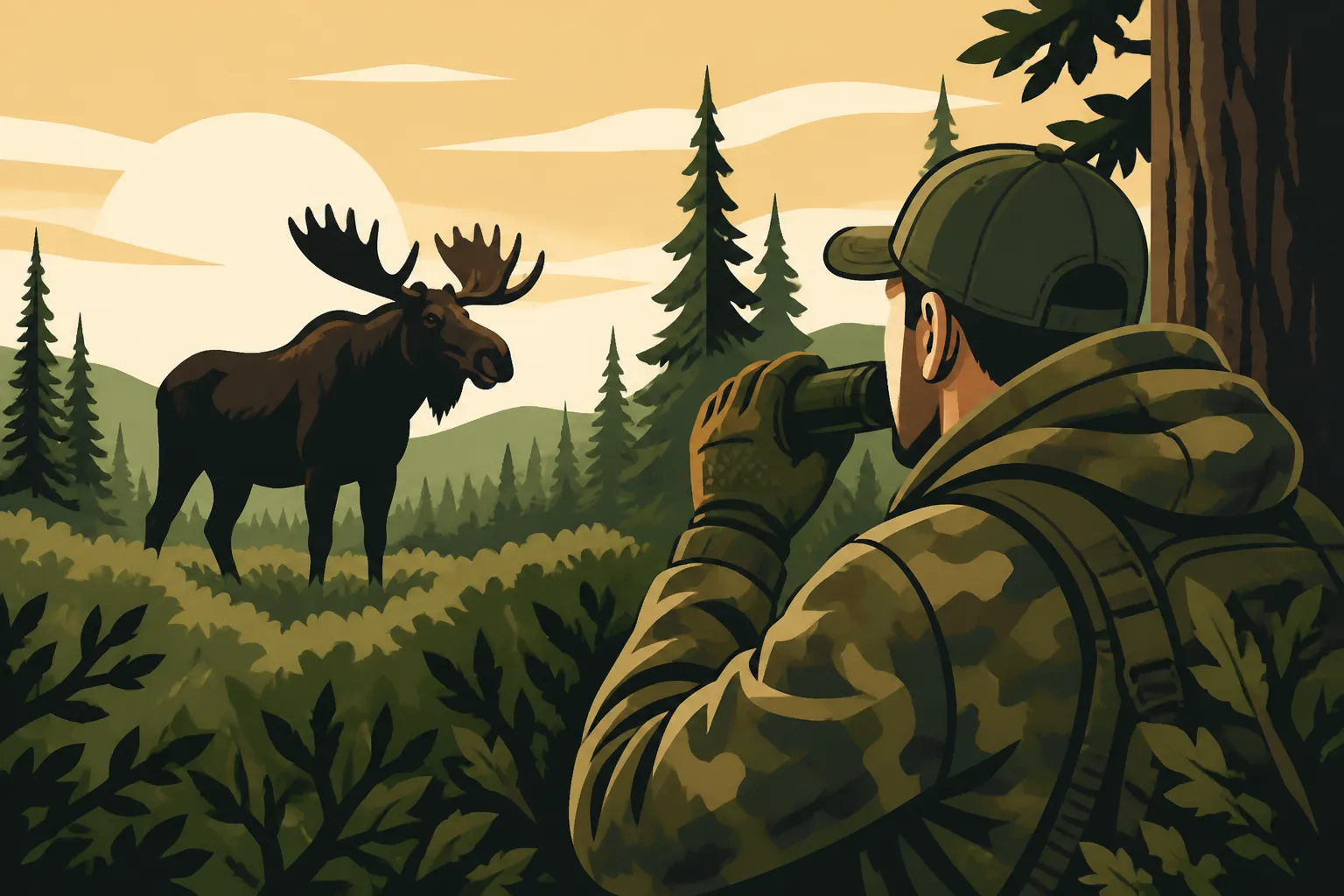
In the dense Saskatchewan bush, good optics aren't just a luxury; they're a necessity. While the bush means closer encounters are possible, it also means visibility can be limited. A pair of high-quality binoculars (8×42 or 10×42 are popular choices) will help you pick apart distant shadows, identify moose in thick cover, and confirm antler size long before they get too close. This is especially vital when a bull is approaching cautiously, often skirting your position, only offering glimpses. A rangefinder is equally important, allowing you to quickly and accurately judge shooting distances, ensuring an ethical shot when the opportunity arises.
Beyond optics, scouting tools can significantly enhance your calling success. A reliable GPS device or a smartphone app with detailed satellite imagery (like those offered by GoHunt) is invaluable for marking your calling locations, tracking moose sign, and navigating the often featureless bush. Knowing your exact location, identifying potential moose travel corridors, and even understanding the topography through contour lines can help you plan your approach and calling strategy. A portable saw or pruning shears can be useful for clearing shooting lanes or creating an effective raking setup without too much noise.
Clothing and Scent Control for Close Encounters
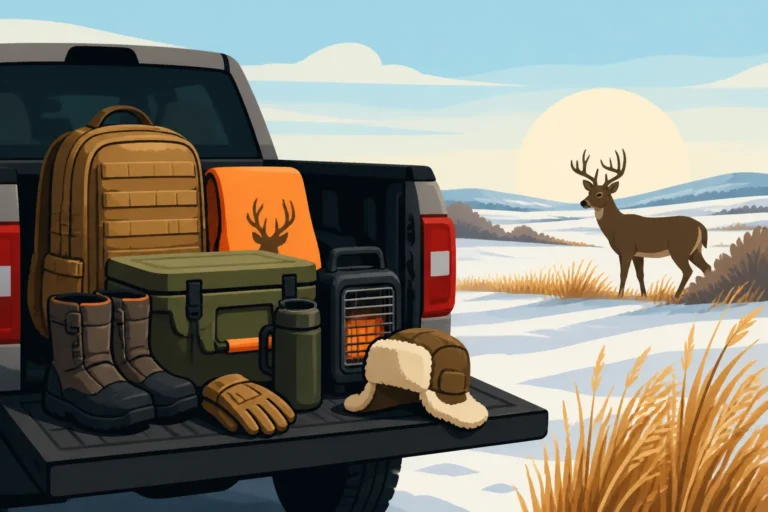
When calling moose in the bush, you're trying to lure an animal that can weigh over a thousand pounds into close proximity. This means your clothing and scent control are absolutely critical. Moose have an incredible sense of smell, and any unnatural scent can send them packing before you even know they were there. Invest in good quality hunting clothing made from quiet, natural fibers or advanced synthetic blends that are designed for silence. The rustle of stiff fabrics can ruin a close encounter. Layering is key for Saskatchewan's variable fall weather, allowing you to adjust to temperature swings from frosty mornings to mild afternoons. Think warm base layers, insulating mid-layers, and a waterproof/windproof outer shell.
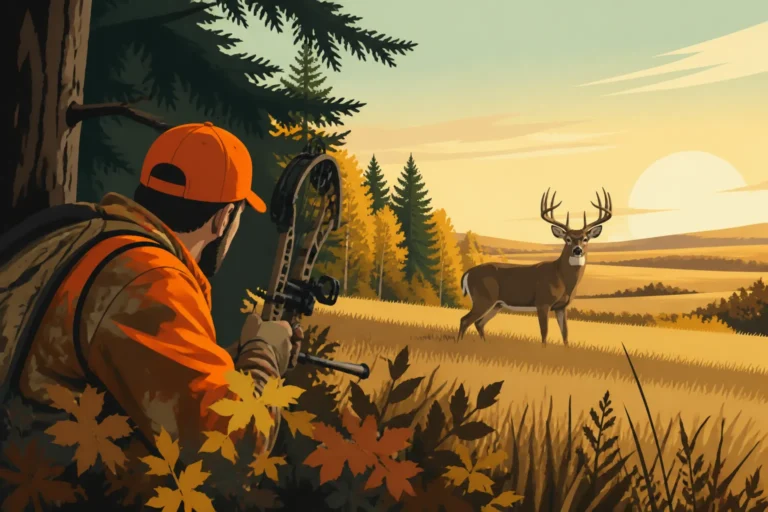
Blaze orange is mandatory for rifle hunting in Saskatchewan and should be worn on your approach and exit, but when actively calling and preparing for a shot, strategic placement on a hat or vest can be considered, keeping safety in mind without hindering concealment. More importantly, meticulous scent control is essential. Shower with scent-eliminating soap, wash your hunting clothes in scent-free detergent, and store them in airtight bags or containers. Use scent-eliminating sprays on your boots and outer layers, and always try to approach your calling location from downwind. This dedication to quiet movement and scent suppression will greatly increase your chances of fooling a wary bull.
Mastering the Art of Moose Calls
Calling a moose isn't about being the loudest; it's about being the most convincing. It requires patience, practice, and a deep understanding of the subtle vocalizations and sounds that define the moose rut.
Emulating Cow Calls and Their Variations
The cow moose bawl is arguably the most effective call for drawing in a bull during the rut. It's a long, mournful, almost guttural cry that expresses a cow's readiness to breed. Mastering this sound takes practice. Start by trying to hum a deep "ooooooowwww-AHHHH-oooooowww" into your grunt tube, letting the sound resonate from your diaphragm. The key is variability. A cow's call isn't static; it changes in pitch, volume, and duration based on her urgency and emotional state. Sometimes she's a lonely, desperate call. Other times, she's a more subtle, contented sound.
Practice varying the length of your calls, from short, soft queries to long, drawn-out bawls. Experiment with the pitch, letting it rise and fall naturally. A young cow might have a higher-pitched, less robust call than an older, more experienced cow. Don't be afraid to add a slight "gurgle" or "gasp" at the end of a longer call, mimicking the natural sounds a cow makes. It's also vital to understand that a cow's call will carry differently in various conditions. In dense bush, sound dampens quickly, so you might need to project a bit more, but never overdo it. The goal is to sound like an inviting, authentic cow, not an overly aggressive or panicked one.
The Bull Grunt and Challenge
While the cow call is your primary magnet, the bull grunt is your secondary, often more aggressive, tool, especially for larger, more dominant bulls. A bull grunt is a deeper, shorter, more guttural sound than a cow bawl, signifying a bull's presence and often his readiness to challenge. There are variations here too: a soft, contented grunt from a bull implies he's nearby, maybe working a rub or trailing a cow. A louder, more assertive grunt is a clear challenge to other bulls in the area.
When using bull grunts, be strategic. A big, mature bull might be hesitant to come to a cow call if he suspects another bull is already with her. In this scenario, a challenging grunt can often be the trigger. Imagine a bull already frustrated from searching for cows; hearing another bull grunt might just be enough to push him over the edge and come investigate or challenge. However, use bull grunts sparingly and strategically. Too many aggressive grunts can deter smaller, less dominant bulls, or even make a big bull circle wide to assess the threat. Focus on sounding like a confident, present bull, but not an overly enraged one unless the situation clearly calls for it, like when Calling a Bull Moose in the Rut.
Incorporating Raking and Antler Rattling
Beyond vocalizations, the sounds of antlers raking against trees and brush are incredibly effective for mimicking a bull's presence and dominance. This auditory display can pique the curiosity of a bull who might be reluctant to respond to calls alone. To effectively rake, find a sapling or small tree, preferably one that's flexible and about the diameter of a bull's antler. Using a moose shoulder blade or a stout stick, thrash the sapling, breaking branches and scraping the bark. The goal is to imitate the sound of a bull's antlers, a clear signal of his presence and willingness to challenge.
Vary the intensity and duration of your raking. Sometimes a short, sharp burst is enough to get a response. Other times, a longer, more drawn-out session, mimicking a bull venting his frustration, can be more effective. Combine raking with grunts: rake, then grunt, rake again, then a series of cow bawls. This paints a picture of a bull tending to a cow, perhaps frustratingly trying to get her to cooperate. If you're lucky enough to have real antlers, even shed antlers, you can use them for rattling. This is less common for moose than deer, but a short, sharp clash of antlers followed by some raking can sometimes mimic a skirmish between two bulls, drawing in others to investigate. Remember, the bush is full of subtle sounds, and you want your "raking" to sound as natural as possible, not like a human trying to break branches.
Strategic Bush Calling Techniques
Calling moose in the dense Saskatchewan bush is less about random noise and more about calculated, strategic deployment of your sounds. It's like a chess game, where every move, every call, needs to be deliberate and part of a larger plan.
Setting Up Your Calling Location
Choosing the right calling spot is paramount. You can have the best calls in the world, but if you're in the wrong place, it won't matter. Look for locations that offer a balance of visibility, concealment, and good sound projection. A slight rise or knoll can help your calls carry further. The edge of a muskeg or a beaver pond is often ideal, as it's a natural travel corridor and feeding area for moose. Areas where you've found fresh sign – tracks, rubs, beds – are always prime candidates. When Hunting a Boreal Muskeg Edge, for example, consider setting up where the thick forest gives way to the more open, wet area.
When you get to your chosen spot, take the time to set up properly. Position yourself with the wind in your favor, ideally with the wind blowing across your front, carrying your scent away from where you expect the moose to approach. Look for natural cover that breaks up your outline but still offers shooting lanes. Clear any noisy debris from underfoot to ensure a silent approach from an incoming bull. Consider establishing a "calling triangle": your calling position, a slightly advanced position for a second caller (if hunting with a partner) or where you expect the moose to first appear, and an escape route or an area where the moose might circle downwind. Having a good visual on where you expect the moose to come from is critical, which is why utilizing your GoHunt maps to identify potential approach routes can be a game-changer.
Patience and Persistence: The Waiting Game
Moose calling is rarely a quick affair. Unlike some deer species that might come running in, a bull moose often takes his time, circling, pausing, listening, and trying to pinpoint the source of the call. This means patience is not just a virtue; it's a necessity. Once you've established your calling sequence (a series of cow bawls, grunts, and raking), commit to staying put for a significant amount of time – at least 30-45 minutes, sometimes even an hour or more. A bull might hear you from a great distance and take his sweet time responding.
Your calling sequence shouldn't be constant. Mimic natural moose behavior: call for a few minutes, then be completely silent for 5-10 minutes, listening intently. It's during these silent intervals that a bull is most likely to reveal his presence with a soft grunt, the snap of a twig, or the subtle sound of movement. Don't be afraid to adjust your calling volume and intensity. If you get a distant response, back off the aggression slightly and use more seductive cow calls. If there's no response, you might need to become a bit more persistent or aggressive with your grunts and raking. Remember that hunting the forest fringe for big bucks shares a similar need for patience, as wary animals take their time.
Adapting to Moose Responses (or Lack Thereof)
The most challenging part of moose calling is reacting to what, or what isn't, happening. If you get a strong, immediate response – a clear grunt or the sound of breaking brush – fantastic! Now you need to determine the bull's direction and speed. If he's coming quickly, stop calling and get ready. He might be a dominant bull eager to check out the new cow or challenge the perceived rival. If his response is hesitant, or he grunts from the same spot repeatedly, he might be trying to draw you in. In this case, a challenging grunt or some aggressive raking might be what's needed to close the distance.
What if there's no response? Don't give up immediately. Perhaps the moose didn't hear you, or he's too far away. Try moving a few hundred yards to a new location and repeating your sequence, ensuring you're not walking past prime moose habitat or disturbing other potential animals. If you've called repeatedly in an area with no success, but you're confident there are moose around (based on sign or previous knowledge), consider changing your tactics entirely. Maybe switch from a lonely cow call to a frustrated bull scenario. Sometimes, it's not the call itself, but the context you create. Persistence in the right areas will pay off.
Environmental Factors and Their Impact on Calling
The natural environment of Saskatchewan's bush is a dynamic element that constantly influences how successful your calling efforts will be. Understanding these factors and learning to work with them, rather than against them, is crucial.
Wind, Rain, and Temperature Considerations
Wind is arguably your biggest ally and foe in the bush. A light, consistent breeze can carry your calls far and wide, making it easier for distant moose to hear you. More importantly, it can carry your scent away from approaching animals. However, a strong, gusting wind can distort your calls, make it impossible for you to hear subtle responses, and make moose feel less secure, often causing them to seek shelter in dense timber. When the wind is strong, moose might move less, and your calling efforts will likely be less effective. Always position yourself downwind of where you expect moose to be, but also consider how the wind will carry your call. A crosswind can be very effective as it disperses your scent to the side while allowing your calls to travel in a specific direction.
Rain and temperature also play significant roles. Light rain or drizzle can be excellent for calling, as it dampens sound, masks your movements, and often gets moose moving. It also helps wash away human scent. Heavy rain, however, can make moose hunker down, and it severely limits visibility and sound travel. Cooler temperatures, especially crisp, frosty mornings in October, are prime moose hunting conditions. Moose are far more active and responsive in the cold. Conversely, warmer temperatures, particularly during the early rut, can make moose sluggish and less likely to respond vocally. Always check the forecast and adjust your calling strategy and timing accordingly. Hunting Saskatchewan winter weather safely means being prepared for all conditions.
Terrain and Cover for Approach and Escape
The rugged and dense terrain of Saskatchewan's bush is both a blessing and a curse. It provides excellent cover for moose, making them feel secure, but it also provides a challenge for hunters. When choosing a calling location, assess the surrounding terrain for natural approach routes for the moose. Do they have thick draws, willow bottoms, or stands of spruce that would allow them to sneak in undetected? Position yourself so that you can see these potential approach routes, giving you time to react. Often, a bull will try to circle downwind of your position before committing, so be aware of potential wind swirls and openings in the bush that might allow him to do so without you seeing him.
Conversely, consider your own escape or repositioning options. If a bull comes in too aggressively, or if you call in a cow with calves you don't want to harvest, you need to be able to move safely and quietly. Understanding the terrain, perhaps by using maps provided by GoHunt, helps you visualize these movements. Thick cover can be used to your advantage for concealment, but it can also prevent you from seeing an approaching bull until he's too close. Strike a balance between good visibility and good cover. Hunting a bush bluff, for example, might offer a vantage point for calling while still providing surrounding cover for moose.
Understanding Sound Travel in Dense Bush
Sound behaves differently in dense bush compared to open country. The thick canopy, undergrowth, and numerous trees absorb and deflect sound waves, meaning your calls won't travel as far or as clearly as they might in open prairie. This is why projecting your calls effectively is so important. When calling, choose natural openings or clearings if possible, or aim your calls along natural corridors like cutlines or creek beds where sound can carry further.
Listen to your own calls. How do they sound? Are they muffled or clear? Pay attention to the acoustics of the environment. A call might sound great to you, but if it's hitting a wall of thick spruce immediately, it won't be heard by distant moose. This also applies to hearing responses. It can be incredibly difficult to pinpoint the exact location of a distant grunt in the bush. A bull might sound close, but be hundreds of yards away, or vice versa. Use natural landmarks, like prominent trees or changes in elevation, to triangulate the direction of a response. Wait for multiple grunts if possible to get a better fix on his location. A slight pause after a call, where you listen intently, is often more important than the call itself.
Safety and Ethics While Calling Moose
Calling moose can create incredibly exciting and intense situations, bringing massive animals into close quarters. Because of this, safety and ethical considerations must always be at the forefront of your mind.
Identifying Your Target and Backstop
In the excitement of a bull moose responding to your call, it's easy to get tunnel vision. However, it is absolutely critical to correctly identify your target and ensure you have a safe backstop before taking any shot. Moose are large, dark animals, and in the low light of dawn or dusk, or in dense cover, they can be difficult to distinguish. Always be 100% certain it's a legal bull (if antler restrictions apply) and that it's a moose, not another hunter. The adrenaline can cloud judgment, which is why practice and discipline are vital.
Before you raise your firearm or bow, confirm not only the animal but also what's behind it. Are there other moose, potentially a cow and calf? Is there a rise in the terrain, a thick stand of trees, or open ground? Your bullet or arrow must terminate safely. Never shoot at sound or movement alone. Wait for a clear, unobstructed shot at the vitals, ensuring an ethical and humane harvest. This might mean letting a bull walk away if the conditions aren't perfect, a tough but necessary decision that speaks to responsible hunting. For a general overview of Legal Firearms and Bows for Big Game in Saskatchewan, refer to the provincial regulations.
Bear Awareness in Moose Country
Saskatchewan's bush is also black bear country, and where you find moose, you'll often find bears. Bears are curious, intelligent animals, and a moose call, particularly a distressed cow call or a challenging bull grunt, can attract them. While most black bears are shy and will avoid humans, some might investigate the source of the sound, especially if they associate it with potential food or a weakened animal. This is not to say you shouldn't call, but rather that you should always be prepared.
When setting up your calling location, choose a spot that offers good visibility and escape routes. Always carry bear spray, ensure it's easily accessible, and know how to use it. Make noise as you move through thick cover, especially when approaching your calling spot, to avoid surprising a bear at close range. If a bear approaches your calling setup, assess its behavior. If it's merely curious, making your presence known and speaking firmly might be enough to deter it. If it's acting aggressively or showing predatory interest, be prepared to use your bear spray. For more comprehensive information on Wildlife Safety in Saskatchewan Bear Country, it's always wise to review relevant resources.
Respecting the Animal and the Landscape
Ethical hunting goes beyond legal compliance; it's about respecting the animals you pursue and the wild places they call home. When calling moose, understand that you are entering their domain and mimicking their behaviors. Treat the animals with respect, whether they respond to your calls or not. If a bull comes in and you decide not to take a shot, or if it's not a legal animal, let it pass undisturbed. Don't harass animals with excessive calling or pursue them relentlessly if they're clearly not interested.
Minimize your impact on the landscape. Pack out everything you pack in, leaving no trace of your presence. Avoid damaging trees or vegetation unnecessarily, especially when raking. If you are fortunate enough to harvest a moose, commit to a quick and efficient field dressing, and ensure all edible meat is retrieved. Quartering a Moose Alone in the Bush is a strenuous task, but essential for proper meat care. Take pride in your efforts to retrieve every ounce of usable meat and manage your carcass responsibly. Our role as hunters is not just to harvest, but to be stewards of the environment, ensuring these opportunities exist for generations to come.
| Moose Call Type | Primary Use | Sound Description | Best Time to Use |
|---|---|---|---|
| Cow Bawl | Attracting bulls, especially early in rut | Long, mournful, drawn-out "oooooowwww-AHHHH-ooooowww" | All phases of the rut, especially early to mid |
| Bull Grunt | Challenging rival bulls, indicating presence | Deep, guttural, shorter "unngh" or "guh-unngh" | Mid to late rut, when bulls are aggressive |
| Raking/Thrashing | Simulating bull presence, challenge | Cracking branches, scraping bark, antler sounds | Mid to late rut, when paired with grunts |
| Calf Bleat | Curiosity, drawing in cows or protective bulls | Short, higher-pitched "maaa-ah" | Less common for calling, but can work for cows |
Disclaimer
Hunting is an inherently risky activity. The information provided in this guide is for educational purposes only and should not replace professional guidance or your own due diligence. Always adhere to all local, provincial, and federal hunting regulations. Be aware of your surroundings, understand local wildlife, and prioritize safety above all else. This content does not endorse or promote unsafe practices.