Hunting Snow Geese Over a Big Spread
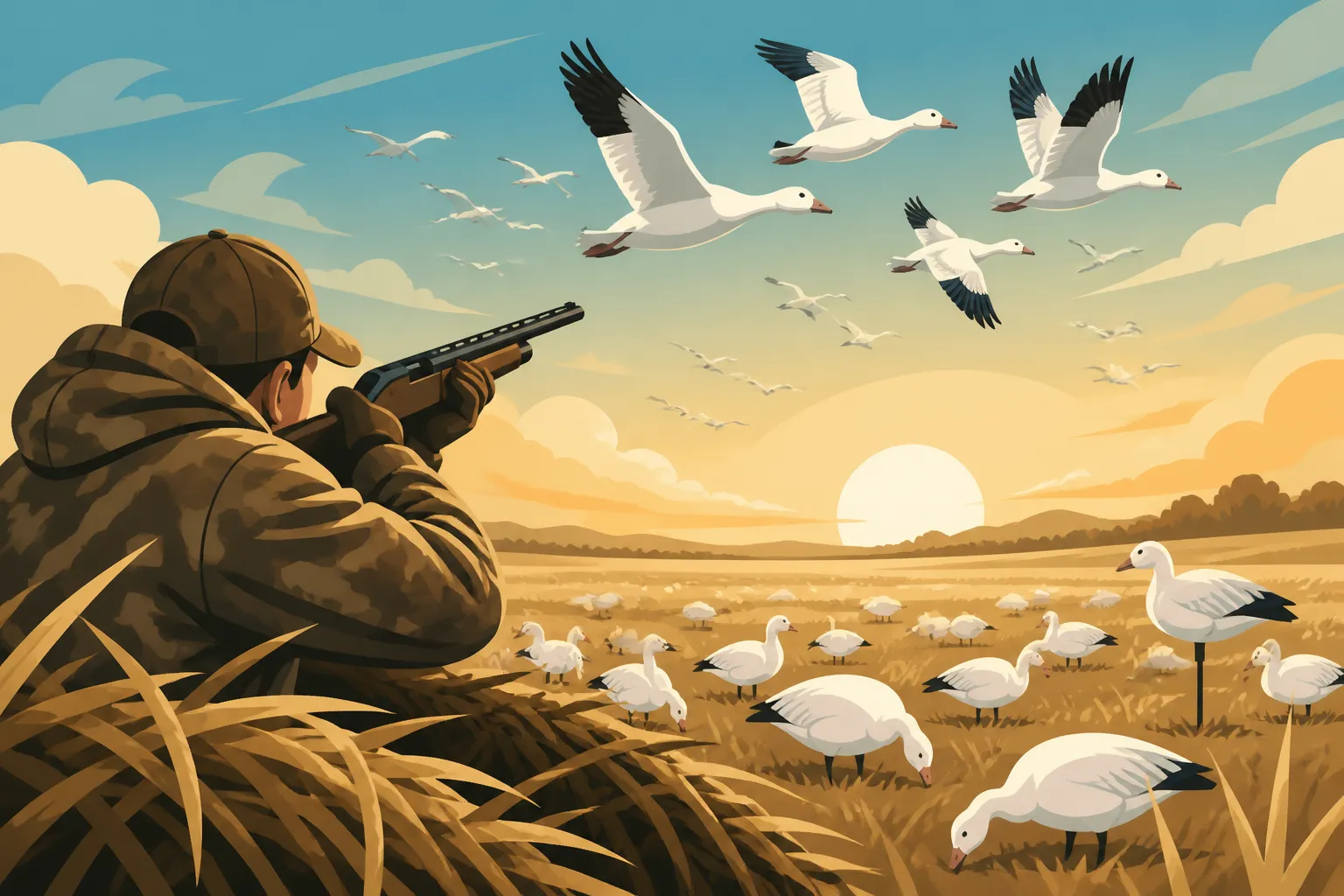
There’s nothing quite like the sight and sound of hundreds, sometimes thousands, of snow geese descending from the sky, but getting them to commit to your spread can feel like trying to herd cats with a whistle. It’s a specialized pursuit that often leaves hunters scratching their heads, wondering why their carefully placed decoys aren’t doing the trick. This comprehensive guide is dedicated to demystifying the art and science of hunting snow geese over a truly massive spread, giving you the insights and strategies you need to bring those wary birds right into your lap in Saskatchewan's prime staging grounds.
The Unique Challenge of Snow Geese: Why They're Different
Hunting snow geese isn't just a bigger version of hunting Canada geese or ducks. These birds operate on a completely different level of intelligence, wariness, and sheer numbers. If you've ever tried to fool them with a small spread of duck decoys or even a modest goose spread, you've likely felt the frustration of watching entire tornadoes of birds circle miles high, seemingly immune to your efforts. It's a humbling experience that teaches you quickly that a different approach is absolutely necessary.
Understanding Snow Goose Behavior
Snow geese are incredible migrants, traversing vast distances and congregating in immense numbers, especially during their spring and fall migrations through Saskatchewan. They often travel in flocks numbering in the hundreds, even thousands, creating a visual and auditory spectacle that's hard to forget. This sheer volume of birds makes them incredibly wary. A lone hunter or a small group with a meager spread simply doesn't mimic the safety and appeal of their actual flock. They've evolved to rely on safety in numbers, and anything that looks unnatural, or too small, is immediately perceived as a threat or simply not worth their time.
They are primarily grazers, preferring large, open agricultural fields like pea, lentil, or stubble fields where they can feed on waste grain. Their daily routine often involves flying from large roosting lakes or sloughs to these feeding grounds at first light, spending the day grazing, and then returning in the evening. Understanding these flight patterns and feeding preferences is paramount. You need to be where they want to be, and your setup needs to replicate what they naturally seek out. The challenge isn't just attracting them; it's convincing them that your field, your spread, and your small group of hunters are part of the massive, safe flock they instinctively seek out. Their eyesight is legendary, and they pick up on details that would go unnoticed by other waterfowl.
Why a "Big Spread" is Non-Negotiable
This brings us to the core truth of snow goose hunting: you absolutely must commit to a big spread. We're not talking about a couple dozen full-body decoys here; we're talking hundreds, often thousands, of decoys. Why such an extreme measure? Because a big spread is the only way to effectively mimic the enormous flocks these birds travel and feed with. A small spread looks like a few stragglers, which is inherently suspicious to a bird that’s used to being surrounded by thousands of its kind.
The visual impact of a truly massive spread creates an optical illusion, drawing birds in from incredible distances. When a high-flying flock spots what looks like hundreds, if not thousands, of their brethren on the ground, it signals safety, food, and camaraderie. This is the visual reassurance they need to consider dropping lower. Without that overwhelming visual appeal, they'll simply bypass your location, leaving you to watch them sail by. Think of it less as a decoy spread and more as a "decoy city" – a sprawling, dynamic representation of a feeding snow goose flock. This scale is what sets successful snow goose hunts apart from frustrating misses, making the initial investment in gear and the effort of deployment entirely worthwhile.
Essential Gear for Your Snow Goose Spread
Stepping into the world of serious snow goose hunting means gearing up differently. It's an equipment-intensive pursuit, but with the right tools, you can drastically increase your chances of success. This isn't about buying the most expensive gear, but rather the most effective gear that works in concert to create a convincing illusion.
Decoy Types and Their Strategic Placement
When it comes to snow geese, variety and volume are your best friends. There are several types of decoys, each playing a specific role in building a realistic spread. Mixing and matching these can give your setup depth and movement that static decoys alone cannot achieve.
Full-body decoys, while expensive and bulky to transport, offer the most realistic profile. They sit on stakes or stands, mimicking geese that are standing, feeding, or preening. These are best used closer to your hide, forming the core of your landing zone, where birds will get the closest look. Shells are lighter and more compact, offering a decent profile for less cost and bulk. They're good for filling out the middle ground of your spread. Then you have the workhorses: windsocks, silhouettes, and rags. Windsocks are fantastic because they offer constant, realistic movement in the slightest breeze, which is absolutely crucial for convincing wary snows. They're lightweight, packable, and relatively inexpensive, allowing you to deploy hundreds, if not thousands, to create that necessary mass. Rags, or "silo socks," are even simpler – basically white plastic bags on stakes – but en masse, they provide incredible visual appeal and motion for minimal cost.
The key isn't just quantity, but also how you use them. You want your spread to look natural, with some birds "feeding" (heads down), some "alert" (heads up), and the windsocks swaying. A good rule of thumb is to place your most realistic decoys (full bodies) closest to your blinds, with shells and windsocks filling out the bulk of the field. Remember, the goal is an overwhelming illusion of a happy, feeding flock.
| Decoy Type | Pros | Cons | Best Use |
|---|---|---|---|
| Full Body | Most realistic profile, durable | Expensive, bulky, heavy to transport | Close to blinds, landing zone perimeter |
| Shell | Realistic profile, lighter than full bodies | Still somewhat bulky, less movement | Mid-range of spread, adding volume |
| Wind Sock | Excellent movement, lightweight, affordable | Less realistic profile up close, can tangle | Bulk of spread, adding realism and motion |
| Silo / Rag | Very affordable, compact, good motion | Minimal realism, can look like trash up close | Mass fill, back of spread, creating visual noise |
Calling and Electronic Calls (E-Callers)
The visual aspect of a big spread is crucial, but it's only half the equation. You also need to replicate the raucous symphony of a massive snow goose flock. This is where calling, specifically using electronic calls (e-callers), becomes absolutely vital. In Canada, federal regulations permit the use of electronic calls for snow geese, which is a game-changer. These devices can broadcast incredibly loud, realistic snow goose vocalizations that can be heard for miles, grabbing the attention of high-flying birds that might otherwise pass you by.
Modern e-callers come with a variety of pre-programmed sounds, from feeding chatter to excited honks and squawks. The key is to use a high-quality system with multiple speakers spread throughout your decoy field to create a multi-directional soundscape. This makes the sounds appear to come from all over your "flock," rather than a single source, adding to the realism. Some popular e-caller brands offer systems with wireless remotes, allowing you to adjust volume, switch calls, and even turn the system on or off from the comfort of your layout blind. Mastering the timing and volume of your calling – knowing when to crank it up for distant birds and when to tone it down as they approach – is an art form that comes with practice, but an e-caller provides the powerful tool you need.
Blinds and Concealment
After all the effort of setting up a giant spread, the last thing you want is for a keen-eyed snow goose to spot you. Effective concealment is paramount. Layout blinds are the go-to choice for snow goose hunting, allowing you to lie prone in the field, blending seamlessly with the environment. These blinds are designed to be low-profile and can be brushed in with local vegetation like stubble, straw, or whatever is naturally present in the field.
The goal is not just to be hidden, but to be invisible. This means not only brushing in your blind thoroughly but also paying attention to your face and hands. Wear a face mask and gloves that match your surroundings. Avoid any shiny objects, like watch faces or reflective sunglasses, that can flare birds from a distance. If hunting in a large stubble field, ensure your layout blind mimics the field's texture and color as closely as possible. Sometimes, even digging shallow pits for blinds can offer an extra layer of concealment, especially on flatter terrain. Remember, snow geese have incredible eyesight, so even a slight glint or an unnatural lump in the field can send them packing. Blending in with the environment is a core principle when Hunting Whitetails on Saskatchewan Farmland, and it's even more critical when facing the discerning eyes of snow geese.
Setting Up Your Massive Snow Goose Spread for Success
Deploying a truly enormous snow goose spread is a logistical undertaking. It's not something you do on a whim. It requires planning, teamwork, and an understanding of how to make your plastic flock look as convincing as possible.
Scouting the X
You simply cannot overstate the importance of scouting for snow geese. These birds are creatures of habit but will move fields frequently based on food availability and pressure. Your "X" is the exact spot where the birds want to be – where they are feeding consistently. Finding it requires dedication and often some creative sleuthing. Start by observing major flyways at dawn and dusk. Drive grid roads and gravel roads in the areas known for migration, looking for large white patches in fields. Once you spot birds, watch their behavior. Are they feeding actively? What direction are they coming from, and where are they going?
Using mapping apps, like GoHunt, can be invaluable for identifying potential roosting lakes, tracking historical feeding patterns, and understanding land ownership to secure permission. Once you've identified a likely feeding field, spend time watching it. Note where the birds typically land, which sections they prefer, and their general flight paths. Scouting Fields for Saskatchewan Waterfowl is a daily commitment, and it's the foundation of a successful hunt. Without putting in the legwork to find where the birds want to be, even the best spread in the world will be largely ineffective. These birds will move quickly, so a field that was hot yesterday might be empty today.
The "J" or "V" Formation Strategy
Once you've secured permission on a hot field, the next step is strategically placing your hundreds, or thousands, of decoys. While there's no single "perfect" spread, several proven formations effectively guide incoming birds into an ideal landing zone, setting them up for a clean shot. The "J" and "V" formations are two of the most popular and effective.
The "J" spread, as the name suggests, resembles the letter 'J' laid out in the field. The long, straight part of the 'J' forms the main body of your flock, with the curve creating a natural pocket or landing zone where you want the birds to commit. Your layout blinds and e-caller speakers are typically placed at the "hook" of the J, within the open pocket. This formation works by giving the birds an open, inviting area to land, while the bulk of the decoys surrounds them, offering a sense of security. The "V" formation works similarly, creating a large funnel that directs birds towards the opening at the point of the 'V', where your hides are located. Both formations aim to give incoming birds a clear, open path to a perceived landing spot, drawing their attention away from your well-hidden blinds. When Setting a Goose Spread in Swathed Barley, these formations are excellent for guiding the birds.
Motion Decoys and Wind Management
In addition to static decoys, adding motion is a critical element for convincing wary snow geese. Nothing looks more lifelike than movement. Flapping decoys, often battery-operated, can mimic birds landing or taking off, creating dynamic visual cues. Kites, flown high above the spread, can imitate high-flying birds scouting the area, drawing the attention of distant flocks. Even simple flags, manipulated by hand from your blind, can make a huge difference, signaling to incoming birds that the field is alive with activity.
Wind is your best friend when it comes to snow goose hunting, and it plays a massive role in both decoy movement and bird approach. Snow geese, like most waterfowl, prefer to land into the wind. This means you need to orient your spread and your landing zone with the prevailing wind direction in mind. Place your open pocket downwind of your main body of decoys, so birds are forced to fly over or past your blinds as they attempt to land. Furthermore, ensure your windsocks and rag decoys are correctly oriented to catch the wind, giving them that natural, swaying movement that helps bring the spread to life. Pay attention to forecasts, as a shifting wind can require you to adjust your setup, especially the position of your blinds relative to the landing zone.
The Hunt: Tactics and Troubleshooting
You’ve scouted, you’ve set up your massive spread, and now the birds are starting to fly. This is where the rubber meets the road, and your in-the-moment decisions can make or break the hunt.
Calling Sequences and Volume
Effective calling is a nuanced art. You can't just blast an e-caller on full volume the entire time. Your calling needs to tell a story. For distant birds, you want to be loud and assertive, using excited chatter and hail calls to grab their attention and draw them towards your field. As they get closer, you'll want to reduce the volume and switch to more subtle feeding calls, contented murmurs, and soft clucks. The goal is to make your spread sound like a happy, relaxed flock that’s enjoying a meal.
Watch the birds’ reactions. If they suddenly climb higher or veer off, you might be calling too aggressively or too loudly. If they seem interested but hesitant, try varying your calls, adding more excitement, or switching to a new sequence. Sometimes, a burst of loud, excited calling as a flock is trying to decide can be just enough to pull them in. Other times, silence, or very soft clucking, is what convinces a wary group. Have one person dedicated to operating the e-caller, listening intently to the birds and adjusting accordingly. It's a continuous conversation with the flock, and understanding their response is key.
Dealing with Finicky Birds
Even with a perfect spread and masterful calling, snow geese can be incredibly finicky. You’ll encounter flocks that fly high, circle endlessly, or commit to a field just a quarter-mile away, seemingly ignoring your impressive setup. Don't get discouraged – this is par for the course. When birds are high and showing no interest, continue with loud, assertive calling to try and pull them over your location. Sometimes, simply having the largest, loudest spread in the area will eventually pull them in.
For birds that are circling, analyze their approach. Are they flaring from your blinds? Is there too much shine? Are they uncomfortable with the landing zone? You might need to make subtle adjustments to your layout blind brushing, or adjust the size and shape of your landing hole. If you have extra flags or flappers, deploy them strategically to add more motion and realism. Patience is critical. Often, multiple flocks will work an area, and if you can get one group to commit, it will often encourage subsequent groups to follow suit. A well-placed shot on the first flock can solidify the confidence of later birds, demonstrating that your field is indeed a safe place. This scenario demands the same kind of tactical patience as Hunting Saskatchewan's November Rut, where waiting for the right moment is key.
Safety and Ethical Considerations
Snow goose hunting, especially with a large group and a massive spread, requires strict adherence to safety and ethical hunting practices. Always establish clear shooting lanes and zones of fire before the hunt begins. Communicate constantly with your fellow hunters, especially when birds are working. No shot is worth risking an injury. Ensure everyone knows their role and understands the plan.
Use the appropriate ammunition, which in Saskatchewan for waterfowl, means non-toxic shot. Ensure you are familiar with Non-Toxic Shot for Saskatchewan Waterfowl rules. Respect bag limits and possession limits, which for snow geese can be quite generous but are still legally binding. Most importantly, make every effort to retrieve all downed birds. Snow geese are tough, and cripples can run or fly a long way. Having a dog trained for retrieval or a dedicated retrieve team is invaluable. Wasting game meat is illegal and unethical, so ensure every bird harvested is recovered and properly cared for. This includes prompt field dressing and cooling, especially if hunting in warmer conditions.
Optimizing Your Experience and Maximizing Your Harvest
Snow goose hunting is a marathon, not a sprint. To truly maximize your harvest and enjoy the experience, you need to consider the logistical and environmental factors at play.
Field Logistics and Teamwork
Setting up and tearing down a large snow goose spread is a massive undertaking. It can easily take hours with multiple people. Efficient teamwork is essential. Before you even head out, have a plan. Designate roles: who is setting out full bodies, who is on windsocks, who is setting up the e-caller, and who is brushing in blinds. Having a system for packing and unpacking decoys, using large bags or trailers, will save immense amounts of time and effort. When hunting with a larger group, effective communication becomes even more critical.
Remember to factor in travel time to the field, especially if it's on remote Hunting Whitetails on Saskatchewan Crown Land or private acreage that requires specific access. Consider using ATVs or UTVs to transport gear if field conditions allow. Being organized and working as a cohesive unit will not only make the setup more efficient but also reduce fatigue, leaving you fresh and focused for the hunt itself. This collaborative spirit is similar to what's needed for Getting a Moose Out With a Quad in tougher terrain.
Weather's Impact on Snow Goose Hunts
The weather in Saskatchewan is notoriously unpredictable, and it plays a colossal role in snow goose migration and behavior. Wind is perhaps the most critical factor. A good, consistent breeze helps your windsocks and flags dance, adding vital realism. It also helps birds commit to your spread, as they prefer to land into the wind. Calm days can be much tougher, as your decoys lack movement, and birds can be warier without the wind to obscure sounds or smells.
Rain, snow, or fog can also influence the hunt. Light rain or snow can sometimes improve hunting, as it reduces visibility for the birds, making them more likely to drop lower. Heavy snow can push birds out of an area or make travel and setup impossible. Fog can ground birds entirely, making hunting nearly impossible until it lifts. Bright sun can cause glint and glare off blinds or decoys, so positioning yourself to have the sun at your back can be advantageous. Always keep an eye on the forecast and be prepared to adapt your strategy, or even postpone your hunt, if conditions become unfavorable or unsafe. For late-season hunts, always consider the challenges of Hunting Saskatchewan Winter Weather Safely to ensure everyone's well-being.
Disclaimer
Hunting is an activity with inherent risks. This guide is for informational purposes only and does not replace official regulations, professional instruction, or common sense. Always consult the most current Saskatchewan hunting regulations before heading afield and prioritize safety.