Getting From the Airport to a Saskatchewan Camp
Arriving in Saskatchewan for a hunting trip can be an exciting, yet often daunting, experience, especially when you consider the journey from the bustling airport terminal to a remote hunting camp nestled deep in the boreal forest or out on the vast prairie. Many hunters feel overwhelmed trying to coordinate flights, ground transportation, and firearm logistics in an unfamiliar landscape. This guide will walk you through everything you need to know about getting from a Saskatchewan airport to your hunting camp, ensuring a smooth and stress-free start to your adventure.
Major Airports and Initial Logistics
Saskatchewan has two primary international airports that serve as the main entry points for most hunters coming to the province, along with a few smaller regional options. Understanding where you'll land and what to expect upon arrival is the first critical step in your journey to camp.
Saskatoon (SK) and Regina (YZR) – Your Main Hubs
The vast majority of hunters flying into Saskatchewan will arrive at either John G. Diefenbaker International Airport (SK) in Saskatoon or Regina International Airport (YZR) in Regina. Both are modern, well-equipped airports that handle a good volume of traffic, making them convenient for connections and ground services.
Upon landing, your first task will be navigating customs if you're an international traveler. This is where you'll declare your firearms, if you've brought them. Have your Non-Resident Firearm Declaration Form (CAFC 909 EF) filled out in triplicate and ready to present. Expect a bit of a wait, especially during peak hunting seasons like the late fall. Once cleared through customs, you'll proceed to baggage claim. This is often where outfitters or pre-arranged transportation will meet you. It’s a good idea to have a clear meeting point established beforehand, perhaps near a specific baggage carousel or outside a designated arrival door. Remember that these airports, while international, are smaller than major hubs like Toronto or Vancouver, making navigation generally simpler.
Smaller Regional Airports and Their Limitations
While Saskatoon and Regina are the main entry points, Saskatchewan also has a network of smaller regional airports in cities like Prince Albert, North Battleford, or La Ronge. These airports generally offer limited commercial flights, often requiring connections through larger hubs, and direct flights are rare for most out-of-province travelers.
For hunters, these smaller airports might only come into play if your outfitter has arranged a private charter flight directly into a remote airstrip closer to camp, or if you've opted for a "fly-in" hunt in the far north. Such arrangements are typically part of a specialized hunting package and require extensive coordination with your outfitter. It's crucial to confirm all flight details, luggage restrictions, and any additional costs associated with charter flights well in advance. For most standard big game or bird hunts, a commercial flight into Saskatoon or Regina remains the most practical and cost-effective option.
Transportation Options to Camp
Once you've landed and collected your gear, the next big question is how you'll cover the distance from the airport to your hunting camp. Depending on your outfitter's services, your budget, and your personal preferences, you have a few distinct choices.
Outfitter Pick-Up – The Most Common Choice
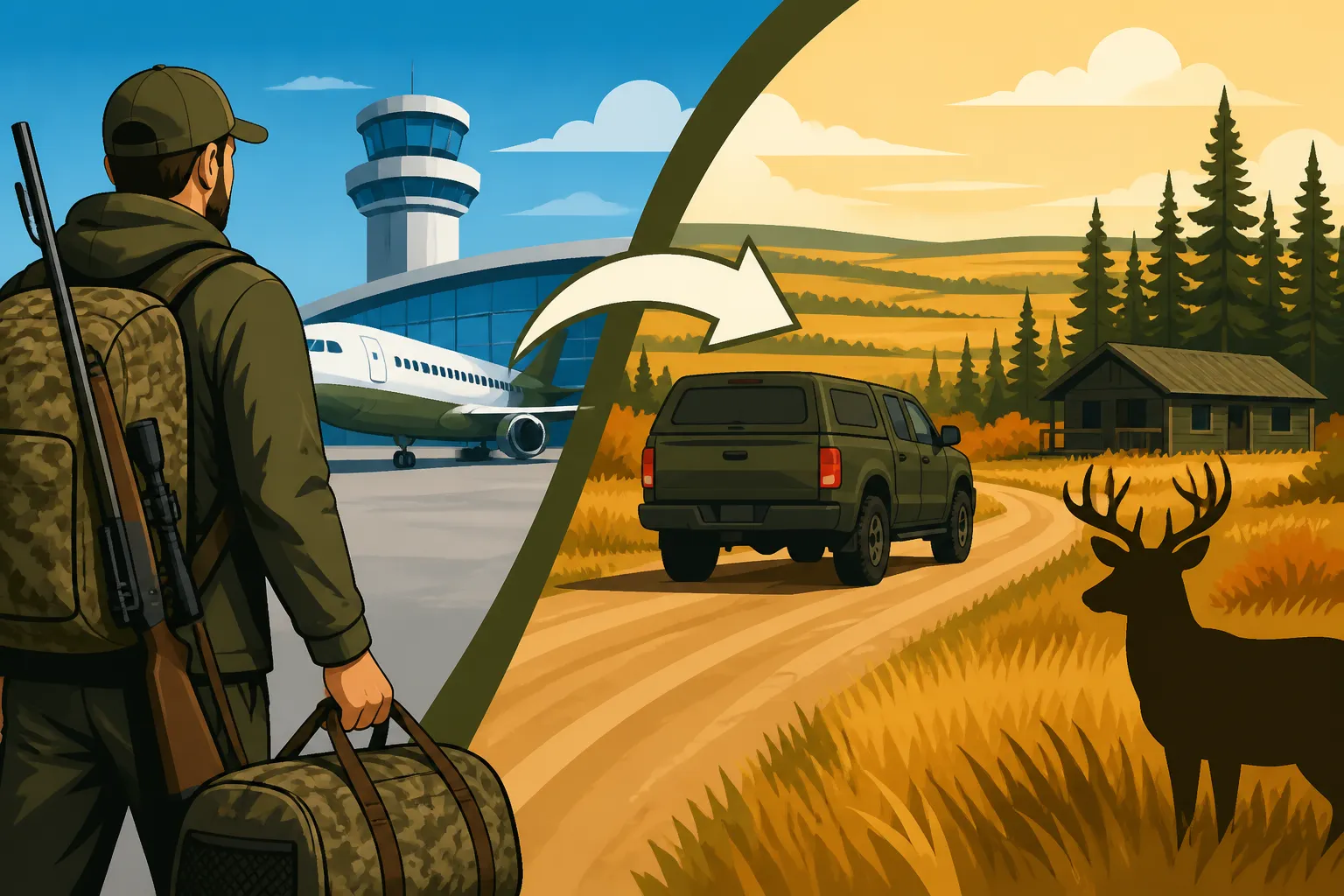
For many hunters, especially those booking through a reputable outfitter, an airport pick-up service is included in their package. This is often the most convenient and stress-free option. Your outfitter, or a designated guide, will meet you directly at the airport, assist with your luggage and firearms, and transport you directly to camp.
The main advantage here is peace of mind. You don't have to worry about navigating unfamiliar roads, dealing with rental car logistics, or finding your way to a remote location that might not even show up on a standard GPS. Your outfitter knows the route, the road conditions, and how to handle any potential issues that might arise. This is especially valuable after a long day of travel. Ensure you've communicated your exact flight details and arrival times to your outfitter well in advance. Keep their contact information handy in case of flight delays or other unforeseen circumstances. Remember that they often pick up multiple hunters, so a brief wait for other arrivals might be part of the plan. Using a platform like BookYourHunt allows for clear communication channels to confirm these arrangements ahead of time. It's really important to confirm What an Outfitter Needs From You Beforehand to make this process as smooth as possible.
Rental Vehicles – Self-Drive Considerations
For hunters who prefer more independence or whose outfitter doesn't offer pick-up, renting a vehicle is a viable option. Both Saskatoon and Regina airports have a variety of car rental agencies on-site or nearby. However, there are several key considerations you need to keep in mind for a Saskatchewan hunting trip.
Firstly, consider the type of vehicle. Many hunting camps, particularly those in the forest fringe or off main highways, are accessed via gravel roads, dirt tracks, or even trails that can become challenging in wet or snowy conditions. A standard two-wheel-drive sedan might get you there in dry conditions, but a four-wheel-drive truck or SUV is often a much safer and more reliable choice, especially if you're Hunting the Rut in Early to Mid November or later in the season. Secondly, familiarize yourself with your route. While GPS is helpful, cell service can be spotty or non-existent once you leave populated areas. Having a good old-fashioned paper map, or an offline mapping app like what GoHunt uses, can be a lifesaver. Factor in fuel stops, as gas stations can be few and far between on some stretches. Lastly, remember that any firearms you're transporting must remain unloaded and securely stored, ideally in a locked case, and out of sight in the vehicle. Consider having a Winter Truck Kit for a Saskatchewan Hunt if you're traveling during the colder months, as conditions can change rapidly.
Private Shuttles or Taxis – Less Common, but Available
While not as common for reaching remote hunting camps, private shuttle services or taxis can be an option for shorter distances or if your camp is closer to a major town. These services are typically much more expensive than a shared outfitter pick-up or a rental car, especially for longer journeys.
Most standard taxi services are designed for city travel and may not be equipped or willing to travel hundreds of kilometers on unpaved roads, nor do they often have the cargo capacity for multiple hunters and all their gear, including gun cases. However, if your camp is just outside the city limits, or if you're simply transferring between the airport and a nearby hotel before meeting your outfitter, these services can be convenient. Always confirm the cost, vehicle capacity, and their willingness to transport hunting gear and firearms before booking.
Preparing for the Journey to Camp
Once you've decided on your transportation, a bit of pre-trip planning can save you a lot of headaches on the day of travel. Anticipating potential issues and having a plan B will make your journey significantly smoother.
Essential Communication with Your Outfitter
This cannot be stressed enough: proactive and clear communication with your outfitter is paramount. As soon as you have your flight itinerary, share it with them. This includes flight numbers, arrival times, and any layovers. If your flight gets delayed or canceled, notify them immediately. They are coordinating other hunters, camp logistics, and often driving significant distances to pick you up.
Providing your outfitter with accurate information allows them to adjust their schedule and ensure someone is there when you arrive. Ask for their direct cell phone number, and provide them with yours. Discuss a contingency plan in case of major delays – perhaps a recommended hotel near the airport, or where to meet if you're severely off schedule. Good outfitters are used to these scenarios, but clear communication helps everyone involved. Many use the contact features of services like GoHunt or BookYourHunt to manage these client communications efficiently.
Packing Smart for the Journey
When packing for your hunting trip, think about what you’ll need immediately upon arrival, and what might be safely tucked away. Your hunting license, important documents (like your passport and firearm declaration), and any essential medications should always be in your carry-on luggage.
For firearms, ensure they are securely cased, unloaded, and checked according to airline and Canadian regulations. Ammunition should be in its original packaging or an approved container, separate from the firearm, and also checked. Consider packing a small bag with a change of clothes, basic toiletries, and perhaps some snacks and water for the journey to camp, especially if it's a long drive. Dressing for Saskatchewan's November Cold is also critical, so make sure some warm layers are easily accessible if you're arriving in the late season.
Understanding Saskatchewan Road Conditions
Saskatchewan's landscape is diverse, and so are its roads. While major highways are generally well-maintained, once you turn off onto secondary roads or grid roads, conditions can change dramatically.
Gravel roads are common, particularly as you get closer to rural hunting areas. These can be dusty in dry conditions, muddy after rain, and treacherous when covered in snow or ice. Wildlife, especially deer, moose, and elk, are frequently on or near roads, so constant vigilance is crucial, particularly at dawn and dusk. In winter, heavy snowfall can lead to rapidly deteriorating conditions, with grid roads sometimes becoming impassable. Your outfitter will have the most up-to-date information on the roads leading to camp. If you're driving yourself, check weather forecasts for your route and consult local road condition reports. Learning about Saskatchewan Grid Road and Winter Access can help you prepare for the unique challenges of traveling in rural areas.
Handling Firearms and Ammunition
Transporting firearms and ammunition across international borders and within Canada requires strict adherence to regulations. Knowing these rules beforehand will prevent significant delays and potential legal issues.
Declaring Firearms at the Border and Airport
As an international traveler bringing firearms into Canada, you must declare them to the Canada Border Services Agency (CBSA) upon arrival. This involves filling out a Non-Resident Firearm Declaration Form (CAFC 909 EF) in triplicate. It's highly recommended to fill this out before you arrive to save time at the border.
You'll present this form to the CBSA officer, who will verify your firearm and then stamp and sign the declaration, making it a temporary license. There is a fee associated with this declaration. Remember, your firearm must be unloaded and stored in a locked, non-transparent container, separate from any ammunition, during transport. Do not present your firearm until instructed to do so by the officer. For comprehensive details, refer to Declaring a Firearm at the Canadian Border and Flying to Saskatchewan With a Rifle.
Transporting Ammunition Safely
Ammunition has its own set of rules for transport. It must be securely packed in a separate container from your firearm. Most airlines require ammunition to be in its original manufacturer's packaging or a sturdy container designed for ammunition, and it must be declared to the airline when you check your bags.
There are also quantity limits. Typically, airlines will allow a maximum of 5 kg (11 lbs) gross weight of ammunition per passenger. Check with your specific airline well in advance of your travel date, as policies can vary slightly. Ensure the container is made of fiber, wood, plastic, or metal, and protects the cartridges from movement and accidental discharge. For more detailed rules, especially concerning different types of ammunition, it’s worth reading up on Ammunition Rules at the Border.
Renting a Rifle from Your Outfitter
For many hunters, particularly those traveling internationally, the hassle and potential complications of bringing their own firearm can be a deterrent. A popular alternative is to rent a rifle directly from your outfitter.
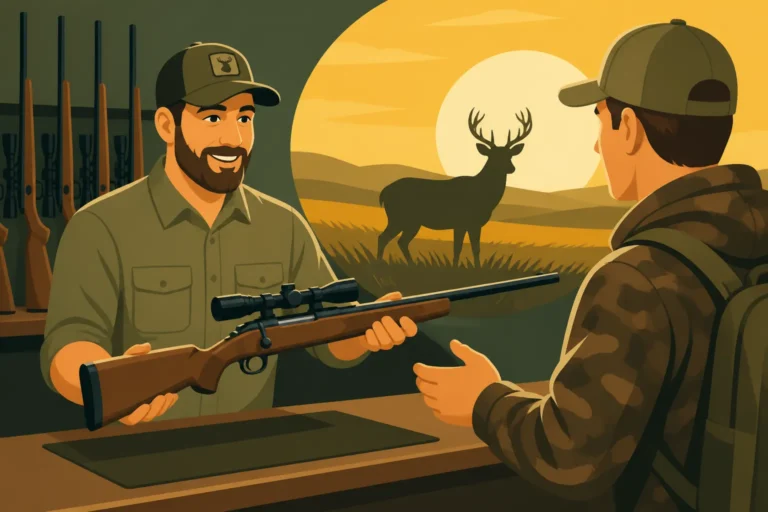
Most reputable Saskatchewan outfitters offer this service for an additional fee. This eliminates the need to declare a firearm at the border, worry about airline regulations, or transport it from the airport to camp. It can significantly simplify your travel logistics. If you choose this option, make sure to discuss it with your outfitter beforehand. Ask about the caliber and type of rifle they provide, and if possible, arrange to sight it in at their range before your hunt begins. Even if you're an experienced shot, it's crucial to be comfortable and familiar with the rented firearm. Your outfitter can explain the specifics in their Renting a Rifle From a Saskatchewan Outfitter details.
Comparing Transportation Options
Here's a quick comparison of the common ways to get from a Saskatchewan airport to your hunting camp:
| Transportation Method | Pros | Cons | Best For |
|---|---|---|---|
| Outfitter Pick-Up | Highly convenient, stress-free, local expertise | Less flexibility, potential wait for other hunters, included in package cost | Most hunters, especially those with limited time or first-timers |
| Rental Vehicle | Maximum flexibility, independence | Navigation challenges, potential for rough roads, added costs (rental, fuel, insurance), liability for vehicle damage | Experienced hunters, those wanting to scout on their own, group travel |
| Private Shuttle/Taxi | Direct, comfortable (for shorter distances) | Very expensive for long distances, limited capacity for gear, not all will go off-road | Short transfers, connecting flights, specific logistical needs |
No matter which option you choose, remember that the success of your journey often hinges on clear communication and thorough preparation. Reviewing the Saskatchewan Trip Planning Timeline can help you stay organized. While it's great to know about Cell Service at a Saskatchewan Camp for once you're there, don't rely on it for your journey to camp.
Disclaimer
This article is for general informational purposes only and does not constitute professional advice. Laws, prices and regulations vary by location and change over time. Consult a qualified professional for guidance on your specific situation.