Declaring a Firearm at the Canadian Border
Coming to Saskatchewan to hunt is an incredible experience, but for many hunters, especially those from outside Canada, the thought of crossing the border with a firearm can bring on a cold sweat. There's a lot of apprehension, fear of making a mistake, and honestly, a lot of misinformation floating around. This guide is here to cut through the confusion and give you a clear, practical roadmap for successfully declaring your firearm at the Canadian border, making your entry smooth and stress-free for your hunting adventure.
Understanding Canadian Firearm Laws for Hunters
Before you even pack your bags, it's absolutely critical to understand that Canadian firearm laws are distinct from those in other countries, and ignorance is simply not an excuse at the border. The goal isn't to discourage you, but to empower you with knowledge so you can avoid any unpleasant surprises that could derail your long-anticipated Saskatchewan hunting trip. Canada has specific classifications for firearms, and knowing where your hunting rifle or shotgun fits into these categories is your first, most important step.
Restricted vs. Non-Restricted Firearms
For the vast majority of hunters travelling to Saskatchewan, you'll be dealing with what Canada classifies as "non-restricted" firearms. This category typically includes most common hunting rifles and shotguns. These are the workhorses of the hunting world – your bolt-action deer rifle, your trusty pump-action shotgun for waterfowl, or perhaps a lever-action for bush hunting. These are generally permitted for import by non-residents for hunting purposes, provided you follow the proper declaration procedure.
However, it's crucial to be aware of "restricted" and "prohibited" firearms. Restricted firearms include most handguns and certain semi-automatic rifles. Prohibited firearms include fully automatic weapons, sawed-off shotguns, and certain military-style firearms. As a general rule, restricted and prohibited firearms are not permitted for import by non-residents for hunting. Trying to bring one of these across without specific, rare authorization is a surefire way to have your firearm seized and potentially face serious charges. If you have any doubt whatsoever about your specific firearm, you must consult the Canadian Border Services Agency (CBSA) or the Royal Canadian Mounted Police (RCMP) Canadian Firearm Program before you even leave home. Don't rely on hearsay from a buddy; get the official word.
Ammunition Limits and Storage Rules
It’s not just the firearm itself that has rules; ammunition is also regulated. While you can bring a reasonable amount of ammunition for your declared hunting firearm, there are limits. Typically, you're allowed to bring up to 200 rounds of ammunition for your non-restricted firearm without needing an import permit. Anything significantly over that might raise questions or require additional paperwork, which you definitely want to avoid at the border. Again, check the latest regulations if you plan on bringing a large quantity.
Beyond limits, proper storage and transport are non-negotiable in Canada. When transporting your firearm, it must be unloaded, and it must be stored in a case or container that is securely locked. This isn't just a suggestion; it's the law. For non-restricted firearms, the trigger lock requirement is crucial. The firearm itself doesn't need to be disassembled, but it absolutely must be secured with a trigger lock or similar device, and then placed in a locked case. Ammunition should be stored separately from the firearm, also in a secure manner. Border Services officers will often ask to inspect how your firearms are stored, and if they aren't compliant, you'll run into problems.
The Non-Resident Firearm Declaration Form
This form is the cornerstone of bringing your hunting firearm into Canada. It's often referred to as RCMP 5589, and it's your official declaration to the Canadian government about the firearms you are bringing into the country. Understanding it, completing it accurately, and having it ready is paramount. This isn't a form you want to fill out rushed at the border crossing while a line of cars builds up behind you.
What the Form Is and Why It's Crucial
The Non-Resident Firearm Declaration form is essentially a temporary firearm licence. When confirmed by a CBSA officer, it acts as a legal document that allows you to possess and transport your declared non-restricted firearms within Canada for up to 60 days. This means you don't need to apply for a full Canadian Possession and Acquisition Licence (PAL) just for a hunting trip, which would be a much longer and more complex process. The purpose of this form is to ensure that all firearms entering the country are accounted for, their ownership is verified, and they are intended for a legal purpose, such as hunting.
Without a properly completed and confirmed declaration, your firearm is considered illegally imported, and the consequences can be severe. This could include seizure of your firearm, fines, and potentially even being denied entry into Canada or future travel restrictions. It's truly not worth trying to bypass this essential step. Many hunters book their trips through reputable outfitters who understand the nuances of this process and can guide you, or you might consult resources like BookYourHunt to find outfitters who are well-versed in assisting international clients with border crossing requirements.
Step-by-Step Guide to Filling Out the Form
While the form itself looks straightforward, attention to detail is key. You can find this form online, typically on the RCMP's Canadian Firearm Program website. Print it out and fill it in before you arrive at the border. You'll need three copies: one for you, one for the CBSA officer, and one to be attached to your firearm's case while in transit within Canada.
- Personal Information: Fill in your full name, address, date of birth, and contact information. Ensure this matches your passport or other identification exactly.
- Purpose of Importation: Clearly state "Hunting" as the purpose. This aligns with the non-restricted firearm status and the temporary nature of the declaration.
- Firearm Details: This is where accuracy is critical. For each firearm, you need to provide:
- Manufacturer: The company that made the firearm (e.g., Winchester, Remington, Savage).
- Type: Rifle, shotgun, etc.
- Action: Bolt-action, pump-action, semi-automatic (for eligible non-restricted types), break-action.
- Calibre/Gauge: E.g., .30-06, 12 gauge, .270 Win.
- Serial Number: This must be exact. Double-check it against the firearm itself.
- Model: The specific model name (e.g., Model 70, 870 Express, 110 Apex).
- Barrel Length: Measure accurately.
- Present Value: An estimate of the firearm's worth.
- Ammunition: Declare the type and quantity of ammunition you are bringing.
- Signature: Do NOT sign the form until you are in front of the CBSA officer. They need to witness your signature.
It’s a good idea to bring a photograph of each firearm with its serial number visible, just in case there are any legibility issues or questions. Having platforms like GoHunt for trip planning can remind you of these crucial pre-trip steps.
Crossing the Border with Your Firearm
You've done your homework, filled out the form, and packed everything according to Canadian law. Now comes the moment of truth: the border crossing itself. While it can feel daunting, being prepared and confident in your knowledge will make all the difference.
What to Expect at the Port of Entry
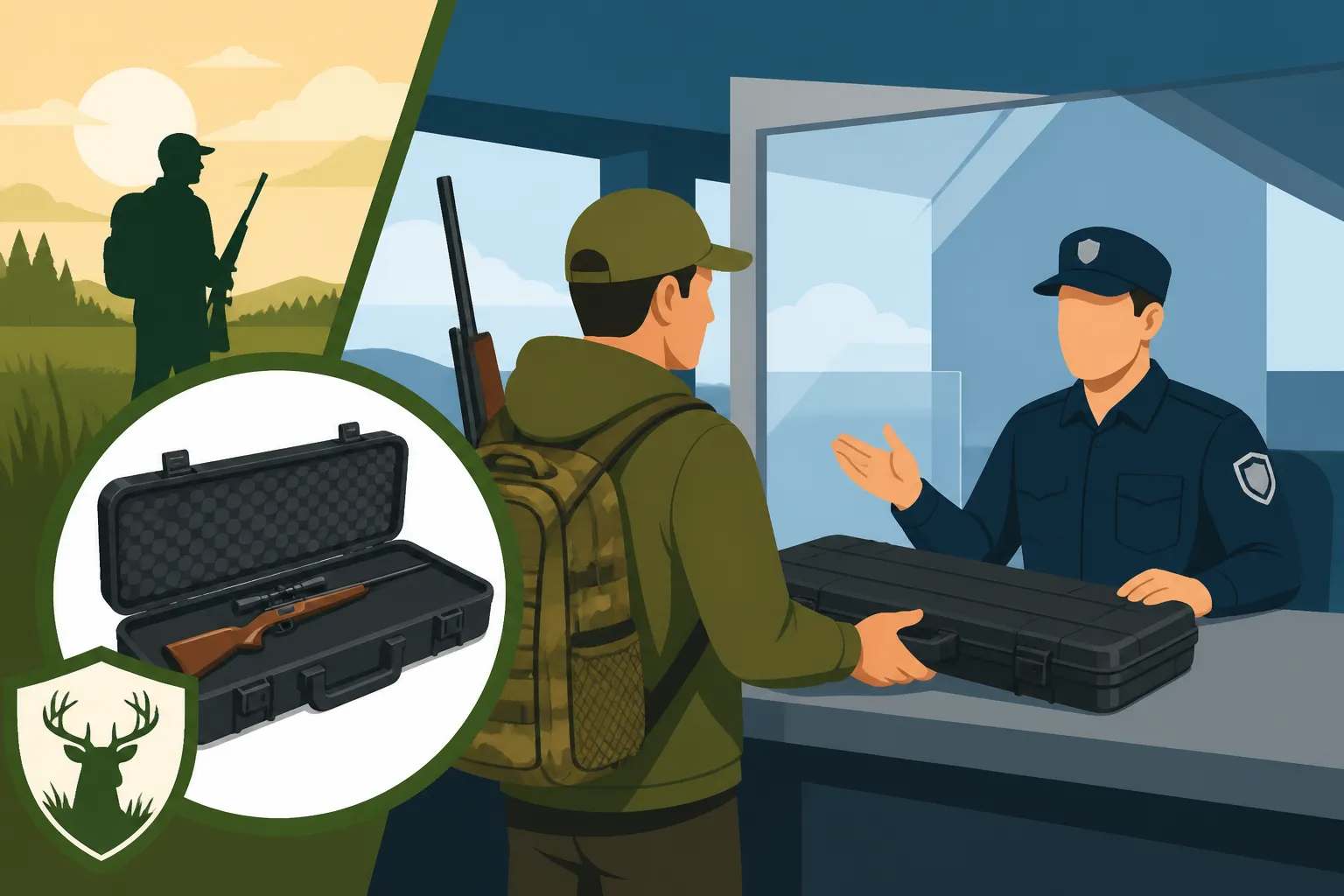
When you approach the Canadian border, you'll first interact with a primary inspection officer. Be truthful and upfront about your purpose for entering Canada and declare that you have firearms. Do not attempt to hide them or minimize their presence. You'll state, "I am entering Canada for a hunting trip, and I am declaring firearms." The officer will then typically direct you to secondary inspection, where a specialist officer will handle your declaration.
At secondary inspection, have your passport, any relevant hunting licences or invitations (especially if you're hunting with a Saskatchewan outfitter or on private land with permission), and your unsigned Non-Resident Firearm Declaration form ready. The officer will review your documents, verify your identity, and then ask to inspect your firearms. They will confirm the serial numbers, ensure they are properly stored (unloaded, trigger-locked, in a locked case), and confirm they meet the non-restricted criteria. Once satisfied, they will witness your signature on the declaration form and process the fee.
The Declaration Fee and Confirmation
There is a non-refundable fee associated with the Non-Resident Firearm Declaration. This fee is standard, regardless of the number of non-restricted firearms declared on the single form (up to three firearms). The officer will process this payment, usually by credit card. Once the payment is processed and the officer has confirmed all details, they will stamp and sign your form, returning your copies. This confirmed and signed form is your temporary licence to possess your firearms in Canada, and it is valid for 60 days. Keep this document with you at all times, separate from your firearm. What a Non-Resident Pays Through an Outfitter might give you an idea of overall costs for your trip, but remember the declaration fee is a separate, direct payment at the border.
Always ensure you receive a copy of the stamped and signed form. One copy should be affixed to your firearm's hard case, or readily available with the firearm if you have multiple cases. This visual confirmation helps other law enforcement understand the firearm's legal status if you are stopped. Remember, this form is not just for crossing the border; it's your proof of legal possession while you're enjoying Whitetail Hunting in Saskatchewan or any other hunt.
Bringing Firearms Into Saskatchewan: A Checklist
To help you keep track, here’s a quick checklist for your border crossing with firearms:
| Item | Status | Notes |
|---|---|---|
| Valid Passport/ID | Required | Must match names on all documents |
| Non-Restricted Firearm(s) | Confirmed | No handguns, no prohibited firearms |
| Unloaded Firearm(s) | Required | Chambers empty, magazines removed |
| Trigger Lock(s) | Required | One per firearm |
| Locked Hard Case | Required | Firearm(s) secured within |
| Ammunition | Separately stored & limited | Up to 200 rounds without permit; in secure container separate from firearm |
| Non-Resident Declaration | Filled out (unsigned) in triplicate | RCMP 5589. Do NOT sign until witnessed by CBSA officer |
| Declaration Fee | Payment ready | Usually by credit card |
| Hunting License/Invite | Recommended | Proof of purpose (e.g., Saskatchewan Hunting Licences and What They Cost, outfitter letter) |
| Return Ticket/Itinerary | Recommended | Proof of planned departure |
| Copies of Previous Forms | Recommended | If you've declared firearms before, having old forms can speed things up |
This checklist is a helpful tool, but always refer to the official CBSA website for the most current regulations.
Common Mistakes and How to Avoid Them
Even with the best intentions, it's easy to stumble if you're not aware of potential pitfalls. Learning from others' mistakes can save you a lot of grief and ensure your Planning a Saskatchewan Hunting Trip goes off without a hitch.
Not Declaring Your Firearm
This is, by far, the biggest and most costly mistake you can make. Some hunters, either out of ignorance, confusion, or a misguided attempt to save time or the declaration fee, try to simply drive across without mentioning their firearms. This is considered smuggling. If discovered, which is very likely through various detection methods, you will face severe penalties. This includes seizure of your firearm (with no chance of getting it back), significant fines, potential criminal charges, and a ban from entering Canada in the future. It's a risk that is simply not worth taking. Always, always declare your firearms immediately upon arrival at the border.
Incorrectly Filled Out Declaration Form
Even if you intend to declare, an improperly filled out form can cause significant delays and complications. Common errors include:
- Missing Information: Forgetting a serial number, barrel length, or manufacturer.
- Typographical Errors: A single digit wrong in a serial number can flag your firearm. Double and triple-check every single piece of data you transcribe onto the form against the actual firearm.
- Signing Too Early: Remember, the CBSA officer must witness your signature. Signing beforehand invalidates that part of the process and will require you to start over.
- Outdated Form: Always download the latest version of the RCMP 5589 form from the official government website before your trip. Regulations can change, and you want to be sure you're using the correct document.
Take your time, be meticulous, and have a clear head when filling out the Non-Resident Firearm Declaration. This is not the place for hurried work.
Improper Firearm Storage and Transport
Canadian law is very specific about how firearms must be stored when being transported. I've heard stories of hunters having their firearms seized because they simply put a soft case in the truck, or forgot a trigger lock, or had a loaded magazine in the same case. It seems minor, but these are serious safety and legal requirements in Canada.
- Unloaded: Ensure the chamber is empty and any magazines are removed from the firearm.
- Trigger Lock: Every non-restricted firearm must have a trigger lock, cable lock, or similar device to render it inoperable.
- Locked Case: The firearm, with its trigger lock, must then be placed in a robust, lockable case. Soft cases are generally insufficient unless they themselves are lockable and meet certain criteria for securing the firearm. A hard, lockable case is always the safest bet.
- Ammunition Separation: Ammunition should be stored in a separate container, ideally also locked, and not in the same case as the firearm.
Failing any of these checks could lead to delays, fines, or even seizure. Make sure you understand Legal Firearms and Bows for Big Game and how they should be transported, especially if you're heading out to the forest fringe for Hunting Whitetails in Saskatchewan's Forest Fringe.
Ignoring Changes in Regulations or Firearm Classifications
Firearm laws can change. While major shifts are usually well-publicized, smaller adjustments to classifications or definitions can occur. What was non-restricted last year might have a different status this year, although this is rare for common hunting firearms. It is your responsibility as the importer to stay informed. Before every trip, take a few minutes to check the official CBSA and RCMP websites for any updates related to Bringing Firearms Into Saskatchewan. Your outfitter, if you've booked one, will also be a valuable resource for up-to-date information. They often deal with this on a daily basis and can provide invaluable insights for Rules for Non-Residents Hunting Saskatchewan.
Crossing the border with a firearm can be intimidating, but with thorough preparation and an understanding of the rules, it can be a smooth and efficient process. Being honest, organized, and respectful of Canadian law will ensure your Saskatchewan hunting adventure starts the right way.
Disclaimer
This article is for general informational purposes only and does not constitute professional advice. Laws, prices and regulations vary by location and change over time. Consult a qualified professional for guidance on your specific situation.