Dressing for Saskatchewan’s November Cold
The crisp, bright days of a Saskatchewan November can quickly turn brutally cold, often catching hunters off guard, leaving them shivering in a stand, cutting a hunt short, or worse, risking serious exposure. There's nothing quite like the deep, penetrating chill that settles in when the wind whips across the open prairie or through a dense bush, turning an otherwise perfect morning into an exercise in endurance. This guide is dedicated to helping you master the art of dressing for Saskatchewan's notorious November cold, ensuring you stay warm, comfortable, and focused on the hunt, no matter what the weather throws at you.
Understanding Saskatchewan's November Cold
November in Saskatchewan isn't just "cool"; it's a profound, bone-chilling cold that demands respect and proper preparation. Many hunters, especially those new to the province or visiting from milder climates, underestimate just how quickly conditions can change and how relentless the cold can be.
The Brutal Reality of Late Fall Weather
Picture this: you wake up to a stunning hoarfrost morning, the thermometer reading -10°C (14°F). Sounds manageable, right? But by mid-morning, a front blows in, dropping the temperature to -20°C (-4°F) and bringing with it a biting north wind. Suddenly, that "manageable" cold becomes dangerous. Snow can start falling, reducing visibility and adding another layer of moisture to contend with. These rapid shifts are the norm, not the exception, in Saskatchewan during November. One day you might be comfortable in lighter layers, and the next you're fighting for warmth, wishing you'd packed that extra down jacket. It's not just about staying warm; it's about being prepared for a dynamic environment that can go from pleasant to perilous in a matter of hours.
Wind Chill: The Silent Hunter's Enemy
The actual air temperature is only part of the story when you're out in a November stand or stalking through a field. The wind chill factor is often the true villain, making an already cold day feel absolutely frigid. Wind strips away the thin layer of warm air your body naturally creates around itself, speeding up heat loss significantly. A -15°C (5°F) day with a 20 km/h (12 mph) wind can feel like -25°C (-13°F) or colder to exposed skin. This is why you can feel comfortable enough walking, but sitting still for an hour in a tree stand suddenly turns into a survival challenge. Understanding wind chill isn't just academic; it directly influences your choice of outer layers and how much insulation you truly need. Ignoring it is a surefire way to cut your hunt short. For anyone planning to brave these conditions, especially during prime time, you'll need to know about Hunting the Rut in Early to Mid November.
Why Layering Isn't Just a Buzzword, It's Survival
You hear it all the time: "layer up!" But in Saskatchewan's November, it's more than just a suggestion – it's your key to comfort and safety. Layering allows you to adapt to changing activity levels and fluctuating temperatures. When you're hiking into your stand, you'll generate a lot of body heat, and you'll want to shed layers to avoid sweating, which will make you dangerously cold once you stop moving. Once you're settled in your blind or stand, you can add those layers back to retain warmth. The beauty of a proper layering system is its versatility. You're not relying on one bulky, inflexible garment; instead, you're building an adaptive system that can be fine-tuned to your exact needs throughout the day. This strategic approach will make all the difference between an enjoyable hunt and a miserable one, especially if you plan on Sitting All Day in a Saskatchewan Blind.
The Essential Layering System for Success
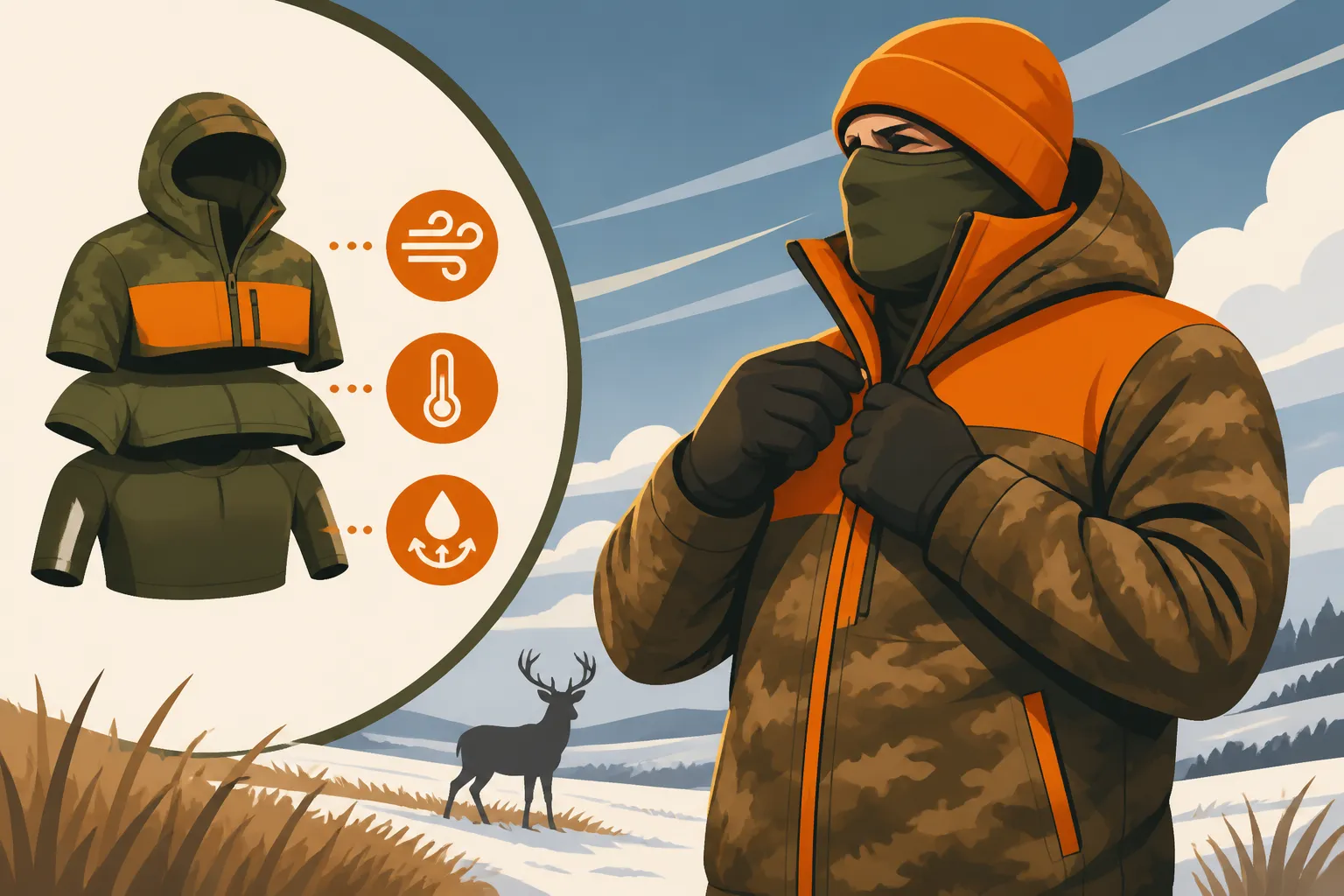
A well-thought-out layering system is your best defense against Saskatchewan's November cold. Each layer serves a specific purpose, working together to manage moisture and retain heat.
Base Layers: Wicking Away the Chill
Your base layer is the foundation of your cold-weather hunting wardrobe. Its primary job is to wick moisture (sweat) away from your skin, keeping you dry. Wet skin, even in moderately cold temperatures, can quickly lead to hypothermia when you stop moving. Forget cotton for your base layers; it absorbs moisture and holds it against your skin, making you feel clammy and cold. Instead, opt for materials like merino wool or synthetic blends. Merino wool is fantastic because it's naturally odor-resistant and provides excellent warmth even when slightly damp. Synthetics, on the other hand, are often more durable and dry faster. Choose a weight appropriate for the expected temperatures – a mid-weight base layer is usually a good starting point for November, with heavier options available for truly frigid conditions. Ensure it fits snugly but not restrictively, allowing for good blood circulation.
Mid Layers: Trapping the Warmth
The mid-layer is your primary insulation. Its job is to trap air, creating a thermal barrier that holds your body heat close. Fleece, down, and synthetic insulated jackets or vests are popular choices here. For a truly cold November day, you might even consider a couple of mid-layers: a lighter fleece over your base, and then a heavier, perhaps synthetic-fill jacket over that. The key is to have options you can add or remove. A quality fleece jacket is a staple, providing warmth without excessive bulk. For extreme cold, a packable down or synthetic puffer jacket can be invaluable. Look for options that allow for good arm movement, as you'll be drawing a bow or shouldering a rifle. When the temperature really drops, you might appreciate having a system that allows for Hunting Whitetails at Thirty Below.
Outer Layers: Your Shield Against the Elements
Your outer layer, also known as your shell, is your first line of defense against wind, snow, and rain. While November can be dry, you can't count on it. A good outer layer needs to be windproof and water-resistant (or waterproof, depending on your preference and expected conditions) to protect your insulating layers. It also needs to be quiet, especially if you're Bowhunting Saskatchewan's September Season or rifle hunting up close. Many hunters opt for insulated outer layers in November, combining the shell and some insulation into one garment. However, a non-insulated shell worn over sufficient mid-layers offers more versatility. Look for features like adjustable cuffs, a good hood that can be worn over other headwear, and strategically placed pockets. The material should be durable enough to withstand brush and briars but still quiet when you move.
Beyond the Layers: Head, Hands, and Feet
Even with the best layering system on your torso, if your extremities are cold, you'll be miserable. Your head, hands, and feet are critical areas for heat loss and are highly susceptible to frostbite.
Protecting Your Extremities from Frostbite
It's astonishing how much heat you can lose through an uncovered head. A good, insulated beanie, trapper hat, or balaclava is non-negotiable for November hunting. Consider bringing a couple of options – a lighter beanie for walking and a heavier, windproof hat for sitting still. For your hands, a layering approach works best here too. Start with a thin pair of merino wool or synthetic gloves that allow for dexterity. Over these, wear a warmer, insulated pair of gloves or, even better for sitting, large, insulated mittens with a slot for your trigger finger. Mittens are generally warmer than gloves because your fingers share warmth. Keeping hand warmers readily available is also a smart move.
Footwear Choices for All-Day Comfort
Cold feet can ruin a hunt faster than almost anything else. You need boots that are insulated, waterproof, and provide good support. For November, look for boots rated for cold temperatures, often indicated by a gram amount of Thinsulate or other insulation (e.g., 800g, 1200g, 2000g). The insulation level you need depends on how active you'll be and how long you'll be sitting still. If you're primarily stand hunting, go for higher insulation. Ensure your boots are a little roomy to allow for thick wool socks and to prevent constriction, which can cut off circulation and make your feet colder. Always wear wool or synthetic socks – never cotton – and consider a thin liner sock to wick moisture, followed by a heavier outer sock. Bringing an extra pair of dry socks to change into halfway through the day can be a game-changer. For more specific advice, check out Boots for Sitting Still in Deep Cold.
Head and Neck Protection: Don't Skimp Here
Beyond your primary hat, a good neck gaiter or a full balaclava can make a huge difference in sealing off your body from the cold. A neck gaiter can be pulled up over your nose and mouth when the wind picks up, protecting sensitive skin. It can also be pulled down when you're moving or temperatures are milder. The goal is to eliminate any exposed skin where cold air can penetrate. Many hunters use multiple head coverings: a thin merino balaclava under a fleece beanie, for example. This again offers versatility and allows you to adjust as conditions or your activity level change. Think of your head and neck as a crucial "seal" to your entire warmth system.
Practical Tips and Gear Considerations
Getting your gear right is a process of trial and error, but some fundamental principles will always serve you well in Saskatchewan's cold.
Material Matters: Wool, Fleece, and Synthetics
Each material has its strengths and weaknesses, and a smart hunter uses a combination.
| Material Type | Pros | Cons | Best Use |
|---|---|---|---|
| Merino Wool | Excellent warmth-to-weight ratio, warm when damp, odor-resistant, quiet. | Can be expensive, slower drying than synthetics, less durable in some applications. | Base layers, mid-layers, socks, beanies. |
| Synthetics | Dries quickly, durable, often more affordable, good moisture-wicking. | Can retain odor, less warm than wool when damp, can be noisy depending on weave. | Base layers, mid-layers (fleece), outer shells. |
| Down | Exceptional warmth-to-weight, highly compressible. | Useless when wet, expensive, not ideal for high activity where sweating is likely. | Stationary mid-layers, outer jackets for extreme cold. |
| Fleece | Good warmth, breathable, relatively affordable, quiet. | Not windproof, can absorb water if not treated. | Mid-layers, vests. |
For your outer shell, look for durable, quiet synthetics with a DWR (Durable Water Repellent) finish, or a Gore-Tex/similar waterproof-breathable membrane for wet conditions. Natural wool outer layers are also excellent for quietness and warmth, though they can be heavy when wet.
Packing Smart: What to Bring in Your Day Pack
Your day pack isn't just for snacks; it's a mobile warmth station. Always carry spare layers, even if you think you won't need them. A compressible down or synthetic puffer jacket is invaluable for throwing on during a break or if you get unexpectedly cold. Pack an extra pair of dry socks, a spare hat or balaclava, and a couple of hand warmers. A small Thermos of hot coffee, tea, or soup can provide an amazing psychological and physical boost on a truly frigid day. Don't forget a fire-starting kit and emergency supplies, especially if you're venturing into remote areas. Having these essentials can mean the difference between a minor inconvenience and a serious situation if something goes wrong. And remember, during these colder months, proper Meat Care in Saskatchewan's Cold Snaps is also crucial.
The Importance of a Reliable Warm-Up System
Sometimes, despite your best efforts, the cold just gets to you. That's when a reliable warm-up system becomes essential. This might be a portable propane heater in your blind (ensure proper ventilation!), a small survival stove to boil water for a hot drink, or simply knowing when to call it a day and head back to the truck. A pop-up ice fishing tent with a small heater can serve as a fantastic warm-up spot when hunting in open areas. For those long days in the stand, battery-operated heated vests, gloves, or boot inserts can provide targeted warmth when your body's natural heat production isn't enough. It's not a sign of weakness to use these aids; it's a sign of smart, safe hunting. Never push yourself to the point of shivering uncontrollably or losing dexterity; that's when mistakes happen and safety is compromised. Knowing how to stay warm is part of being a responsible hunter, especially if you're out Hunting Saskatchewan Winter Weather Safely.
Internal Link List:
- Hunting the Rut in Early to Mid November
- Sitting All Day in a Saskatchewan Blind
- Hunting Whitetails at Thirty Below
- Boots for Sitting Still in Deep Cold
- Staying Warm in a Saskatchewan Stand
- Meat Care in Saskatchewan's Cold Snaps
- Hunting Saskatchewan Winter Weather Safely
- Winter Truck Kit for a Saskatchewan Hunt
Disclaimer
This article is for general informational purposes only and does not constitute professional advice. Laws, prices and regulations vary by location and change over time. Consult a qualified professional for guidance on your specific situation.