Rules on Hunting From a Vehicle
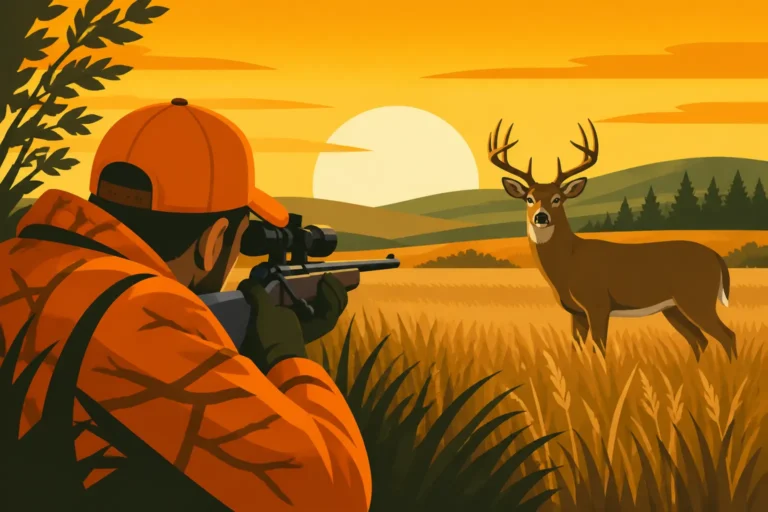
There’s a common scenario that plays out in the minds of many hunters, especially in Saskatchewan's vast landscapes: you’re driving along a grid road, scanning the fields or bush edges, and suddenly, there it is – a magnificent whitetail buck or a bull moose, standing broadside. The temptation can be immense to simply stop, roll down the window, and take the shot. But here in Saskatchewan, the rules about hunting from a vehicle are very clear, and often, what seems like a quick opportunity can lead to serious legal trouble. This guide will meticulously break down what’s permissible, what’s absolutely not, and why these regulations are so crucial for ethical hunting and wildlife conservation.
The Absolute Prohibition: Discharging a Weapon from a Vehicle
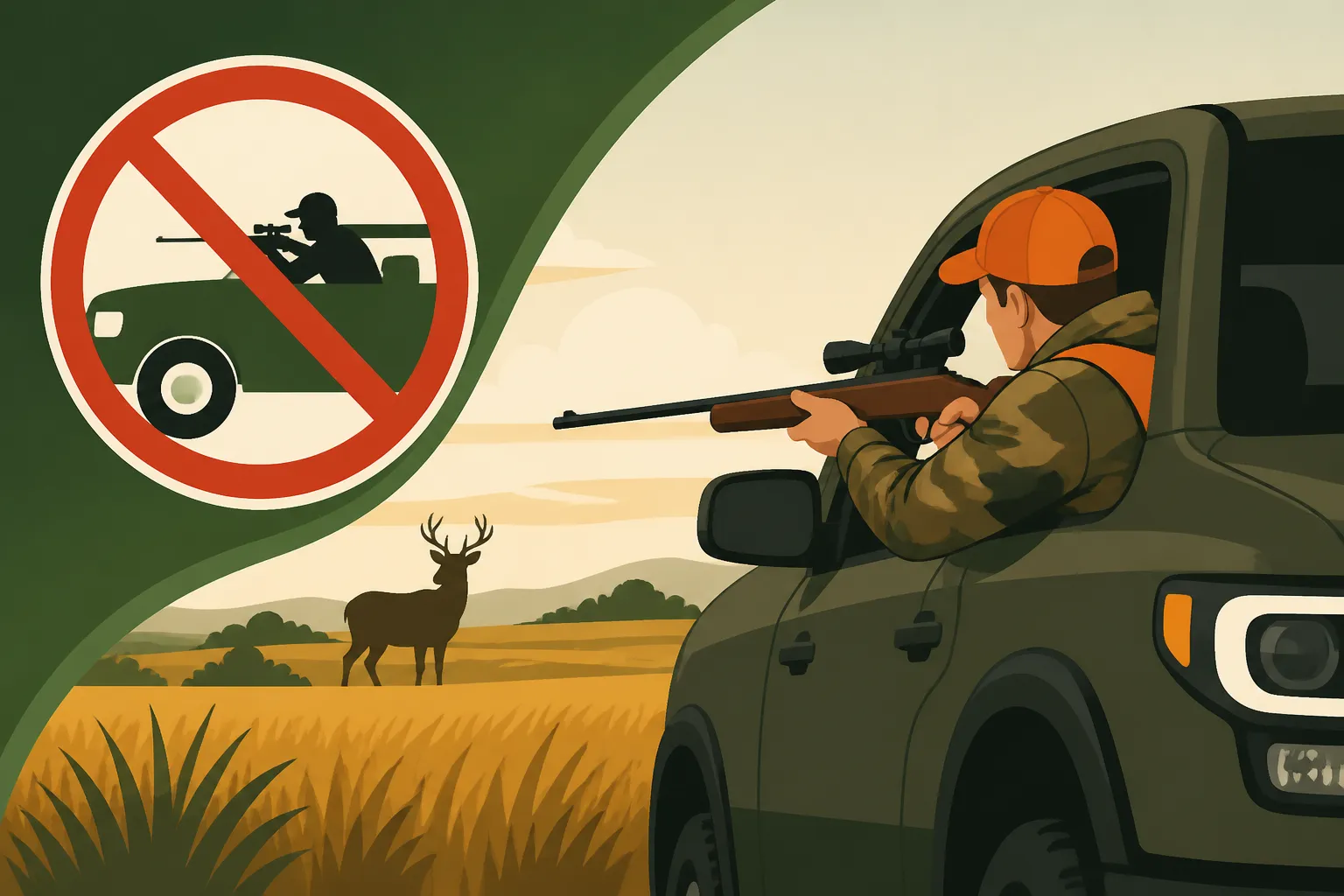
Let’s get straight to the point: in Saskatchewan, it is illegal to discharge a firearm or a bow from any vehicle. This isn't just a suggestion; it's a fundamental rule designed to ensure safety, promote fair chase, and maintain the ethical standards of hunting. This prohibition is quite broad, covering almost any scenario you might envision involving a weapon and a motorized vehicle.
This rule means you cannot shoot from the window of your truck, even if the engine is off and the vehicle is stationary. You cannot stand in the bed of a pickup and shoot. The same applies to ATVs, snowmobiles, or even a boat propelled by a motor, whether it’s moving or anchored. The critical element is the discharge of the weapon from the vehicle itself. It’s about the direct act of using the vehicle as a platform or immediate proximity from which to take a shot. Many hunters have been caught out thinking that if the engine is off, it's okay, but that's a dangerous misconception. The law views the vehicle as a part of the act, regardless of whether it's running or not.
The definition of "vehicle" in this context is broad and includes any conveyance that is self-propelled or designed for transport. So, while you might be thinking primarily of your truck, remember that this extends to your quad, side-by-side, or snowmobile too. Even if you're out Hunting Saskatchewan Winter Weather Safely on a snowmobile, you still need to dismount and move away from the machine before shouldering your rifle. It's a non-negotiable aspect of the provincial hunting regulations. The idea is to remove any perceived advantage a vehicle might offer in pursuing or taking game.
Navigating the Grey Areas: Permissible Vehicle Use and Crucial Exceptions
While the rule against shooting from a vehicle is ironclad, vehicles are undeniably a vital part of hunting in Saskatchewan. Our province is vast, and getting to many prime hunting spots without a truck, ATV, or snowmobile would be impossible. The key is understanding how you can use your vehicle legally and ethically in relation to your hunt.
Accessing Hunting Areas and Scouting
Vehicles are perfectly fine for transportation to and from your hunting grounds. You can drive down grid roads, explore Crown land access points, or use them on private land with permission to get close to where you want to hunt. This is especially true when you're trying to figure out where the game might be, perhaps by Scouting With Satellite Imagery in Saskatchewan or simply driving around looking for sign. Tools like GoHunt can be invaluable here, allowing you to identify land ownership, map out travel routes, and mark potential stand locations without ever having to step out of your truck until you're ready to hunt on foot.
However, "hunting from a vehicle" also encompasses using a vehicle to pursue game. You can’t drive around continuously attempting to spot game, then quickly stop, jump out, and shoot. The spirit of the law requires a clear separation between transportation and the actual act of hunting. You should park your vehicle, get out, and proceed on foot a reasonable distance before actively hunting. What constitutes a "reasonable distance" can be subjective, but generally, it means far enough away that the vehicle isn't directly facilitating the immediate act of shooting an animal. For example, if you're trying to hunt Whitetail Hunting in Saskatchewan's Forest Fringe, you might drive an old logging road, park, and then walk into the bush.
Retrieving Downed Game
This is one of the most common areas of confusion. You've successfully taken down an animal, you've validated your tag, and now you need to get it out of the bush or field. Can you use your vehicle for retrieval? Yes, generally speaking, you can. After an animal has been legally killed and immediately tagged, you can often use a vehicle to retrieve it. This is a practical consideration, especially for large animals like moose or elk, or when hunting in challenging terrain.
However, there’s a crucial caveat: the vehicle must only be used for retrieval, not for further hunting. You must not have any loaded firearms or nocked arrows on board, or readily accessible for the purpose of hunting, while you are using the vehicle for retrieval. The intent must be purely to get your downed animal. If you intend to retrieve your game from a specific quarter, make sure you know the Quad and Side-by-Side Rules on Crown Land for that area. Be sure to check your specific Wildlife Management Zone regulations as well, as some areas may have further restrictions on vehicle use, even for retrieval. For example, if you're hunting in a remote area and need to get a moose out, using a quad is often the only practical solution, but the hunting portion of the activity must be completely finished.
Provisions for Hunters with Disabilities
Saskatchewan recognizes that some hunters face physical challenges that make conventional hunting difficult or impossible. For these individuals, specific permits can be obtained that allow for certain exceptions to the general rules regarding vehicle use. These permits are typically issued on a case-by-case basis and allow a disabled hunter to hunt from a stationary vehicle, or from closer proximity to a vehicle than other hunters.
To qualify for such a permit, there are strict medical criteria that must be met, and an application process must be followed with the Ministry of Environment. It's not a blanket exemption and requires careful planning and adherence to the conditions outlined in the permit. These permits ensure that hunting remains an accessible activity for everyone who shares a passion for it, while still upholding the principles of safety and responsible hunting. Hunters requiring this accommodation should research Saskatchewan Disabled Hunter Permits well in advance of the season.
Table of Permitted vs. Prohibited Vehicle Use
To clarify some of these nuances, here’s a quick breakdown:
| Action Involving a Vehicle | Permitted? | Conditions/Notes |
|---|---|---|
| Driving to a hunting area | Yes | Essential for access to most areas in Saskatchewan. |
| Parking, then walking to hunt | Yes | Vehicle used for transport only; active hunting done on foot away from the vehicle. |
| Using mapping apps (e.g., GoHunt) while driving | Yes | For scouting, identifying land ownership, planning routes. |
| Discharging a firearm/bow from a stationary vehicle | No | Illegal, regardless of engine status. |
| Discharging a firearm/bow from a moving vehicle | No | Absolutely prohibited; extremely dangerous and illegal. |
| Pursuing game with a vehicle | No | This includes "spotting and stopping" rapidly to shoot; violates fair chase. |
| Retrieving legally harvested and tagged game | Yes | Only for retrieval; no loaded firearms/nocked arrows accessible for hunting during retrieval. |
| Hunting from a stationary vehicle with a disabled permit | Yes | Requires a specific permit from the Ministry of Environment for qualified individuals. |
| Hunting on a designated trail using an ATV | No | You must dismount and move away from the ATV to hunt. ATVs are for access, not active hunting platforms. |
The "Why": Upholding Ethics, Ensuring Safety, and Promoting Fair Chase
These rules aren't just arbitrary lines drawn in the sand by regulators; they are deeply rooted in fundamental principles of safety, ethical hunting, and conservation. Understanding the 'why' behind them helps foster a greater appreciation for responsible hunting practices.
Safety Above All Else
Discharging a firearm or bow from a vehicle introduces numerous safety risks. Vehicles are not stable shooting platforms, increasing the chance of an errant shot. The field of view from inside a vehicle is often restricted, making it harder to identify your target clearly and ensure a safe backdrop. You might not see another hunter, a farm building, or livestock beyond your intended target. Furthermore, bullets can ricochet off hard surfaces or even the vehicle itself in unpredictable ways. This concern is paramount, especially when you consider the shared landscapes where hunting takes place, often near roads, homes, and other recreational users.
The potential for accidents skyrockets when hunters attempt to shoot from moving vehicles or quickly dismount for a rushed shot. The integrity of the hunting community relies on everyone prioritizing safety, not just for themselves but for all others in the field. This is why thorough Saskatchewan Hunter Education Requirements exist, emphasizing safe firearm handling and ethical practices.
The Principle of Fair Chase
At the heart of ethical hunting lies the concept of fair chase. This principle dictates that hunters should not take unfair advantage of the animals they pursue. Using a vehicle to directly aid in the act of hunting – whether by chasing game, quickly closing distances, or using it as a shooting platform – gives the hunter an undeniable and unsportsmanlike advantage. It transforms hunting from a challenging pursuit of skilled woodcraft and patience into a less respectful, often opportunistic, act.
Fair chase ensures that the animal has a reasonable chance to evade the hunter, maintaining the integrity of the hunt. It’s about appreciating the challenge, the skill, and the effort involved in successfully harvesting game. When you hunt ethically, you earn your harvest. This commitment to fair chase protects the public image of hunting and ensures that it remains a respected tradition. Imagine a world without these rules; it would quickly devolve into little more than target practice, stripping hunting of its ancient and honorable traditions.
Maintaining Public Trust and Conservation Efforts
The way hunters conduct themselves in the field directly impacts public perception of hunting. When rules like those against hunting from vehicles are violated, it can erode public trust, making it harder to garner support for conservation efforts and defend hunting rights. Many people outside the hunting community already hold misconceptions, and actions that appear unethical or dangerous only serve to reinforce those negative stereotypes.
Moreover, these regulations contribute to wildlife management and conservation by preventing overharvesting and ensuring sustainable populations. If every hunter could simply drive around and shoot game from their vehicle, it would put undue pressure on wildlife populations, leading to rapid declines. The regulations are a part of a larger framework that dictates seasons, limits, and methods, all designed to ensure Why Saskatchewan Bucks Grow So Large and that future generations will have the opportunity to experience hunting in Saskatchewan. By following these rules, we, as hunters, demonstrate our commitment to responsible stewardship of natural resources.
Ensuring Compliance and Avoiding Costly Mistakes
Understanding the rules is one thing, but consistently applying them in the field can be another challenge. The stakes are high, with potential penalties ranging from significant fines to license suspension and even equipment seizure.
Know Your Regulations Like the Back of Your Hand
The most fundamental advice is to thoroughly familiarize yourself with the current Saskatchewan Hunters' and Trappers' Guide. This is your bible for all regulations, and it’s updated annually. Don't rely solely on what someone told you around the campfire or a past practice. Rules can change, and ignorance is rarely an acceptable defense. Many digital resources, including mapping apps like GoHunt, now integrate regulatory information, offering another layer of awareness, particularly when you're trying to determine your location within a specific Wildlife Management Zone.
It’s also crucial to understand the rules around Saskatchewan Landowner Permission Law. Even if you're not hunting from a vehicle, improper access can lead to trespass charges, adding another layer of complexity to your hunt. Always get permission if you're on private land, and understand the specific rules for public land access.
Adopt Best Practices for Vehicle Use
To avoid any ambiguity or accidental infractions, it's wise to adopt some solid best practices:
- Park with Purpose: When you arrive at your intended hunting area, pull off the road safely, and ideally, out of sight. Park your vehicle, then unload your firearm or un-nock your arrow before you even think about stepping out to hunt.
- Walk In, Walk Out: Commit to hunting on foot. Use your vehicle to get to your general area, but then do the hard work of walking, still-hunting, or setting up a stand away from the immediate vicinity of your vehicle. This reinforces fair chase and reduces any perception of using the vehicle for an unfair advantage.
- Separate Scouting from Hunting: If you're using your vehicle to scout, focus solely on observing. Keep your hunting gear stored away, and do not have loaded firearms or nocked arrows readily accessible. When you transition from scouting to hunting, make a clear distinction in your actions. This might mean parking your truck at the edge of a field when you're Hunting a Swathed Grain Field at Dusk and then walking a kilometer in to set up a blind.
- Stay Informed: Keep up-to-date with any rule changes that might occur from season to season. The hunting landscape is dynamic, and regulations are sometimes adjusted to respond to conservation needs or public safety concerns.
The Consequences of Non-Compliance
It's impossible to overstate the seriousness of violating hunting regulations in Saskatchewan. The penalties for offenses like hunting from a vehicle are not trivial. You could face:
- Substantial Fines: These can range from hundreds to thousands of dollars, depending on the severity of the offense and whether it's a repeat occurrence.
- Seizure of Equipment: Your firearm, bow, ammunition, hunting vehicle, and even the harvested game animal could be seized by conservation officers. Imagine losing your prized hunting rifle or your truck.
- License Suspension or Revocation: You could lose your hunting privileges for a significant period, potentially for years, which for many passionate hunters, is one of the most devastating penalties.
- Criminal Charges: In severe cases, especially those involving repeated offenses or dangerous conduct, you could face criminal charges.
Conservation officers are out in the field to enforce these laws, not just to catch people, but to ensure everyone's safety and the long-term health of our wildlife. If you witness what you believe to be a violation, it's your responsibility as an ethical hunter to report it to the Saskatchewan's Turn In Poachers Line. Protecting our hunting heritage means holding ourselves and others accountable. These rules, while sometimes seeming inconvenient, are fundamental to preserving what we all cherish about hunting in Saskatchewan.
Disclaimer
The information provided in this guide is for general informational purposes only and does not constitute legal advice. Hunting regulations in Saskatchewan can change and may be interpreted differently depending on specific circumstances. It is the responsibility of every hunter to consult the most current Saskatchewan Hunters' and Trappers' Guide published by the Ministry of Environment, as well as any relevant federal regulations, before engaging in any hunting activities. Always prioritize safety and ethical practices.