Moving a Carcass Between Zones
It's an age-old problem for hunters: you've successfully tagged an animal, the hard work of the harvest is done, and now you're wondering how exactly you're supposed to get that beautiful carcass home without breaking any rules. Moving a game animal, especially between different Wildlife Management Zones (WMZs) in Saskatchewan, can feel like navigating a legal minefield, particularly with the critical issue of Chronic Wasting Disease (CWD) adding layers of complexity. This comprehensive guide is here to demystify the regulations, clarify what you can and cannot do, and ensure your well-deserved harvest makes it from the field to your freezer legally and safely.
Understanding Saskatchewan's Wildlife Management Zones and Why They Matter
Saskatchewan is a vast province, renowned for its incredible hunting opportunities. But it's not a monolithic block when it comes to wildlife management. The province is meticulously divided into numerous Wildlife Management Zones (WMZs), and understanding these zones is absolutely fundamental to staying on the right side of the law, especially when it comes to transporting your harvest. These zones aren't just lines on a map; they are strategic tools used by the Ministry of Environment to manage wildlife populations, address specific conservation concerns, and, crucially for our discussion today, control the spread of diseases like Chronic Wasting Disease (CWD).
Each WMZ can have its own specific regulations regarding hunting seasons, species available, and even antler point restrictions. For instance, an antlerless deer draw might be open in one zone but closed in an adjacent one. This localized management means that what's legal in WMZ 37 might be entirely different in WMZ 35. You can find detailed maps of these zones in the annual Saskatchewan Hunters’ and Trappers’ Guide, or by using digital mapping tools. Many hunters find resources like the GoHunt app incredibly useful for pinpointing exact WMZ boundaries, even out in the field. Knowing your precise location within these zones before, during, and after your hunt is paramount, as it directly impacts your responsibilities when moving game. If you're planning a trip, take the time to really study the map for your target area. You can learn more by checking out Reading a Saskatchewan WMZ Map Before You Go.
Specific Regulations for Carcass Movement in CWD Zones
Now, let's talk about the elephant in the room for many hunters: Chronic Wasting Disease (CWD). This isn't just a Saskatchewan issue; it's a grave concern across North America wherever cervids (deer, elk, moose, caribou) roam. CWD is a fatal, transmissible neurological disease that affects these animals, caused by misfolded proteins called prions. Once an animal is infected, there's no recovery, and the prions can persist in the environment for years, making containment a huge challenge. While there's currently no evidence of CWD transmitting to humans, health authorities strongly advise against consuming meat from infected animals.
Because CWD is such a serious threat, Saskatchewan has implemented strict regulations regarding the movement of carcasses, particularly from zones where CWD is prevalent or mandatory testing is required. The aim is simple: prevent the accidental spread of CWD prions to new areas where the disease may not yet be established. For the current hunting season, many WMZs have mandatory CWD testing requirements for specific species, primarily white-tailed deer and mule deer. These zones can change year to year based on disease prevalence, so always consult the most recent Saskatchewan Hunters’ and Trappers’ Guide or the Ministry of Environment website. You can also dive deeper into Saskatchewan's CWD Testing Rules.
What Can and Cannot Be Moved from a CWD Mandatory Zone?
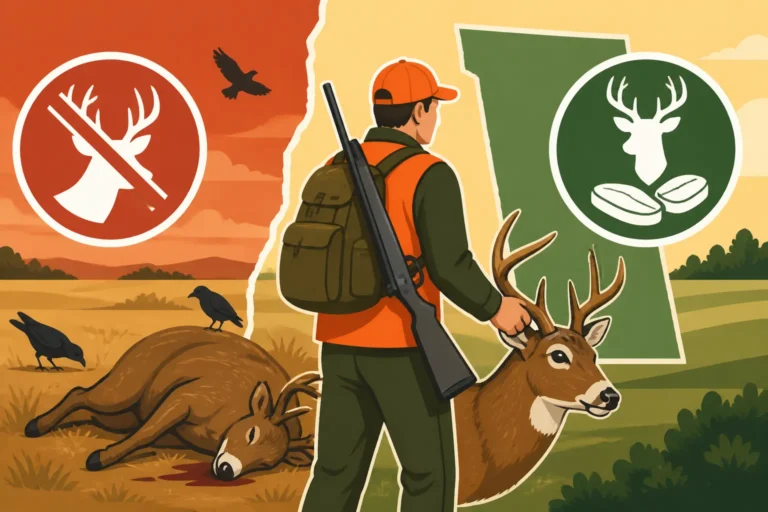
This is where many hunters get tripped up, and it's essential to be crystal clear. If you harvest a deer or elk in a designated mandatory CWD submission zone, you absolutely cannot transport the entire carcass, or even most of it, outside of that zone. The critical parts that must not leave the CWD-designated zone are:
- The head: This includes the brain, eyes, and any associated soft tissue.
- The spinal column: The entire backbone.
- The spleen and lymph nodes: These are also high-risk tissues.
These are the parts most likely to contain the infectious prions. So, what can you take with you? You can transport:
- Deboned meat: This is the safest way to transport meat from a CWD zone. All bone and nervous tissue must be removed.
- Quarters: If the meat is still on the bone, it must be reduced to quarters (four basic pieces of the animal, often with the hide removed), and all high-risk nervous tissue (brain, spinal cord) must be removed. This typically means the head and spinal column stay in the zone.
- Hides: As long as the head is removed.
- Antlers or skull plates: These are allowed, but they must be completely cleaned of all brain matter and other soft tissue. "Cleaned" means absolutely no brain or tissue remnants.
- Teeth: If you're collecting teeth for aging, they can be removed and transported.
For hunters who want to submit their animal for CWD testing, designated drop-off locations are provided within or near these mandatory testing zones. You typically remove the head, leave the rest of the carcass (or the high-risk parts) in the CWD zone, and then submit the head for testing. It’s a bit of extra work, but it’s crucial for monitoring the disease and protecting the wider cervid population. For more details on this process, refer to Mandatory CWD Testing Zones. If you happen to receive a positive CWD test result, there are specific protocols to follow, which you can read about in What to Do With a Positive Result.
General Guidelines for Carcass Transport Outside CWD Zones
Even if you're lucky enough to be hunting in a WMZ not currently affected by mandatory CWD restrictions, there are still important general guidelines to follow when moving your game animal. These rules are in place for various reasons, including ensuring ethical hunting practices, proper species identification, and preventing spoilage.
Tagging and Validation:
The first and most critical step after harvesting any big game animal in Saskatchewan is to immediately validate your tag and attach it to the animal. This isn't just a suggestion; it's a legal requirement. The tag needs to be visible and securely attached to prevent loss. Skipping this step or delaying it can lead to serious fines and confiscation of your animal. Your licence specifies exactly how and where to affix the tag. Remember, a properly validated tag is your proof of a legal harvest, and without it, you're looking at potential legal trouble. You can always refer to the general Saskatchewan Big Game Season Dates for context on when and where these regulations apply.
Evidence of Sex Requirements:
For certain species and licences, you are required to keep "evidence of sex" attached to the carcass during transport. This allows conservation officers to verify that you've harvested the correct sex of animal according to your licence (e.g., antlered vs. antlerless deer). For deer, this typically means keeping either the head (if it's an antlered deer) or the unskinned udder or scrotum (for antlerless deer) naturally attached to the carcass or a major portion of it. Always check the current hunting guide for the specific requirements for your species and licence type, as these can vary. It’s a good idea to refresh your memory on Evidence of Sex Requirements before heading out.
Avoiding Waste and Proper Storage:
Saskatchewan law dictates that you cannot "waste" edible game meat. This means you have a responsibility to properly care for your harvest and ensure the meat is not spoiled. Transporting a full, unskinned carcass over long distances, especially in warmer weather, risks rapid spoilage. This is where field dressing and quartering become essential best practices, even if not strictly mandated by law for all transport outside CWD zones. Quartering an animal helps it cool much faster, significantly reducing the risk of bacterial growth and spoilage.
When you're transporting meat, whether quartered or deboned, it needs to be protected from contamination. Heavy-duty game bags are your best friend here, as they allow air circulation while keeping dirt, flies, and debris off the meat. You also need to ensure your vehicle is clean and that the meat isn't exposed to exhaust fumes or excessive heat. For guidance on handling meat in various conditions, especially the challenges of colder weather, check out Meat Care in Saskatchewan's Cold Snaps. Also, a quick review of Transporting Game Meat in Saskatchewan can provide useful context.
Inter-Provincial and International Transport (Briefly):
While this guide focuses on moving carcasses between zones within Saskatchewan, it's important to briefly note that if you plan to transport your game out of the province or out of Canada, you will encounter an entirely new set of regulations. Provincial borders, and especially the Canada-U.S. border, have even stricter rules, often prohibiting the transport of certain carcass parts to prevent the spread of CWD and other diseases. Always check with the authorities in the destination province, state, or country before you leave Saskatchewan.
Best Practices for Carcass Handling and Transport
Regardless of the specific zone you're hunting in, adopting solid best practices for carcass handling will make your life easier, ensure the quality of your meat, and help you comply with regulations. There's nothing worse than putting in all that effort for a trophy and then realizing you've compromised the meat or accidentally broken a rule.
1. Field Dressing Immediately:
The moment your animal is down, the clock starts ticking. Field dressing should be done as quickly and cleanly as possible. Removing the entrails helps the carcass cool down rapidly, which is paramount for meat quality. In Saskatchewan's often chilly hunting seasons, especially during the late fall or early winter, this can be less critical than in warmer climates, but it’s still best practice. However, don't underestimate how quickly body heat can spoil meat, even when the air is cool, if the guts are left in. For colder conditions, you might want to look at advice on Field Dressing in Saskatchewan's Deep Cold.
2. Thorough Cooling is Key:
After field dressing, focus on getting that carcass cooled. If you can, hang the animal to allow air circulation all around it. If hanging isn't an option, prop it open to maximize airflow. Many hunters use ice chests or coolers for smaller game or quartered meat, but ensure the meat isn't submerged in water, which can degrade quality. For larger animals, particularly if you're hours from a processing facility, consider putting ice packs in the cavity, wrapped in plastic to prevent direct water contact.
3. Quartering for Ease and Compliance:
Breaking down your animal into quarters or deboned meat on-site offers several advantages. It significantly reduces the weight you have to drag or carry, makes loading into a vehicle much easier, and, as we’ve discussed, is often a legal requirement in CWD zones. Even outside CWD zones, it aids in cooling and allows for easier inspection and management of your harvest. If you're tackling a larger animal like a moose, understanding how to quarter it efficiently is a skill worth developing. Consider learning more through guides like Quartering a Moose Alone in the Bush.
4. Utilize Quality Game Bags:
Once quartered, wrap your meat in breathable game bags. These aren't just for keeping dirt off; they protect the meat from flies, insects, and even birds or small scavengers, all while allowing the meat to "breathe" and continue cooling. Avoid plastic tarps or garbage bags for direct meat contact, as these trap heat and moisture, promoting bacterial growth.
5. Proper Labeling, Especially for Group Hunts:
If you're hunting with a group or harvesting multiple animals, clearly label your meat bags with your name, licence number, and possibly the WMZ where the animal was harvested. This helps avoid confusion during transport and processing, and it's good practice for accountability.
6. Keep Records:
It's always smart to keep a small journal or log of where and when you harvested your animal, especially if it's from a CWD testing zone. Digital mapping apps like GoHunt can help you mark the exact spot where the animal fell, making it easier to retrace your steps or provide precise information if required.
7. Plan Your Route and Storage Ahead:
Before you even head out, have a plan for how you'll handle your carcass, especially if you're aiming for a CWD zone. Know where the nearest CWD drop-off points are and what their operating hours are. Think about where you'll store the meat once you get home – do you have enough freezer space? Having a clear strategy prevents last-minute stress and ensures you don't make hasty decisions that could lead to non-compliance. You can gather a lot of preparatory information by checking out Where to Read the Hunting Guide.
Transporting a game carcass in Saskatchewan, especially with the added complexity of CWD, requires diligence and attention to detail. But by understanding the WMZs, adhering to CWD regulations, and employing best practices for carcass care, you can ensure your hard-earned harvest is handled legally, safely, and with the respect it deserves.
Summary of Carcass Movement Restrictions in CWD Mandatory Zones
To help clarify the specific rules around CWD zones, here's a concise table outlining what parts of a deer or elk carcass are restricted from leaving a CWD mandatory submission zone and what can be transported. Always refer to the most current Saskatchewan Hunters’ and Trappers’ Guide for the definitive rules for the current season, as zones and regulations can change.
| Carcass Part | Restricted from Leaving CWD Mandatory Zone? | Transportable from CWD Mandatory Zone? | Notes |
|---|---|---|---|
| Whole Carcass | Yes | No (unless for immediate CWD testing at designated site) | Full carcass must remain in zone or be taken to a CWD drop-off point immediately. |
| Head (including brain, eyes) | Yes | No (unless for CWD testing submission or fully cleaned) | Must be removed and left in the zone, or taken to a CWD drop-off site. If kept for taxidermy, must be completely free of all brain/tissue. |
| Spinal Column | Yes | No | Must be removed (e.g., by quartering or deboning) and left in the zone. |
| Spleen and Lymph Nodes | Yes | No | Must be removed and left in the zone. |
| Deboned Meat | No | Yes | All meat removed from bone and nervous tissue. This is the safest and most compliant way to transport meat. |
| Quarters (meat on bone) | No (with conditions) | Yes (if head & spinal column removed) | Carcass reduced to four quarters, and all high-risk parts (head, spinal column, spleen, lymph nodes) must be removed and left in the zone. |
| Hide (without head) | No | Yes | Hide must be removed from the head. |
| Antlers / Skull Plate (cleaned) | No | Yes (if completely cleaned) | Skull plate must be free of all brain matter and soft tissue. "Cleaned" means no discernible tissue remaining. |
| Teeth | No | Yes | May be removed for aging or collection. |
Disclaimer
The information provided in this article is for general guidance only and is based on typical regulations in Saskatchewan. Hunting regulations, Wildlife Management Zone boundaries, and specific rules regarding carcass movement, especially concerning Chronic Wasting Disease (CWD), can change annually. It is the hunter's sole responsibility to consult the most current Saskatchewan Hunters’ and Trappers’ Guide, the Saskatchewan Ministry of Environment website, or contact the Ministry directly to ensure full compliance with all applicable laws and regulations before and during any hunting activity. Failure to do so may result in fines, penalties, or loss of hunting privileges.