Hunting a Bluff Between Two Fields
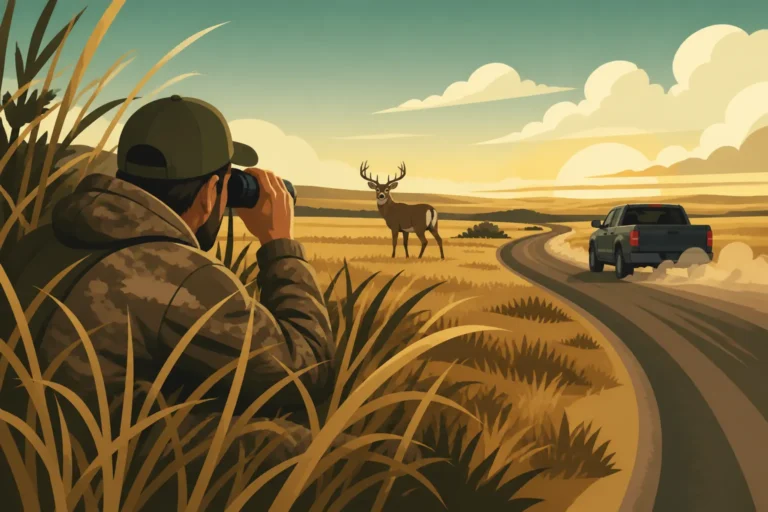
It's incredibly frustrating, isn't it, to drive past what looks like prime deer habitat – those small, isolated bluffs of trees sitting right between two golden fields – and wonder if you're missing something? Many hunters overlook these seemingly insignificant patches of cover, dismissing them as too small or too exposed. But I'm here to tell you that these bluffs are often overlooked goldmines, acting as critical hideouts and travel corridors for big game in Saskatchewan's agricultural landscape. This guide will help you understand these vital features and equip you with the strategies to hunt them effectively, turning those missed opportunities into successful harvests.
Understanding the Role of Bluffs in Saskatchewan's Landscape
When we talk about hunting in Saskatchewan's vast and open agricultural zones, our minds often jump to wide-open stubble fields or sprawling river bottom systems. However, some of the most consistent deer activity, especially from those wary, mature bucks, happens in places many hunters simply don't give a second thought to: the humble bluff. These small, often unassuming islands of cover are absolute magnets for wildlife, offering sanctuary and strategic pathways in a world dominated by human activity and cultivated land.
What Constitutes a "Bluff" in a Farmland Setting?
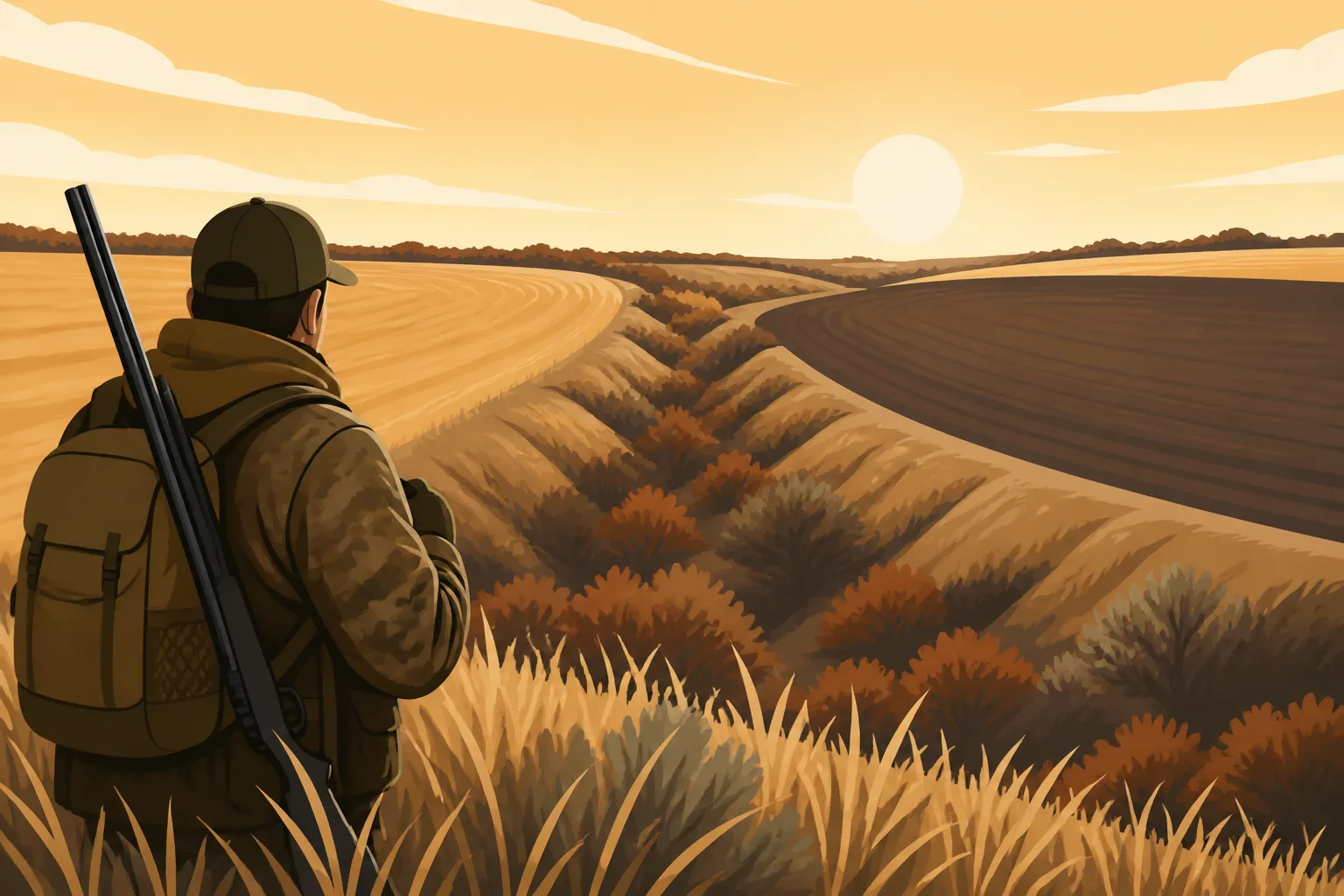
In Saskatchewan, a "bluff" isn't a towering cliff face. Instead, it refers to a distinct, often isolated pocket of trees or dense brush, typically surrounded by open fields. These can range from a few acres of aspens, poplars, or willows to a mix of deciduous trees interspersed with some evergreens like spruce or pine, especially as you move north into the parkland transition zones. Sometimes, a bluff might simply be a dense ring of brush around a slough, or a mature shelterbelt that's grown wild and wide.
What makes them so special isn't their size, but their strategic placement. They often sit on slightly elevated ground, along old fencelines that were never completely cleared, or in low-lying areas that are too wet to farm. Picture a ten-acre stand of poplars, thick with underbrush, bordered on one side by a harvested wheat field and on the other by a standing canola field. Many hunters see such a spot and think, "Too small, too much pressure," or "Deer will just run right out into the open." But these micro-habitats are precisely what makes them so attractive to game. They offer concentrated cover, creating an oasis in an otherwise exposed environment, and understanding their subtle nuances is the first step to unlocking their potential.
Why Game Animals Gravitate Towards These Bluffs
It's really quite simple when you think about it from a deer's perspective: survival. In the vast, open plains and farmlands of Saskatchewan, unbroken cover can be scarce. A bluff, no matter how small, offers immediate and vital resources.
Firstly, bluffs provide crucial cover and security. Think about a harsh winter wind ripping across an open field at -20 degrees Celsius. A dense bluff, even a small one, acts as a windbreak and offers thermal cover, allowing deer to conserve energy and escape the elements. It’s also a visual barrier, offering concealment from predators – both four-legged and two-legged. A deer tucked into the dense interior of a bluff feels secure, even if it's surrounded by open fields. Secondly, these areas are prime bedding areas. The thick undergrowth, fallen timber, and protective canopy create ideal spots for deer to bed down during the day. They can lie low, chew their cud, and stay hidden, all while being just a stone's throw from abundant food sources in the surrounding fields. When the sun starts to dip, they simply stand up and take a few steps out to feed.
Crucially, bluffs also serve as invaluable travel corridors. While they might seem isolated, they often connect to larger blocks of cover, other smaller bluffs, or water sources like sloughs. They are the safe highways deer use to move between more extensive bedding areas and feeding grounds. You'll find well-worn trails running through them, particularly along their edges or connecting different pockets of thicket. While primarily known for whitetail deer, in certain transition zones, you might even find mule deer using these bluffs, especially if there's sufficient brush or broken topography. Even predators like coyotes use them as ambush points or travel routes, highlighting their importance in the local ecosystem. Neglecting these spots means missing out on key movements and predictable patterns that are essential for a successful hunt.
Scouting Strategies for Bluffs Between Fields
You can’t hunt what you don’t know, and nowhere is that truer than with bluffs. These small patches of cover demand meticulous scouting. Driving past them on the grid road just isn't enough; you need to understand their internal structure, how game uses them, and how they relate to the broader landscape. Thankfully, modern tools and good old-fashioned legwork make this more accessible than ever before.
Utilizing Topographical Maps and Satellite Imagery
Before you even step foot in the field, spend some quality time with your digital maps. Tools like GoHunt or Google Earth are absolute game-changers for pre-season scouting. Start by identifying potential bluffs within your chosen hunting area. Look for any patches of timber or dense brush surrounded by open agricultural land. Once you've spotted them, zoom in and analyze their characteristics.
Pay close attention to the connectivity of these bluffs. Does a particular bluff connect to a larger woodlot via a creek bottom or a narrow strip of trees? Are there multiple bluffs forming a chain that deer might use to travel undetected? Look for natural funnels, pinch points, or areas where the cover narrows significantly. This helps you understand potential travel routes. Also, note the adjacent field edges. What kind of crops are typically planted there? Are they harvested early (like peas or barley) or later (like corn or canola)? The type and status of the crops will heavily influence when and how deer use the bluff. A standing cornfield provides additional cover and food right next to a bluff, making it an incredibly attractive spot for deer, especially late in the season. It’s common for hunters to struggle with visualizing game movement just by driving by; aerial views provide that crucial, bird's-eye perspective that lets you connect the dots and anticipate game movements before you ever get boots on the ground.
Boots-on-the-Ground Reconnaissance
Once you've done your digital homework, it's time for some old-fashioned dirt-kicking. This is where you confirm your theories and find the real secrets of the bluff. But first and foremost, you absolutely must obtain permission from the landowner if the bluff is on private property. Failing to do so can lead to serious legal issues and tarnish the reputation of all hunters. You can learn more about "Saskatchewan Landowner Permission Law" to ensure you're always acting within the rules.
Once permission is secured, approach the bluff slowly and methodically. This isn't just a walk; it's an investigation. You're looking for fresh sign: tracks, rubs, scrapes, droppings, and, most importantly, well-worn trails entering and exiting the bluff. Pay attention to how many trails there are and which directions they lead. Are they faint, or beaten down like a deer highway? These trails will tell you where deer are entering and leaving the safety of the cover.
Inside the bluff, try to identify specific bedding areas. Look for flattened grass or leaves, fresh droppings, and perhaps even some deer hair. These are usually in the densest, most protected parts of the bluff, offering both visual and thermal cover. As you move, consider the wind direction. How do prevailing winds interact with the bluff and the surrounding fields? Where would a deer naturally approach or exit based on scent? Try to pinpoint specific entry and exit points that deer prefer, perhaps a low spot in a fence line or a gap in thick brush. Timing your reconnaissance is also key; scout during off-hours or outside hunting season to minimize disturbance to the animals you hope to pursue. A thorough scouting trip can reveal a maze of deer activity within a seemingly small area, completely changing your perception of its hunting potential.
Effective Hunting Tactics for Bluffs
Successfully hunting bluffs between fields requires a blend of stealth, strategic positioning, and an understanding of deer behavior. It's not just about showing up; it's about making the right moves at the right time in the right place.
Stand Placement and Wind Considerations
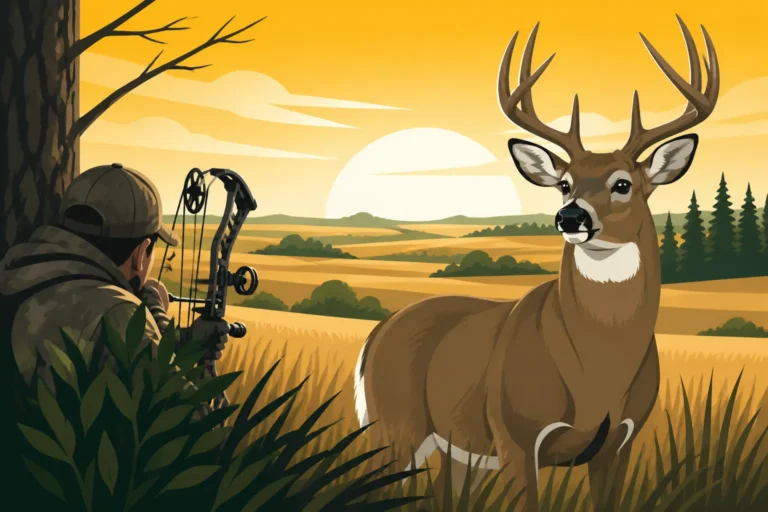
When it comes to hunting bluffs, stand placement is paramount. Whether you prefer a treestand or a ground blind, your location needs to offer a clear shot, allow for a quiet approach, and, most importantly, negate your scent. For treestands, look for mature trees along the bluff's edge that offer concealment and overlook a key trail, pinch point, or the edge of an adjacent feeding field. A good rule of thumb is to place your stand where you can see into the bluff and also watch the field edge. For ground blinds, situate them within the dense cover of the bluff, ensuring they break up your outline and allow for shooting lanes without exposing you. Consider checking out tips on "Hanging a Stand on a Saskatchewan Bush Edge" for more ideas on blending in effectively.
Your entry and exit routes are just as critical. Plan a path that minimizes noise and scent dispersal. This often means approaching with the wind in your face, or at least quartering to it, and avoiding walking through known bedding areas or major travel corridors. Deer in these smaller bluffs are extremely sensitive to pressure. One wrong move, and you could blow them out for days.
However, the single most critical factor is wind direction. You absolutely must play the wind. Never let your scent blow into the bluff where deer are likely to be bedded or traveling. Ideally, your scent should blow into the open field, away from any potential deer activity. This often means hunting specific bluffs or sides of bluffs only on certain wind directions. What happens if the wind shifts mid-hunt? This is a realistic concern. Have a backup plan or be prepared to pull out quietly if the conditions turn unfavorable. Many hunts are sabotaged by improper wind management, so mastering this aspect is key to consistently seeing deer in these high-potential areas.
Still-Hunting and Driving Smaller Bluffs
Sometimes, sitting and waiting isn't the only, or even the best, tactic for these smaller pieces of cover. Still-hunting, a slow, deliberate movement through the bluff, can be incredibly effective. This method involves taking a few steps, then stopping for several minutes to glass and listen. Deer often hold tight in these small bluffs, relying on their camouflage to remain hidden. By moving slowly and stopping frequently, you increase your chances of spotting a deer before it bolts. This tactic works particularly well for smaller, isolated bluffs where deer might be bedded during the day. You're effectively easing through their living room, giving them just enough time to feel a slight disturbance but not enough to panic and crash out immediately.
For slightly larger bluffs, or when you know deer are present but holding tight, a mini-drive with one or two partners can be successful. One or two hunters act as "blockers," positioned quietly on the downwind side or at expected escape routes, while another "pushes" slowly through the bluff. Safety is paramount here: clear communication, knowing where everyone is at all times, and understanding your shooting lanes are non-negotiable. The goal isn't to blast through the cover and spook everything; it's a controlled, quiet movement designed to gently encourage deer to move towards the blockers. This is an excellent tactic for breaking up the routine of deer that have become accustomed to holding still. If you're considering hunting a smaller land parcel, the principles of covering ground efficiently in places like "Hunting a Saskatchewan Quarter Section" can also apply.
Decoys and Calling in Bluff Settings
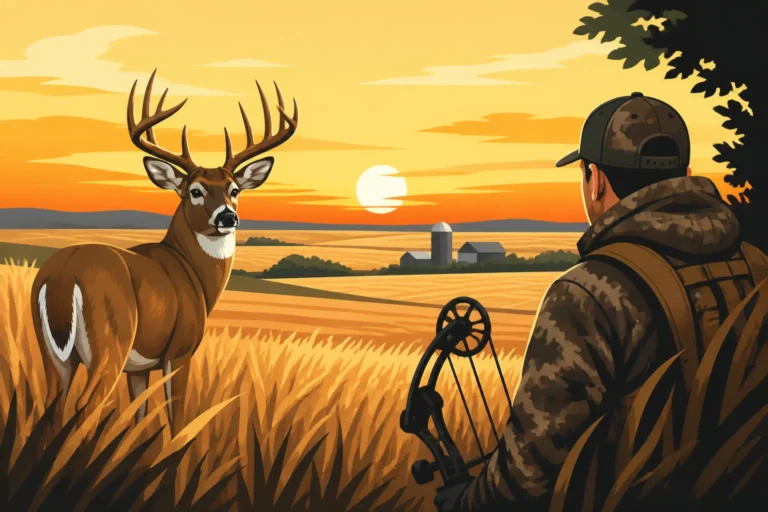
Integrating decoys and calling into your bluff hunting strategy can significantly increase your success, especially during the rut. A well-placed decoy can draw a curious buck out of the security of the bluff and into your shooting lane. Consider setting up a doe or small buck decoy on the field edge, facing the bluff, about 20-30 yards from your stand. The visual stimulus can often be enough to pique a deer's interest and encourage them to investigate.
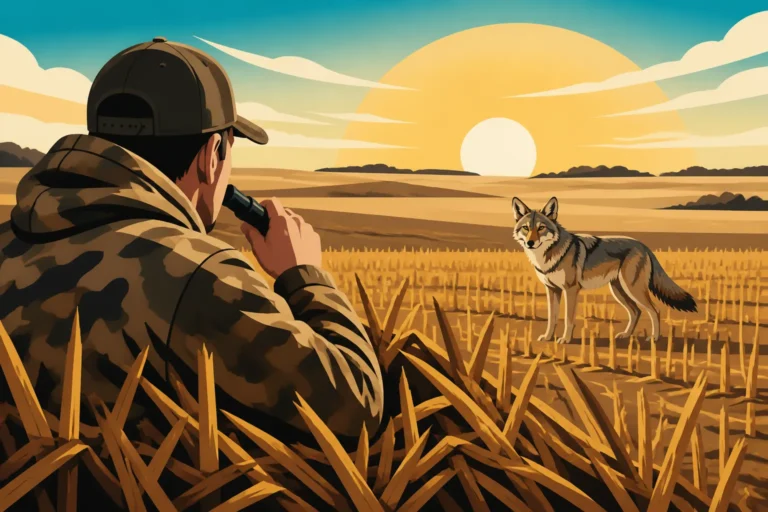
When it comes to calling, bluffs offer a natural acoustic advantage due to the tree cover. Grunts, bleats, and rattling can be highly effective. During the early and peak rut, rattling antlers can mimic two bucks fighting, often drawing in curious or aggressive bucks looking for a fight or an easy doe. Vary your volume based on the density of the cover and the wind conditions. In open parkland, you might need to call louder, but within a bluff, a more subtle approach is often better. For instance, understanding "Rattling Volume in Open Parkland" can help you adjust your strategy. Soft grunts and doe bleats can also coax out deer that are just inside the tree line, especially late in the season when they might be more cautious. Don't forget the power of "Grunt Calls Late in Saskatchewan's Rut" to bring in a searching buck. The best times to use calling are when deer are already moving, or when you suspect a buck is cruising the bluff edge looking for receptive does.
Seasonal Nuances and Adapting to Conditions
The way deer and other game utilize bluffs changes throughout the hunting season. Understanding these seasonal shifts is crucial for adapting your tactics and maximizing your chances of success. A strategy that works in September might fall flat in November or December.
Early Season and Warm Weather Considerations
When Saskatchewan's archery season opens in early September, the landscape is often still green and lush. Temperatures can be warm, and cover is at its densest. During this time, deer will be focused on food and water, often remaining in their beds for longer periods during the heat of the day. For more on this, check out "When Saskatchewan's Archery Season Opens".
In the early season, your focus should be on water sources near bluffs. If there's a slough or a small pond within or immediately adjacent to the bluff, deer will be using it frequently. Set up stands or blinds overlooking these water sources, particularly in the late afternoon and evening as temperatures begin to cool. Evening hunts are generally more productive, as deer will emerge from the bluffs to feed in the adjacent fields. The dense vegetation during early season also means that visibility can be quite challenging for still-hunting within the bluff itself. You might consider focusing on trails leading into and out of the bluff, rather than trying to penetrate its thickest parts, to avoid spooking game. Look for fresh tracks in the dew or dust near field edges at first light to confirm their usage patterns.
The Rut and Peak Movement Periods
The rut, generally peaking from late October through mid-November in Saskatchewan, is an entirely different ballgame. This is when bluffs truly shine as hotbeds of activity. Bucks are actively searching for does, and their daytime movement increases dramatically. For more insight into this prime period, read "Hunting the Rut in Early to Mid November".
During the rut, bluffs serve as vital staging areas and cruising lanes. Bucks will often work the edges of bluffs, scent-checking for does in the surrounding fields or moving quickly between pockets of cover. This means daytime movement inside and around these bluffs will be significantly higher than in the early season. This is the prime time to deploy calling and rattling techniques mentioned earlier, as bucks are more responsive to challenges or the sound of other deer. Consider setting up on the downwind side of a bluff, where bucks might cruise scent-checking, or overlooking a natural travel corridor that cuts through the bluff to an adjacent field. Bluffs can also hold does that are seeking refuge from persistent bucks, making them even more attractive to cruising males.
Late Season and Snow Cover Tactics
As winter sets in and snow blankets Saskatchewan, bluffs undergo another transformation, becoming critical for deer survival. This late season presents unique opportunities for the persistent hunter.
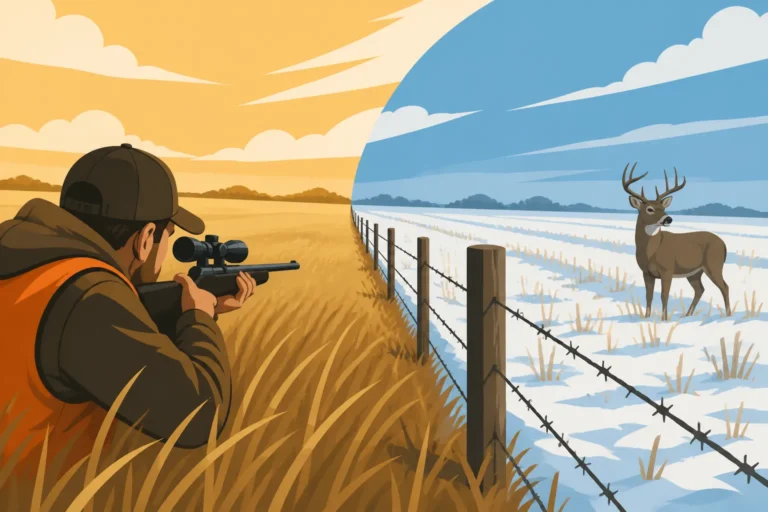
The presence of snow offers a significant visual advantage. Fresh snowfall reveals tracks, allowing you to easily identify how deer are entering, exiting, and moving within the bluff. You can learn a lot about their daily patterns by simply reading the fresh tracks. Thermal cover becomes paramount as temperatures plummet. Bluffs, with their dense growth and protection from the biting winds, offer crucial thermal protection. Deer will seek out the thickest parts of these bluffs to bed down, conserving energy during brutal cold snaps. To ensure your own safety in these conditions, refer to "Hunting Saskatchewan Winter Weather Safely".
Furthermore, food source focus becomes even more critical. Deer will be heavily concentrated near readily available food sources, especially those adjacent to bluffs. A standing cornfield, or a recently harvested field with plenty of waste grain, next to a bluff is an irresistible combination. Knowing "Where Saskatchewan Whitetails Bed in Snow" can help you pinpoint prime bedding spots within the bluff's interior. As food sources dwindle, deer will become more predictable, often moving from bedding in the bluff directly to feeding in the fields during low light hours. This can make for some incredible late-season hunting opportunities if you're willing to brave the cold and adapt your strategy.
Here's a quick comparison of how hunting strategies might shift with the seasons:
| Season | Primary Deer Focus | Key Bluff Use | Recommended Tactics | Scouting Tips |
|---|---|---|---|---|
| Early Season | Food & Water | Daytime Bedding, Water | Evening sits over water/field edges, quiet entry | Identify water sources, fresh feeding sign in fields. Utilize GoHunt for crop info. |
| Rut (Peak) | Breeding, Seeking Does | Cruising Lanes, Staging Area | Calling (grunts, bleats, rattling), field edge stands | Look for rubs/scrapes along bluff edges, fresh travel corridors. |
| Late Season | Survival, Thermal Cover, Food | Thermal Bedding, Food Access | Morning/evening sits on food sources, track fresh snow | Follow fresh tracks in snow, identify densest cover for bedding, reliable food. |
Ultimately, bluffs between fields are not just small patches of trees; they are dynamic ecosystems that demand respect and strategic planning. By understanding how game uses them throughout the year and adapting your hunting tactics accordingly, you'll uncover some of the most productive and rewarding hunting opportunities Saskatchewan has to offer.
Disclaimer
Hunting is an inherently dangerous activity. Always prioritize safety by following all local, provincial, and federal hunting regulations, including those specific to Saskatchewan. Ensure you have proper licensing, landowner permission, and adhere to firearm safety rules. This guide provides general information and recommendations; always exercise your own judgment and consult official Saskatchewan hunting regulations for the most current and accurate information.