Staying Warm in a Saskatchewan Stand
There's nothing quite like the crisp, cold air of a Saskatchewan morning from a treestand or ground blind, waiting for that buck of a lifetime to step out. But let's be real, that magic can quickly fade when the biting cold starts to creep into your bones, turning what should be an exciting hunt into an endurance test. The good news is, you don't have to shiver through your entire season. This guide is all about equipping you with the knowledge, gear, and strategies to not just survive, but actually thrive in a Saskatchewan stand, even when the mercury plummets.
Understanding the Relentless Saskatchewan Cold
Saskatchewan's reputation for cold isn't just a stereotype; it's a reality that every hunter needs to respect. What feels like a tolerable chill at home can quickly become a serious threat when you're sitting stationary for hours, exposed to the elements. This isn't just about temperature; it's a complex interplay of factors that conspire to steal your warmth.
How Wind Chill Slices Through Layers
You might look at the thermometer and think, "Okay, -10 Celsius, I can handle that," but then a sharp prairie wind whips up, and suddenly it feels like -25. That, my friends, is the insidious power of wind chill. It doesn't just make the air feel colder; it actively accelerates heat loss from your body by stripping away the insulating layer of warm air that your clothing is trying to trap. Imagine a thin blanket of warmth around you, created by your base layers and mid-layers; the wind acts like a relentless hand, constantly tearing that blanket away, forcing your body to work overtime to regenerate it. This is why a perfectly still -15C day can feel more manageable than a -5C day with a 30 km/h breeze.
This effect is particularly pronounced when you're perched high in a treestand, exposed to open air movement, or sitting in a ground blind where drafts might sneak in. Even a tiny gap in your clothing, like a loosely cinched cuff or an unzipped collar, becomes a heat leak. Hunters who underestimate wind's impact often find themselves tapping out early, shivering uncontrollably, or even facing mild hypothermia symptoms, simply because their carefully chosen layers weren't designed to combat that constant assault. It’s not enough for your gear to be warm; it absolutely must be windproof to truly hold its own against Saskatchewan's notorious gusts.
The Double Whammy of Stillness and Waiting
One of the biggest challenges in cold-weather hunting is the inherent inactivity. Unlike hiking or dragging a deer, which generate internal body heat, sitting on stand involves minimal physical exertion. Your metabolism slows down, and your body naturally conserves energy by reducing blood flow to your extremities – fingers, toes, ears, and nose. This is why these areas are often the first to feel the bite of the cold. You start out feeling fine, perhaps even a bit warm from the walk in, but after an hour or two of sitting absolutely still, the internal furnace starts to bank its fires.
The mental aspect of waiting compounds this. You're focused, alert, straining to catch any sound or movement, which can make you less aware of the gradual creep of cold. By the time you notice your toes are numb or your fingers ache, you've likely lost a significant amount of core heat, and it becomes a much harder battle to get warm again. This stillness is often necessary for success, especially when Hunting the Rut in Early to Mid November for those big bucks, meaning you have to be extra vigilant with your clothing choices to counteract this natural drop in body temperature. It’s not about just wearing more clothing, but wearing the right clothing that can maintain warmth even when your body isn't actively producing much of its own.
Unexpected Weather Shifts
Saskatchewan weather is famously unpredictable. A morning that starts clear and calm can quickly turn into a blustery, snowy afternoon, or a mild day can see temperatures plummet 10 or 15 degrees in just a few hours once the sun dips or a cold front moves in. This can catch even experienced hunters off guard, leaving them underdressed and vulnerable. You might check the forecast for the day, but savvy hunters know that the forecast is a guideline, not a guarantee. That balmy autumn day can turn into a raw, damp, bone-chilling experience by late afternoon.
This rapid change means that packing for extremes, even when the forecast looks favourable, is not just smart, it’s essential. A light drizzle might seem harmless, but combined with dropping temperatures and a bit of wind, it can saturate outer layers not designed for moisture, leading to rapid heat loss. The same goes for snow squalls that roll in without much warning, especially when you're out Hunting the December Late Season Cold. Being prepared for all eventualities, rather than just the forecast, is a cornerstone of safe and comfortable cold-weather hunting in this province. It often means carrying more gear than you think you need, especially if you plan on Sitting All Day in a Saskatchewan Blind.
Layering: Your First Line of Defense Against the Chill
Effective layering is the single most critical strategy for staying warm in a Saskatchewan stand. It's not about throwing on every piece of clothing you own; it's about creating an intelligent system that traps air, wicks moisture, and protects you from the external elements. Think of it as building a micro-climate around your body.
Base Layers: The Foundation of Warmth
Your base layer is the first layer of clothing against your skin, and its primary job is to manage moisture. When you walk to your stand, even in cold weather, you'll likely sweat a little. If that sweat stays on your skin, it will cool rapidly once you stop moving, drawing heat away from your body. This is why cotton, despite feeling soft, is a terrible base layer; it absorbs moisture and holds it close to your skin.
The best base layers are made from materials like merino wool or synthetic fabrics. Merino wool is a superstar because it's soft, incredibly warm for its weight, and naturally wicks moisture away while retaining its insulating properties even when damp. It also has natural odor-resistant qualities, which is a huge bonus on multi-day hunts. Synthetics, on the other hand, are often more durable, dry faster, and can be more budget-friendly. Look for polyester or polypropylene blends designed for active wear. The fit is also crucial: your base layer should be snug but not restrictive, ensuring maximum contact with your skin for efficient moisture transfer. A good base layer, like those from reputable brands, forms the intelligent starting point of your cold-weather hunting system, actively helping your body regulate its temperature rather than just acting as a static barrier.
Mid Layers: Insulation is Key
Once your base layer is managing moisture, your mid-layers come into play to provide the bulk of your insulation. This is where you trap air – the best insulator there is. Multiple thin to medium mid-layers are often more effective and versatile than one thick, bulky layer. Why? Because you can add or subtract them as conditions change or as your activity level varies. This adaptability is critical for preventing overheating while moving and then adding warmth when stationary.
Fleece, down, and synthetic puffies are popular choices for mid-layers. Fleece is affordable, dries relatively quickly, and provides decent warmth, but it can be bulky. Down is incredibly warm for its weight and highly compressible, making it easy to pack, but its insulating power is severely compromised if it gets wet. Synthetic insulation, often found in "puffy" jackets, mimics down's loft but retains warmth better when damp, making it a more forgiving option in wet snow or drizzle. Look for garments with varying weights and thicknesses, allowing you to fine-tune your insulation. A lightweight fleece vest over a merino base, topped with a synthetic puffy jacket, offers a dynamic system that can adapt from a brisk walk to the stand to hours of motionless waiting. Remember, the goal here is to create dead air space, so ensure a comfortable fit that isn't too tight, which would compress the insulation.
Outer Layers: The Wind and Waterproof Shell
Your outermost layer is your shield against the elements – primarily wind and moisture. No matter how many warm layers you have underneath, if the wind is cutting through them or they get saturated with snow or rain, you're going to get cold very quickly. A high-quality outer shell needs to be windproof, water-resistant or waterproof, and breathable. Breathability is important to allow any residual moisture from your body to escape, preventing it from building up inside and making you clammy.
Many modern hunting jackets and pants feature membranes like Gore-Tex or proprietary waterproof/breathable technologies. These are investments, but they pay dividends in comfort and safety. Look for quiet fabrics that won't rustle or swish when you move, which could spook game. Pay attention to details like adjustable cuffs, drawstrings at the waist and hood, and storm flaps over zippers – these all contribute to sealing out drafts and precipitation. For instance, if you're out Hunting the Forest Fringe for Big Bucks, you might encounter a mix of open areas and dense bush, making a durable, silent, and fully protective outer layer absolutely essential. Having a reliable shell means you can focus on the hunt, knowing that a sudden change in weather, be it a heavy snowfall or a bitter wind, won't prematurely send you back to camp.
Strategic Gear Beyond Clothing
While layering is foundational, specific pieces of gear are designed to combat the cold in critical areas, particularly your extremities, which are often the first to suffer.
Footwear and Hand Protection: Often the First to Get Cold
Your feet and hands are often the first places to get cold because your body prioritizes sending warm blood to your core organs. When your fingers and toes get numb, it's not just uncomfortable; it severely impacts your ability to operate your rifle or bow safely and effectively.
For footwear, choose insulated, waterproof boots rated for extreme cold. Look for boots with ample room in the toe box to allow for air circulation and prevent compression of your toes, which restricts blood flow. Don't make the mistake of wearing boots that are too tight with thick socks. Layering socks is also key: a thin, moisture-wicking synthetic or merino wool liner sock underneath a thicker, insulated wool sock works wonders. The liner wicks moisture, and the outer sock provides warmth. Chemical foot warmers, placed on top of your toes or beneath your arch, can provide hours of additional heat. When it comes to hand protection, thin, sensitive gloves can be worn for dexterity (e.g., shooting a bow), but for sitting still, a large, insulated hand muff (often worn around your waist or chest) is a game-changer. You can keep bare or lightly gloved hands inside the muff, often with a couple of chemical hand warmers, keeping them toasty until you need to make a shot. Brands like Sitka Gear or First Lite offer excellent options for specialized cold-weather gloves and muffs designed for hunters. Don't forget, Boots for Sitting Still in Deep Cold are a specific investment that pays off exponentially.
Head and Neck Coverage: Preventing Heat Loss
You hear the old adage about losing most of your heat through your head, and while the exact percentage is debated, your head and neck are certainly major culprits in heat loss due to their high blood flow and proximity to your core. Protecting these areas is non-negotiable for staying warm.
An insulated hat that covers your ears is a must. Options range from simple wool beanies to elaborate trapper hats with ear flaps. A balaclava or a neck gaiter (or both) provides crucial protection for your face, chin, and neck. These can be pulled up over your nose and mouth to warm the air you breathe, preventing that painful sting in your lungs on truly frigid days. They also keep wind and snow from sneaking down your collar. Some hunters even wear thin hood under their main jacket's hood for an extra layer of wind protection. Think about the cumulative effect: a warm head and neck help your entire body feel warmer by reducing the amount of work your core has to do to keep blood warm as it circulates to these exposed areas. This is especially true when you're out Hunting Saskatchewan Winter Weather Safely where exposure can lead to rapid heat loss.
Portable Heating Solutions: When Layers Aren't Enough
Sometimes, despite all the best layering and specialized gear, the Saskatchewan cold just wins, especially if you're committed to Hunting Whitetails at Thirty Below. This is where portable heating solutions can be a lifesaver, transforming a miserable sit into a bearable one.
Small, portable propane heaters, like those from Buddy Heater, are incredibly popular for enclosed ground blinds. They provide substantial radiant heat, warming the air inside the blind. Always use these with extreme caution, ensure proper ventilation to prevent carbon monoxide buildup, and understand local regulations on their use. Battery-powered heated vests, gloves, and socks are another excellent option, offering direct heat to specific body parts. These are becoming more efficient and longer-lasting with advancements in battery technology, though they are often a significant investment. Finally, don't underestimate the power of disposable chemical hand and foot warmers. Stock up on these! They're inexpensive, lightweight, and can provide hours of warmth in pockets, gloves, boots, or even tucked against your core. For those who prefer a more sustainable option, reusable hand warmers that you boil to recharge are also available, though they require more prep. These devices, when used responsibly, can extend your sit considerably and maintain your focus on the hunt. For finding quality gear and comparing options, platforms like GoHunt can be useful for researching specific product reviews and recommendations tailored for extreme cold conditions.
Mindset and Movement: Non-Gear Strategies
While gear is vital, your approach to the hunt and even your internal state can significantly impact how well you stay warm.
The Power of Pre-Hunt Warm-Up
Before you even step into your stand, a little bit of pre-hunt warm-up can make a world of difference. This isn't about breaking a sweat, but about gently getting your blood flowing and raising your core temperature slightly. A brisk walk to your stand, rather than a leisurely stroll, can achieve this. Once you arrive at your stand, if time and noise permit, perform a few quiet stretches or some light calisthenics (like arm circles or knee raises) before you settle in.
The goal is to get your internal furnace burning a bit hotter before you go stationary. This gives you a buffer against the immediate chill of sitting still. It also helps to prevent your muscles from seizing up in the cold, which can contribute to feeling colder and more uncomfortable. Just be mindful of scent control during any strenuous activity; if you exert yourself too much, you'll sweat, and that moisture will quickly turn cold once you stop moving. The idea is a controlled warm-up, not a full workout.
Strategic Movement in the Stand
Sitting completely motionless for hours is a surefire way to get cold. However, in hunting, movement is often a cardinal sin. The trick is to learn how to incorporate small, subtle, and silent movements that improve circulation without alerting game. This might include wiggling your toes inside your boots, flexing your calf muscles, gently rotating your ankles, or subtly shrugging your shoulders.
Even very small movements like these help to pump blood to your extremities, preventing the cold from setting in too deeply. If you're in an enclosed blind, you might have a bit more freedom for slightly larger movements, like standing up for a minute or doing a few quiet knee bends. If you are treestand hunting, careful, deliberate shifts in weight can also help. The key is to be extremely slow and methodical, constantly scanning your surroundings for any approaching game before you move. Remember, a little blood flow goes a long way in combating the cold, and keeping your body moving, even minimally, is far better than freezing solid.
Nutrition and Hydration for Internal Warmth
What you put into your body before and during a cold weather hunt plays a surprisingly important role in staying warm. Your body generates heat through metabolism, and that process requires fuel. Skipping breakfast or relying on sugary snacks isn't going to cut it for a long, cold sit.
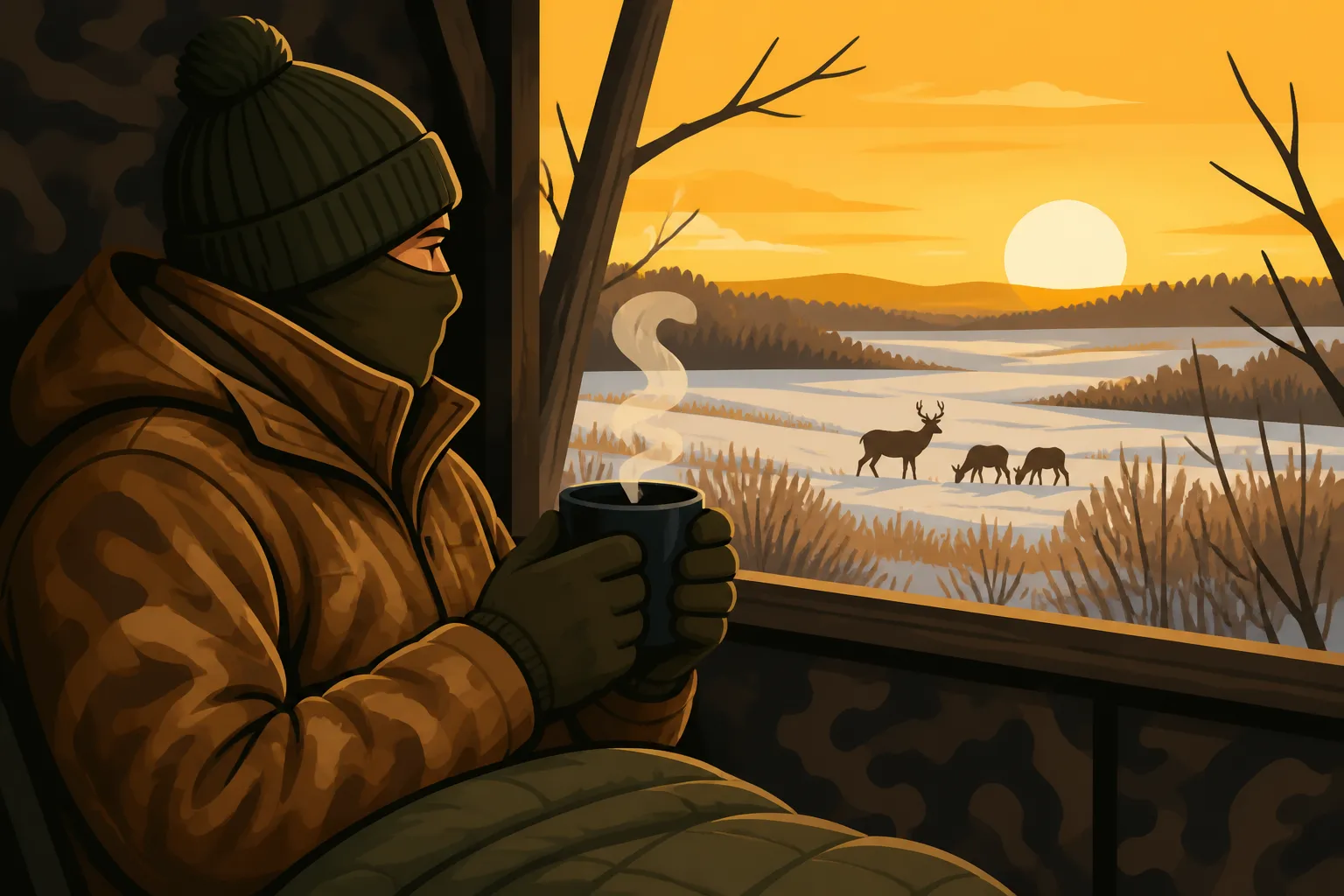
Focus on calorie-dense foods that provide sustained energy. A hearty breakfast with protein and complex carbohydrates will give your body the fuel it needs to keep generating heat. During your hunt, bring high-energy snacks like nuts, trail mix, jerky, and energy bars. Eating these periodically will stoke your internal fire. Hydration is also critical. It’s easy to forget to drink water in cold weather, but dehydration impairs your body's ability to regulate temperature. Pack a thermos of hot coffee, tea, or broth. Sipping on warm liquids not only provides direct warmth but also helps keep you hydrated and boosts morale. A warm drink can feel like a mini-heater from the inside out and is a ritual for many during Hunting the Rut in Early to Mid November.
Choosing the Right Stand for the Weather
The type of stand you choose, and where you place it, can be as important as your clothing in staying warm. Some stand types offer inherent advantages in cold weather.
Enclosed Blinds vs. Open Treestands
When facing the bitter cold of Saskatchewan, the choice between an enclosed ground blind and an open treestand can dramatically impact your comfort and endurance. An enclosed ground blind, particularly one with heavy fabric and a dark interior, acts as a significant thermal barrier. It blocks the wind completely, retains some of your body heat, and can even be safely heated with a portable propane heater, as mentioned earlier. This makes them ideal for prolonged sits in severe cold, allowing you to move more freely, stretch, or even sip a hot beverage without detection. They are also fantastic for hunting a Saskatchewan bush edge where you might be tucked away from the main wind but still need warmth. For those interested in extended, comfortable sits, especially in later seasons, considering a high-quality enclosed blind is a smart move.
On the other hand, an open treestand offers superior visibility and scent dispersal, but leaves you completely exposed to the wind, cold, and precipitation. This demands a much more rigorous layering system and often limits the duration of your sit, especially if the wind picks up. While some hunters prefer the vantage point of a treestand, for extreme cold, they are undeniably more challenging. If you do opt for a treestand in cold weather, consider adding a wind-blocking skirt or blind material around the stand to at least reduce direct wind exposure. Ultimately, your comfort and ability to focus on the hunt will be far better in an enclosed blind when the temperatures really drop, aligning well with advice found on planning resources like BookYourHunt, which may highlight outfitters offering such accommodations.
Natural Cover and Sun Exposure
Beyond the type of stand, its precise location can significantly influence your warmth. Utilizing natural cover to block wind is a simple yet incredibly effective strategy. Setting up your stand on the leeward side of a thick bluff, a dense treeline, or even a large rock outcropping can cut the wind dramatically, creating a noticeable difference in perceived temperature. Even a few extra degrees of protection from the wind can extend your comfortable sit by hours. Hunters often look for this kind of protection when Hunting a Bluff Between Two Fields or similar sheltered locations.
Furthermore, consider the sun's path. In the late season, the sun sits low in the sky, and even its weak warmth can provide a welcome respite. If possible, position your stand so that you receive morning or afternoon sun, especially if you're facing a long sit. A stand facing east will get sun in the morning, which can help warm you up from the initial pre-dawn chill. Conversely, a stand facing west will catch the afternoon sun, providing warmth as the day starts to cool. Conversely, avoiding direct sun in early season hunts helps keep you cool, but in late-season Saskatchewan, every bit of natural warmth is a blessing. Even small adjustments in stand placement can make a significant impact on your overall comfort and ability to stay warm throughout the hunting day. A well-placed stand in a sheltered, sun-exposed location can feel dramatically warmer than one fully exposed to the elements, even with identical clothing.
Table: Cold Weather Layering System Comparison
Here's a quick look at common materials for each layer and their key characteristics:
| Layer Type | Material | Key Characteristics | Pros | Cons |
|---|---|---|---|---|
| Base | Merino Wool | Wicks moisture, insulating, odor-resistant, soft | Warm when damp, naturally anti-microbial, comfortable | Can be expensive, slower drying than synthetics, less durable |
| Synthetic (Poly/Propylene) | Wicks moisture, fast-drying, durable, affordable | Excellent moisture wicking, quick drying, durable, budget-friendly | Can retain odors, not as warm when damp as merino | |
| Mid | Fleece | Insulating, breathable, soft, quick-drying | Affordable, comfortable, good warmth-to-weight | Can be bulky, not windproof, loses insulation when wet |
| Down Insulation | High warmth-to-weight, compressible, very warm | Extremely warm, lightweight, packs small | Very expensive, useless when wet, ethical sourcing concerns | |
| Synthetic Puffy | Insulating, retains warmth when wet, durable | Warm when damp, good warmth-to-weight, more affordable than down | Can be bulkier than down, slightly less efficient insulation | |
| Outer | Softshell (Windproof) | Wind-resistant, breathable, water-repellent | Excellent wind protection, good for active wear, quiet | Not fully waterproof (good for light snow/drizzle only) |
| Hardshell (Waterproof/Breathable) | Waterproof, windproof, breathable (e.g., Gore-Tex) | Full protection from rain/snow/wind, highly durable | Can be noisy (unless specialized hunting fabric), less flexible |
Remember, the best system often involves a combination of these materials, chosen strategically for the specific conditions you'll face.
Conclusion
Staying warm in a Saskatchewan hunting stand is less about luck and more about meticulous preparation, smart gear choices, and a good understanding of how your body reacts to the cold. From the foundational layers of merino and synthetics to the insulating power of a puffy jacket and the protective shield of a windproof shell, every piece of clothing plays a vital role. But don't stop there. Protecting your extremities with specialized boots and hand muffs, covering your head and neck, and even considering a portable heater or heated garments can make all the difference. Add to that the strategic advantage of a pre-hunt warm-up, subtle movements in the stand, and proper nutrition, and you'll be well on your way to enjoying those long, productive sits without the misery of shivering. The Saskatchewan wilderness offers incredible hunting opportunities, and by mastering the art of staying warm, you'll be able to fully embrace every moment, focused on the hunt, not the cold.
Disclaimer
This article is for general informational purposes only and does not constitute professional advice. Laws, prices and regulations vary by location and change over time. Consult a qualified professional for guidance on your specific situation.