How Big a Posted Land Sign Must Be
One of the most common anxieties for any hunter in Saskatchewan, especially when you're exploring new ground, is knowing whether you're legally allowed to be there. The patchwork of private and public land can be confusing, and nothing feels worse than inadvertently trespassing. This guide is dedicated to demystifying one critical piece of that puzzle: the exact requirements for posted land signs in Saskatchewan, helping both landowners protect their property and hunters stay on the right side of the law.
Understanding Saskatchewan's Posted Land Laws
It's a common misconception that all un-fenced land is open for hunting, or that a single, faded sign in the distance is enough to deter everyone. The reality is far more nuanced, designed to create clarity for both landowners and those seeking access. Understanding these foundational laws is crucial for responsible hunting and maintaining good landowner relations.
Why Posted Land Matters to Hunters
As hunters, we share a deep respect for the land, and that respect extends to private property. Trespassing isn't just a legal issue; it erodes the trust between landowners and the hunting community, making it harder for everyone to enjoy our traditions. Imagine putting in countless hours preparing your land, cultivating crops, or managing wildlife habitat, only to have someone disregard your boundaries. It's frustrating, and that frustration often leads to land being completely closed off. Knowing and respecting posted land ensures that we preserve access for future generations and maintain the good standing of hunters in the community. It’s not just about avoiding a ticket; it’s about upholding a code of ethics that benefits us all.
The Legal Foundation: Saskatchewan's Trespass Act
The cornerstone of land access in Saskatchewan is the Trespass to Property Act, 2009. This Act is designed to protect landowners' rights and clarify what constitutes trespassing. Essentially, it states that if land is "posted" with signs indicating no trespassing or restricted access, or if the landowner has directly communicated this, then entering that land without permission is an offence. What’s important to note is that this Act lays out specific criteria for what makes a sign legally effective. It's not just any sign; it has to meet certain standards to hold up in court. The intention is to remove ambiguity, so there's no "I didn't see the sign" excuse if the posting is done correctly. If you're looking to understand the broader implications, you might want to read more about Saskatchewan Landowner Permission Law.
The Specifics of Posted Land Signage
This is where the rubber meets the road. Many hunters have seen a handwritten note tacked to a fence post and wondered if it’s legally binding. Landowners, too, often question if their efforts to post their property are sufficient. The details truly matter here.
Demystifying the "How Big" Requirement
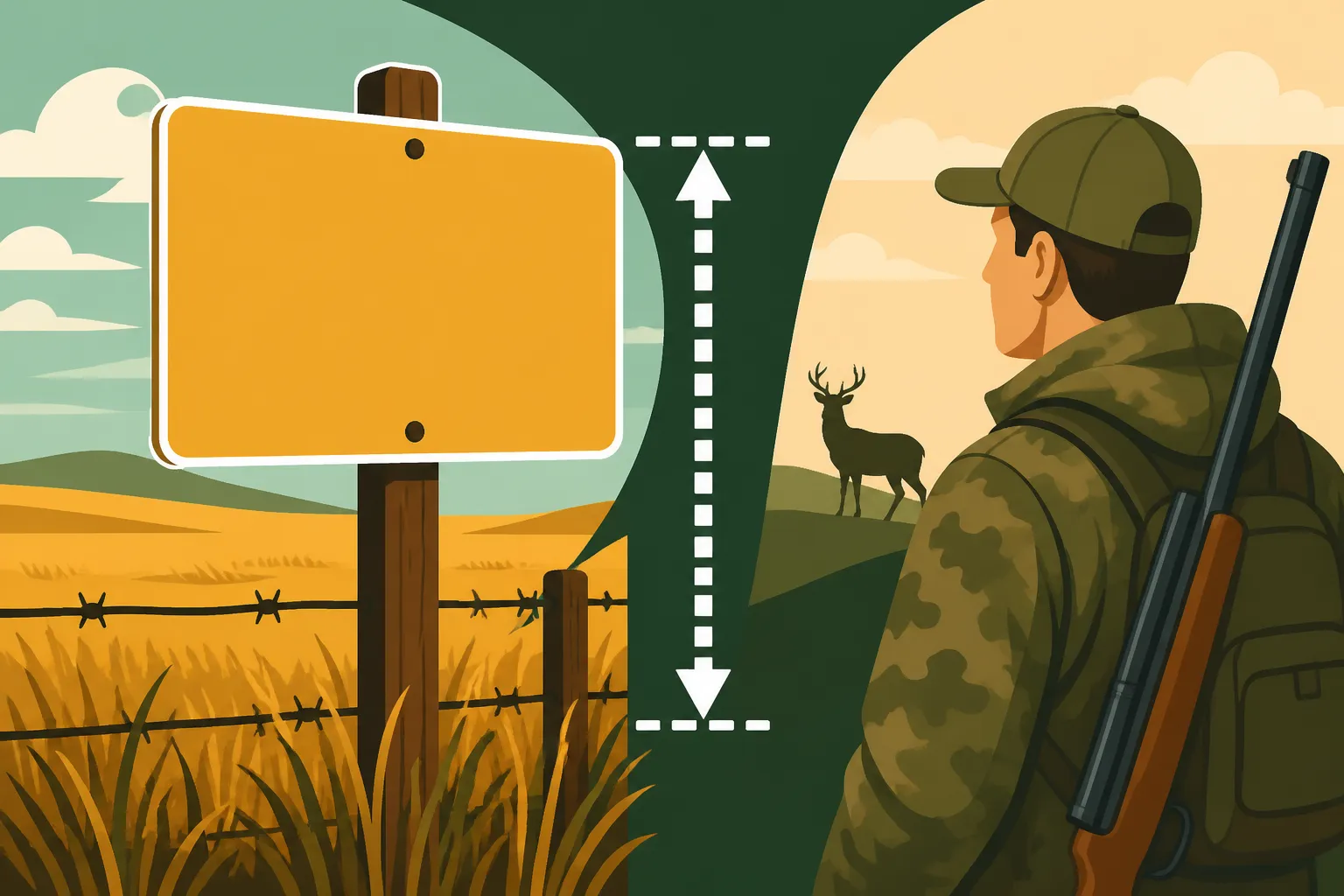
Let's get straight to the point about sign size. Saskatchewan's Trespass to Property Act doesn't specify an exact minimum dimension in inches or centimeters for "no trespassing" signs. Instead, the legal requirement revolves around visibility and conspicuousness. The Act states that land is considered "posted" if signs are placed "so that they are clearly visible in daylight under normal weather conditions from all ordinary points of access to the land."
While an exact measurement isn't mandated, this "clearly visible" clause implies a practical minimum. A sign that's too small to be read from a vehicle driving by, or from a reasonable distance for someone walking, simply won't meet the legal intent. Most effective and legally defensible signs are at least 8×10 inches, if not larger (e.g., 10×12 or 12×18 inches), making them easy to spot. They often use high-contrast colors, typically red or white, with bold, legible lettering. This lack of a specific measurement can sometimes be frustrating for landowners who want to be absolutely sure they're compliant, but it also allows for flexibility as long as the spirit of "clear visibility" is upheld. It's worth noting that simply knowing What Saskatchewan's Posted Signs Must Say is only part of the equation; how they say it and how visible they are is equally vital.
Placement and Visibility: More Than Just Size
Beyond just the sign's dimensions, its placement and overall visibility are paramount. A big sign hidden behind a bush is as ineffective as a tiny sign on a wide-open field. The Act emphasizes "all ordinary points of access," which means every gate, trail, road allowance, or common approach where someone might reasonably enter the property needs a sign. This isn't just one sign per quarter section; it could mean several signs along a long property line or at multiple entry points into a bush bluff.
Consider the elements: a sign needs to be weather-resistant, able to withstand Saskatchewan's often harsh sun, wind, rain, and snow. Faded, torn, or mud-splattered signs quickly lose their legal weight because they are no longer "clearly visible." The height at which a sign is placed is also important; eye-level for someone driving or walking is ideal, rather than high up on a power pole or hidden in tall grass. The goal is to make it impossible for someone to honestly claim they didn't see it. This is why many landowners opt for durable materials like aluminum or rigid plastic, using bold, block letters and often including their contact information for those seeking permission. For hunters trying to gauge what's what, understanding Reading a Posted Land Sign Correctly involves more than just a quick glance.
Practical Implications for Hunters and Landowners
This topic isn't just academic; it has very real consequences on the ground for everyone involved in hunting in Saskatchewan. Navigating these rules effectively can save headaches, fines, and foster better community relationships.
What Hunters Need to Look For
As a hunter, your primary responsibility is to know where you are and whose land you're on. When approaching any potential hunting area, actively look for signs. Don't assume. Look for signs at fence lines, gates, trailheads, and any entry points. Pay attention to their condition: are they legible? Are they consistent? While the law doesn't specify a size, use common sense. If a sign is barely readable or tucked away, that's a red flag. Always err on the side of caution. If you're unsure, don't enter.
Many modern hunters utilize mapping apps to aid in scouting and land identification. Tools like GoHunt or other GPS-based hunting apps can overlay property boundaries and ownership information onto satellite imagery, giving you a powerful visual aid. While these apps are incredibly helpful for identifying potential private land, they don't replace the physical signs on the ground or the need to obtain permission. They are fantastic for pre-scouting and getting a general idea of land status, especially when considering Scouting With Satellite Imagery in Saskatchewan. However, always confirm with the physical signs and, ideally, with the landowner directly, if you plan to hunt private property. Knowing the specific Wildlife Management Zone you're in also helps clarify general regulations; you can learn more by checking out Hunting Saskatchewan's Wildlife Management Zones.
Here's a quick reference for hunters:
| Sign Aspect | Legal Requirement (Trespass Act) | Practical Hunter Interpretation |
|---|---|---|
| Size | "Clearly visible" | Look for signs at least 8×10 inches; easy to read from a distance. Smaller or faded signs are a warning. |
| Placement | "All ordinary points of access" | Expect signs at every gate, major trail, and road entry. If there's an obvious way onto the land, look for a sign there. |
| Condition | "Clearly visible in daylight under normal weather conditions" | Avoid land with signs that are faded, torn, covered in mud/snow, or otherwise illegible. Assume "posted" if signs are clear. |
| Wording | "No Trespassing" or similar | Look for explicit statements like "No Hunting," "Private Property," or "No Entry." |
| Permission | Implied for posted land | Always seek direct landowner permission for posted land. No sign doesn't automatically mean open season. |
Best Practices for Landowners Posting Their Land
For landowners, posting your land effectively is about clarity and deterrence. Don't just slap up a few signs and hope for the best. To ensure your signs are legally defensible and clearly communicate your wishes, here are some best practices:
- Go Big and Bold: While no minimum size is specified, bigger is definitely better. Signs that are 10×12 inches or larger with high-contrast, bold lettering (e.g., black on white or red on white) are much harder to miss.
- Strategic Placement: Walk your property lines and identify every single point where someone could reasonably enter: gates, field approaches, trail intersections, fence crossings, and even popular "parking" spots along grid roads. Place a sign at each of these points. Don't forget to post signs along natural boundaries like creek beds or bush edges if they serve as entry points.
- Durability is Key: Invest in signs made from weather-resistant materials like aluminum, heavy-duty plastic, or laminated wood. Paper signs, even laminated, often don't last a full season in Saskatchewan's weather.
- Clear Messaging: Use unambiguous language such as "No Hunting," "No Trespassing," or "Private Property – No Unauthorized Entry." Consider adding your contact information (phone number or email) for those who might genuinely seek permission.
- Regular Maintenance: Periodically check your signs. Replace any that are faded, damaged, or obscured by vegetation. A well-maintained sign shows you are serious about enforcing your property rights.
- Consider "Hunt on Foot Only": If you're a landowner who allows some hunting but wants to control vehicle access, ensure your signs clearly state "Hunt on Foot Only" or "Foot Access By Permission Only." This specific instruction is also legally recognized and helps manage activities on your property.
- Document Your Efforts: For your own peace of mind, and in the rare event of a legal challenge, keep a record of when and where you placed signs, perhaps with photos.
By following these guidelines, landowners can effectively protect their property, and hunters can approach the field with confidence, knowing they are respecting the rules. Whether you're a hunter looking to secure permission or a landowner wanting to manage access, open communication and clear signage are the keys to a harmonious hunting season. It's often useful to remember that good relationships start with a knock on the door, as discussed in Knocking on Doors in Saskatchewan Farm Country.
Disclaimer
The information provided in this guide is for general informational purposes only and does not constitute legal advice. While we strive to provide accurate and up-to-date information, hunting regulations and laws can change. Always consult the official Saskatchewan hunting regulations and the Trespass to Property Act, 2009, or seek legal counsel for specific interpretations. Hunters are responsible for knowing and adhering to all applicable laws.