Where Saskatchewan’s Elk Herds Live Today
For many of us who dream of chasing bugling bulls, Saskatchewan often brings to mind images of monstrous whitetails or endless flights of waterfowl. But let me tell you, if you've ever found yourself wondering where Saskatchewan's magnificent elk herds actually roam, you're not alone. It can feel like these incredible animals are ghosts, leaving behind tantalizing glimpses but often remaining just out of reach. This guide is dedicated to pulling back the curtain, exploring not just where these incredible animals call home today, but also why they choose these specific landscapes, and what it means for those of us hoping to encounter them in the wild.
Understanding Saskatchewan's Elk Landscape
Elk in Saskatchewan aren't just a recent phenomenon; they've been an integral part of the ecosystem for centuries. However, their distribution and numbers have certainly seen some dramatic shifts over time. Understanding this ebb and flow is crucial for anyone trying to pinpoint where these majestic creatures might be found.
Historical Presence and Recent Expansions
Historically, elk were far more widespread across the North American continent, and Saskatchewan was no exception. Vast herds once roamed the open prairies and parklands before European settlement drastically altered the landscape. Habitat loss, unregulated hunting, and agricultural expansion pushed elk populations to the brink, confining them primarily to the more remote, rugged, or heavily forested areas. Fast forward to today, and thanks to dedicated conservation efforts, herd numbers have rebounded significantly in many regions. What's truly fascinating is the modern-day expansion of elk into areas they haven't occupied in generations, sometimes even pushing into prime agricultural zones. This means that while traditional strongholds still exist, elk are proving to be incredibly adaptable, constantly surprising us with new territories they've claimed. This shifting landscape makes hunting them both more challenging and more rewarding, as new opportunities arise.
Habitat Preferences Across the Province
Elk are creatures of edge habitat, generally preferring a mosaic of dense cover for security and bedding, alongside open areas for grazing and browsing. In Saskatchewan, this translates into a diverse range of environments. You'll find them using the thick coniferous and deciduous forests of the north, especially where there are clearings or burns that provide new growth. Moving south, they thrive in the aspen parkland, utilizing the countless bluffs, willow bottoms, and slough fringes that offer both concealment and abundant forage. Even further south, on the open prairies, they've learned to adapt, finding refuge in deep coulees, river breaks, and even large tracts of standing or swathed crops. They are not content to stay in one type of terrain; rather, they move with the seasons and in response to pressure, always seeking that ideal balance of food, water, and security.
The Elusive Nature of Saskatchewan Elk
Despite their impressive size, elk are incredibly adept at disappearing into the landscape. This elusiveness is one of the main frustrations for hunters, but it's also what makes pursuing them so captivating. They possess keen senses, are constantly aware of their surroundings, and, particularly in heavily hunted zones, quickly become nocturnal or move to impenetrable cover during daylight hours. A herd might be present in an area for weeks, feeding openly, only to vanish the moment hunting season opens, sometimes traveling miles to find sanctuary. This makes relying solely on past success or hearsay a tricky proposition. Successful elk hunting often boils down to understanding their habits, anticipating their movements, and being patient enough to catch them when they let their guard down, which is a big reason why Scouting a Saskatchewan Wildlife Management Zone is so critical.
Key Elk Regions: Forest Fringe & Parkland
When we talk about traditional elk country in Saskatchewan, the vast expanses where the southern agricultural lands meet the northern boreal forest immediately come to mind. This "forest fringe" and the aspen parkland are where some of the province's most robust and widely distributed elk populations can be found.
The Boreal Transition Zone: A Primary Habitat
The zone where the dense boreal forest transitions into the mixed woods and eventually the agricultural belt is prime elk real estate. This includes areas around Prince Albert, Hudson Bay, and Nipawin. Here, elk benefit from the best of both worlds: the extensive, often rugged cover of the forest for security, and the rich forage opportunities found in agricultural fields and forest clearings. These animals are masters at utilizing forest edges, cutlines, and natural openings to feed, then retreating deep into the timber for bedding and safety. You'll often find them along the fringes of provincial forests like the Pasquia Hills or the Porcupine Provincial Forest. The sheer scale of this landscape means elk have room to roam, allowing for larger, more established herds. Hunting these areas often involves navigating dense bush, utilizing old logging roads, and focusing on areas where the forest meets a more open feed source.
Aspen Parkland: A Balancing Act of Cover and Food
Moving further south, the aspen parkland ecosystem provides another fantastic habitat for elk. This region is characterized by rolling hills, countless bluffs of aspen, willow thickets, and sloughs interspersed with cultivated fields. Elk here use the bluffs and dense willow rings around sloughs as bedding areas and escape cover, venturing out into the surrounding grain fields to feed, especially during the low light hours. This unique patchwork of cover and food means that even smaller pockets of habitat can hold elk, provided they have enough seclusion. Farmers often see elk grazing in pea, canola, or oat fields, particularly as crops mature or after harvest. The challenge for hunters in the parkland is often gaining access to these private lands where elk often concentrate. Areas like the Touchwood Hills or parts of the Thickwood Hills are classic examples of this type of elk country.
Specific Examples of Forest Fringe/Parkland Zones
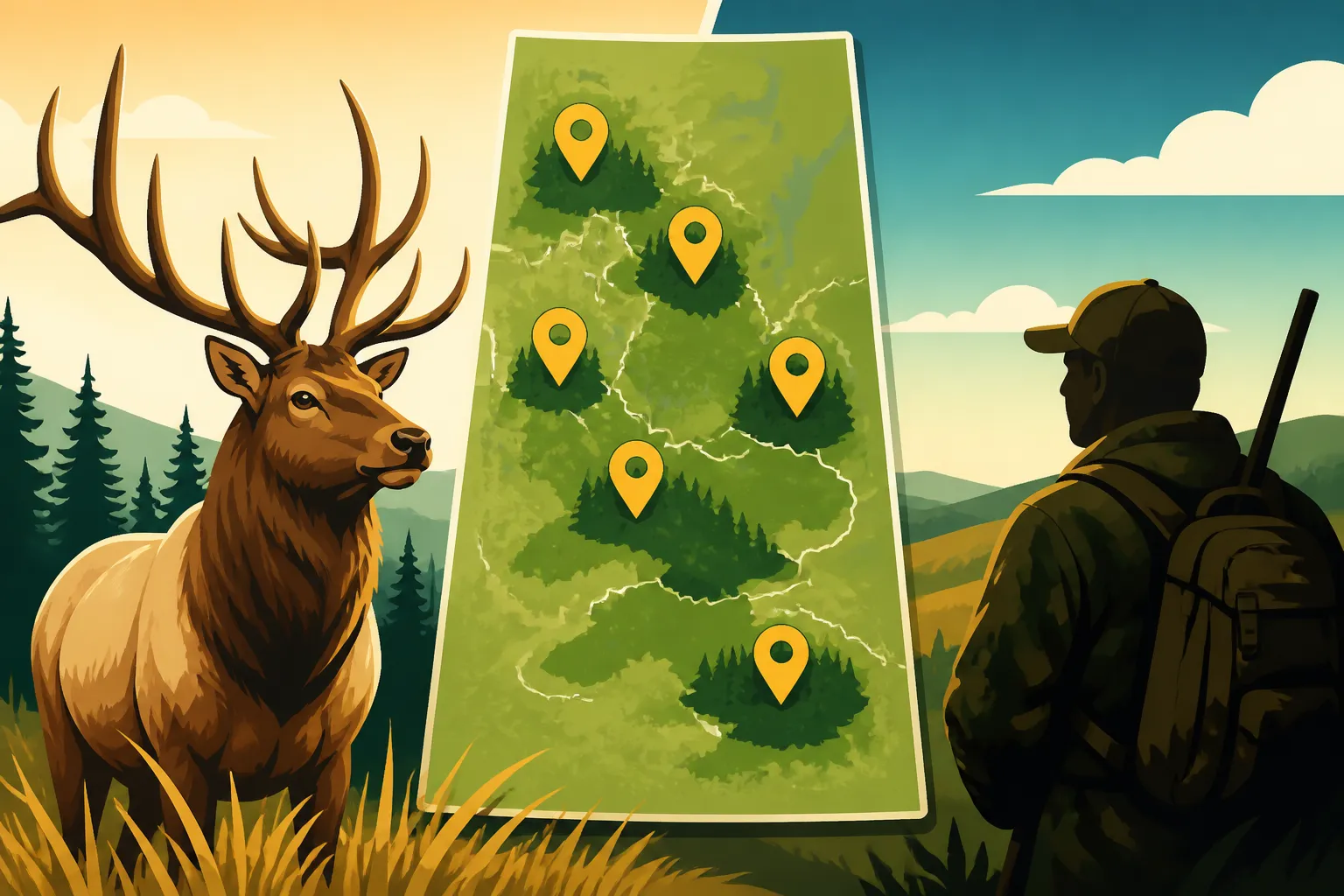
To get a better handle on specific areas, consider zones around Saskatchewan's major provincial forests and parks. For instance, the region around Hudson Bay and Nipawin, particularly those Wildlife Management Zones (WMZs) bordering the provincial forests, are well-known for their strong elk populations. Similarly, parts of the Prince Albert Forest Fringe hold good numbers, though finding them can be a challenge due to the vastness of the terrain. The Moose Mountain country in the southeast, while technically more isolated parkland, also showcases how these animals thrive where cover meets abundant food. When you're planning your hunt, focusing on WMZs that fall within these broader ecological regions is a smart start. You can find detailed maps of these zones to help plan your approach, which is vital for understanding How Saskatchewan's Zones Set Your Season.
Elk on the Prairies: Unexpected Encounters
While many people associate elk with mountains or vast forests, Saskatchewan offers a compelling counter-narrative: elk thriving and expanding their range across the seemingly open prairies. This presents a unique hunting scenario, vastly different from chasing elk in dense timber.
Farmland Encroachment: Why Elk are Moving South
One of the most significant shifts in elk distribution over recent decades has been their increased presence in Saskatchewan's agricultural heartland, particularly in the central and southern parts of the province. Why the move? It's a combination of factors. Reduced hunting pressure in certain areas, successful reintroduction efforts, and, perhaps most importantly, the incredible abundance of food provided by cultivated crops. A field of standing peas, canola, or lentils offers a banquet that elk simply can't resist. These protein-rich crops allow elk to put on significant weight, contributing to healthier herds. While this can lead to crop damage and tension with landowners, it also means that elk are now found in areas that were historically considered pure deer or antelope country, changing the game for local hunters.
Adaptations to Open Country
You might wonder how a large animal like an elk manages to survive, let alone thrive, in relatively open prairie landscapes. The answer lies in their remarkable adaptability and their keen ability to utilize what little cover exists. Prairie elk become masters of concealment. They'll use deep coulees and river breaks as their primary sanctuaries, disappearing into the folds of the land as if by magic. Willow-choked creek bottoms, large slough systems, and even expansive fields of tall, standing crops (especially corn or mature grain) become their temporary homes. They'll bed down in these areas during the day, virtually invisible, then emerge at dusk to feed in adjacent fields. Their movements can be far more predictable than their forest-dwelling cousins, often following specific travel corridors between cover and food sources.
Hunting Considerations in Agricultural Zones
Hunting elk in farmland presents a unique set of challenges and opportunities. First and foremost, gaining landowner permission is absolutely paramount. These are almost exclusively private land hunts, and respectful communication is key. Once you have permission, the tactics shift dramatically from traditional bush hunting. Long-range glassing becomes your primary tool, as you'll spend hours scouting from elevated positions, often using high-quality optics like those you might find advertised on GoHunt. Identifying travel routes between bedding cover and feeding areas is critical. Stalking in open country requires extreme patience and a deep understanding of wind direction, terrain features, and elk behavior. It's a chess match where one wrong move can send an entire herd scattering across miles of prairie. Success often comes from catching elk moving at first light or last light, or by setting up an ambush along a known travel corridor. If you're looking for a completely different elk hunting experience, focusing on Hunting Elk on Saskatchewan Grain Land could be for you.
Major Elk Strongholds and Provincial Forests
While elk are found across much of the province, some areas stand out as consistent producers of healthy herds, often due to a perfect storm of habitat, reduced pressure, and effective management. These are the places that often come to mind when serious elk hunters talk about Saskatchewan's best opportunities.
Moose Mountain Provincial Park and Surrounding Areas
In the southeast corner of Saskatchewan lies Moose Mountain Provincial Park, a true gem for elk enthusiasts. This unique island of aspen parkland and mixed forest, surrounded by vast agricultural fields, has been a sanctuary for elk for decades. The park itself is a protected area, but the elk frequently venture onto surrounding private lands, creating hunting opportunities on the periphery. The density of cover within the park, combined with the readily available food sources in adjacent fields, makes for an ideal habitat. Elk here grow large, both in body and antler size, benefiting from the nutrient-rich diet. Hunting around Moose Mountain involves careful scouting of the park boundaries and securing permission on the adjacent farms. It's a highly sought-after draw, and for good reason, offering some of the best elk hunting in the province.
Porcupine Hills and Pasquia Hills
Venturing into the east-central region of Saskatchewan, the Porcupine Hills and Pasquia Hills are two other significant provincial forest areas that host thriving elk populations. These are larger, more remote blocks of boreal and mixed forest, offering vast amounts of secure habitat. Unlike the more isolated Moose Mountain, these hills are part of a larger, interconnected forest ecosystem, allowing for greater natural dispersal and less human encroachment. Elk here utilize the dense timber, especially spruce and fir stands, for thermal cover in winter and escape cover year-round. They'll also feed in the numerous clearings, old burn sites, and cutblocks that regenerate with browse and grasses. Hunting these areas often means deep woods hunting, relying on tracking, still-hunting, and sometimes calling. These regions require more robust outdoor skills and preparedness, as the terrain can be rugged and access challenging.
River Valleys and Breaks: Natural Movement Corridors
Beyond the named hills and forests, Saskatchewan's extensive river systems play a crucial, often overlooked, role in elk distribution. Major river valleys like the Qu'Appelle Valley, the South Saskatchewan River, and the North Saskatchewan River act as natural corridors and sanctuaries for elk. The steep slopes, heavy timber, and broken terrain within these valleys provide excellent cover, while the river itself offers a consistent water source. Elk will use these valleys to travel long distances, move between larger blocks of habitat, and find refuge from pressure. The "breaks" – the rugged, often brushy lands immediately adjacent to the valley floor – are particularly valuable. Hunting these areas involves navigating challenging topography, but it can be incredibly rewarding, especially during the rut when bulls are more vocal. If you're looking for where the elk rut peaks, these valleys are often hotbeds of activity.
Factors Influencing Elk Distribution
Understanding where elk are is only part of the puzzle. To truly anticipate their movements and locate them successfully, you need to grasp the why behind their distribution. Several key factors constantly influence how elk utilize the landscape.
Food Availability and Agricultural Influence
Like all wildlife, elk are driven by their stomach. In Saskatchewan, this means food availability is perhaps the single most significant factor influencing where herds establish themselves and where they move throughout the year. During spring and summer, lush native grasses and forbs in forest clearings, meadows, and along river bottoms provide ample forage. However, as fall approaches and crops mature, the rich, easily digestible grains and legumes in agricultural fields become an irresistible draw. Fields of peas, canola, barley, and oats are essentially high-energy buffets for elk, allowing them to pack on critical weight for the winter and for bulls to grow impressive antlers. This is why you'll often find elk herds congregating near the edges of cultivated land, even when dense timber is miles away. Hunters using tools like GoHunt can often identify these crop interfaces on satellite imagery, providing crucial starting points for scouting.
Cover and Security from Predation/Humans
While food draws them in, cover keeps them safe. Elk, especially mature bulls and cows with calves, require dense, secure cover to bed down, escape predators (both natural and human), and find thermal protection from harsh weather. In the boreal forest, this means thick stands of spruce, fir, and pine. In the parkland, it's aspen bluffs, dense willow rings around sloughs, and deep creek bottoms. On the prairie, it could be the sheer drop-offs of a coulee, a vast tract of standing corn, or even just a subtle rise in the land that breaks up their outline. The amount of hunting pressure an area receives can dramatically impact how elk use available cover. In heavily hunted zones, elk may become largely nocturnal, feeding only under the cloak of darkness and spending daylight hours bedded deep in the thickest, most inaccessible cover they can find. This makes understanding Hunting the Forest Fringe for Big Bucks relevant, as elk exhibit similar evasive behaviours.
Water Sources and Seasonal Movements
Water, like food and cover, is non-negotiable for elk. While they can go without direct water sources for periods if their forage is moist, a reliable water supply is critical, especially during hot, dry periods and for lactating cows. Rivers, creeks, sloughs, and dugouts all serve this purpose. In Saskatchewan, where water can sometimes be limited on the open prairie, areas with permanent water sources often become magnets for elk. Their seasonal movements are also influenced by these factors. As snow melts in spring, elk might disperse to new green-ups. In summer, they might concentrate near reliable water. And as winter sets in, their movements might be dictated by the availability of food that isn't buried too deep under snow, or by access to thermal cover to escape the bitter cold. Understanding these movements is key to successful Elk Hunting in Saskatchewan.
Scouting Strategies for Saskatchewan Elk
Finding elk in Saskatchewan, whether in dense bush or open fields, is rarely a matter of luck. It demands a dedicated, multi-faceted scouting approach. Relying solely on a general idea of "elk country" isn't enough; you need to dig deeper, using both modern technology and old-school woodsman skills.
Leveraging Technology: Satellite Imagery and Apps
In today's hunting world, technology can be your best friend when it comes to locating elusive elk. High-resolution satellite imagery, available through apps like GoHunt or other mapping platforms, allows you to extensively scout areas from the comfort of your home. You can identify potential bedding areas (dense bluffs, thick timber), feeding grounds (agricultural fields, clearings), and crucial travel corridors (creek bottoms, fence lines, natural funnels) long before you ever set foot on the ground. Look for patterns: where does thick cover meet a desirable food source? Are there pinch points or natural barriers that would funnel elk movement? Pay attention to contours and elevation changes, as elk often prefer higher ground for bedding with good visibility. Mapping out these potential hotspots and access points on your phone or GPS before your hunt saves invaluable time and effort, especially when dealing with vast Saskatchewan landscapes.
Boots on the Ground: Reading Sign and Habitat
While technology gets you in the ballpark, nothing beats physical scouting – getting your "boots on the ground" to confirm what the maps suggest and uncover fresh sign. When you're in the field, you're not just looking for elk; you're looking for evidence of their presence and recent activity. Fresh tracks in mud or snow can tell you how big the elk are and which direction they're traveling. Rubs on trees (where bulls strip bark to mark territory and strengthen their necks) indicate a bull has been through. Droppings (size and freshness) can give you a clue about how many elk are in the area and how recently they were there. Wallows – muddy depressions where elk roll to cool off and deter insects – are another clear indicator, often found near water sources or in shaded areas. Pay close attention to the browse lines on shrubs and trees, as elk are both grazers and browsers. Learning to read these subtle cues in the habitat is an art form that significantly increases your chances of success.
Gaining Access: The Landowner Permission Imperative
Saskatchewan, with its vast tracts of private agricultural land, means that securing landowner permission is often the most critical (and sometimes most challenging) aspect of elk hunting. Unlike some provinces with abundant public land, a significant portion of Saskatchewan's elk population resides on private farms and ranches, especially in the parkland and prairie regions. This means that a crucial part of your scouting isn't just finding elk sign, but finding the landowner and respectfully asking for permission to hunt. Approach landowners well in advance of the season, preferably in person. Be polite, be prepared to show them exactly where you'd like to hunt on a map, and offer to share some of the meat. Building these relationships takes time and trust, but it's often the golden key to accessing prime elk habitat. Remember, Saskatchewan Landowner Permission Law is clear: you must have permission to hunt private land, and respecting that is paramount to positive hunter-landowner relations.
Conservation and Management of Elk Herds
The health and distribution of Saskatchewan's elk herds don't happen by accident. They are the result of ongoing conservation efforts and careful management by the provincial government, often in partnership with local landowners and wildlife organizations. Understanding these efforts can shed light on why elk populations are where they are.
Draw Systems and Population Management
Saskatchewan manages its big game populations, including elk, primarily through a draw system. This means that for most antlered elk tags, hunters must apply through a lottery system, and success rates vary wildly depending on the Wildlife Management Zone (WMZ) and the number of priority points an applicant has. The draw system serves a critical purpose: it allows the province to control hunting pressure and harvest rates to maintain healthy, sustainable elk populations within specific zones. If a zone's elk population is robust and growing, more tags might be allocated; if numbers are declining or stable, fewer tags are issued. This direct link between management decisions and hunter opportunity highlights the importance of the Saskatchewan's Big Game Draw process and how it directly affects where hunters can pursue elk.
CWD and Herd Health Concerns
Chronic Wasting Disease (CWD) is an ongoing concern for all cervid populations in Saskatchewan, including elk. This fatal neurological disease can impact herd health, population numbers, and even distribution as animals succumb or change their patterns. The province actively monitors CWD prevalence, often through mandatory submission zones for testing harvested animals. This data helps wildlife managers understand the spread and impact of the disease, informing management strategies, including carcass disposal regulations and hunting season structures. While the full long-term impact of CWD on Saskatchewan's elk herds is still being studied, it's a factor that hunters need to be aware of and comply with testing requirements to contribute to overall herd health. Understanding Saskatchewan's CWD Testing Rules is an important part of being a responsible hunter.
Habitat Protection and Enhancement Efforts
Beyond managing harvest, protecting and enhancing critical elk habitat is a cornerstone of conservation. This includes preserving large blocks of forest, maintaining natural river valleys and coulees, and promoting responsible land use practices in agricultural areas. Initiatives to conserve wetlands, establish shelterbelts, and create wildlife corridors all contribute to providing the diverse habitat elk need. Organizations like the Saskatchewan Wildlife Federation, often supported by funds from hunting license sales (like the Wildlife Habitat Certificate), play a crucial role in these efforts, sometimes acquiring and managing land specifically for wildlife habitat. These efforts ensure that even as human development continues, there are still places for elk to thrive, benefitting not just elk but a wide array of other wildlife.
Hunting Challenges and Opportunities
Hunting elk in Saskatchewan is an experience unlike any other, demanding patience, skill, and adaptability. Whether you're in the deep bush or on the open prairie, the challenges are real, but so are the incredible opportunities.
Dealing with Pressure: Finding Unpressured Animals
One of the biggest challenges, especially in more accessible or well-known elk zones, is hunting pressure. Elk are incredibly intelligent animals and quickly learn to avoid areas with heavy human activity. This means that finding unpressured animals often involves venturing deeper into the bush, walking further from roads, or seeking out areas on private land where hunting is limited. For public land hunters, this might mean putting in extra miles on foot, hunting during weekdays, or focusing on less obvious pockets of cover that others overlook. On private land, respectful landowner relations are key to gaining access to these less-pressured sanctuaries. The ability to endure the elements, spend long hours glassing, or commit to a full day of still-hunting often makes the difference between success and frustration when hunting animals that are constantly avoiding detection.
Weather and Seasonal Considerations
Saskatchewan's weather is notoriously unpredictable and can dramatically influence elk behavior and hunting conditions. Early fall hunts might mean warm temperatures, making elk more nocturnal and less responsive to calling. Conversely, a sudden cold snap or early snowfall can kickstart elk activity, pushing them to feed more actively to build fat reserves. Snowfall is often a hunter's best friend, as it reveals fresh tracks, making it easier to locate animals and understand their movements. However, extreme cold can also make sitting still for long periods unbearable, requiring specialized gear and mental fortitude. Understanding these Hunting Saskatchewan Winter Weather Safely conditions and preparing accordingly is not just about comfort; it's about safety and effectiveness. The season dates, particularly around the rut, are also critical for tactics like Bugling Elk on a Farm Edge.
Calling and Stalking Tactics for Elk
The tactics you employ for elk hunting in Saskatchewan will vary significantly depending on the habitat and time of year. During the September and early October rut, calling can be incredibly effective. Bugles and cow calls can entice a bull to reveal himself, particularly in the more open parkland or forest fringe areas. However, in heavily hunted zones, over-calling or unrealistic calls can sometimes scare off wary bulls. Knowing when to call aggressively, when to be subtle, and when to remain silent is an acquired skill. Stalking, on the other hand, is a year-round tactic that demands stealth, patience, and a deep understanding of wind direction. Whether you're creeping through dense spruce in the north or navigating a prairie coulee, the ability to move silently, break up your silhouette, and remain undetected is paramount. Often, a combination of calling to locate and then stalking to close the distance is the most effective approach.
Saskatchewan Elk Habitat and Hunting Overview
| Region Type | Typical Habitat | Elk Characteristics | Hunting Challenges | Hunting Opportunities |
|---|---|---|---|---|
| Forest Fringe | Dense boreal/mixed forest, clearings, old cutblocks, agricultural interfaces | Good populations, larger body sizes, often elusive | Navigating thick bush, varying access, heavy cover | Ambush points on edges, still-hunting, calling in rut |
| Aspen Parkland | Aspen bluffs, willow thickets, sloughs, cultivated fields | Strong populations, adapted to patchy cover, heavy | Landowner permission, elk can be nocturnal, smaller pockets | Glassing, ambushing travel routes, spot-and-stalk |
| Prairie/Farmland | Deep coulees, river breaks, standing crops, isolated bluffs | Increasing populations, highly adaptable, very wary | Landowner permission, long-range shots, minimal cover | Long-range glassing, intercepting movements, strategic hides |
| Provincial Forests | Extensive, remote boreal/mixed forest | Secure habitat, less pressured, can be very large | Rugged terrain, difficult access, deep woods hunting | True wilderness experience, tracking, calling |
| River Valleys/Breaks | Steep slopes, heavy timber, broken terrain, water access | Travel corridors, secure bedding, good rut activity | Challenging topography, tough to traverse, dense cover | Spotting movement across breaks, ambush, calling |
Disclaimer
Please remember that hunting regulations, seasons, and licensing requirements can change. Always consult the official Saskatchewan Hunters' and Trappers' Guide or the provincial Ministry of Environment website for the most current and accurate information before planning any hunt. This article is intended for informational purposes only.