Wolf Pack Size in Saskatchewan’s Boreal
For anyone who spends time in Saskatchewan's vast northern boreal forest, the presence of wolves is a palpable, often mysterious reality. You hear their howls echoing across frozen lakes, or you stumble upon their massive tracks in fresh snow, and you can't help but wonder about the unseen dynamics of these apex predators. It’s natural to be curious about how these incredible animals live, how they organize themselves, and how many might be roaming that distant ridge. This guide will take a deep dive into the fascinating world of wolf pack size within Saskatchewan's boreal region, helping you understand the forces that shape these elusive family units.
Understanding the Boreal Forest and Its Wolf Habitat
Saskatchewan's boreal forest is an immense, sprawling wilderness, a mosaic of dense conifer stands, trembling aspen bluffs, vast muskegs, and countless lakes and rivers. It’s a place that feels untamed, where human presence often fades into the background, and wildlife thrives in its rawest form. This immense habitat is precisely why it supports a healthy wolf population, and understanding this environment is key to grasping the lives of its top predators.
The Vastness of Saskatchewan's Boreal Region
The sheer scale of Saskatchewan's boreal forest is difficult to overstate. It stretches across the northern half of the province, encompassing everything from the forest fringe transitioning into the parkland, all the way up to the edges of the taiga. This is a land of endless cover, with dense spruce and pine forests providing perfect concealment and shelter, especially during the long, cold winters. Unlike the open prairies, the boreal's rugged terrain, thick undergrowth, and numerous waterways create a natural fortress where wolves can roam, hunt, and raise their young with minimal disturbance from humans. It’s this wild, expansive nature that allows wolf packs the space they need to establish large territories and follow migrating prey. If you've ever ventured far off a main road into this country, you know just how quickly you can feel swallowed by the bush – and that's exactly what makes it such prime wolf habitat. When you're Hunting Saskatchewan's Boreal North, you're truly in their domain.
Prey Availability and Its Influence on Pack Size
At the heart of any wolf population is its food source. Wolves are obligate carnivores, and their numbers, their health, and critically, their pack size, are directly tied to the abundance and distribution of their prey. In Saskatchewan's boreal, this means a diverse menu that can include moose, woodland caribou, deer (especially in the southern reaches of the boreal forest fringe), beaver, and even smaller game like snowshoe hare. A thriving prey base, such as a strong moose population or healthy caribou herds, can support larger, more robust wolf packs. Conversely, if prey numbers decline due to harsh winters, disease, or habitat loss, wolf packs will often shrink, or they might struggle to raise pups to maturity. It's a delicate ecological balance. A single moose, for instance, can feed a pack for several days, but successfully taking down such a large animal requires cooperation, strength, and numbers. This necessity for cooperative hunting often drives the typical pack structure we see.
Typical Wolf Pack Structures and Dynamics
When we think of a wolf pack, we often picture a large, cohesive unit working together. While this image holds a lot of truth, the reality is a bit more nuanced and dynamic. Wolf packs are essentially family units, and their structure can be surprisingly fluid, changing with the seasons, the availability of food, and the life stages of individual wolves.
The Alpha Pair and Their Offspring
At the core of almost every functioning wolf pack is the breeding pair, often referred to as the alpha male and alpha female. These two are the foundation, responsible for leading the pack, making most of the critical decisions, and, most importantly, producing the annual litter of pups. They are typically the strongest, most experienced animals in the group. The rest of the pack usually consists of their offspring from previous years, known as subadults, and the current year's pups. These subadults play a crucial role in the pack, helping to hunt, guard the den, and even regurgitate food for the younger pups. Think of it like a human family unit, but with a much stricter hierarchy and a shared, vital purpose: survival. The stability and success of this alpha pair directly influence the entire pack's well-being and, therefore, its size.
Dispersal and Pack Expansion
As young wolves mature, usually around one to three years of age, a natural instinct often kicks in: the urge to disperse. This means leaving their natal pack to strike out on their own, often traveling hundreds of kilometers in search of a mate and a new territory to call their own. Dispersal is vital for the genetic health of the wider wolf population, preventing inbreeding and allowing for the colonization of new areas. However, not all young wolves disperse. Some may stay with their parents, becoming integral members of the pack and contributing to its hunting efficiency and defense. The decision to stay or go can depend on various factors, including the availability of prey within the existing territory, the density of other wolf packs in the surrounding areas, and even the personality of the individual wolf. When a young wolf successfully disperses and finds a mate, they form a new breeding pair, starting a new pack, which is how wolf populations expand and fill suitable habitats.
Factors Influencing Saskatchewan Boreal Wolf Pack Size
Wolf pack size isn't a static number carved in stone; it's a constantly fluctuating metric influenced by a complex interplay of ecological factors. From the richness of the forest to the presence of human activity, many elements conspire to determine how many wolves roam together in the vastness of the boreal.
Prey Density and Distribution
This is perhaps the single most critical factor. Imagine a buffet: if it's overflowing with delicious food, more people can comfortably eat. If it's sparse, only a few will find enough to satisfy their hunger. Wolves are no different. In areas of Saskatchewan's boreal where prey animals like moose and woodland caribou are abundant and widely distributed, packs can afford to be larger. More mouths mean more hunters, which can be advantageous for taking down big game. However, if prey is scarce or patchy, packs may be smaller, or they might even break apart into smaller hunting units to cover more ground.
For instance, consider a prime area with a robust Moose in Saskatchewan's Farmland and Forest population. A larger pack might be able to consistently take down adult moose, which provides a huge caloric reward. But if that moose population declines, perhaps due to factors like winter ticks or harsh winters, then the wolf pack might struggle to sustain its numbers. The distribution of prey also matters; if prey animals are widely scattered, a large pack might spend too much energy simply finding them, making a smaller, more agile group more efficient. Conversely, during periods when prey might be concentrated – say, near a particular water source in a dry summer, or congregating in a winter yarding area – wolf packs might temporarily swell in size, drawing in peripheral wolves or even merging with smaller family units to capitalize on the bounty. The ongoing question of Do Wolves Affect Saskatchewan Moose Numbers? highlights this critical predator-prey relationship.
Human Influence and Hunting Pressure
While the boreal forest might feel remote, human activity still leaves its mark. Hunting and trapping can certainly impact wolf pack sizes in localized areas. Licensed hunters and trappers play a role in managing wolf populations, especially in the more accessible parts of the forest fringe. A pack that experiences significant harvest pressure might see its numbers reduced, and its social structure could be disrupted. The loss of a key alpha animal, for example, could temporarily destabilize the entire group.
However, wolves are incredibly resilient creatures. While direct removal can reduce numbers, their ability to reproduce quickly and for dispersing wolves to fill vacancies means that populations can often bounce back if the habitat and prey base remain strong. The impact of human influence isn't just about direct hunting; it also includes habitat alteration from logging, mining, or road building. These activities can fragment wolf territories, alter prey movements, and inadvertently increase human-wolf interactions, all of which can indirectly affect pack dynamics and size. Understanding how to interact with these animals, even when Hunting Wolves in the Northern Bush, is part of responsible wildlife management.
Territoriality and Intraspecific Competition
Wolves are highly territorial animals, and this fundamental aspect of their biology plays a massive role in regulating pack sizes and overall population density. Each pack establishes and defends a territory, a vast expanse of land that provides enough resources to sustain its members. The size of these territories can vary dramatically depending on the availability of prey, but within these boundaries, the pack is dominant.
When another wolf or pack encroaches upon an established territory, conflict can erupt. These encounters can range from ritualized displays and howling contests to violent confrontations, sometimes resulting in serious injury or even death. This intraspecific competition – competition among individuals of the same species – acts as a natural ceiling on how many wolf packs, and therefore how many wolves, an area can support. A healthy pack will aggressively defend its hunting grounds, preventing other packs from moving in and forcing dispersing individuals to seek unclaimed or less desirable areas. This dynamic means that even if prey is abundant, there's a limit to how many wolves can exist in a given square kilometer because they simply won't tolerate close neighbours.
Observing and Estimating Pack Sizes
If you’ve ever tried to spot a wolf in the dense boreal, you know it's a challenging endeavor. These animals are masters of camouflage and stealth, preferring to remain unseen. Estimating their numbers, let alone the size of a specific pack, requires a combination of specialized techniques and keen observational skills.
Challenges of Boreal Wolf Research
Studying wolves in Saskatchewan's boreal forest is not for the faint of heart. The sheer vastness and ruggedness of the terrain make it incredibly difficult to track and observe these animals consistently. Dense tree cover, deep snow, and the remoteness of much of their habitat all conspire to make direct observation rare. Researchers often rely on indirect methods, such as capturing and fitting wolves with GPS or radio collars. These collars allow scientists to track their movements, identify their territories, and infer pack composition based on consistent spatial relationships and activity patterns. Aerial surveys, flown during winter when snow cover makes tracks more visible and canopy cover is less dense, can also help estimate wolf densities across broader landscapes. However, even with these tools, getting an exact, real-time count of every member of a pack at any given moment is exceptionally challenging. It's a reminder of just how wild and untamed this northern country truly is.
Signs of Wolf Presence and Activity
For hunters and outdoor enthusiasts, direct observation of a wolf pack is a rare treat. More often, you’ll encounter their sign. Learning to read these clues can give you a better understanding of their presence and potentially the size of the pack in an area.
Tracks: Wolf tracks are unmistakable. They are typically larger than even the biggest domestic dog, often measuring 4-5 inches long, and they tend to follow a very straight line, almost like a tightrope walker. When you find multiple sets of tracks of varying sizes, especially side-by-side, it's a good indication that a pack has recently passed through. The number of distinct track patterns can sometimes offer a minimum estimate of pack size, though older trails can be misleading.
Scat: Wolf droppings are usually large and rope-like, often containing hair and bone fragments from their prey. Finding multiple scats in close proximity can also suggest a pack's presence. Wolves often use scat as a territorial marker, depositing it in prominent locations.
Howling: Hearing wolves howl is one of the most iconic sounds of the boreal. A chorus of howls indicates the presence of multiple animals. Experienced listeners can sometimes distinguish individual voices, giving a rough idea of how many wolves are participating. Packs often howl to communicate with each other, rally before a hunt, or declare their territory to rival packs. If you hear a distant howl, wait, and listen; often, others will join in.
Kills: Discovering a fresh or recent kill site, especially of a large ungulate like a moose or deer, is a strong indicator of wolf activity. While not directly telling you pack size, the size of the kill can suggest the hunting power of the local pack.
By paying attention to these signs, you can start to piece together a picture of the wolf activity in your chosen hunting area. It's an exciting part of being in the wild.
The Range of Pack Sizes You Might Encounter
So, what's the magic number? How big are these wolf packs in Saskatchewan's boreal? The truth is, there isn't one simple answer, as pack sizes are highly adaptable to their environment and circumstances.
Average Boreal Pack Sizes
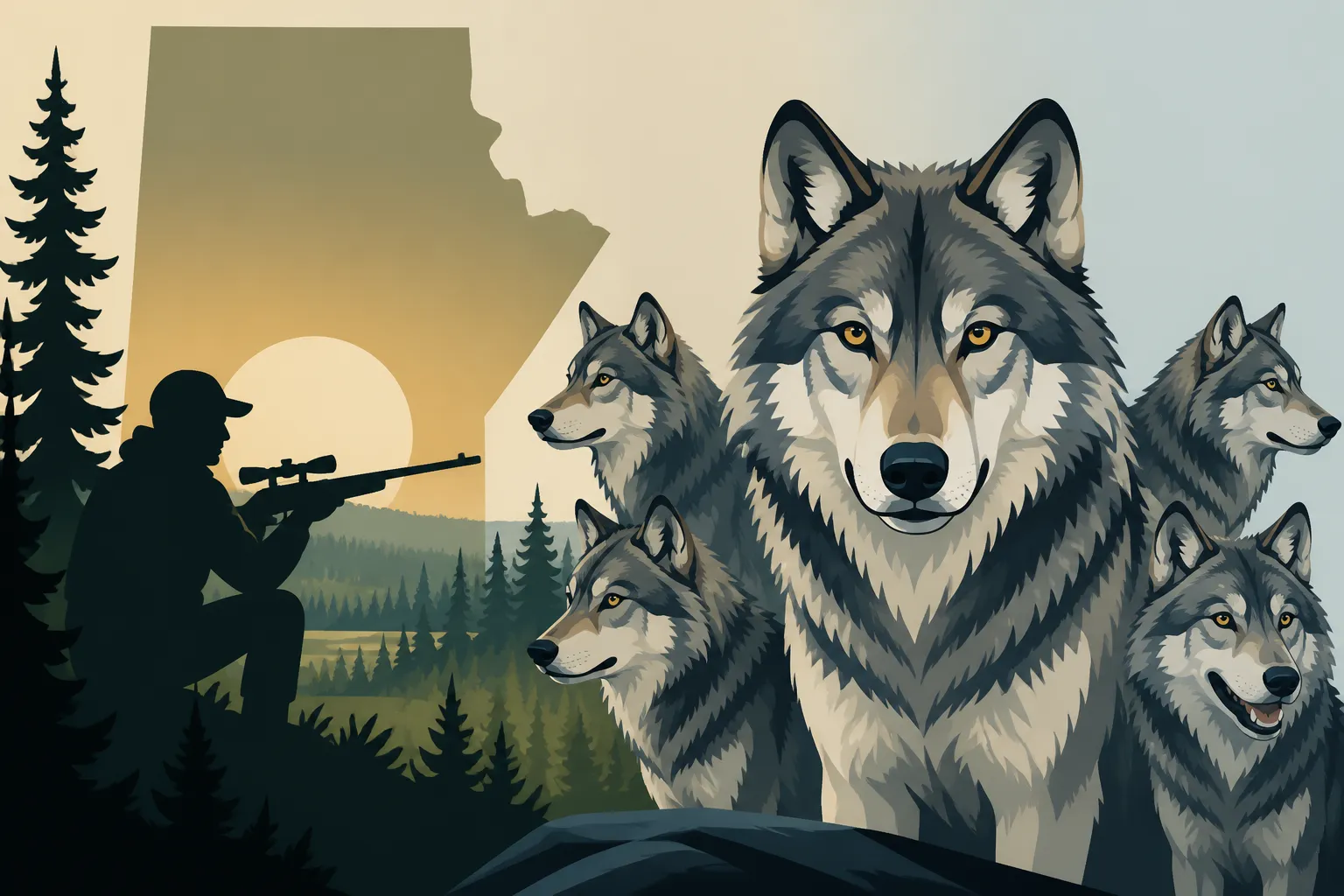
In general, across the North American boreal forest, including Saskatchewan, a typical wolf pack might consist of anywhere from 4 to 8 individuals. This usually includes the alpha pair, their pups from the current year, and one or two offspring from previous years who haven't yet dispersed. This size provides enough numbers for effective cooperative hunting of large prey like moose and caribou, while not being so large that resources become stretched too thin within their territory.
It's important to remember that this is an average. You might encounter smaller family units, especially if you're in an area with lower prey density or if a pack has recently lost members. Conversely, you could stumble upon a larger group under specific conditions. Think of it like a family. Some families are small, just parents and a child or two. Others might have grandparents, aunts, uncles, and cousins all living in close proximity, especially during certain times of the year. The average provides a good baseline, but the boreal is a place of endless variation.
Smaller vs. Larger Packs: The Extremes
While the 4-8 individual range is common, both smaller and significantly larger packs can occur.
Smaller Packs: At the lower end, you might find a pack that consists solely of the breeding pair and their new litter of pups. This is often the starting point for a new pack, or it might be a pack that has faced severe challenges, such as a harsh winter reducing pup survival, or the dispersal or death of older offspring. These smaller units may struggle more with taking down large prey and might focus more on smaller game or scavenging until their numbers can increase. If prey availability is consistently low in a particular area, a pack might remain small for extended periods.
Larger Packs: On the flip side, sometimes you hear whispers of truly massive wolf packs, upwards of 12-15 or even more individuals. While less common, these larger aggregations usually occur under very specific circumstances. One such scenario is during periods of exceptionally high prey abundance, where a rich food source can support more mouths. Another might be a temporary merger of two smaller, related packs, or a situation where multiple generations of offspring have chosen to delay dispersal from their natal pack due to factors like plentiful food, a lack of available territory nearby, or even strong social bonds. These larger packs can be incredibly efficient hunters, capable of bringing down even the largest prey with relative ease, but they also require a larger territory and a consistent food supply to sustain themselves. The incredible animal that is a northern wolf means a large pack of them is an impressive sight to behold.
No matter the size, observing or even just knowing that a wolf pack roams the boreal is a powerful reminder of the wild heart of Saskatchewan. It’s a privilege to share this landscape with such magnificent creatures.
Disclaimer
This article is for general informational purposes only and does not constitute professional advice. Laws, prices and regulations vary by location and change over time. Consult a qualified professional for guidance on your specific situation.