How Saskatchewan’s Zones Set Your Season
One of the biggest head-scratchers for new and even seasoned hunters in Saskatchewan is figuring out how all the different rules and season dates actually apply to the specific spot they want to hunt. It's not a "one size fits all" province, and trying to navigate the ever-changing landscape of regulations can feel like cracking a secret code. This comprehensive guide will demystify Saskatchewan's Wildlife Management Zones (WMZs) and explain exactly how they dictate everything from when you can hunt to what weapon you can use.
Understanding Saskatchewan's Wildlife Management Zones (WMZs)
Saskatchewan is a vast and ecologically diverse province, stretching from the rich agricultural lands of the south to the sprawling boreal forest in the north. This incredible variety in landscape means an equally diverse array of wildlife populations, each requiring tailored management strategies. That's where Wildlife Management Zones (WMZs) come into play, serving as the fundamental building blocks of the province's hunting regulations.
What is a WMZ and Why Do They Exist?
At its core, a WMZ is a geographical area designated by the provincial government for the purpose of managing wildlife populations and regulating hunting activities. Think of them as localized districts, each with its own unique set of rules. The primary reason for their existence is quite simple: effective conservation and sustainable harvesting. A healthy deer population in the southern parkland faces different challenges and has different habitat requirements than a moose population deep in the boreal forest. Trying to apply the same hunting season length or bag limit across the entire province would be impractical and potentially detrimental to local wildlife.
WMZs allow the Ministry of Environment to manage specific populations based on their numbers, habitat health, reproductive rates, and even local human impact. For instance, an area with a booming whitetail population that might be causing agricultural damage could have a longer season or more antlerless tags, whereas a zone with declining moose numbers might be draw-only with very limited tags. These zones help distribute hunting pressure more evenly and ensure that localized populations aren't over-harvested, maintaining a delicate balance for both wildlife and hunters. This granular approach ensures that regulations are responsive to real-world conditions on the ground. You can find more general information about these geographical divisions in our guide on Saskatchewan's Wildlife Management Zones.
How WMZs Differ Across the Province
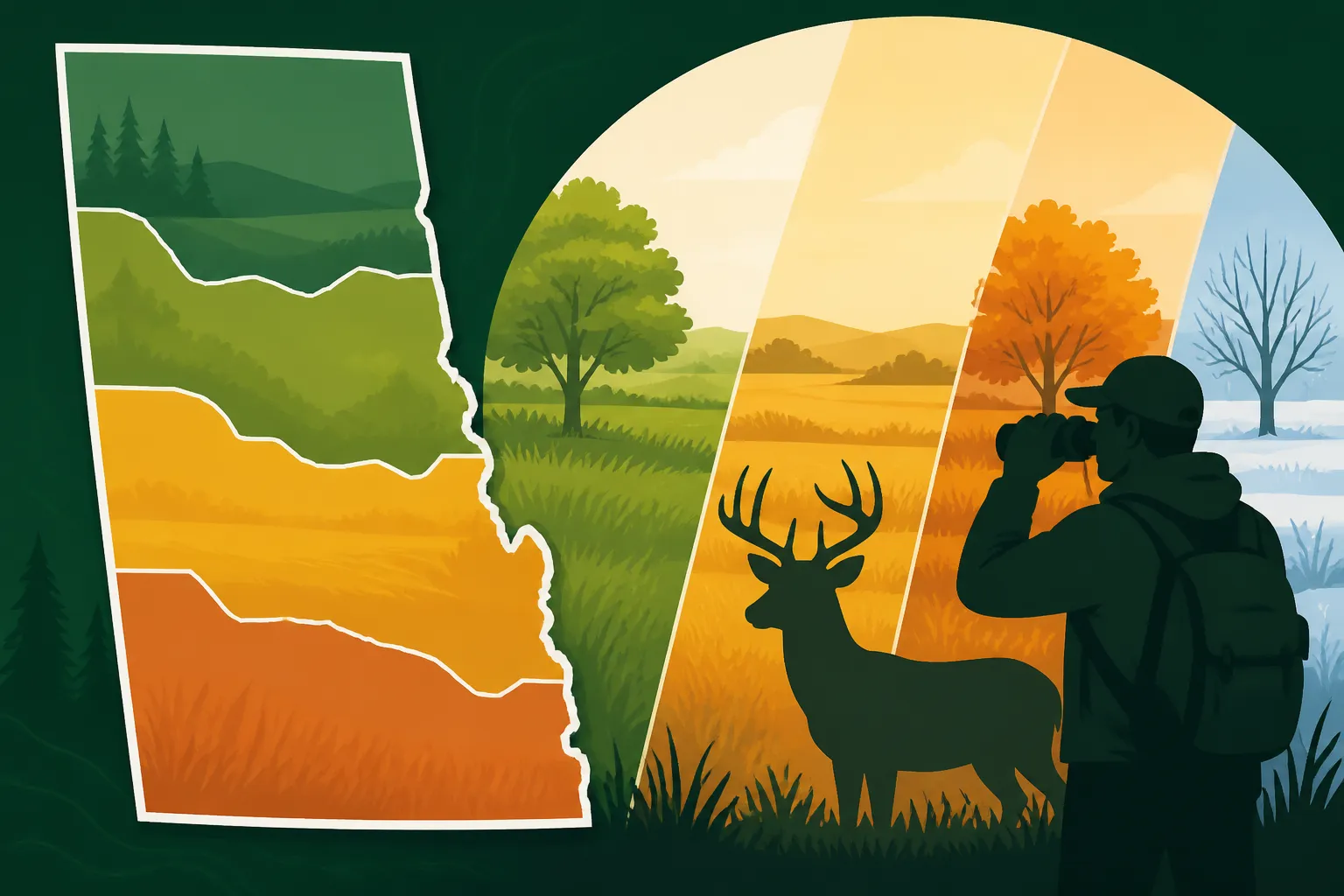
Saskatchewan's landscape can be broadly divided into several distinct ecological regions, and the WMZs reflect these differences beautifully. Understanding these regional distinctions is key to comprehending why the regulations vary so much.
In the southern prairie zones, you'll typically find open grasslands, rolling hills, and vast agricultural fields. Here, species like pronghorn and mule deer thrive in the coulees and badlands, while whitetails often stick to river valleys, shelterbelts, and slough edges. The management in these zones often focuses on species adapted to open country and minimizing conflicts with agriculture. For example, specific zones might have different rules for Hunting Saskatchewan's Southern Prairie.
Moving north, we enter the aspen parkland, a transitional zone characterized by a mix of agricultural land, aspen bluffs, and wetlands. This area is often a hunter's paradise, boasting high densities of whitetail deer, good numbers of moose, and abundant waterfowl. The regulations here need to balance high hunter interest with maintaining robust populations and addressing landowner concerns. The interspersing of fields and bush makes this habitat incredibly productive, but also highly accessible, which influences season structures.
Further north still is the forest fringe, a band where farmland gives way to dense boreal forest. This is prime habitat for larger game like moose, elk, and black bear, alongside a significant whitetail population. Regulations in these WMZs often account for more remote access, diverse predator populations, and the differing movement patterns of forest-dwelling animals. Hunters venturing into these areas might find more extensive Crown land opportunities but also more challenging conditions. Our guide on Hunting Saskatchewan's Forest Fringe delves deeper into these unique challenges and opportunities.
Finally, the boreal north comprises vast tracts of dense forest, lakes, and muskeg. These remote zones are home to robust moose and black bear populations, and regulations here are often designed to protect wilderness values and manage for lower hunter densities. Access can be challenging, often requiring quads, boats, or even float planes, which naturally limits hunter pressure and influences how seasons are structured. Each of these regions presents a unique set of management challenges and opportunities, directly impacting the seasons and rules hunters must follow.
The Direct Link Between WMZs and Hunting Seasons
The very first thing you need to know when planning a hunt in Saskatchewan is your desired WMZ. Without this piece of information, you simply cannot determine the correct season dates, bag limits, or weapon restrictions. The provincial government meticulously crafts regulations for each zone, acknowledging the unique wildlife dynamics at play. This localized approach is crucial for sustainable harvesting and ensuring the long-term health of our game populations.
Species-Specific Season Dates by Zone
It's not enough to know the general provincial season for a species; you must know the specific WMZ you intend to hunt. For instance, a whitetail deer season in a southern parkland zone might open weeks earlier for archery hunters than in a far northern boreal zone, and the general rifle season could have completely different start and end dates. Saskatchewan Big Game Season Dates are a complex tapestry woven across these zones.
Take whitetail deer, for example: many southern and central WMZs might see an archery season open as early as September 1st, allowing hunters to take advantage of the milder weather and pre-rut activity. However, in some northern zones, the archery season might start later or be shorter due to lower populations, different migratory patterns, or less human impact on the landscape. Similarly, the general rifle season for whitetails often kicks off in early November in many prime parkland and forest fringe zones, capitalizing on the rut. But other zones, perhaps those with sensitive populations or different harvest goals, could have a rifle season that starts later or is considerably shorter.
Moose and elk seasons also show significant variation. Some WMZs will have an archery-only season for moose, while others might offer a combined archery/rifle season. Furthermore, the allocation of moose and elk tags is often entirely draw-based within specific zones, ensuring that harvest pressure is tightly controlled. Black bear seasons typically run spring and fall, but the exact start and end dates can shift slightly from one WMZ to another, often influenced by denning patterns and local population estimates. Even for game birds, while federal migratory bird regulations set the broad framework, provincial WMZs can define specific opening and closing dates for species like sharp-tailed grouse or Hungarian partridge, reflecting local population trends and agricultural cycles.
Why Certain Zones Have Shorter or Longer Seasons
The length of a hunting season within a particular WMZ is not arbitrary; it's a carefully calculated decision based on several critical factors. Understanding these helps hunters appreciate the science and effort behind wildlife management.
Population Density and Health: A zone with a robust and growing deer population might support a longer season or higher bag limits, while a zone where deer numbers are stable or declining will likely have a more conservative season. This is fundamental to sustainable harvesting; you can't harvest what isn't there, and you shouldn't over-harvest a struggling population.
Harvest Quotas: For draw species like moose and elk, specific harvest quotas are set for each WMZ. Once these quotas are determined, the season length is set to allow sufficient opportunity to meet the quota without exceeding it. If a zone historically sees its quota filled quickly, managers might consider adjusting the season length or the number of tags.
Habitat Capacity: The quality and quantity of available habitat play a huge role. A WMZ with ample food, water, and cover can sustain a larger game population and thus potentially a longer hunting season. Conversely, zones experiencing habitat degradation, severe weather impacts (like harsh winters), or increased agricultural encroachment might have shorter seasons to give wildlife a chance to recover or adapt.
Hunter Pressure: Zones that are easily accessible and close to population centers tend to attract more hunters. To manage this increased pressure and prevent over-harvest, these WMZs might have shorter seasons or more restrictive tag limits. This also helps to distribute hunters more evenly across the landscape, enhancing the quality of the hunting experience for everyone.
Specific Species Vulnerabilities: Some species, or specific age/sex classes within a species, are more vulnerable during certain times of the year or under particular environmental conditions. For example, an early season for antlered mule deer in some zones might be very short to protect younger bucks, or a late season might be adjusted to account for animals yarded up in deep snow. This targeted management protects vulnerable segments of the population while allowing for appropriate harvest of others. For comprehensive information on how species specific seasons are structured, check out our guide on Saskatchewan's Big Game Draw.
Navigating Draw vs. Over-the-Counter Licences by Zone
Understanding the difference between draw-only and over-the-counter (OTC) licences, and how they apply to specific WMZs, is paramount for any hunter in Saskatchewan. This system is designed to manage harvest pressure, especially for high-demand or sensitive species, ensuring that hunting remains sustainable and fair.
Draw Only Zones and Species
For many of Saskatchewan's most sought-after big game animals, particularly moose, elk, and certain antlered mule deer, licences are allocated through a provincial draw system. This means you can't just walk into a vendor and buy a tag; you must apply for it within specific WMZs, and success depends on a lottery system, often influenced by your draw priority. Our guide on Saskatchewan's Big Game Draw explains the mechanics of this system in detail.
The reason certain zones are designated as "draw only" for these species is directly related to population management. Moose populations, for example, can be sensitive to over-harvest, especially large bulls. By making them draw-only in specific WMZs, the province can precisely control the number of hunters and the total harvest within those areas. This allows wildlife managers to ensure that harvest levels are sustainable and that enough breeding animals remain to maintain healthy populations. You'll find that the most productive or highly desired moose and elk hunting areas are almost always draw-only. The number of tags available for a particular WMZ is determined annually based on aerial surveys, harvest data from previous years, and habitat conditions.
When applying for the draw, hunters typically select their preferred WMZs, often listing first, second, and third choices. The more competitive a WMZ (i.e., known for large animals or high success rates), the higher your draw priority might need to be to secure a tag. This system helps distribute hunting opportunities and ensures that no single zone is overwhelmed by hunter numbers, particularly for species that are harder to count or are less numerous than, say, whitetail deer. For anyone eyeing a specific species, it's crucial to consult the regulations each year for which WMZs are draw-only and what the specific application rules are for that particular species.
Zones with Over-the-Counter Opportunities
While many big game opportunities require a draw, Saskatchewan still offers plenty of over-the-counter (OTC) licence opportunities, particularly for general white-tailed deer and all game bird species. These licences can typically be purchased directly from a vendor or online through your Saskatchewan HAL account without having to go through a lottery.
For white-tailed deer, many WMZs, especially in the more populated central and southern parts of the province, offer general antlered deer licences over-the-counter. These zones typically have robust whitetail populations that can sustain higher hunting pressure. The OTC system makes hunting more accessible and provides ample opportunity for resident hunters. While the season dates will still vary by WMZ, the ease of acquiring a tag in these areas means more flexibility for hunters planning their outings.
Game bird licences are almost entirely OTC across all WMZs. This includes licences for migratory birds like ducks, geese, and cranes (which also require a federal migratory game bird permit), as well as upland birds like sharp-tailed grouse, Hungarian partridge, and ruffed grouse. The widespread nature and high reproductive rates of most game bird species allow for a more open harvest system, though daily and possession limits are strictly enforced and vary by species. This provides fantastic opportunities for hunters to pursue a variety of game birds throughout the hunting season, often across multiple WMZs, allowing for diverse hunting experiences. For more information on what these opportunities cost, refer to our guide on Saskatchewan Resident Licence Options.
It's important to remember that even with OTC licences, all other WMZ-specific regulations, such as season dates, weapon restrictions, and bag limits, still apply. Always double-check the regulations for your chosen WMZ before heading out.
Equipment Restrictions and Methods Within Specific Zones
Beyond season dates and draw rules, your chosen WMZ can also dictate what type of equipment you're legally allowed to use. This is particularly relevant when considering archery, rifle, and muzzleloader hunting, as different zones have varying regulations to manage safety, hunter density, and specific wildlife populations.
Archery-Only Zones and Early Seasons
Saskatchewan offers fantastic opportunities for bowhunters, and in some WMZs, or during specific early periods, archery is the only legal hunting method for certain big game. These "archery-only" designations serve multiple purposes.
Firstly, they provide an extended season, often starting in early September, for hunters who prefer the challenge and close-quarters nature of bowhunting. This early start gives archers a unique opportunity to scout and hunt before the general rifle season opens, often finding deer in more predictable summer patterns. For example, many of the central parkland and southern zones, often those with higher human populations or closer proximity to towns, will have an Saskatchewan Archery Season Dates that precedes the rifle season.
Secondly, some WMZs might be designated as archery-only year-round for certain species. These areas are typically found closer to urban centres, provincial parks, or high-density residential areas where discharging a firearm could pose a safety risk or create public nuisance issues. By restricting hunting to archery, which has a shorter effective range and less noise, wildlife can still be managed in these sensitive areas while minimizing potential conflicts. This is a crucial consideration for maintaining public safety and ensuring hunting remains a respected activity. It's vital for bowhunters to confirm if their chosen WMZ has any specific archery-only rules or if the early season is strictly for bows.
Rifle, Muzzleloader, and Shotgun Rules by Zone
While rifles are the most common tool for big game hunting across much of Saskatchewan, there are definite WMZ-specific regulations regarding their use, and the legality of muzzleloaders and shotguns.
Most of Saskatchewan's vast forested and rural agricultural WMZs permit the use of rifles for big game during the general rifle season. These zones are typically expansive enough that the safe discharge of a high-powered rifle isn't a significant concern, and long-range shooting is often a necessity, especially for species like mule deer in open country or for Hunting Whitetails on Saskatchewan Farmland. Our guide to Saskatchewan Rifle Season Dates provides a comprehensive look at when and where you can use your preferred firearm.
However, as you move into WMZs closer to towns, cities, or areas with more fragmented agricultural land and residential development, you might encounter specific restrictions. Some WMZs, or portions thereof, may restrict rifle hunting entirely or impose calibre restrictions. In these areas, shotguns with slugs often become the primary legal firearm for big game. Shotguns, with their shorter effective range, are considered safer in more populated or confined landscapes, reducing the risk of projectiles traveling too far.
Muzzleloader seasons are also tied to specific WMZs and usually have their own set of unique dates. These seasons often fall between the archery and general rifle seasons, offering another specialized hunting opportunity. Muzzleloader hunting requires specific equipment and techniques, and the zones allowing this method are carefully selected to provide an additional layer of opportunity without over-pressuring game. Always verify the legal muzzleloader equipment and season dates for your chosen WMZ, as these can be quite specific. The table below illustrates how weapon restrictions can vary by zone type.
| Zone Type | Common Big Game Species | Primary Weapon Allowed (General Season) | Archery-Only/Early Season | Shotgun with Slugs Option | Muzzleloader Season |
|---|---|---|---|---|---|
| Southern Prairie | Mule Deer, Whitetail, Pronghorn | Rifle (some zones) | Yes | Yes (some zones) | Yes (some zones) |
| Aspen Parkland | Whitetail, Moose, Elk | Rifle | Yes | Yes (some zones) | Yes (some zones) |
| Forest Fringe | Whitetail, Moose, Elk, Bear | Rifle | Yes | Less common | Yes (some zones) |
| Near Urban Centers | Whitetail | Shotgun with Slugs (often restricted rifle) | Yes | Yes (primary) | Less common |
| Boreal North (Remote) | Moose, Bear, Whitetail | Rifle | Yes | Less common | Yes (some zones) |
It is absolutely critical to consult the most current Saskatchewan Hunters' and Trappers' Guide annually, as these regulations can and do change. Hunting with an illegal weapon in a specific WMZ can result in significant penalties.
Special Regulations and Considerations for Specific Zones
Beyond the general season dates and weapon restrictions, WMZs can also have unique regulations related to specific types of tags, such as antlerless opportunities, and critical health considerations like Chronic Wasting Disease (CWD) testing. These special rules are designed to fine-tune wildlife management efforts at a very local level.
Antlerless Opportunities and Draw Rules
Managing the female segment of a deer population, often referred to as "antlerless" deer (does and fawns), is a cornerstone of effective whitetail and mule deer management. WMZs play a direct role in how these opportunities are allocated.
In zones where deer populations are thriving or perhaps even exceeding the carrying capacity of the land, the province might issue a higher number of antlerless tags. These tags serve to reduce the overall deer density, helping to balance populations with available habitat and minimize potential conflicts with agricultural operations. Antlerless tags can be available either over-the-counter or through a draw, depending on the specific WMZ and the management objectives. Some zones might offer general antlerless tags that can be purchased directly, allowing hunters to target does. This is particularly common in areas experiencing crop damage or where sustained growth in deer numbers is observed.
Conversely, in WMZs where deer populations are stable, recovering, or where a more conservative approach is desired, antlerless tags might be limited to a draw system. This allows for precise control over the number of does harvested, ensuring that the breeding potential of the herd is not negatively impacted. The draw process for antlerless tags often has higher odds than for antlered tags, but it still ties the harvest directly to the local population dynamics within that specific WMZ. Understanding the Saskatchewan Antlerless Draw Rules for your chosen zone is key if you plan to target does, as these opportunities are invaluable for herd health and providing meat for the freezer.
CWD Mandatory Testing Zones
One of the most significant and evolving considerations for hunters in Saskatchewan is Chronic Wasting Disease (CWD). This neurological disease affects cervids (deer, elk, moose) and is a serious concern for wildlife managers and hunters alike. The province has implemented a mandatory CWD testing program, and critically, certain WMZs are designated as "mandatory testing zones."
If you harvest a cervid (whitetail, mule deer, moose, or elk) within one of these designated WMZs, you are legally required to submit the animal's head for CWD testing within a specified timeframe. The purpose of this mandatory testing is to monitor the prevalence and spread of CWD across the province. By collecting data from specific zones, wildlife officials can better understand the disease's distribution, identify hotspots, and adjust management strategies as needed. Our guide on Mandatory CWD Testing Zones details the specific geographical areas and procedures.
This requirement impacts how you plan your hunt and handle your harvest. Hunters need to be aware of the submission deadlines, the designated drop-off locations (which are often specific to certain WMZs or regions), and the proper method for preparing the head for submission. Failure to comply with mandatory CWD testing requirements can result in fines. Furthermore, if an animal tests positive for CWD, there are specific recommendations and rules regarding the consumption and disposal of the meat and carcass. This isn't just a regulatory hurdle; it's a vital part of protecting Saskatchewan's cherished wildlife resources and ensuring the health of the game meat we consume. Always check the current year's hunting guide for the most up-to-date list of CWD mandatory testing zones and submission procedures.
Planning Your Hunt: Using WMZs to Your Advantage
Now that we've covered the ins and outs of how WMZs dictate seasons and rules, it's time to put that knowledge into practice. Smart planning around these zones can make the difference between a frustrating trip and a successful, compliant hunt.
Researching Zone-Specific Regulations
The single most important step in planning any Saskatchewan hunt is meticulous research of the zone-specific regulations for your chosen WMZ. Assuming rules from one zone apply to another is a recipe for disappointment and potential legal trouble.
Your primary resource should always be the Saskatchewan Hunters' and Trappers' Guide. This document is updated annually and contains all the official regulations, season dates, draw rules, and WMZ maps. You can usually find it online on the provincial government's website, or pick up a physical copy at most licence vendors. Don't rely on old guides or word-of-mouth; regulations can change from year to year based on wildlife surveys, population trends, and environmental factors.
Beyond the official guide, several excellent tools can assist you. Online mapping applications, like the provincial government's own interactive hunting map, or third-party apps such as GoHunt, can overlay WMZ boundaries onto detailed topographic maps, satellite imagery, and even show land ownership (Crown vs. private). Using a tool like GoHunt can be incredibly helpful for visualizing your chosen WMZ, understanding its terrain, and identifying potential access points or areas of interest. These digital aids can quickly clarify where one zone ends and another begins, which is particularly important if you're hunting near a boundary.
When researching, pay close attention to:
- Opening and closing dates for your specific species and weapon type (archery, rifle, muzzleloader).
- Bag limits – how many animals of a particular species you can harvest.
- Antler restrictions – some zones might have antler point restrictions or "earn-a-buck" rules for specific animals.
- Weapon restrictions – confirming if rifles, shotguns, or archery equipment are legal in that zone during your hunt.
- Special draw requirements for your species, if applicable.
- CWD testing requirements for the zone.
Taking the time to thoroughly understand these zone-specific rules before you ever step foot in the field will prevent costly mistakes and ensure you have a legal and enjoyable hunting experience.
Scouting and Accessing Land Within WMZs
Understanding WMZs is not just about legality; it's also a powerful tool for effective scouting and securing access to hunting land. Each WMZ represents a unique ecological unit, and knowing its boundaries helps you focus your scouting efforts.
When scouting, whether physically or virtually with tools like GoHunt or other mapping apps, always keep your WMZ in mind. If you're looking for Hunting Whitetails in Saskatchewan's Forest Fringe, you'll be looking at different terrain features and habitat types than if you were hunting a prairie zone. Satellite imagery can show you agricultural fields, forest blocks, water sources, and potential travel corridors within your chosen zone. The detailed layers offered by many mapping apps, including Crown land boundaries, are indispensable here.
Accessing Land:
- Private Land: A significant portion of Saskatchewan, especially in the agricultural south and central regions, is private land. This means you must obtain permission from the landowner before hunting. Knowing your WMZ and the specific quarter sections within it helps you pinpoint landowners for contact. Our guide on Getting Private Land Permission in Saskatchewan offers practical tips for this crucial step.
- Crown Land: Saskatchewan has vast tracts of Crown land, particularly in the forest fringe and boreal north, which are generally open to public hunting. However, even on Crown land, there might be specific rules depending on the WMZ. Some Crown lands might have vehicle restrictions, or be part of special management areas. Using a mapping application that clearly delineates Crown land within your WMZ is essential for planning access points and understanding where you can legally hunt. You can find more details on general public access rules in Public Hunting Land in Saskatchewan. Always confirm any local restrictions or closures that might apply to a specific Crown land parcel within your chosen zone.
By thoroughly researching your WMZ and leveraging mapping tools, you can effectively scout for game, identify legal hunting areas, and make informed decisions about where and how to pursue your quarry. This proactive approach significantly increases your chances of a successful and compliant hunt.
Common Misconceptions and Troubleshooting Zone Issues
Despite the clear guidelines, hunters often fall prey to common misconceptions or find themselves confused by WMZ boundaries. Addressing these issues proactively can save a lot of headaches and ensure a smooth hunting experience.
The "One Size Fits All" Mistake
Perhaps the most frequent and dangerous misconception among hunters is the belief that Saskatchewan's hunting regulations are uniform across the entire province. This "one size fits all" mentality is simply not true and can lead to serious violations. As we've thoroughly discussed, every aspect of hunting, from season dates to weapon restrictions and even CWD testing, can vary significantly from one WMZ to another.
Imagine a hunter who primarily hunts deer in WMZ 30 (a central parkland zone) where the rifle season opens November 1st. They then decide to venture into WMZ 70 (a northern forest zone) without checking the regulations, assuming the season is the same. They might find that the rifle season in WMZ 70 doesn't open until November 10th. Hunting before the legal opening date is a serious offense, even if done unknowingly.
Another example: a hunter accustomed to using a high-powered rifle in a remote boreal WMZ might take their same setup to a WMZ bordering a town, only to discover that rifles are prohibited there, and only shotguns with slugs are allowed. Again, ignorance of the specific WMZ rule is no excuse and could lead to fines, confiscation of equipment, and loss of hunting privileges.
The diverse ecological zones and varying wildlife populations necessitate this differentiated approach. What works for managing mule deer in the shortgrass prairie wouldn't be appropriate for black bears in the dense northern bush. Wildlife managers are constantly balancing population health, hunter opportunity, and public safety at a local WMZ level. Therefore, it is the hunter's responsibility to verify the current regulations for the exact WMZ they plan to hunt, every single season. Our guide on Saskatchewan Hunter Education Requirements emphasizes this responsibility.
What to Do If You're Unsure About a Zone Boundary
It's easy to get turned around, especially when hunting in unfamiliar territory or where WMZ boundaries might not follow obvious geographical features like rivers or major roads. What happens if you're out in the field and suddenly question which WMZ you're in?
1. Use a GPS or Mapping App: This is your best friend in the field. A dedicated GPS unit or a smartphone with a reliable hunting app (like GoHunt) with pre-loaded WMZ boundaries is indispensable. Before your hunt, download the relevant maps for offline use, as cell service can be spotty in many hunting areas. These tools will show your exact location relative to WMZ lines, providing real-time clarity.
2. Consult a Physical Map: While digital tools are great, a physical map of the WMZs (available in the Hunters' and Trappers' Guide or as standalone maps) can be a crucial backup, especially if your electronics fail. Orient yourself using identifiable landmarks.
3. Reference Land Descriptions: If you have land permission, double-check the legal land description (e.g., NE 1/4 of Section 12, Township 30, Range 5, W3M) and cross-reference it with WMZ maps. This is often the most precise way to confirm which zone you're on or near.
4. When in Doubt, Don't Risk It: If you are genuinely unsure about which WMZ you're in, or if you're right on a boundary and can't confirm the rules, err on the side of caution. It's better to hold off on taking a shot or move to a confirmed area than to risk a violation. This might mean postponing your hunt, moving to a clearly defined area, or even ending your day.
5. Contact Officials: If you're planning a hunt and have persistent questions about WMZ boundaries or regulations, contact the Ministry of Environment regional office closest to your intended hunting area, or call the Saskatchewan Environment Inquiry Centre. They are the ultimate authority and can provide clarification.
Being prepared with the right tools and having a plan for uncertainty will help you avoid accidental rule infringements and ensure your focus remains on a safe and enjoyable hunting experience.
Disclaimer
The information provided in this guide is for general informational purposes only and is not intended as legal advice. Hunting regulations in Saskatchewan can change annually. It is the sole responsibility of every hunter to consult the most current Saskatchewan Hunters' and Trappers' Guide, available from the Ministry of Environment, and other official sources before engaging in any hunting activities. Always ensure you are aware of and comply with all applicable provincial and federal hunting laws and regulations.