How Mule Deer Use Coulees in Winter
When the cold winds howl across the vast Saskatchewan prairie and a fresh blanket of snow covers the landscape, many hunters find themselves scratching their heads, wondering where the mule deer have vanished to. It’s a common frustration, feeling like the deer simply disappear when the mercury drops. But they don't disappear; they adapt, and understanding how mule deer utilize the intricate network of coulees in winter is absolutely key to finding success. This guide will walk you through their winter habits, offering insights into how these geological features become their lifeline and how you can approach hunting them effectively.
Why Coulees are Critical Winter Habitat
For mule deer in Saskatchewan, coulees aren't just pretty dips in the landscape; they are survival strongholds, especially when winter hits with its characteristic fury. These carved-out depressions offer a unique microclimate and a wealth of resources that are hard to come by on the open prairie. It’s a matter of life and death, and the deer know it instinctively.
Shelter from the Elements
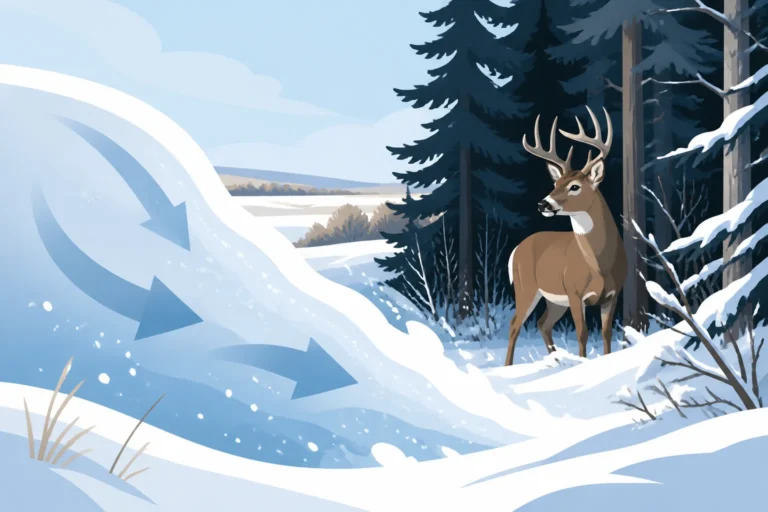
Picture a bitter prairie wind, whipping across miles of open stubble fields, driving snow into every exposed nook. Now imagine the relative calm within a deep coulee, sheltered from the brunt of that gale. This is precisely why mule deer gravitate to them. The steep banks and dense brush found within a coulees provide crucial protection from the elements. North-facing slopes might hold deep, insulating snow, while south-facing slopes, exposed to the limited winter sun, can offer slightly warmer, drier bedding spots. These natural windbreaks reduce wind chill dramatically, helping deer conserve precious energy that would otherwise be spent just trying to stay warm. A few degrees of warmth and a break from the wind can make all the difference for a deer trying to survive a long, harsh Saskatchewan winter.
Food Sources in a Harsh Landscape
While the open fields might offer some scattered waste grain in a lighter snow year, coulees consistently provide more reliable and accessible food sources during the lean months. The sheltered environment allows certain types of woody browse—like willow, saskatoon, and various shrubs—to persist and remain available, even with significant snow cover. Deer will paw through snow to access these critical browse plants. You'll often find distinct browse lines, where deer have nipped off the tender ends of twigs. These coulee bottoms and sides also tend to collect more moisture, supporting denser vegetation than the surrounding uplands. Hunters often overlook how vital these subtle differences in available forage are when the rest of the landscape is frozen solid or buried deep. Understanding what mule deer eat through a prairie winter is crucial.
Security and Escape Routes
Beyond shelter and food, coulees offer a vital sense of security. The broken topography provides numerous hiding spots and natural escape routes from predators, human or otherwise. A mule deer can disappear over a coulee rim or into a thick patch of brush faster than you can blink. This intricate network of draws, fingers, and cross-channels allows deer to move unseen and offers multiple lines of retreat if they feel pressured. On the flat prairie, a deer is exposed; in a coulee, it's virtually invisible once it dips below the rim. This combination of cover and escape potential makes coulees irresistible sanctuaries for deer seeking to avoid detection and feel safe. They know these areas intimately and use them to their full advantage.
Reading the Signs: Where to Look in a Coulee
Finding mule deer in a coulee isn't about aimlessly wandering; it's about systematically reading the landscape and interpreting the subtle clues they leave behind. The snow acts like a giant ledger, recording every step and every stop a deer makes. Learning to decipher these signs will dramatically increase your chances of success.
Identifying Key Travel Corridors
Mule deer are creatures of habit, especially in winter when conserving energy is paramount. They’ll often use the same trails repeatedly to move between bedding areas, feeding grounds, and water sources within and around coulees. Look for well-worn trails, even under a dusting of fresh snow, as deer will follow the path of least resistance. These trails might run along the bottom of a coulee, up a less steep finger, or skirt a sheltered sidehill. Gaps in dense brush or low points along a rim are also common travel corridors. When scouting, pay close attention to where these trails intersect or bottleneck. Using an app like GoHunt with its mapping features can help you identify these natural funnels before you even set foot in the field, saving you valuable time and energy.
Bedding Areas and South-Facing Slopes
In winter, a mule deer's primary goal is to stay warm and conserve energy. This means their bedding choices are strategic. South-facing slopes within a coulee are prime real estate. These slopes catch the most winter sun, warming up slightly and often melting snow sooner, creating drier, more comfortable spots. Look for flattened areas in the snow, often with a slight depression, indicating a bed site. These beds will typically be near cover, offering a quick escape, and in a spot where the deer can observe its surroundings. You might find several beds in a cluster, indicating a small group of deer. Identifying these preferred bedding zones can tell you where deer are spending the bulk of their daylight hours.
Scrub and Browse Evidence
While fresh tracks are exciting, don't overlook the more subtle signs of feeding. Mule deer are browsers, and in winter, they rely heavily on woody vegetation. Look for signs of nipped twigs and branches, especially on shrubs like willow, saskatoon, chokecherry, and even young aspen or poplar. The ends of the browsed twigs will appear clean-cut and often frayed slightly, unlike the ragged tears left by cattle. The height of the browse line can also give you an indication of how much snow has been on the ground. A heavy concentration of browsed material within a specific section of a coulee indicates a preferred feeding area, suggesting deer are spending significant time there. This is a clear indicator that the coulee offers good forage and that deer are actively using it.
Hunting Strategies for Winter Coulee Mule Deer
Hunting mule deer in Saskatchewan's winter coulees requires a specific set of tactics. It's not like still-hunting a forest or calling whitetails in the rut. You need patience, keen observation skills, and a willingness to adapt to the challenging conditions. The open nature of the prairie surrounding the coulees means you often spot deer from a distance, making strategic approaches critical.
Glassing Techniques from Afar
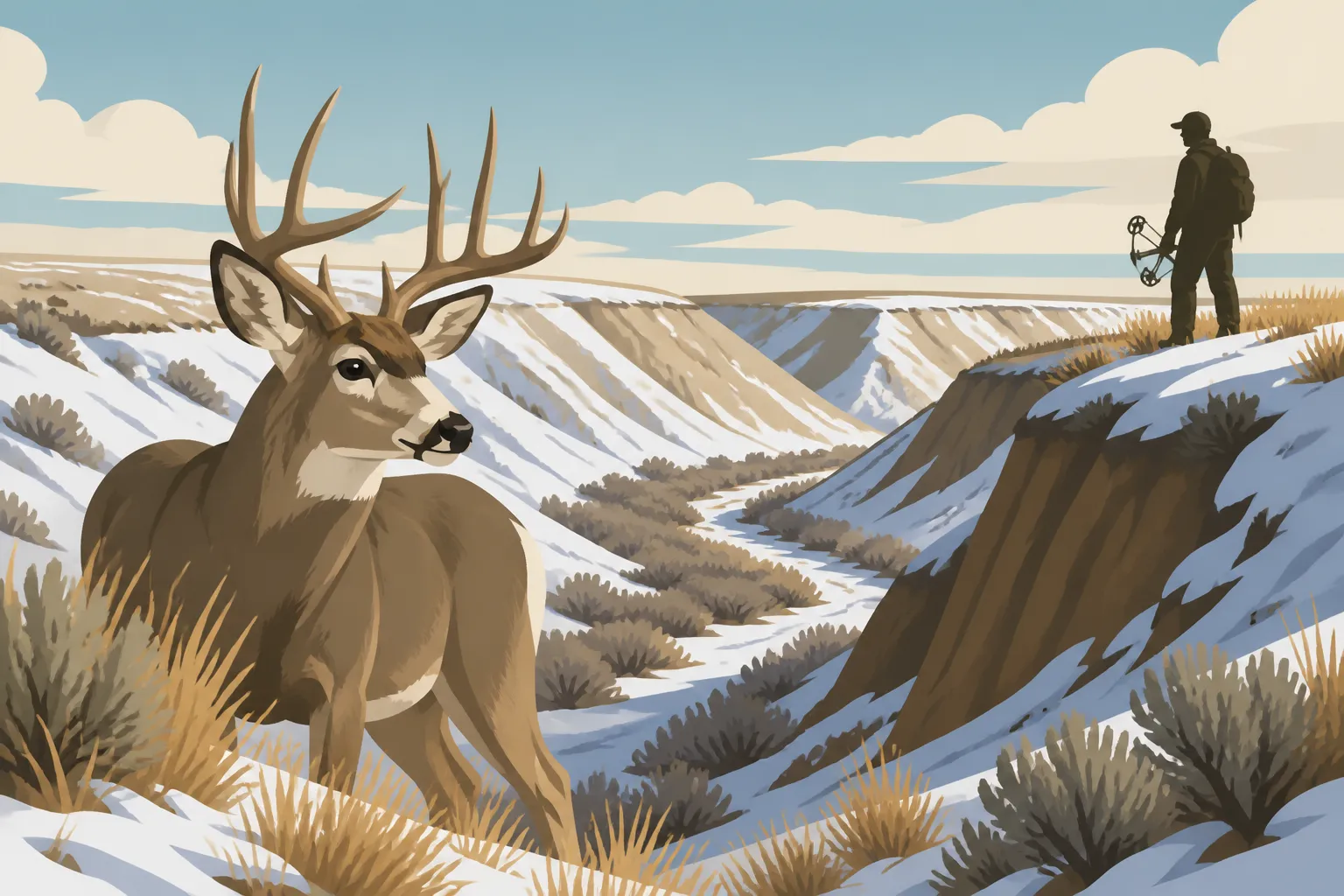
This is arguably the most effective strategy for Glassing a Saskatchewan Coulee for Mule Deer in winter. Instead of blindly walking into a coulee and potentially spooking game, use high-quality binoculars or a spotting scope from a vantage point well away from the coulee itself. Find a rise, a bluff, or even the cab of your truck, and systematically pick apart the coulee. Start by scanning the entire coulee, then break it down into smaller sections, looking for anything that seems out of place – a horizontal line against vertical brush, an ear twitch, the flick of a tail, or the dark patch of a deer's body against the snow. Pay extra attention to the sunny, south-facing slopes, as deer love to bed there during the day. This patient, methodical approach allows you to locate deer without disturbing them, giving you the upper hand for a planned stalk.
Strategic Stalking and Wind Management
Once you've spotted a deer, the real work begins. Stalking in winter snow can be noisy, making wind direction absolutely critical. Mule deer have excellent noses, and if the wind carries your scent to them, your hunt is over. Always approach with the wind in your face or quartering into it. Plan your route carefully, using the natural topography of the coulee – its draws, ridges, and dense brush – for cover. Sometimes, circling widely to get a favorable wind advantage is necessary, even if it adds significant distance to your approach. Snow conditions also play a huge role; powdery snow can be quiet, but crusty snow can make every step a loud crunch. Take your time, move slowly, and pause frequently to glass ahead and ensure the deer hasn't moved or noticed you. This is where patience truly pays off.
Working Coulee Fingers and Points
Coulees are rarely simple straight lines; they often feature numerous fingers, small draws, and points extending into the prairie. These smaller features are crucial hiding and bedding spots. When you're Hunting a Prairie Coulee Bottom or its edges, don't just walk the main channel. Systematically work these fingers and points. One effective tactic is to have two hunters: one hunter works along the bottom or one side, pushing deer towards the other hunter positioned strategically on a point or higher up the opposing bank. This requires good communication and careful planning to ensure safety. Deer often use these smaller draws as escape routes or places to sneak a quick bite of browse. Never assume a small dip doesn't hold a deer; often, the biggest bucks will tuck themselves into the unlikeliest of places.
Challenges and Considerations for Winter Coulee Hunting
Hunting mule deer in Saskatchewan's winter coulees is a rewarding challenge, but it comes with its own unique set of difficulties. Being prepared for these challenges isn't just about success; it's about safety and respecting the land.
Navigating Deep Snow and Ice
Saskatchewan winters are no joke, and deep snow can turn an otherwise manageable coulee into a grueling ordeal. Drifts can be shoulder-high in places, making travel slow and exhausting. Ice can form on steep slopes, especially if there's been a thaw and refreeze cycle, creating treacherous footing. Always be aware of snow depth and ice conditions. Snowshoes or cross-country skis can be invaluable for covering ground efficiently in deeper snow, but they also require practice. A good pair of winter boots with excellent traction is non-negotiable. Furthermore, remember that deep snow severely limits a mule deer's mobility, making them more vulnerable to predation and stress. Always consider the welfare of the animals and be ethical in your approach. Hunting Saskatchewan Winter Weather Safely should be your top priority.
Respecting Private Land and Posted Boundaries
A significant portion of Saskatchewan's coulee systems runs through privately owned farmland. Unlike some other jurisdictions, you absolutely need permission from the landowner to hunt on private land. This isn't just polite; it's the law. Many coulees are also part of or border grazing leases or community pastures, which might have specific access rules. Always check land boundaries using a reliable mapping tool like GoHunt or by consulting local land maps. Look for "Posted" signs, which clearly indicate that permission is required. Understanding Saskatchewan Trespass Law for Hunters and what Saskatchewan's Posted Signs Must Say is critical. Knock on doors well in advance of your hunt, introduce yourself, and respectfully ask for permission. Building good relationships with landowners is essential for long-term hunting access in Saskatchewan.
Winter Gear and Safety Essentials
The unforgiving nature of a Saskatchewan winter demands proper gear. Layering is key: start with a moisture-wicking base layer, add insulating layers like fleece or down, and top it off with a windproof and waterproof outer shell. Warm, insulated boots are a must, as are a good hat, gloves, and perhaps hand warmers. Beyond clothing, a sturdy backpack should contain essentials: extra food and water (ensure water bottles are insulated to prevent freezing), a first-aid kit, a headlamp with extra batteries, fire-starting materials, a knife, and a way to communicate like a satellite messenger if you're in an area without cell service. If you're successful, having the right tools for Field Dressing in Saskatchewan's Deep Cold is also crucial. Always let someone know where you're going and when you expect to return. A well-stocked Winter Truck Kit for a Saskatchewan Hunt is also a non-negotiable for anyone venturing out in the cold.
| Coulee Feature | Mule Deer Usage in Winter | Hunter Implications |
|---|---|---|
| South-Facing Slopes | Prime bedding areas; warmer, less snow, good sun exposure | First place to glass in the morning; deer often visible as they bask. |
| North-Facing Slopes | Deeper snow for insulation; less direct sun, denser cover | Can hold deer seeking deep cover or during extreme cold; may require more active tracking/pushing. |
| Coulee Bottoms | Travel corridors, access to water (if unfrozen), browse | Often well-worn trails; good for stalking if wind is right; check for fresh tracks. |
| Dense Brush/Thickets | Escape cover, deep bedding spots, protection from wind | Deer will disappear into these quickly; approach cautiously, consider using a partner to push if ethical and safe. |
| Finger Draws/Sidehills | Secondary travel routes, smaller bedding pockets | Don't overlook these smaller features; often hold bucks seeking solitude; approach from high ground for glassing advantage. |
| Wind-Blown Rims | Lookout points (briefly), some exposed browse | Deer will often move over these to enter/exit, or quickly glass surrounding prairie before dropping in. |
Disclaimer
This article is for general informational purposes only and does not constitute professional advice. Laws, prices and regulations vary by location and change over time. Consult a qualified professional for guidance on your specific situation.