Hunting a Grazing Lease Quarter
One of the biggest headaches for hunters in Saskatchewan can be figuring out where you can actually hunt. You’ve done your homework, you’ve got your licences, but then you’re staring at a map, trying to distinguish between different types of land, especially those confusing grazing lease quarters. This guide is going to walk you through exactly what a grazing lease quarter is, how to find them, and most importantly, how to navigate the permission process so you can ethically and legally pursue game on these often overlooked but incredibly productive pieces of the landscape.
Understanding Saskatchewan's Grazing Lease Quarters
It's easy to get tangled up in the terminology when it comes to land in Saskatchewan, and "grazing lease quarter" is one that often stumps hunters. Many folks assume that if land isn't actively posted with "No Hunting" signs, it must be fair game, especially if it looks like open prairie or bush. But a grazing lease isn't quite that simple.
At its core, a grazing lease quarter is a piece of Crown land – meaning it's public land owned by the provincial government – that has been leased out to a private individual or company, typically for the purpose of grazing livestock like cattle. This lease grants the lessee certain rights and responsibilities over that land, but it doesn't transfer ownership. It's a key distinction because while the land is Crown land, the access to it often falls into a grey area that combines aspects of both public and private land rules.
Think of it this way: the province owns the raw land, but the rancher or farmer leasing it has paid for the right to use that land for agricultural purposes, and they have responsibilities for managing it, maintaining fences, and often investing in infrastructure. This arrangement is designed to promote sustainable agriculture and land management, but it inherently creates a tricky situation for recreational users like hunters. While the provincial government generally promotes public access to Crown land, the specific conditions of a grazing lease mean that the lessee's operations, livestock, and investment on that land need to be respected and protected. That's why you can't just waltz onto a grazing lease like you might on other forms of Saskatchewan's Crown Land Access.
Identifying and Locating Grazing Lease Lands
The first step to successfully hunting a grazing lease is knowing how to find them on a map and differentiate them from other types of land. This isn't always straightforward, as official land designations can be complex, and what looks like open range from the road might actually be leased land.
Digital Mapping Tools for Land Identification
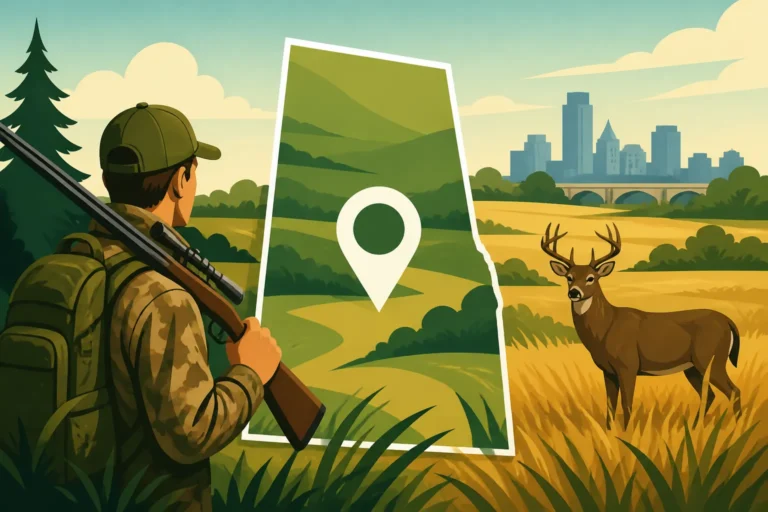
In this day and age, your best friend for identifying land ownership and lease status is a good digital mapping application. Gone are the days of trying to piece together information from multiple government maps and aerial photos. Applications like onX Hunt and GoHunt have revolutionized how hunters scout and plan. These platforms overlay property boundaries, landowner information, and often designate Crown lands, including those under grazing leases.
When you're looking at a map on one of these apps, you'll typically see different colour codes or labels for various land types. Crown grazing leases are usually marked distinctively. Zooming in, you can often click on a parcel to reveal more detailed information, such as the legal land description (quarter section, township, range, meridian) and sometimes even the lessee's contact information. This is invaluable because it tells you exactly what kind of land you're looking at and who might be the appropriate person to contact for permission.
For example, you might be driving through a beautiful stretch of rolling prairie and spot some promising-looking coulees or a brushy bluff that just screams "deer." Instead of guessing, you can pull up your map app, drop a pin, and immediately see if that land is privately owned, unleased Crown land, or a grazing lease. This technology takes a lot of the guesswork and potential for accidental trespass out of the equation. It's truly a game-changer for ethical hunters who want to do things by the book. You can even use these tools for Scouting With Satellite Imagery in Saskatchewan before you ever leave home, getting a lay of the land and identifying potential access points or habitat features.
Understanding Legal Land Descriptions
Even with digital tools, it helps to understand the underlying system of legal land descriptions. Saskatchewan, like much of Western Canada, uses the Dominion Land Survey system. Land is divided into townships (six miles by six miles), which are further divided into 36 sections (one mile by one mile). Each section is then typically divided into four quarter sections (160 acres).
Grazing leases are often granted for full sections or individual quarter sections. So, when you see a map showing "SW 15-20-10 W3" that means the Southwest quarter of Section 15, Township 20, Range 10, West of the 3rd Meridian. While your mapping app will usually show you the boundaries visually, knowing this system can help you cross-reference with older maps, or even with local knowledge if you're talking to a landowner or a local resident who doesn't use digital tools. It also ensures you're pinpointing the exact quarter section you're interested in, which is crucial for getting accurate permission. Reading a Saskatchewan WMZ Map Before You Go can also help you understand the broader context of the area you're hunting in.
| Land Type | Ownership | Primary Use | Access for Hunting | Notes |
|---|---|---|---|---|
| Private Land | Individual/Corp | Agriculture | Permission required | Must get explicit permission from landowner/occupant. |
| Crown Land (Unallocated) | Provincial Govt | Various | Generally open | May have specific restrictions or closures; check WMZ rules. |
| Grazing Lease Quarter | Provincial Govt | Livestock Grazing | Permission highly recommended | Crown land, but leased for private operation. Respect lessee's rights. |
| FWDF Lands | Provincial Govt | Wildlife Habitat | Generally open | Acquired through Fish and Wildlife Development Fund. Check specific rules. |
| Community Pastures | Federal/Provincial | Livestock Grazing | Specific permission rules | Varied management, often require manager permission. |
Navigating Access and Permission on Grazing Leases
Here's where it gets truly important, and where many hunters stumble. While technically Crown land, access to a grazing lease quarter for hunting is not the same as accessing unallocated Crown land. You absolutely need to understand the nuances to avoid potential issues.
The Role of the Lessee: Seeking Permission
The critical takeaway for hunting a grazing lease is this: you should always, always, always seek permission from the grazing lease holder (the lessee) before you hunt. While the official stance from the provincial government on Crown grazing leases has evolved over time, and some interpretations suggest access might be permitted without explicit permission if no crops are present and the land isn't posted, the most respectful, ethical, and practically safest approach is to get that permission.
Why? Because the lessee has operational control over that land. They have livestock, fences, possibly water sources, and other infrastructure that are vital to their livelihood. Showing up unannounced, especially with a firearm, can be startling and disruptive to their operations. They also have responsibilities for the safety of their animals and their family. Approaching them politely and asking for permission demonstrates respect for their business and their investment. This proactive approach builds goodwill and helps maintain positive Saskatchewan Landowner Relations for Hunters, which is crucial for all hunters in the long run.
Imagine you've been granted the right to use a piece of land for your business, and someone just shows up with a rifle without a word. You'd likely be concerned. It's the same principle here. Even if the law is technically ambiguous on public access to a grazing lease versus a cultivation lease, going the extra mile to ask shows you're a responsible hunter. Often, these landowners are more than happy to grant access once they know who you are, what you're doing, and that you'll be respectful. They might even offer valuable insights into game movement or areas to avoid due to livestock.
How to Approach a Grazing Lease Holder
So, how do you go about asking?
- Identify the Lessee: Your digital mapping app is gold here. It should provide contact information or at least point you to the local land titles office where you can find out who holds the lease. Sometimes, local landowners nearby will also know who leases the grazing land.
- Timing is Key: Don't show up at dinner time, or during calving season, or when they're frantically trying to get crops off the field. Try to call or visit during reasonable daylight hours, ideally during a less busy time of year if possible, though this can be tricky with hunting seasons.
- Be Prepared and Polite: Introduce yourself, state your purpose clearly ("Hi, my name is [Your Name], and I was hoping to get permission to hunt deer on the grazing lease quarter located at [Legal Land Description]"), and assure them you will be respectful of their land, livestock, and fences. Offer to share your phone number.
- Listen to Their Conditions: They might have specific requests: "Please don't drive off the main trail," "Watch out for cattle in the north pasture," "No hunting near the corrals," or "Only hunt on foot." Abide by these conditions without exception.
- Understand "No": Be prepared for a "no." If they decline, thank them politely and move on. There could be various reasons – previous bad experiences, active cattle operations, or simply a desire for privacy. Pushing the issue will only harm the reputation of hunters everywhere.
- Follow Up: If you are granted permission and have a successful hunt, a thank-you note or even a small gesture (like offering some game meat if that's appropriate and appreciated) can go a long way in securing future access.
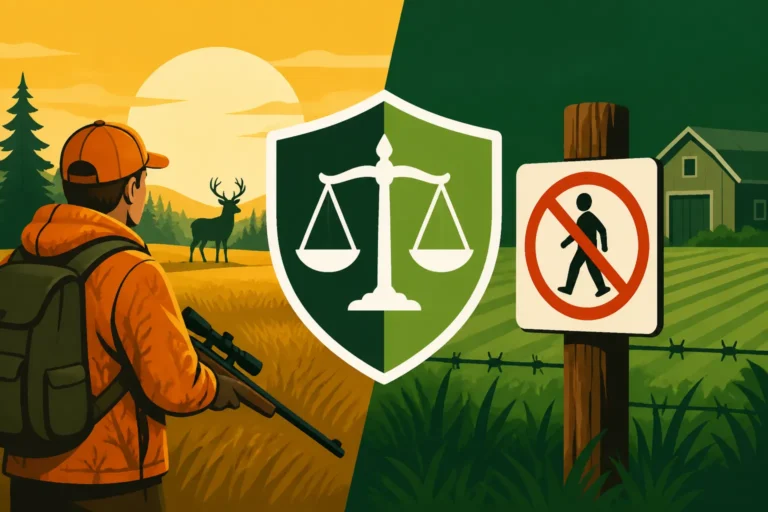
This process is very similar to Getting Private Land Permission in Saskatchewan, and the same courtesies apply. Remember, even if the land is not posted with "No Trespassing" signs, What Saskatchewan's Trespass Law Requires still applies to lands under lease where you haven't received permission. It’s always best to have explicit permission.
Hunting Strategies for Grazing Lease Quarters
Once you've secured permission, understanding how to effectively hunt a grazing lease quarter can greatly improve your success. These lands, by their nature, often present unique hunting challenges and opportunities.
Adapting to Open Landscapes and Cover
Many grazing leases are found in the more open parts of Saskatchewan – think prairie, aspen parkland, or the forest fringe. This means you're often dealing with expansive views, limited dense cover, and animals that are highly attuned to their surroundings.
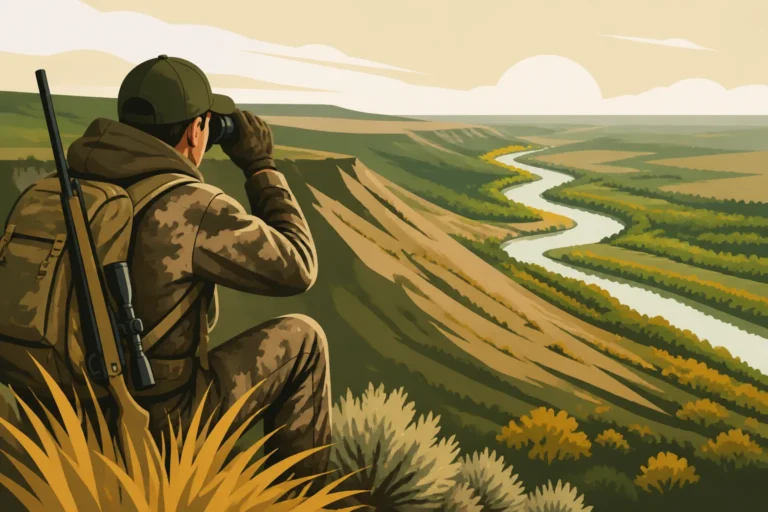
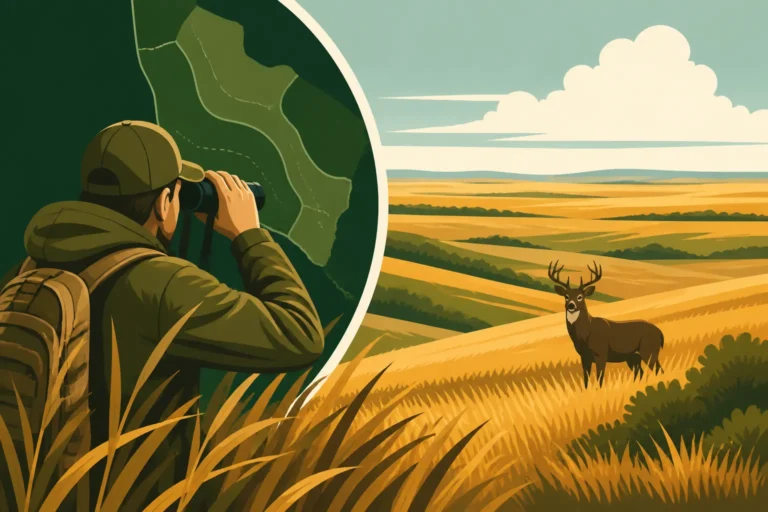
- Spot and Stalk: This is often the name of the game on open grazing leases. Using good optics is paramount. Spend time glassing from elevated positions, looking for deer beds in the long grass, the dark patch of an elk, or the subtle movement of a coyote. Once you spot game, the challenge becomes using what little cover there is – a coulee bottom, a willow run, or even just the undulations of the terrain – to close the distance. This is a tactic often employed when Stalking Mule Deer in Open Prairie.
- Utilizing Natural Features: Grazing leases often feature natural draws, coulees, bluffs, and sloughs. These features provide vital cover, bedding areas, and travel corridors for game. A deep coulee might hold deer throughout the day, while a willow-lined slough could be a bedding sanctuary. Understanding how deer use these features is crucial. Hunting a Prairie Coulee Bottom or Hunting a Slough Edge for Whitetails are classic strategies. Game animals will often feed in the more open pastures during low light conditions and retreat to these covered areas during the day.
- Reading Sign: On heavily grazed land, deer tracks can be harder to distinguish from cattle tracks, but you can still find rubs, scrapes, and distinct game trails, especially in the denser cover elements. Look for where game enters and exits the open pasture, usually along a tree line, a brushy fence row, or the mouth of a coulee. Reading Whitetail Sign in Saskatchewan Bluffs can give you an edge in deciphering animal movements.
Considering the Presence of Livestock
The defining characteristic of a grazing lease is, of course, the livestock. Their presence directly impacts your hunting approach.
- Safety First: Always be aware of where cattle are. Never shoot towards or near livestock. Not only is it incredibly dangerous and unethical, but it could also lead to severe legal penalties and certainly ruin any chance of future access. If a deer you want to shoot is near cattle, be patient and wait until it moves clear.
- Livestock as "Obstacles": Animals like deer and elk generally coexist with cattle, but they can be pushed around or influenced by their presence. Sometimes, a herd of cattle moving through an area can actually push deer out of cover, presenting an opportunity. Other times, the sheer number of cattle can make it harder to spot your target, or their movement might spook your quarry.
- Minimize Disturbance: Your goal is to be a ghost on the landscape. Avoid running ATVs or side-by-sides unnecessarily if the lessee has requested "hunt on foot only." Walk around cattle, not through them. Close gates securely. Leave fences exactly as you found them. Remember, you're a guest, and minimizing your impact ensures the lessee's operations are undisturbed. This careful approach is important for hunting any Hunting a Pasture With Cattle On It.
Planning Your Approach and Exit
Hunting a grazing lease often means a longer walk or a more strategic entry/exit to avoid spooking game that might be in the open fields.
- Early Morning/Late Evening: Just like with many other hunting scenarios, dawn and dusk are prime times. Game animals often use the open grazing areas to feed during these periods before retreating to cover. Plan your approach in the dark to get into position before first light, or position yourself for an evening hunt as the animals start to emerge.
- Wind Direction: Always play the wind. On open prairie, the wind can swirl more than in dense timber, so pay extra attention to thermals in coulees and changes in wind direction. Your scent is your biggest giveaway in these open environments.
- Extraction: Consider how you will extract an animal if successful. On a large, open grazing lease, you might be a long way from a vehicle. If the lessee permits vehicle access on established trails, that can be a huge help. Otherwise, be prepared for a long haul, potentially with a game cart, especially if you're hunting a Saskatchewan Quarter Section that's far from the road. Thinking about Getting a Deer Out on a Frozen Trail or across rough ground is part of responsible planning.
By understanding the nature of grazing leases, diligently seeking permission, and adapting your hunting strategies to these unique landscapes, you can unlock some truly fantastic hunting opportunities in Saskatchewan. Respect for the land, the livestock, and the lessee are paramount to ensuring these opportunities remain available for all ethical hunters.
Disclaimer
This article is for general informational purposes only and does not constitute professional advice. Laws, prices and regulations vary by location and change over time. Consult a qualified professional for guidance on your specific situation.