Hunting a Pasture With Cattle On It
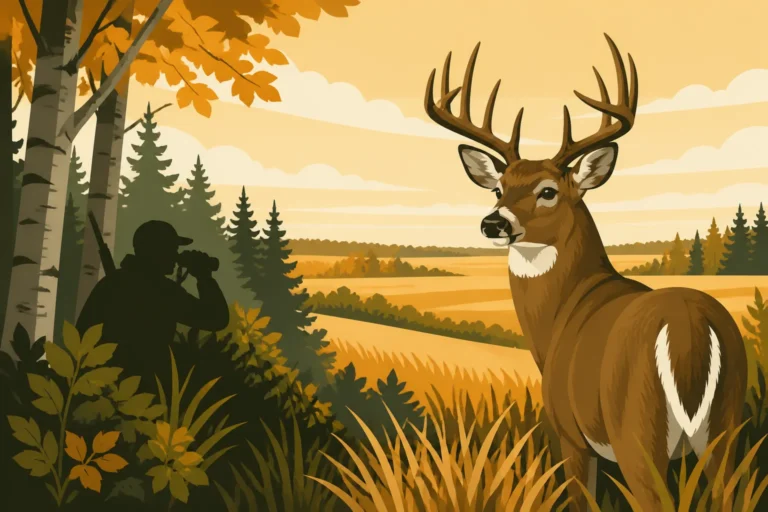
There's nothing quite like the sight of a big buck or a herd of elk grazing in what looks like prime habitat, only to realize that the field is also teeming with cattle. It's a common scenario for many of us hunting in Saskatchewan's mixed agricultural and wilderness zones, and it brings a whole new set of questions and challenges. You've found the game, but now you have to figure out how to hunt it safely and ethically without disturbing livestock or upsetting the landowner. This guide will walk you through the nuances of hunting pastures with cattle, offering practical advice and strategies to help you navigate these unique situations successfully.
Understanding Game Movement in Cattle Pastures
When you see deer, moose, or elk sharing a pasture with cattle, it might seem counterintuitive at first glance. After all, livestock can be noisy and disruptive. However, there's a good reason why these wild game animals choose to hang out in cow country, and understanding that 'why' is your first step to a successful hunt.
Why Wild Game Utilizes Grazing Areas
Game animals, especially whitetails, mule deer, moose, and elk, are always looking for the easiest meal and the most secure cover. Pastures, while home to cattle, often provide exactly that. Think about it: a well-maintained pasture typically means good forage. The grass is usually lush, well-watered, and often fertilized, providing a protein-rich diet that can be hard to beat in other areas. This is particularly true in areas where the native browse might be overgrazed or in drier years. Deer and elk, in particular, are drawn to these green oases, especially as the season progresses and other food sources dry up or become less palatable. Moose, too, will often be found in low-lying, brushy areas within pastures or along their edges, taking advantage of the willows and aquatic vegetation. You can learn more about how different species use these areas by reading about Hunting Whitetails on Saskatchewan Farmland or even Hunting Farmland Moose in Saskatchewan.
Furthermore, cattle can inadvertently create game trails and openings in thick cover that deer, elk, and moose will readily use. Their constant grazing can also encourage new, tender growth that game animals find irresistible. It’s a symbiotic relationship in a way; cattle keep the grass clipped, and game comes in for the tender shoots. The game might also feel a false sense of security, relying on the presence of cattle as a sort of 'early warning system' against predators, believing that the larger, more visible cows will detect threats first. This is a subtle dynamic, but it's one I've observed time and again.
How Cattle Presence Affects Game Behavior
While game animals certainly tolerate cattle, they don't exactly mingle with them. You'll often find deer and elk grazing on the periphery of a cattle herd, or moving into a pasture once the cattle have settled down or moved to another section. Cattle are generally pretty oblivious to deer, but a curious calf might wander over, or a whole herd could decide to move through an area where game is bedded, causing them to spook.
The biggest factor to consider is sound and scent. Cattle are loud – bawling, stomping, rustling. This can mask your approach, which is sometimes a benefit, but it also means the game might be more on edge or simply accustomed to a higher level of background noise. Their scent, too, is pervasive. Deer and elk rely heavily on their sense of smell, and a pasture full of cattle offers a complex scent profile that can make it harder for them to pick up on your human scent. This means paying even closer attention to wind direction than usual. The trick is to watch for patterns: when do the cattle typically graze in certain areas? When do they head for water? When do they bed down? Often, game animals will utilize these quieter periods to feed or move.
Strategic Approaches for Hunting Pastures with Cattle
Hunting a pasture with cattle isn't just about finding the game; it's about executing a hunt that respects both the livestock and the landowner. This requires careful planning, a keen eye for detail, and often a slower, more deliberate approach.
Scouting and Observation Techniques
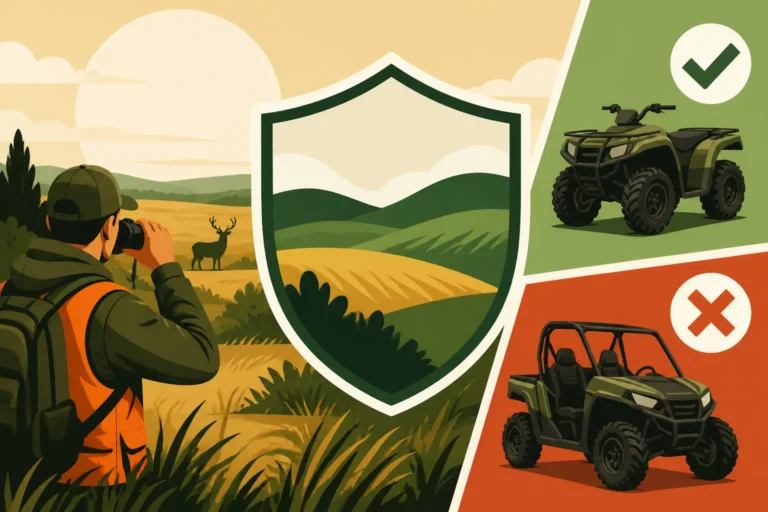
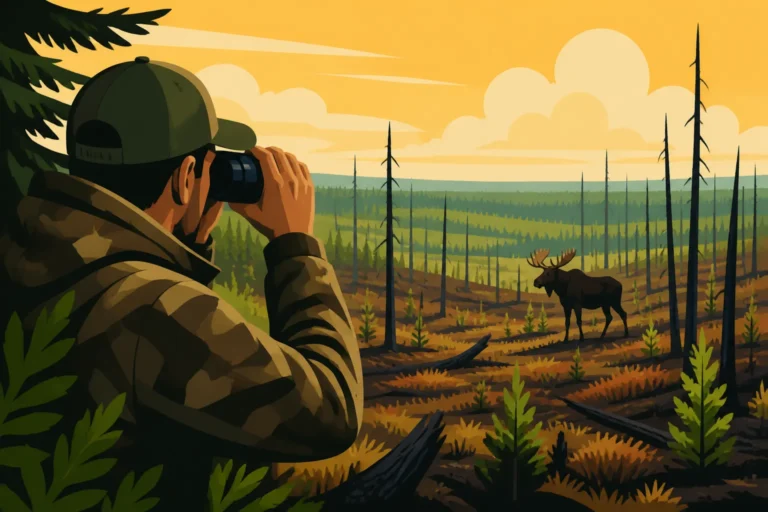
Before you even think about setting foot in a pasture with cattle, observation is key. Spend time glassing the area from a distance, preferably using high-quality binoculars or a spotting scope. Observe the cattle: their movements, feeding patterns, and bedding areas. Note if there are any distinct sections of the pasture they frequent more or less. Just as importantly, watch for the game animals themselves. When do they enter the pasture? Where do they feed? Do they use specific entry and exit points? Are they typically on certain edges, or do they move into the middle? Tools like GoHunt can be invaluable here, allowing you to study satellite imagery for potential cover, water sources, and natural funnels within the pasture that might draw game. This pre-scouting can save you a lot of guesswork and minimize disturbance later. You might even find some useful insights by checking out Scouting With Satellite Imagery in Saskatchewan.
Look for subtle signs. Are there fresh tracks along the fence lines or near watering holes that aren't cattle tracks? Are there rubs or scrapes on the few trees or larger bushes that indicate deer activity? Game trails, often subtle, might appear in the taller grass or brushy areas, distinct from the broader cattle trails. Pay attention to the wind, too. If you can observe how the wind typically behaves in that specific pasture at different times of the day, you'll be much better prepared to plan your approach.
Planning Your Stalk and Approach
Once you've spotted game and understand the cattle's routine, it's time to plan your approach. This is where patience truly becomes a virtue.
- Wind is paramount: Always, always, always approach with the wind in your favor, carrying your scent away from both the game and the cattle. Spooking a herd of cattle can ruin your hunt and potentially annoy the landowner.
- Use available cover: Even a slight rise in the terrain, a row of scrub brush, or a dip in the ground can provide crucial cover in an otherwise open pasture. If the pasture borders a treeline or a bush bluff, use that as your primary approach route. Hunters often underestimate how much cover a small undulation can provide, especially when crawling or moving slowly.
- Move slowly and deliberately: Rushing will almost always end in disaster. Take your time, stop frequently to glass, and be ready to freeze if either cattle or game look your way. Mimic the slow, deliberate movements of grazing animals if you can't be completely hidden.
- Mind the cattle: If cattle are between you and your target, you have a few options. Sometimes, you can wait them out, hoping they move. Other times, a very slow, wide berth might work, but be prepared for their curiosity. Young cattle, especially, can be inquisitive and might follow you, which can be a real headache. Avoid pushing cattle or making sudden movements that could startle them into a run. This is both a safety concern for you and a stressor for the livestock.
Gear Considerations for Pasture Hunts
When you're heading into a pasture where cattle roam, your gear choices can make a significant difference.
- Footwear: You'll likely be doing a lot of walking, potentially through mud, uneven ground, and even manure. Waterproof, comfortable, and sturdy boots are a must.
- Optics: As mentioned, good binoculars are essential for long-range glassing to locate game and monitor cattle movements without disturbing them.
- Clothing: Earth tones and camouflage are standard, but consider durable materials that can withstand potential snags from brush or barbed wire. Depending on the season, layers are crucial to adapt to Saskatchewan's unpredictable weather. You might also want to wear a vest or hat in blaze orange, as required during rifle season, ensuring you're visible to other hunters and, inadvertently, sometimes to the cattle from a distance. For specific season details, check out Saskatchewan Rifle Season Dates.
- Rangefinder: Critical for accurate shot placement, especially in open pasture environments where judging distance can be tricky.
- Pack: A comfortable daypack for water, snacks, extra layers, and your game processing kit is vital. You might also consider a small kneeling pad if you anticipate long periods of low-crawling.
Practical Tips for a Safe and Ethical Hunt
Hunting in cattle pastures isn't just about bagging your animal; it's about doing so responsibly, safely, and in a way that preserves your relationship with the landowner.
Minimizing Disturbance to Livestock
This cannot be stressed enough: do not spook the cattle. A stampeding herd can injure themselves, damage fences, and cause significant stress, which translates to financial loss for the farmer. It's not just rude; it's potentially damaging. Always operate under the assumption that the cattle are the priority.
- Stay calm and move slowly: If cattle notice you and start to stare or mill about, stop. Wait for them to lose interest. Avoid eye contact.
- Give them space: If you need to walk past a group of cattle, give them a wide berth. Walk around them, not through them.
- No sudden movements or loud noises: This includes yelling, slamming truck doors (if allowed), or running. Your goal is to be a ghost, not a cowboy.
- Do not interact: Don't pet them, don't try to herd them, and absolutely do not attempt to feed them. They are livestock, not pets, and maintaining their natural wariness of humans (unless accustomed to a specific handler) is important for their safety and management.
Ethical Shot Placement and Trajectory
This is perhaps the most critical safety consideration in a cattle pasture. Before you even shoulder your rifle or draw your bow, you must have a clear, unobstructed shot at your target animal, with an absolutely safe backdrop.
- Identify your target: Be 100% certain it's the animal you're legally permitted to harvest. Misidentifying a cow for a bull moose, or a domestic animal for game, is a catastrophic mistake.
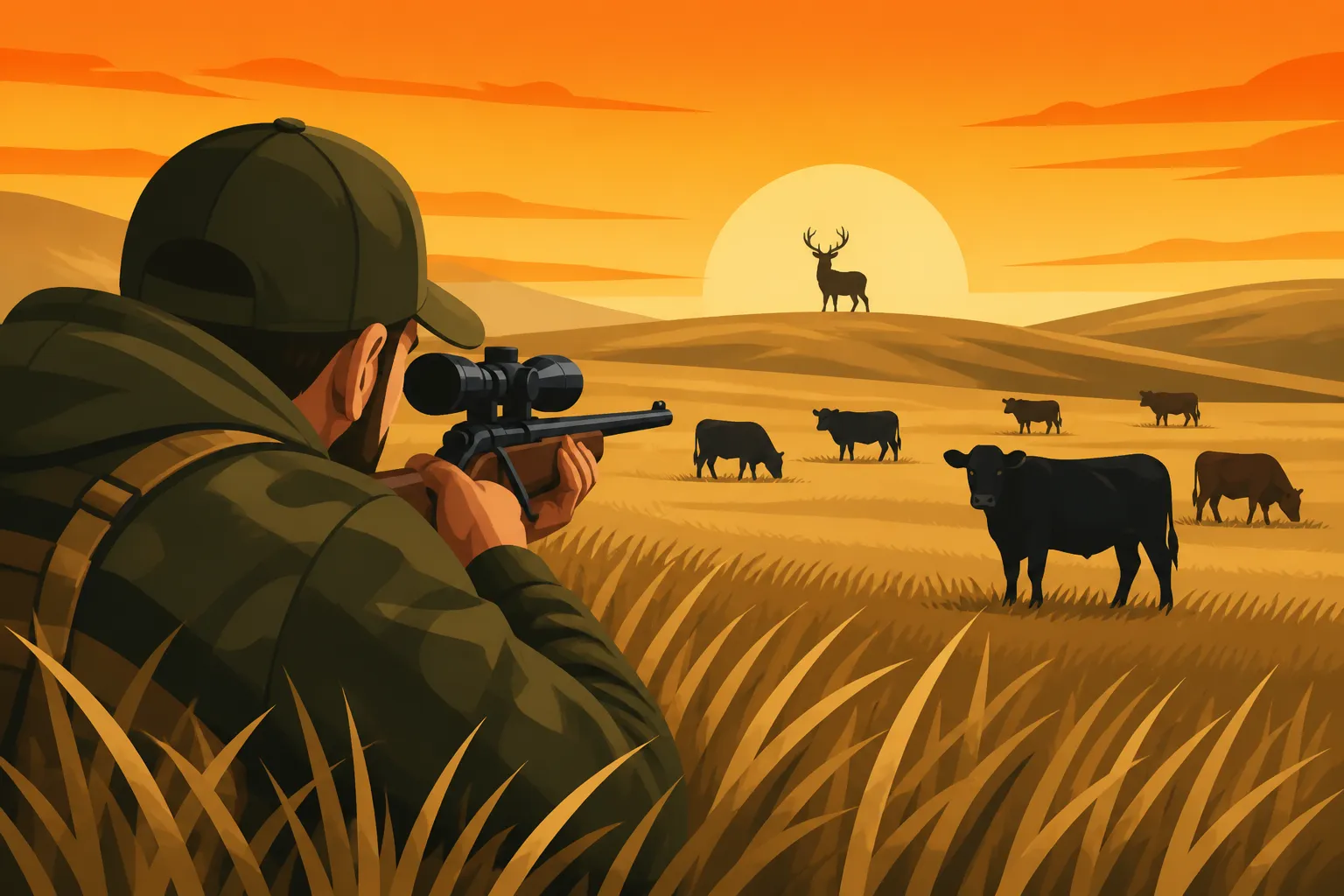
- No shot near or over cattle: Never take a shot if there is any chance your bullet could strike a cow, or if the bullet could ricochet and hit one. This means no shots at animals standing directly in front of, behind, or amongst cattle. Wait for the animal to separate itself from the herd and move to an area with a clear line of sight and a safe backstop (like a distant hill, a thick treeline, or open ground where a bullet will safely impact).
- Bullet trajectory: Remember that bullets can travel a very long distance. Even if there are no cattle directly in your sight picture, ensure there are none further downrange that could be hit by a pass-through or a ricochet. This might mean passing on a shot you would normally take in an open field without livestock. For insights into legal and safe equipment, review Legal Firearms and Bows for Big Game.
Game Retrieval in a Pasture
So, you've made a clean shot, and your animal is down. Now comes the often-challenging task of retrieval.
- Get permission for vehicle access: If you plan on using a quad or truck to retrieve your game, always get explicit permission from the landowner beforehand. Driving off established trails or cutting across fields without permission is a quick way to lose hunting privileges. If permission is not granted, be prepared for a long pack-out.
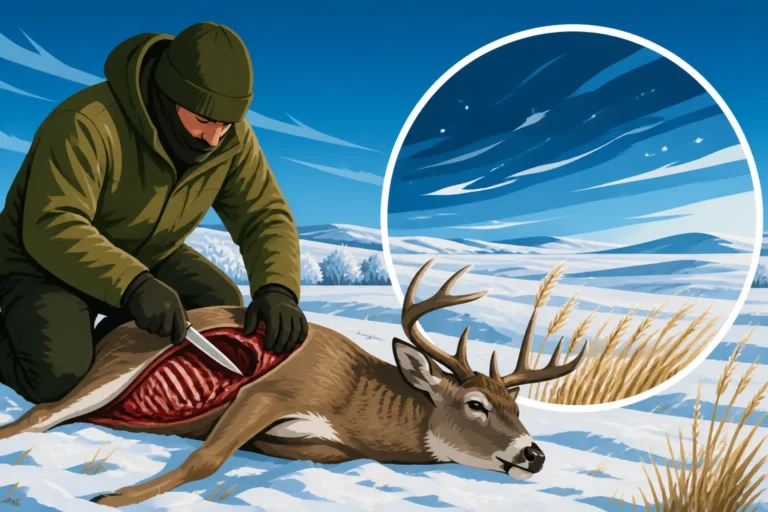
- Secure the carcass promptly: Especially if other cattle are in the area, you want to get your animal field-dressed and out as quickly and respectfully as possible. Don't leave a carcass lying in the pasture for extended periods. This is also crucial for meat quality, especially in warmer weather, or if you're Meat Care in Saskatchewan's Cold Snaps.
- Minimize disturbance during retrieval: Even with permission to use a vehicle, drive slowly and avoid spooking any remaining cattle. If you're on foot, try to move the animal without dragging it through active grazing areas if possible.
- Close all gates: This is a golden rule. If you open a gate, close it. Even if it looks like it was open before, close it. Don't take chances with livestock getting out.
- Report any issues: If you accidentally spooked cattle or damaged anything, be upfront with the landowner. Honesty and accountability go a long way in maintaining good relationships. You might even find yourself needing to know about Getting a Deer Out on a Frozen Trail if it's a late-season harvest.
Navigating Regulations and Landowner Relations
Hunting on private land, especially land with active agricultural operations like cattle pastures, means your relationship with the landowner is paramount. Respect for their property, their livestock, and their wishes is not just good etiquette; it's often legally required.
Securing Landowner Permission
In Saskatchewan, it is a legal requirement to obtain permission before hunting on private land. This isn't just a suggestion; it's the law.
- Ask in person, if possible: The best way to get permission is to knock on the door, introduce yourself, and respectfully ask. Be polite, be clear about what you want to hunt, and be prepared for a "no." A "no" isn't personal; it's their property, and they have every right.
- Be specific: Tell them exactly what species you're after and when you plan to hunt. If you're hoping to retrieve with a vehicle, ask about that upfront.
- Offer to help: Sometimes, offering to help with a small chore around the yard or keeping an eye on their fences can go a long way.
- Provide contact info: Give them your name and cell number so they can reach you if needed.
- Follow their rules: If they grant permission but set specific conditions (e.g., "only hunt the north quarter," "no driving off the main trail," "only hunt after the cattle are moved"), respect those conditions without question. Learn more about the intricacies of Saskatchewan Landowner Permission Law.
Understanding Posted Land Regulations
Saskatchewan has clear rules about posted land. If land is properly posted with "No Hunting" or "No Trespassing" signs, you cannot hunt there, even if you see game.
- Know the signs: Familiarize yourself with what legally constitutes a "posted" sign in Saskatchewan. It typically needs to be clearly visible and of a certain size.
- Respect the boundaries: Even if the cattle are on one side of a fence and the game on the other, if that other side is posted, you cannot pursue it without separate, explicit permission. Hunting involves understanding property lines, and tools like GoHunt can help you visualize land boundaries effectively. Reviewing Reading a Posted Land Sign Correctly will ensure you understand the legal requirements.
- When in doubt, don't: If you're unsure if land is private or public, or if permission covers a specific area, err on the side of caution and either clarify with the landowner or find another spot.
Safety for All Parties Involved
Hunting is an amazing privilege, but it carries immense responsibility. When hunting around cattle, that responsibility expands to include the well-being of the livestock and the farmer's livelihood.
- Your safety: Be aware of your surroundings. While cattle are generally docile, a protective mother cow, a bull, or an injured animal can be unpredictable. Maintain a respectful distance.
- Livestock safety: As discussed, avoiding spooking or injuring cattle is paramount. This directly impacts the farmer's bottom line.
- Farmer's safety and property: Never damage fences, gates, or other farm infrastructure. If you notice a broken fence or an issue with the cattle, let the landowner know. Building trust and being a responsible guest is the best way to ensure you're welcome back. In the end, it’s about being a good neighbour and a responsible hunter, ensuring that these valuable hunting opportunities remain available for years to come.
Remember, every hunt is an opportunity to learn and grow, and navigating the complexities of hunting pastures with cattle will certainly add to your skills as a hunter.
Table: Key Considerations for Hunting Cattle Pastures
| Aspect | Importance | Best Practices | Common Pitfalls |
|---|---|---|---|
| Landowner Access | Absolutely critical, legal requirement | Always ask permission in advance, build trust, respect their rules. | Hunting without permission, damaging property. |
| Cattle Disturbance | High, impacts livestock welfare & relations | Move slowly, use cover, give wide berth, avoid sudden movements. | Spooking herds, chasing cattle, being loud. |
| Shot Safety | Paramount, prevents injury/damage | Clear shot at target, safe backdrop, no cattle in line of fire. | Shooting near/over cattle, ignoring ricochet potential. |
| Game Retrieval | Important for meat quality & landowner trust | Get vehicle permission beforehand, remove carcass promptly, close all gates. | Leaving carcass, driving off-trail without permission. |
| Scouting | High, aids success & minimizes disturbance | Glass from distance, identify game patterns, observe cattle routines, use apps. | Rushing in, disturbing area, not understanding movements. |
| Wind Direction | Crucial for all hunting | Always approach with wind in your favor, check frequently. | Relying on guesswork, letting your scent carry. |
Disclaimer
Hunting is an activity that carries inherent risks. The information provided in this guide is for informational purposes only and should not be considered a substitute for formal hunter education, local regulations, or professional guidance. Always prioritize safety, respect wildlife and property, and be aware of and comply with all applicable hunting laws and regulations in Saskatchewan and any other jurisdiction you may be hunting in.