Hunting a Prairie Coulee System
Hunting a prairie coulee system in Saskatchewan can feel like searching for a needle in a haystack – vast, open spaces giving way to surprisingly deep, winding pockets of cover. It's a landscape that intimidates many, but for those willing to put in the effort, these natural breaks in the prairie can hold an incredible amount of game, especially when deer are seeking refuge from the elements or hunting pressure. This guide will walk you through understanding, scouting, and effectively hunting these challenging yet rewarding areas, helping you unlock their potential for a successful hunt.
Understanding the Prairie Coulee Ecosystem
Saskatchewan's coulees are more than just dips in the land; they are vibrant, miniature ecosystems offering critical shelter, food, and travel corridors for wildlife. Their unique topography creates microclimates and vegetation patterns that are vastly different from the surrounding open prairie. To hunt them effectively, you first need to understand what makes them tick.
Coulee Formation and Diverse Vegetation
Prairie coulees are typically formed by ancient glacial meltwaters or erosion over millennia, carving out deep, winding channels through the otherwise flat or gently rolling landscape. These channels can range from shallow depressions barely offering relief to dramatic, steep-sided valleys that drop hundreds of feet. What’s truly remarkable is the change in vegetation. While the uplands might be dominated by short prairie grasses and croplands, the coulees often protect a completely different world.
Within these sheltered confines, you'll find a mosaic of taller grasses, dense willow thickets, trembling aspen groves, and sometimes even patches of chokecherry and saskatoon berry bushes. This dense growth thrives because the coulees offer protection from the relentless prairie winds and often hold more moisture, especially from snowmelt that drains into them. This creates a rich, diverse habitat that offers both sustenance and cover, making them an irresistible draw for many species, particularly whitetail and mule deer, as well as various furbearers and upland birds.
Wildlife Use of Coulee Systems
The diverse cover and food sources within a coulee make it an absolute magnet for wildlife, especially when the surrounding prairie offers little in terms of shelter. Deer, in particular, rely heavily on coulees for bedding, feeding, and travel. During harsh winters, a coulee's deep sides can offer crucial thermal cover, protecting animals from brutal winds and deep snow, helping them conserve energy. What a Hard Saskatchewan Winter Culls explains just how important these sheltered areas are for survival.
Deer will use the slopes for bedding, often positioning themselves just below the rim where they can spot danger approaching from the prairie above, but remain hidden from within the coulee itself. The bottoms, especially if there's a spring or seeping water, become natural travel corridors and feeding grounds. Mule deer often prefer the more open, grassy slopes and rims of coulees, using their keen eyesight to spot threats, while whitetails tend to stick closer to the denser brush in the bottom and along the steeper, timbered banks. Understanding these preferences is key to anticipating their movements within these complex systems.
Scouting and Interpreting Coulee Sign
Successfully hunting a coulee system is far less about luck and far more about diligent scouting. These areas are vast and can be deceptively tricky to navigate, making thorough pre-hunt preparation absolutely critical. You need to know where the animals are spending their time, how they’re moving, and what escape routes they prefer.
Leveraging Digital Scouting Tools
Before you ever set foot in a coulee, you should be spending significant time studying it from afar. Satellite imagery and topographical maps are your best friends here. Tools like onX Hunt or GoHunt allow you to zoom in and identify key features that aren't visible from the road. Look for areas where the coulee widens or narrows, where brush thickens into dense pockets, or where small, hidden ravines branch off the main system. These are often pinch points, bedding areas, or travel corridors.
Pay close attention to changes in elevation and contours. Steep, north-facing slopes might hold snow longer, providing water or different vegetation, while south-facing slopes get more sun and might be preferred for bedding on cold days. Identify potential access points, both for yourself and for animals moving in and out of the coulee. Scouting With Satellite Imagery in Saskatchewan delves deeper into how to effectively use these tools to break down complex terrain like coulees into manageable, huntable sections. Marking these potential hot spots and travel routes on your map will save you countless hours of aimless walking once you're on the ground.
On-the-Ground Scouting and Sign Reading
Once you've done your digital homework, it's time to hit the ground. Walking the rims of the coulee, especially at dawn or dusk, can reveal much about game movement. Look for tracks crossing into and out of the coulee, indicating main entry and exit points. When you venture down into the coulee itself, focus on fresh sign. Pay attention to rub lines on small trees or bushes, indicating where bucks are marking territory. Scrapes, particularly during the rut, are vital indicators of buck activity.
Bedding areas are crucial to pinpoint. Look for flattened grass or disturbed snow in sheltered pockets, often with good visibility out but concealed from above. These might be under a dense clump of willows or on a subtle bench on a slope. Connecting these bedding areas with feeding zones and water sources (if present) will reveal the deer's daily patterns. Reading Whitetail Sign in Saskatchewan Bluffs offers excellent advice applicable to the dense pockets found within coulees. Don't forget to look for droppings; fresh, soft droppings mean deer are actively using that specific spot. A successful coulee hunt hinges on understanding these intimate details of animal behavior within their complex habitat.
Hunting Strategies for Coulee Systems
Hunting coulees requires a blend of patience, physical fitness, and strategic thinking. Unlike open field hunting, you're dealing with constantly changing terrain, wind currents, and often very dense cover. Your approach will largely depend on the specific coulee, the time of year, and whether you're hunting alone or with a partner.
Still-Hunting and Spot-and-Stalk Techniques
Still-hunting is incredibly effective in coulees, especially for solo hunters. This involves moving slowly and deliberately, stopping frequently to glass and listen. The winding nature of coulees often means you can't see far ahead, so using your ears and nose is just as important as your eyes. Move into the wind, if possible, to keep your scent from blowing ahead. Target the denser brush along the bottom and the benches on the slopes where deer are likely to bed. Take advantage of the terrain to conceal your movements, using the rise and fall of the ground to stay out of sight.
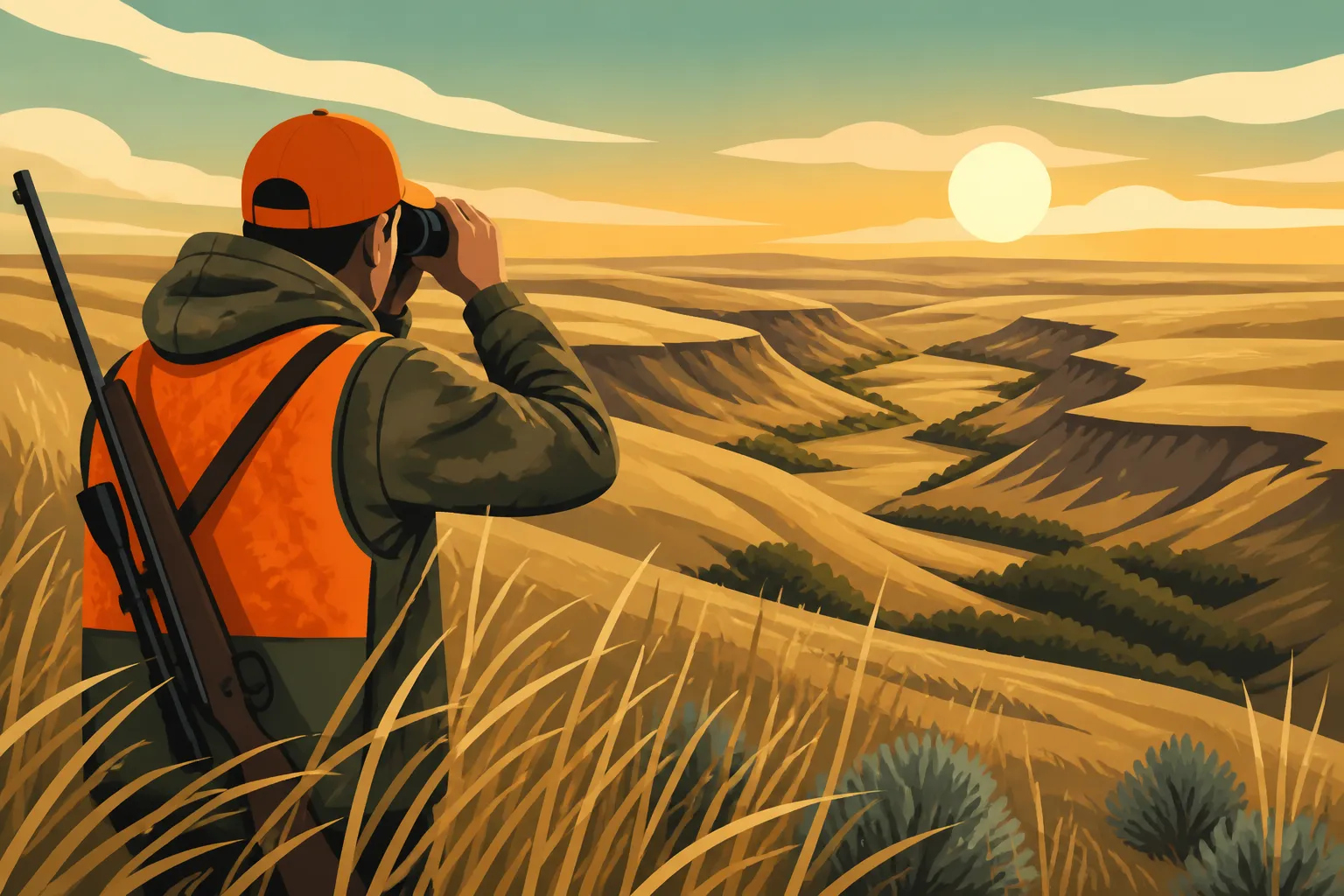
Spot-and-stalk can also be deadly in coulees, particularly for mule deer that prefer the more open, grassy slopes. Glassing a Saskatchewan Coulee for Mule Deer is an invaluable resource for mastering this technique. You might glass from a high point on the prairie, spotting deer bedded in the coulee below. Once spotted, the challenge becomes using the coulee's broken terrain to close the distance without being seen. This requires extreme patience, careful planning of your route, and often involves crawling or taking long detours to stay out of sight and maintain a favorable wind direction. It's physically demanding but can be incredibly rewarding.
Stand Hunting and Ambush Points
While many think of stands as purely for timber hunting, they can be highly effective in certain coulee situations. Look for natural pinch points where a coulee narrows, forcing game through a confined area. Crossings where deer move between distinct sections of the coulee or exit to access fields are also prime spots. If there's a consistent food source within the coulee, such as a thicket of berries or a particularly lush pocket of browse, a stand overlooking it can be lethal.
Ground blinds, especially pop-up models, can also be used to great effect if you can set them up quietly and well in advance of your hunt. They offer excellent concealment in the dense brush of a coulee bottom. The key is to position your stand or blind where you have good visibility along a known travel corridor, but also a solid backdrop to break up your silhouette. Remember that wind in coulees can swirl unpredictably, so always be mindful of your scent cone.
Small Group Drives
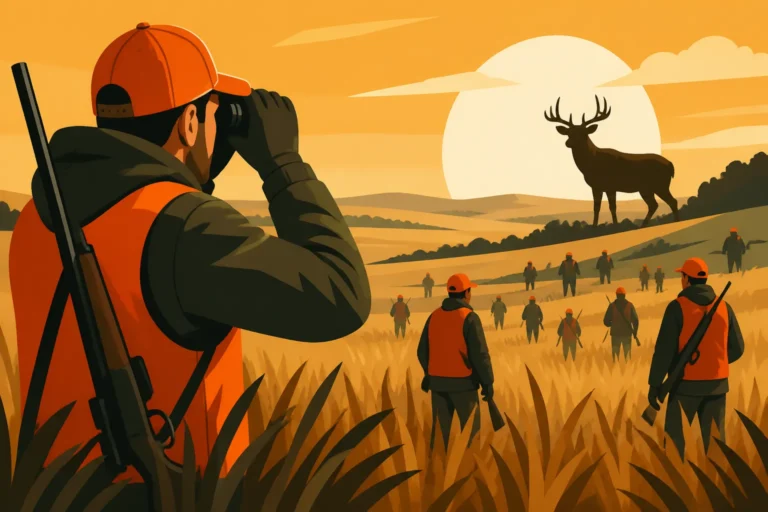
For larger coulee systems or when hunting with a group, a small, organized drive can be very effective. This isn't about running and yelling; it's about a slow, methodical push. One or two hunters act as "blockers" or "posters," positioning themselves quietly at known exit points or pinch points further down the coulee. The remaining hunters, the "drivers," then slowly and silently walk through the coulee, pushing game towards the waiting hunters.
Communication is key, especially if you're out of sight of each other. Walk slowly, pause often, and pay close attention to the wind. The goal isn't to spook deer into a panic, but to gently push them along their natural escape routes. Always ensure you know where every member of your hunting party is to maintain safety. This strategy works particularly well when targeting deer that are bedded deep within the coulee, unwilling to move into the open prairie. Hunting a Prairie Coulee Bottom explores specific tactics for driving those deep, sheltered areas.
Essential Gear and Safety in Coulees
Hunting coulees presents unique challenges, from the variable terrain to unpredictable weather and limited cell service. Being adequately prepared with the right gear and a focus on safety is paramount for a successful and enjoyable hunt.
Footwear, Optics, and Layers
Your footwear choice is arguably the most critical decision for coulee hunting. You'll be doing a lot of walking, often on uneven, steep, and potentially slippery terrain. Invest in comfortable, waterproof, high-ankled boots with excellent ankle support and aggressive traction. Nothing will ruin a hunt faster than sore feet or a twisted ankle miles from your vehicle.
Good optics are non-negotiable. A quality pair of binoculars (10×42 or 10×50 are popular choices) is essential for picking apart distant slopes, identifying game, and spotting subtle movements in the brush. A spotting scope can also be a huge asset if you plan on extended glassing sessions from a high vantage point overlooking a large coulee system. For cold weather hunts, consider binoculars with good low-light performance to extend your hunting hours at dawn and dusk.
Layering your clothing is vital for Saskatchewan's notoriously fluctuating weather. You might start a November morning at -20°C and see it warm up to 0°C by afternoon, only to have a sudden snow squall roll in. Start with a moisture-wicking base layer, add insulating mid-layers like fleece or down, and top it with a windproof and waterproof outer shell. Don't forget a warm hat, gloves, and neck gaiter. When you’re still-hunting, you’ll generate heat, but when you stop to glass or sit on a stand, the cold can set in quickly.
Communication and Emergency Preparedness
Cell service in many remote coulee areas across Saskatchewan can be spotty or non-existent, which is a serious safety concern. Always carry a reliable form of off-grid communication, such as a satellite messenger (like an inReach or Zoleo) or a two-way radio if hunting with partners. Share your hunting plan and estimated return time with someone reliable back home, even if it's just a text message outlining your general area.
Your emergency kit should be robust. Beyond the standard first-aid supplies, consider adding items specific to coulee hunting: a headlamp with spare batteries, a fire starter, a compass and physical map (even if you use GPS, batteries die!), a knife, high-energy snacks, and extra water. If you plan to be out all day, especially in colder weather, a small insulated thermos with a hot drink can be a huge morale booster. Hunting Saskatchewan Winter Weather Safely provides additional crucial advice for staying safe in the province's colder months.
Game Retrieval and Meat Care
Coulees, by their very nature, make game retrieval challenging. If you successfully take an animal deep within a coulee, getting it out can be a monumental task. Think about how you’ll get it back to your vehicle before you pull the trigger. Consider carrying a game cart if the terrain allows, or be prepared for quartering the animal and making multiple trips.
Once the animal is down, proper meat care is essential, especially in Saskatchewan's often fluctuating temperatures. Field dress the animal quickly and efficiently to allow the carcass to cool down. If temperatures are warm, consider quartering the animal and getting the meat into game bags immediately, hanging it in the shade if possible, or getting it directly to a cooler. If it's cold, you have a bit more time, but still want to ensure rapid cooling to preserve the meat quality. Meat Care in Saskatchewan's Cold Snaps offers detailed guidance on how to manage your harvest in various weather conditions common to Saskatchewan. This preparation will not only make the hunt more enjoyable but also ensure you're able to fully utilize your hard-earned harvest.
| Coulee Hunting Strategy | Ideal Scenario | Pros | Cons |
|---|---|---|---|
| Still-Hunting | Solo hunter, dense cover, moderate wind | Stealthy, adaptable, covers ground slowly | Physically demanding, requires patience, limited visibility |
| Spot-and-Stalk | Open coulee slopes, mule deer, patient hunter | Highly effective for visible game, engaging | Requires excellent glassing, physically demanding, wind-dependent |
| Stand Hunting | Known pinch points, consistent game movement | Passive, allows for long sits, good concealment | Limited mobility, wind direction critical, cold on long sits |
| Small Group Drive | Large coulee systems, multiple hunters | Efficient for pushing out bedded game, covers large areas | Requires coordination, communication, safety concerns |
Disclaimer
This article is for general informational purposes only and does not constitute professional advice. Laws, prices and regulations vary by location and change over time. Consult a qualified professional for guidance on your specific situation.