Hunting a River Break Above the Valley
Many hunters in Saskatchewan tend to stick to what they know – the familiar field edges, the easily accessible bluffs, or the vast stretches of boreal forest. But there's a whole world of challenging yet incredibly rewarding hunting grounds often overlooked: the river breaks above the valley. These steep, rugged landscapes can look daunting, and honestly, they are a lot of work. But for those willing to put in the effort, they offer unparalleled opportunities for mature game. This guide will help you understand, scout, and successfully hunt these unique and often ignored stretches of Saskatchewan.
The Allure of River Breaks: Why Game Seeks Sanctuary Here
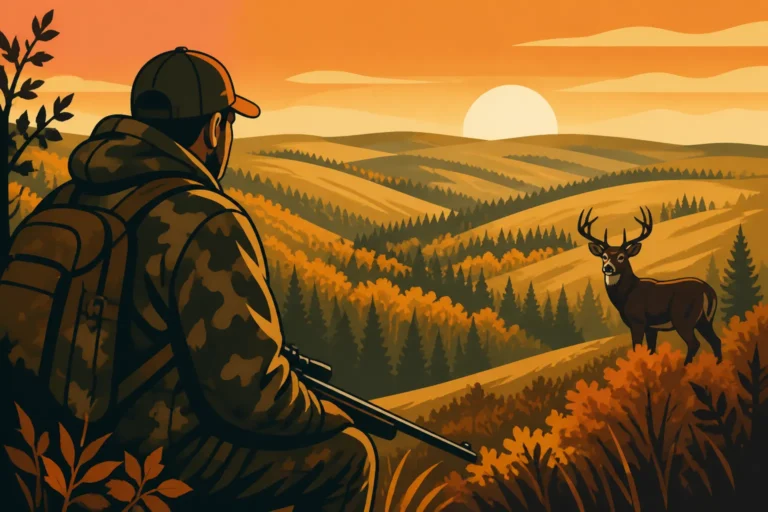
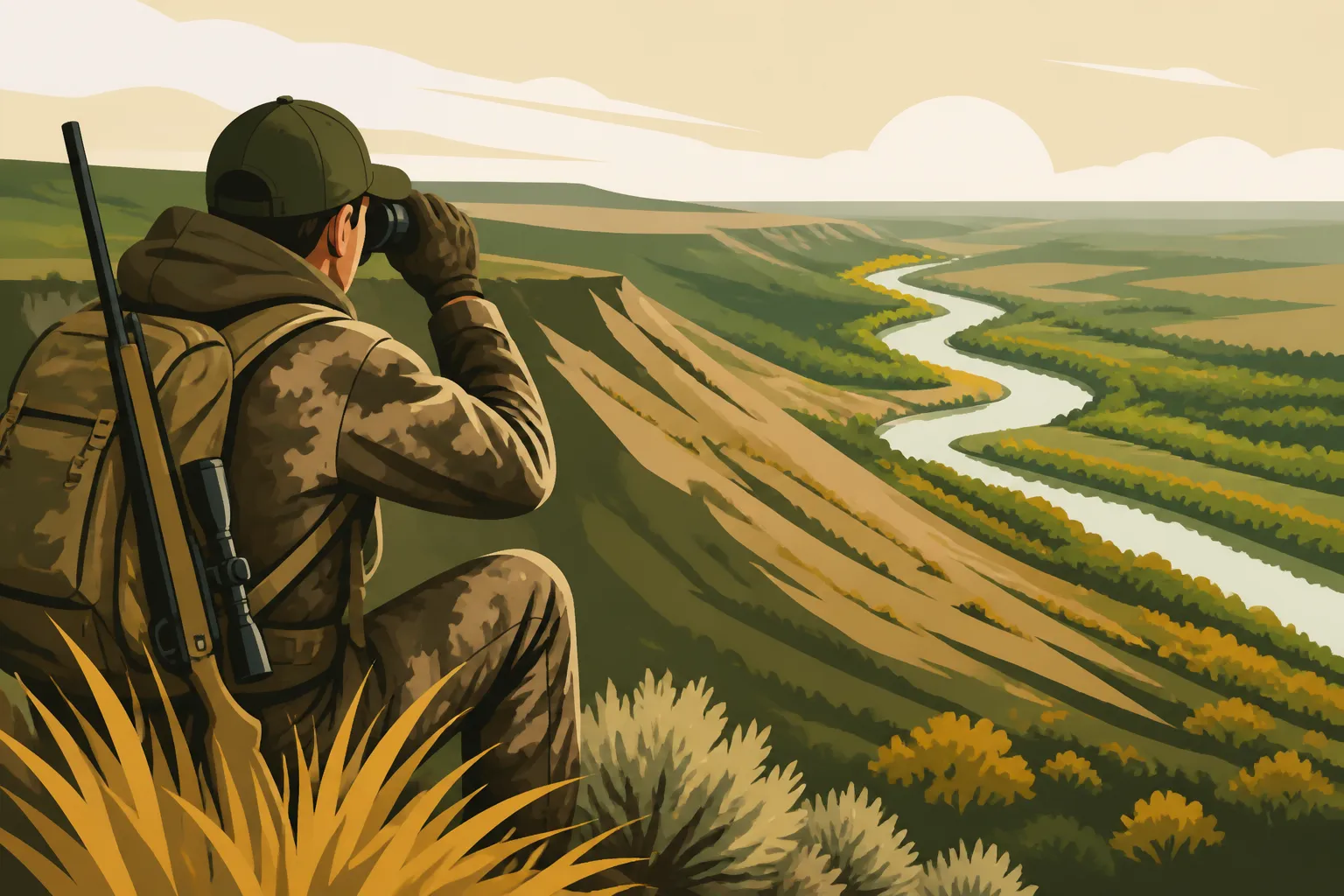
When we talk about a "river break," we're generally referring to the steep, often heavily treed or brushy slopes that rise abruptly from a major river or creek valley. Think of the valleys carved by the Saskatchewan River systems, the Qu'Appelle River, or even larger creek systems that dissect the prairie. These aren't just gentle inclines; they are dramatic changes in elevation, often with numerous draws, coulees, and natural benches that offer a complex, three-dimensional hunting environment. It’s a completely different world from a flat stubble field.
A Natural Fortress for Wary Animals
The primary reason river breaks are so appealing to big game is simple: security. The broken terrain, dense cover, and sheer difficulty of access for humans create a natural fortress. Whitetails, in particular, will seek out these areas, knowing that they can quickly disappear into a maze of ravines and thickets if disturbed. Imagine a mature buck that has survived several hunting seasons. He's learned that the easy-to-reach spots are dangerous. These river breaks offer him a place to bed down, often on a bench overlooking the valley, where he can see danger approaching from below and smell it from above, giving him the ultimate advantage.
Moose also utilize these areas, especially where the river breaks transition into more dense bush. The cover, combined with access to water and browse, makes them ideal moose habitat. You might not think of moose in such dramatic elevation changes, but they are incredibly adept at navigating steep terrain, often using the thick cover to their advantage. Hunting Saskatchewan's River Valley offers them vital thermal protection from extreme cold or heat, and the varied vegetation provides a consistent food source throughout the year.
Habitat Diversity: Food, Water, and Cover
River breaks are ecological hotspots. The varied topography often leads to a mix of vegetation – everything from deciduous trees like aspen and balsam poplar, to evergreens like spruce, depending on the region. This creates a smorgasbord of food sources, from tender new growth in spring to browse that sustains animals through the long winter. Water is, of course, readily available in the river or creek itself, but also in numerous seepages and small springs that might trickle down the slopes, creating pockets of lush growth.
The sheer complexity of the terrain means there are endless options for bedding cover. Animals can bed on sun-drenched southern slopes in cooler weather, or tuck into north-facing draws to escape the heat. They often choose benches or ridges that offer good visibility down into the valley, while keeping their backs to the prevailing wind. This isn't just a place to hide; it's a strategically chosen sanctuary. Where Saskatchewan Whitetails Bed in Snow often reveals that river breaks are prime candidates, as the deep snow can be moderated by the thermal properties of the slopes and dense tree cover.
Decoding the Landscape: Scouting a River Break for Success
Hunting river breaks successfully isn't just about showing up and hoping for the best. It requires meticulous scouting, both from your couch with maps and boots on the ground. These areas are a puzzle, and you need to understand how the pieces fit together before you can expect to find that elusive animal.
The Power of Digital Maps and Satellite Imagery
Before you even step foot in a river break, you need to spend time with digital mapping tools. Platforms like onX Hunt are invaluable here. You can toggle between satellite imagery, topo maps, and even 3D terrain views to get a comprehensive understanding of the landscape. Look for key features:
- Benches and Terraces: These flatter sections on the slopes are often primary travel routes and bedding areas. Animals will use them to traverse the break horizontally rather than constantly climbing or descending. Mark every one you see.
- Draws and Coulees: These are the drainages that cut into the main valley wall. They act as natural funnels and travel corridors, often providing sheltered access from the valley bottom to the top. Pay close attention to where these draws intersect benches.
- Pinch Points and Funnels: Any narrowing of terrain, either due to steep rock faces, dense thickets, or sharp turns in a draw, creates a pinch point where animals are forced to travel through a smaller area. These are prime ambush locations.
- Edge Cover: Look for changes in vegetation density. The edges where thick bush meets more open timber, or where a dense patch of evergreens meets deciduous trees, are often productive.
- Access Points: Identify potential routes into and out of the break. Consider where you can park and how you will approach without spooking game. Remember, just because you can get there, doesn't mean you should if it compromises your hunt.
Use the layering features of onX Hunt to your advantage. Overlaying property lines with topographical maps can help you identify legal access points and potential hunting zones, especially if the river break spans both Crown and private land. This pre-scouting will save you countless hours of wandering aimlessly on the ground. Scouting With Satellite Imagery in Saskatchewan is critical for finding the subtle nuances of these challenging areas.
Boots-on-the-Ground Reconnaissance
Once you've done your digital homework, it's time to hit the field. Ground scouting in river breaks is physically demanding but absolutely essential. You're looking for fresh sign that confirms your map theories and reveals animal activity you couldn't see from above.
- Tracks and Trails: Look for well-worn game trails. Pay attention to their direction. Do they lead to water, bedding, or feeding areas? Are they fresh? Are there multiple sets of tracks, indicating a preferred route?
- Rubs and Scrapes: These are signs of buck activity. Rubs indicate where bucks have worked their antlers, often near bedding areas or along primary travel routes. Scrapes are communication hubs. Finding a series of fresh rubs and scrapes can tell you a lot about a buck's core area and movement patterns. Reading Whitetail Sign in Saskatchewan Bluffs can give you more insights into interpreting these subtle cues.
- Bedding Areas: These are often difficult to spot, but look for flattened grass or leaves under dense cover, on benches, or at the top of a rise where an animal had a good vantage point. Often, bedding areas will have droppings nearby.
- Food Sources: Identify what natural forage is available. Are there berry bushes, aspen sprouts, or other browse species that animals are currently feeding on?
- Wind and Thermals: As you walk, pay close attention to how the wind behaves. River valleys and breaks are notorious for swirling winds and thermal drafts. Mornings often see thermals rising up the slopes as the sun warms the air, while evenings bring cooler air descending. Understanding these patterns is crucial for planning your approach and stand placement.
Remember, a good scouting trip isn't about covering as much ground as possible; it's about covering it slowly and methodically, absorbing every detail. Bring a notepad or use the waypoint feature on onX Hunt to mark every piece of sign, every potential stand location, and every challenging climb.
Strategies for Hunting River Breaks: From Still-Hunting to Stand Placement
Hunting river breaks requires adaptability and a willingness to embrace varying tactics. There's no one-size-fits-all approach, as the terrain and animal behavior will dictate your best move.
The Art of Still-Hunting
Still-hunting is often the most effective method in river breaks, especially if you prefer to be on the move. This involves moving incredibly slowly, taking a few steps, then pausing for several minutes to glass, listen, and observe. The key is to blend into the environment and be as quiet as possible.
- Wind is Paramount: Always hunt into the wind, or at least with a crosswind that carries your scent away from where you expect game to be. In swirling conditions, this becomes incredibly challenging, so choose your route carefully. A good resource like GoHunt can provide detailed wind forecasts and tools to help you visualize thermal currents, which can be a game-changer in these tricky environments.
- Use Cover to Your Advantage: The broken terrain of a river break provides ample cover. Stick to dense timber, the backside of ridges, and the bottoms of draws to conceal your movement.
- Eyes and Ears: Scan constantly, not just for the whole animal, but for parts – an antler tip, the flick of an ear, a patch of hide. Listen for subtle sounds – a twig snap, a rustle in the leaves, the distant sound of a branch breaking.
- Timing: Early mornings and late evenings are prime times, as animals are often on the move between bedding and feeding areas. During the middle of the day, focus on dense bedding areas where they might be bedded tight.
- Expect Close Encounters: The thick cover and broken terrain often lead to close-range opportunities. Be ready to shoot quickly and confidently.
Strategic Stand Placement
While still-hunting is excellent, sometimes a well-placed stand is the ticket, especially during the rut or in specific high-traffic areas. The challenge is getting into and out of these spots undetected, and dealing with thermals.
- Locating Funnels: Look for natural funnels created by terrain features. A narrow saddle between two steep hills, a dense strip of timber along a bench, or a crossing point in a draw are all excellent candidates. Animals will often choose the path of least resistance.
- Thermal Consideration: This is critical. For morning hunts, consider setting up lower on the slope so your scent is carried up by rising thermals. In the evening, set up higher, allowing your scent to be carried down the slope by descending air. This isn't foolproof due to swirling winds, but it's a good general rule.
- Access Routes: Plan your entry and exit routes meticulously. Can you get to your stand without crossing major game trails or walking directly into bedding areas? Is there a subtle way to access it, perhaps using a secondary draw or ridge? Hanging a Stand on a Saskatchewan Bush Edge applies well here, as the edge of a river break's cover against more open terrain can be a hotspot.
- Blind Type: Both treestands and ground blinds can work. Treestands offer a better vantage point over thick brush, but getting them into steep, rugged terrain can be a monumental task. Ground blinds can be quicker to deploy and offer excellent concealment if placed carefully.
The rut can be particularly exciting in river breaks. The challenging terrain can make bucks feel secure, and they might be more willing to move in daylight. Using calls or rattling can be effective, but understanding how sound travels in the broken topography is crucial. Rattling Volume in Open Parkland gives insights into how sound carries, but in a river break, sounds can be muffled or distorted by the hills and draws. Experiment with softer calls initially.
Here's a quick comparison of tactics in river breaks:
| Tactic | Best For | Advantages | Challenges | Key Considerations |
|---|---|---|---|---|
| Still-Hunting | Actively searching, thick cover, unfamiliar areas | Flexible, covers more ground, adaptable | Physically demanding, requires patience and quietness | Wind direction, scent control, slow methodical movement |
| Treestand | Known travel routes, funnels, bedding edges | Elevated vantage, scent dispersal, comfortable | Heavy to pack in, limited mobility, thermal drafts | Access route, wind patterns, sturdy trees for setup |
| Ground Blind | Dense cover, pinch points, difficult trees | Excellent concealment, quick setup, good shelter | Limited visibility, easily busted by swirling wind | Placement for maximum visibility, wind direction, scent |
Patience and Persistence
Ultimately, hunting river breaks is a test of patience and persistence. You might not see animals constantly, but the ones you do encounter are often mature and challenging to get a shot at. Don't get discouraged if you spend hours without seeing anything. The animals are there; they are just masters of their environment. Stick to your plan, trust your scouting, and be ready when the opportunity arises. Hunting a Saskatchewan Bush Bluff also relies heavily on patience and understanding the terrain, much like river breaks.
Essential Gear and Safety in Steep Terrain
The rugged nature of river breaks demands specific gear and a heightened awareness of safety. It's not the place to skimp on preparation.
Gear for the Grind
- Footwear: This is arguably the most critical piece of gear. You need sturdy boots with excellent ankle support and aggressive tread for traction on steep, loose slopes. Waterproofing is a must, as you'll likely encounter wet draws and slippery terrain. Don't skimp here; your feet will thank you.
- Layered Clothing: Climbing steep hills will make you sweat, even in cold weather. Sitting still on a stand will chill you quickly. A good layering system allows you to adjust your clothing to match your activity level and the changing conditions. Synthetic base layers, fleece mid-layers, and a waterproof/windproof outer shell are ideal.
- Navigation Tools: While onX Hunt on your phone is excellent, always carry a backup. A dedicated GPS unit or a physical compass and map are vital. Cell service can be spotty or nonexistent in river valleys, so make sure your digital maps are downloaded for offline use.
- First Aid Kit: A well-stocked first aid kit is non-negotiable. Sprains, cuts, and scrapes are common in steep, uneven terrain. Make sure it includes items for blisters, pain relief, and any personal medications.
- Water and Snacks: Physical exertion means you'll need more hydration and fuel. Carry plenty of water and calorie-dense snacks to keep your energy up throughout the day.
- Game Recovery Gear: If you're successful, getting an animal out of a river break can be a monumental task. Consider bringing a sturdy game cart (though some terrain might make it impossible), a good quality game bag, rope, and a sharp knife. Field Dressing in Saskatchewan's Deep Cold is especially challenging in such remote, steep areas.
Safety First
Hunting in river breaks presents unique hazards. Taking precautions can prevent a bad day from turning into a disaster.
- Hunt with a Partner: Whenever possible, hunt with at least one other person. If someone gets injured, having help is invaluable.
- Leave a Plan: Always tell someone where you're going, your planned route, and when you expect to return. This is crucial in areas with no cell service.
- Stay Found: The broken terrain can be disorienting. Pay attention to landmarks, use your GPS frequently, and mark your entry point. Don't push too far into unfamiliar territory, especially late in the day.
- Mind Your Step: Watch for loose rocks, unstable ground, slippery leaves, and hidden holes or logs. A twisted ankle or a fall can quickly become a serious emergency.
- Awareness of Wildlife: River breaks are wild places. Be aware of other wildlife, including bears and moose. Carry bear spray if you're in bear country, and know how to react to different animal encounters.
- Weather Watch: Weather can change quickly, especially in the fall. Be prepared for sudden temperature drops, rain, or even early snow. Hunting Saskatchewan Winter Weather Safely emphasizes the importance of preparing for rapid changes in conditions that can affect mobility and safety in rugged terrain.
- Emergency Communication: A satellite messenger or personal locator beacon (PLB) can be a lifesaver in areas without cell service. Brands like Garmin inReach or Zoleo offer devices that allow two-way messaging and SOS functions.
Hunting a river break above the valley is not for the faint of heart, but it offers a profound sense of accomplishment and the chance to encounter truly magnificent animals in their natural element. It's a hunt that demands respect for the land, meticulous preparation, and a healthy dose of perseverance.
Disclaimer
This article is for general informational purposes only and does not constitute professional advice. Laws, prices and regulations vary by location and change over time. Consult a qualified professional for guidance on your specific situation.