Hunting a Willow Ring Around a Pothole
It’s easy to drive past those scattered potholes across the Saskatchewan landscape, dismissing them as just another duck pond or a messy tangle of willows. You might be focused on the big bush blocks or the vast crop fields, but let me tell you, overlooking these seemingly small, isolated willow rings can be a huge mistake. Many hunters miss out on incredible opportunities because they don't realize these pockets of cover are absolute magnets for big game, especially in the open prairie and parkland. This guide will walk you through how to pinpoint, scout, and effectively hunt these often-underestimated havens for whitetails, mule deer, and even the occasional moose, ensuring you don't drive past your next trophy.
Why Willow Rings Are Such Powerful Magnets for Game
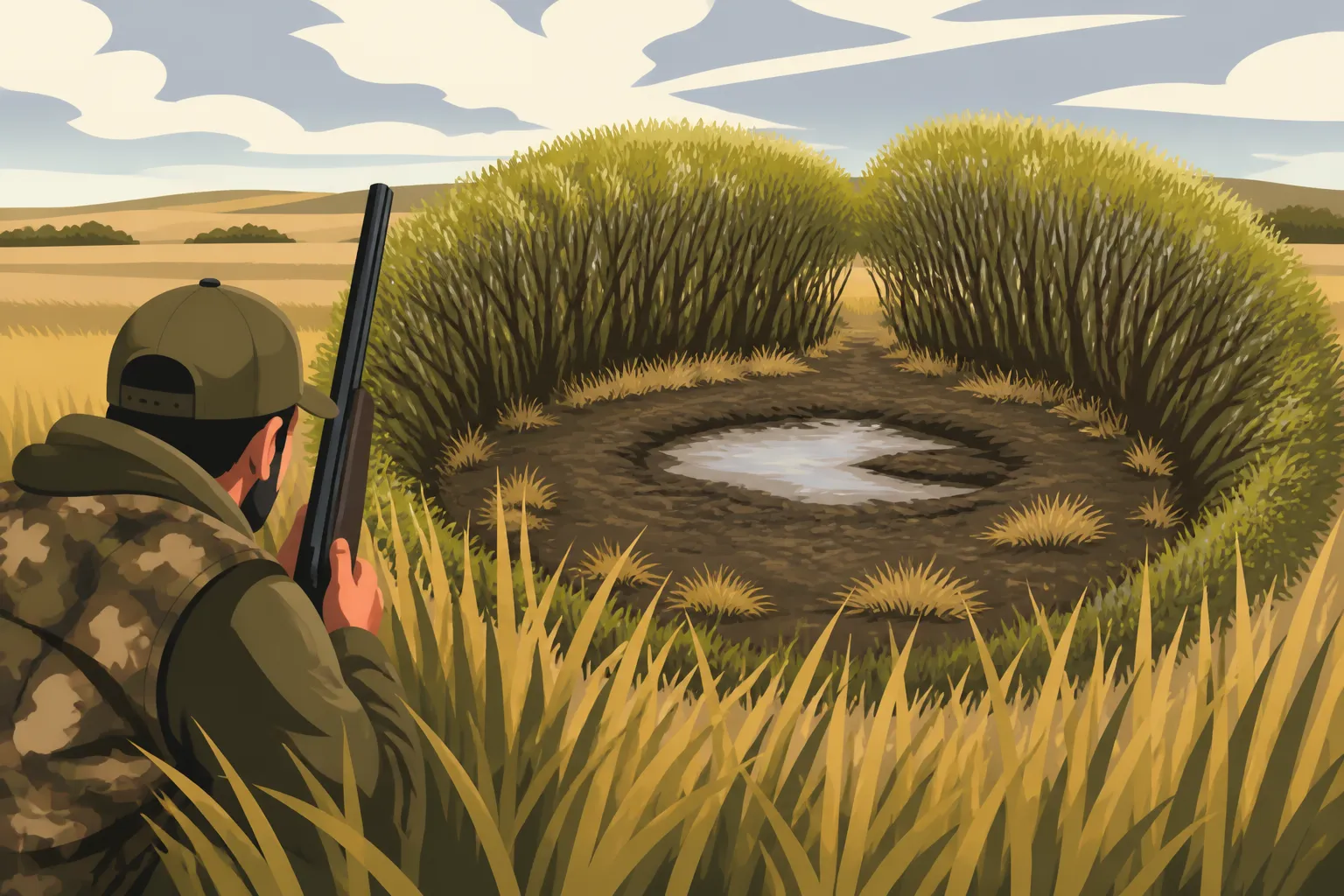
When you're out driving the grid roads, you see them everywhere: a depression in the landscape, often holding water, fringed by a dense growth of willows. These "willow rings around potholes" might look insignificant, but to a deer, they represent everything good in a landscape that can often be sparse on cover. Think of them as miniature oases in a big, open world, providing a critical mix of resources that big game animals absolutely crave.
The Essential Elements of Cover, Food, and Water
First and foremost, these willow rings offer unparalleled cover. In vast stretches of open stubble, pasture, or even lightly treed parkland, a dense thicket of willows, often grown tall and tangled, provides visual security from predators and hunters alike. Deer, in particular, will seek out these spots to bed down during the day, feeling safe and hidden. This cover isn't just visual; it also offers fantastic thermal protection. On a scorching September day, those willows provide crucial shade. In the biting cold of a November rut hunt, they break the wind and can even hold pockets of slightly warmer air, a real game-changer for an animal trying to conserve energy. This is especially true for Hunting Saskatchewan Winter Weather Safely where conserving warmth is critical.
Beyond just cover, these areas are often rich in food. Willows themselves are a preferred browse for both deer and moose, especially in winter when other forage is scarce. The edges of the pothole, where the water meets the dry ground, often host a variety of grasses, forbs, and other palatable vegetation. And let's not forget the surrounding agricultural fields. If that willow ring is nestled within or on the edge of a pea, lentil, or canola field, it becomes a crucial staging area. Deer will bed in the willows all day, then slip out at dusk to feed in the crops, reversing the process at first light.
And then there's water. Even if the pothole is dry for part of the year, the ground around a willow ring tends to hold moisture longer, often creating lush pockets of vegetation that draw in game. A reliable water source is paramount for all wildlife, and these potholes, whether full or holding residual moisture, offer just that. This convergence of cover, food, and water makes them irresistible.
Crucial Travel Corridors and Staging Areas
It's not just about what they offer intrinsically; it's also about their role in the larger landscape. Many willow rings act as vital travel corridors or checkpoints for game moving between larger blocks of cover or feeding areas. Imagine a deer needing to move from one bluffy section of a quarter to another across an open field. That isolated willow ring becomes a logical, safe stopping point, a place to pause, assess the surroundings, and perhaps even grab a quick browse before continuing. They'll often use these small pockets as temporary sanctuaries during daylight hours before committing to a larger, more exposed movement.
During the rut, these willow rings become even more active. Bucks will cruise these edges, scent-checking for does, rubbing their antlers on the willow stems, and leaving scrapes. A mature buck might push a doe into a dense willow ring for a few hours of seclusion before moving on. For anyone interested in Hunting the Rut in Early to Mid November, these small, hidden spots are absolutely key to watch. In vast open areas, they stand out as the only real security a deer can find, concentrating movement and making them predictable ambush points if you play your cards right.
Mastering the Art of Scouting These Pothole Sanctuaries
You can't just stumble into a willow ring and expect success. These spots, while small, demand meticulous scouting. Understanding how game uses them and where they funnel movement is the key to unlocking their potential. This isn't just about finding tracks; it's about interpreting the story the land tells you.
From Your Armchair to Boots on the Ground
Before you even step foot in the field, fire up your mapping apps. Tools like onX Hunt are invaluable for identifying these potholes from above. Look for clusters of cover, especially isolated ones surrounded by open fields or sparse pasture. Pay attention to the topography – are there subtle draws or low spots connecting multiple potholes? These might be hidden travel routes. Mark potential bedding areas within the densest cover and note any nearby crop fields that would provide a food source. GoHunt also provides excellent resources for understanding species distribution in various zones, helping you prioritize which areas might hold the game you’re after. Scouting With Satellite Imagery in Saskatchewan can literally save you miles of walking.
Once you have a few spots marked, it's time for boots-on-the-ground scouting. Approach these willow rings cautiously, especially during the off-season or just before hunting pressure sets in. Walk the perimeter, looking for fresh tracks entering and exiting the thicket. Pay close attention to the size and depth of the tracks – are they fresh deer tracks, maybe a larger buck? Are there distinct trails beaten down through the willows? These are highways for deer.
Next, venture into the willow ring itself, but do so strategically and with the wind in your favor to avoid spreading your scent. Look for rubs on the thicker willow stems, especially along the edges. Find scrapes where bucks have cleared away leaves and urinated, leaving their calling card. Most importantly, look for bedding areas. These will often be flattened-down spots in the densest part of the willows, perhaps with some droppings nearby. Note the direction the beds are facing; deer often bed facing downwind or towards open areas to catch scent and see predators approach. Reading Whitetail Sign in Saskatchewan Bluffs shares similar principles you can apply here.
Understanding Game Movement Patterns
The way animals utilize these willow rings changes with the time of day, weather, and season. In the early morning, deer will typically be retreating from feeding in nearby fields, heading towards the security of the willows to bed down for the day. This makes the trails leading into the ring prime ambush spots at first light. Conversely, in the late afternoon, they'll be staging within the willows, perhaps getting a quick browse, before venturing out to feed. The trails leading out of the ring towards fields are your best bet in the evening.
Wind direction is paramount. Deer will almost always try to use the wind to their advantage, either bedding in a spot where the wind carries scent from potential threats, or approaching a feeding area with the wind in their face. Understanding the prevailing winds and how they swirl around these small pockets of cover is critical for stand placement.
Consider the time of year too. In September, during the early archery season When Saskatchewan's Archery Season Opens, deer might be less concentrated, but these spots still offer refuge from heat and insects. As the rifle season approaches, and especially during the November rut, these spots become increasingly important as bucks travel more and seek out does. Deep snow will also push deer into the thickest cover available, making these willow rings even more valuable.
Strategic Hunting Approaches for Pothole Willow Rings
Once you’ve identified a promising willow ring and understand how game uses it, it’s time to formulate your hunting strategy. These small, often isolated pockets of cover require a nuanced approach, blending patience, stealth, and a keen understanding of wind and animal behavior.
Optimal Stand Placement and Ground Blind Tactics
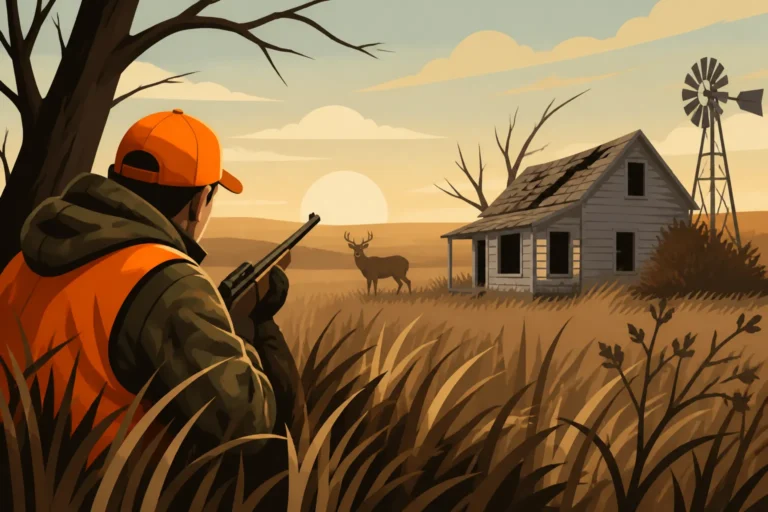
For stationary hunting, you have two primary options: a tree stand or a ground blind. If there's a mature enough tree on the edge of the willow ring, or even within it, a tree stand offers a fantastic vantage point. From above, you can often see into the denser parts of the willows, identifying bedding areas or trails that are obscured from ground level. Position your stand to overlook the main entry/exit trails and any well-used rubs or scrapes. Crucially, set up so the prevailing wind carries your scent away from where you expect deer to approach or bed. An ideal setup allows you to see the deer before they see or smell you. Remember the principles of Hanging a Stand on a Saskatchewan Bush Edge, even in smaller patches of cover.
More often, tree options will be limited, making a ground blind an excellent alternative. Portable ground blinds offer flexibility, allowing you to set up quickly and adapt to changing conditions. When placing a ground blind, integrate it as naturally as possible into the existing cover. Use natural vegetation to brush it in, breaking up its outline. Place it downwind of the most active trails or bedding areas. If possible, set it up a few days in advance to allow animals to get accustomed to its presence. This also allows time for any residual human scent to dissipate. Sitting still and being patient in a ground blind, especially in cold weather, requires robust gear. Consider what you’d use for Sitting All Day in a Saskatchewan Blind.
No matter your choice, your entry and exit routes are paramount. These small spots are easily compromised. Plan your approach to avoid crossing open fields in daylight, and ensure your scent isn't being blown into the hunting area. Use natural ditches, tree lines, or the cover of darkness to your advantage.
Still-Hunting and Spot-and-Stalk Considerations
While stands and blinds are excellent for ambushing, still-hunting or spot-and-stalk tactics can also be effective, especially for mule deer or when you want to actively search for bedded animals. Still-hunting involves slowly, quietly moving around or through the willow ring, pausing frequently to glass ahead and listen. Take five steps, stop for five minutes. This slow pace allows you to observe deer before they detect you. Move into the wind, taking advantage of any small rises or denser sections of willows for cover. Pay attention to subtle movements, ear flickers, or the flick of a tail. This can be especially productive when hunting for a specific bedded buck.
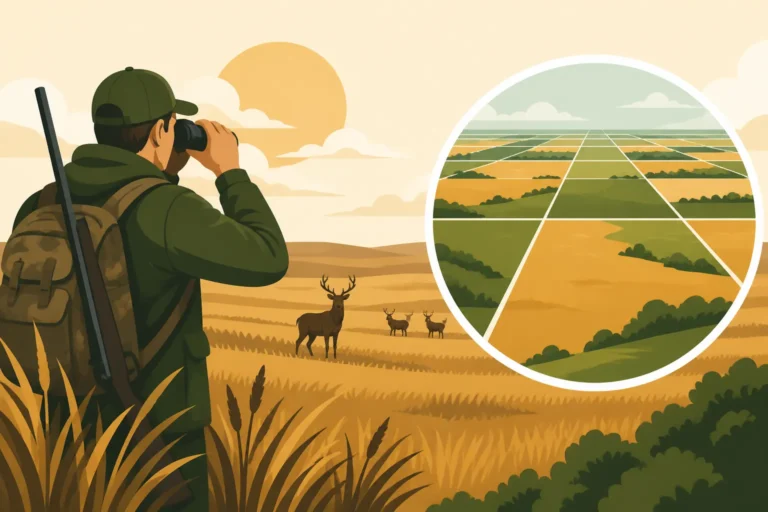
For spot-and-stalk, particularly for mule deer that might be bedded in an isolated willow ring on the open prairie, you'll need good optics. Use binoculars or a spotting scope from a distance to locate the animal. Once spotted, carefully plan your approach, using every fold in the terrain, every fence line, and every bush to shield your movement. The challenge in open country is often the lack of continuous cover. A willow ring can offer that critical last bit of concealment needed to close the distance. Hunting Mule Deer in Prairie Coulees shares strategies for glassing and approaching in broken terrain that are adaptable here.
Species-Specific Tactics and Broader Considerations
While the general principles of hunting willow rings apply across species, tailoring your approach to the specific game you're after can significantly increase your success. Understanding the nuances of how whitetails, mule deer, moose, and even predators utilize these pockets will make you a more effective hunter.
Targeting Whitetails and Mule Deer
Whitetails are arguably the most common big game animal you'll find in these willow rings, especially in the aspen parkland and farmland zones. They use these spots primarily for bedding during the day and as staging areas before moving out to feed in crop fields at dawn and dusk. During the rut, these become prime cruising lanes for bucks searching for does.
- Tactics: Focus on entry and exit trails. Set up a stand or blind covering these trails. During the rut, consider rattling or grunt calls from the edge of the willow ring, especially on days with good wind. Bucks might respond, thinking another buck is challenging them or a hot doe is nearby. Remember that Grunt Calls Late in Saskatchewan's Rut can be highly effective. Early season, focus on shaded, dense pockets within the willows during midday to catch a bedded buck. Late season, when fields are harvested and snow is on the ground, these willow rings become critical food sources as well, with deer browsing the willow stems.
Mule Deer on the other hand, are more likely to be found using these spots in the more open, southern prairie regions. They are less reliant on dense cover for travel, often moving across open ground, but an isolated willow ring provides crucial bedding cover where other options are scarce. A mature mule deer buck might bed in the middle of a small willow ring, keeping an eye on the open country around him.
- Tactics: Spot-and-stalk is often the most effective method for mule deer here. Use high-quality optics from a distance to find bedded bucks. Once located, plan a meticulous stalk using any available topography or vegetation. If the willow ring is truly isolated, you might be able to circle it at a distance, using the willows themselves for cover until you get into a shooting position. Avoid pushing a mule deer out of a willow ring, as they often bound off into the open, making a follow-up shot difficult.
Considering Moose, Waterfowl, and Predators
While not their primary habitat, you might occasionally find moose utilizing larger willow rings, especially if there's abundant water and preferred browse. In some Hunting Farmland Moose Around Saskatchewan Sloughs scenarios, these larger willow pockets can be surprisingly productive. Moose are often drawn to the water itself and the succulent growth found around the edges of potholes. If you're seeing moose sign, be prepared for a close encounter and a lot of thick cover.
Of course, potholes are synonymous with waterfowl. While your focus might be big game, be mindful of waterfowl season dates and regulations if you're hunting in areas heavily used by ducks and geese. You don't want to disturb a duck hunter's spread, and vice-versa. Often, early morning big game hunting can coincide with waterfowl activity. For those interested in Pothole Hunting Prairie Ducks, these are prime areas.
Finally, these willow rings are also hotspots for predators, particularly coyotes. The same features that attract big game (cover, food, travel routes) also attract coyotes, who are opportunistically hunting smaller game or scavenging. If you're hearing coyotes, or seeing their tracks and scat, you might consider spending some time calling them. Calling Coyotes at First Light from the downwind side of a willow ring can be a very effective strategy, as they often use these pockets for bedding during the day.
Hunting a willow ring around a pothole requires adaptability. The specific species, the time of year, and the surrounding landscape will all dictate your best approach. By understanding these variables and honing your scouting and hunting skills, you can turn these overlooked spots into some of your most productive hunting grounds.
| Species | Primary Use of Willow Ring | Key Hunting Tip |
|---|---|---|
| Whitetail Deer | Bedding, staging, rut cruising, feeding | Focus on entry/exit trails at dawn/dusk; use calls during the rut. |
| Mule Deer | Isolated bedding cover in open country | Spot-and-stalk from a distance; use terrain for concealment on approach. |
| Moose | Browse, water access (larger rings only) | Look for fresh browse lines and large tracks; be ready for close-quarters hunting. |
| Coyotes | Resting, hunting smaller game, travel | Call from downwind early morning/late evening; look for tracks and scat. |
| Waterfowl | Nesting, resting, feeding (in the water) | Be mindful of waterfowl hunters; check migratory bird regulations. |
Disclaimer
This article is for general informational purposes only and does not constitute professional advice. Laws, prices and regulations vary by location and change over time. Consult a qualified professional for guidance on your specific situation.