Hunting a Jack Pine Ridge Up North
Hunting in northern Saskatchewan is an experience like no other, but it comes with its own unique set of challenges and rewards. One of the most intriguing and often overlooked types of terrain up there is the jack pine ridge. These aren't your open prairie fields or sprawling aspen parkland bluffs; they're dense, often isolated pockets of coniferous forest that can feel like a maze. Many hunters drive right past them, thinking they're too thick or too difficult to penetrate, but they're missing out on some incredible opportunities. This guide is going to walk you through exactly what makes jack pine ridges special, how to effectively scout them, and the best strategies to successfully hunt them for big game.
Understanding the Jack Pine Ridge Ecosystem
Before you can even think about putting boots on the ground, it’s crucial to understand what you’re up against and, more importantly, what draws the animals to these particular spots. Jack pine ridges aren't just any patch of trees; they're distinct ecological features.
What Defines a Jack Pine Ridge?
Imagine a slightly elevated stretch of land, often rocky or sandy underneath, dominated by tightly packed jack pine trees. These trees are known for their resilience, growing in areas where other species might struggle. They form a thick canopy, often creating dim, almost tunnel-like conditions below, especially in older stands. The undergrowth can vary, from sparse needles to dense Labrador tea, blueberries, or even thick tangles of deadfall. These ridges often stand out visually from surrounding muskeg, poplar bluffs, or more mixed boreal forest, appearing as darker, more uniform green stripes on the landscape. They might run for miles or exist as isolated islands in a sea of different vegetation, making them crucial navigation points.
What you'll notice right away when you step into one of these areas is the quiet. The dense pines muffle sound, and the ground, often covered in a thick carpet of needles, can be surprisingly soft underfoot, making for quiet stalking if you’re careful. The elevation, even if subtle, is key; it means these areas are often drier than the surrounding lowlands, making them attractive bedding and travel corridors, especially during wet periods or when snow is deep.
Why Deer, Moose, and Bear Love Them
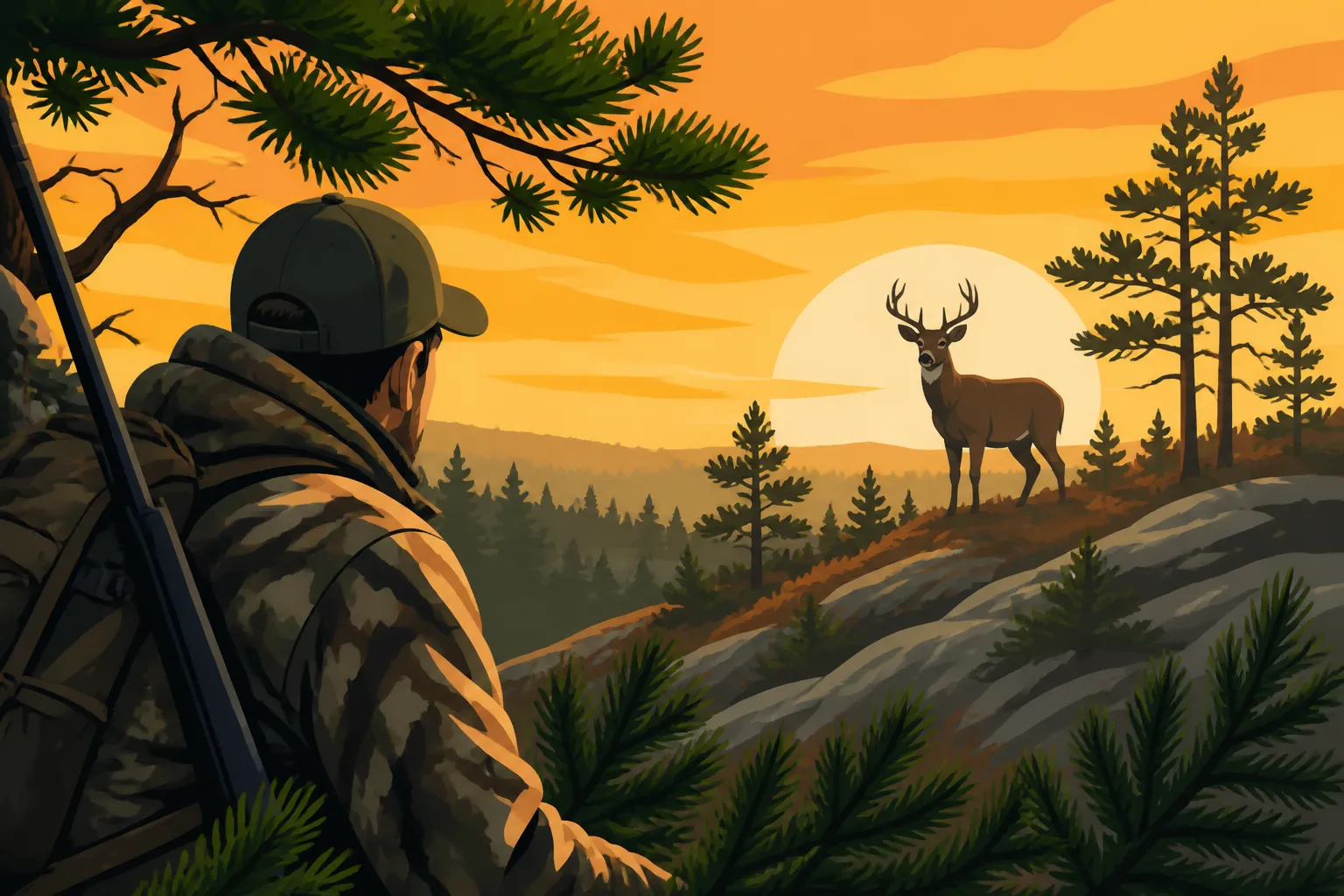
Jack pine ridges are not just pretty scenery; they are vital habitats for many of Saskatchewan's big game species, particularly white-tailed deer, moose, and black bears. For white-tailed deer, these dense stands offer incredible security cover. A big buck can melt into a jack pine thicket and vanish, seemingly into thin air. The tight growth provides excellent thermal cover, protecting deer from brutal winter winds and heavy snow, allowing them to conserve energy. During the rut, these areas can be major staging grounds, with bucks cruising the edges, looking for does. Hunting Whitetails in Saskatchewan's Forest Fringe often involves navigating these kinds of dense pockets.
Moose, while often associated with willow bottoms and water, also use jack pine ridges, especially those bordering wetlands or burns. The higher ground provides a dry place to bed down, and the dense cover offers concealment. They might browse on undergrowth or use the edges for travel between feeding areas. For black bears, these ridges are a goldmine. The thick cover offers perfect denning sites and security, especially for sows with cubs. Bears will frequent these areas for berries in the summer and fall, and the dense pine stands provide excellent ambush cover when they're looking to intercept other game. Black Bear Hunting in Saskatchewan often takes place in country much like this.
Seasonal Changes and Animal Movement
The way animals use jack pine ridges shifts dramatically with the seasons. In early fall, during the archery opener, these ridges provide cool, shaded bedding for deer and bears as temperatures can still be quite warm. Deer might move through them in the early morning and late evening, heading to feeding areas on adjacent farm fields or clearings. As the season progresses into late fall and early winter, these ridges become even more critical.
When snow starts to accumulate, the elevated, drier ground of a jack pine ridge offers easier travel compared to deeper snow in lower areas. The dense canopy catches a lot of the snow, creating shallower conditions underneath, which makes it easier for deer to move and for moose to conserve energy. This is particularly true during late season cold snaps. During the peak of the Hunting the Rut in Early to Mid November, bucks will use these ridges as highways, scent-checking for does, rubbing trees, and making scrapes. It's not uncommon to find heavily used trails and rub lines weaving through the densest parts of a ridge, especially along the edges where they meet other habitat types.
Scouting and Planning Your Hunt
Hunting a jack pine ridge successfully starts long before you ever set foot in the bush with your rifle or bow. It requires diligent scouting, both from afar and on the ground.
Pre-Season Intelligence: Maps and Tools
Modern mapping tools are an absolute game-changer for hunting jack pine ridges. Apps like onX Hunt or other similar digital mapping platforms allow you to zoom in and identify these unique habitat features from the comfort of your home. Look for darker green, uniform patches that appear slightly raised. Compare satellite imagery from different seasons if available – winter imagery can sometimes reveal game trails more clearly. You'll want to layer topographical maps to identify subtle elevation changes that might indicate a ridge.
Identifying land ownership is paramount, especially when hunting the forest fringe where Crown land can butt up against private property. onX Hunt is particularly useful for this, showing property lines and public land boundaries. Pay attention to access points: are there old logging roads, cutlines, or pipelines that run adjacent to or through the ridge? These can be critical entry and exit points. Consider areas where a jack pine ridge might narrow, creating a natural funnel, or where it comes close to a water source or a major feeding area like an agricultural field or recent burn. Understanding Reading Saskatchewan Crown Land Layers on onX is a skill that will pay dividends when dissecting these areas remotely.
Boots on the Ground: Reading Sign
Once you've identified promising jack pine ridges on your maps, it's time to hit the ground. This is where you connect the dots between the digital world and reality. Walk the edges of the ridge first. Look for well-worn game trails leading in and out of the dense cover. These trails will often be most evident where the jack pines meet an open area, a muskeg, or a mixed forest stand.
Once you enter the ridge, move slowly and deliberately. Look for fresh tracks, especially larger deer tracks from mature bucks. Jack pines are excellent for showing rubs – look for small saplings and trees with bark rubbed off at buck-shoulder height. Scrapes might be harder to find deep within the dense pine needles, but they will be present on the edges and along main travel routes. Bedding areas will be visible as flattened spots, often under the thickest canopies or on small rises within the ridge. During winter, look for thermal beds where deer have pawed away snow to get to bare ground. Reading Sign After Fresh Saskatchewan Snow can be incredibly revealing in these thick areas, as tracks and disturbances are more obvious. Note where the pines are densest and where there might be small openings or clearings – these variations can be key to animal movement.
Access Considerations
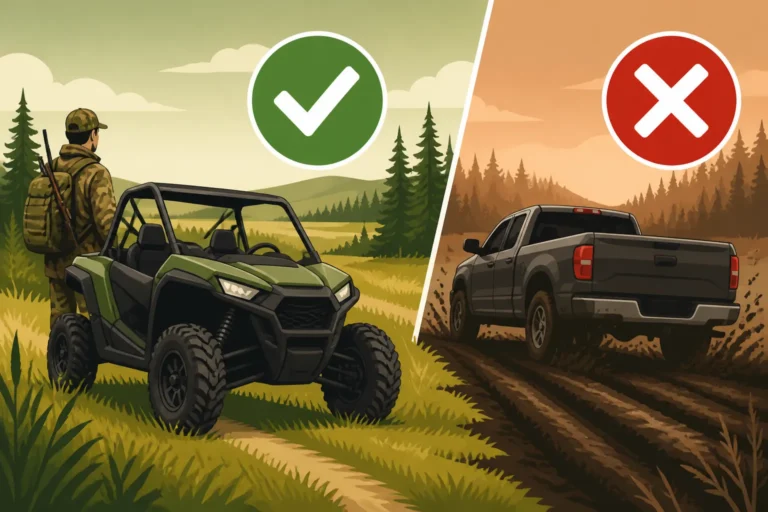
Access to jack pine ridges can range from straightforward to extremely challenging. Many ridges are accessible via grid roads, old logging trails, or even well-maintained gravel roads in northern agricultural zones. However, many more require navigating rougher terrain. If you're venturing deeper, consider the use of an ATV or side-by-side. Always be aware of Quad and Side-by-Side Rules on Crown Land and local regulations. During the late season, deep snow can make access extremely difficult, even with a capable 4×4 truck. Winter Truck Kit for a Saskatchewan Hunt becomes absolutely essential, as getting stuck far from help can be dangerous.
For truly remote ridges, you might need to hike in considerable distances, or even consider a boat access if a ridge is near a lake or major river system. Plan your entry and exit routes carefully, especially if you anticipate having to pack out an animal. Dense jack pine can be disorienting, and it's easy to get turned around, so reliable navigation is non-negotiable.
Hunting Strategies for Jack Pine Ridges
Now for the exciting part: how to actually hunt these elusive and productive areas. Whether you prefer still-hunting, stand hunting, or calling, jack pine ridges offer unique opportunities.
Still-Hunting and Stalking Tactics
Still-hunting is often one of the most effective methods in dense jack pine country. The key is to move incredibly slowly, often taking minutes to move just a few yards. Use the dense trees to your advantage, breaking up your outline and carefully scrutinizing every shadow and texture. The soft pine needle floor often allows for very quiet movement. Take two or three steps, stop, and scan. Use your binoculars to pick apart the shadows, looking for horizontal lines that don't belong (like a deer's back or a moose's leg) in a vertical world of trees. Pay attention to wind direction; in dense bush, swirling winds are common, so try to keep it in your face as much as possible, or at least quartering to you.
Stalking is similar but more focused. If you've spotted an animal or heard movement, assess the wind and terrain, then make your move. In the tight confines of a jack pine ridge, shooting lanes can be very narrow and short, so be prepared for quick, close-range shots. Practice shooting at various distances in cluttered environments to prepare for this. This isn't long-range prairie shooting; it's an intimate, up-close game.
Stand Hunting and Ambush Points
While dense, jack pine ridges do have natural funnels and pinch points that are perfect for stand hunting. Look for areas where the ridge narrows significantly, or where it crosses a small open marsh or a beaver dam. Game will often funnel through these natural bottlenecks. The edges of a jack pine ridge, where it transitions into a poplar bluff, a cutline, or an agricultural field, are prime locations. Deer will often stage in the dense pines before moving out into more open feeding areas at dusk, or retreat into them at dawn.
Setting up a tree stand or a ground blind on these edges can be incredibly effective. Make sure your stand placement offers you clear shooting lanes but also excellent concealment. Remember that animals often use the wind to their advantage, so place your stand where the prevailing wind carries your scent away from anticipated travel routes. If you're hunting an interior game trail, a well-placed ground blind tucked into a thicket can also work, just be sure to clear your shooting lanes thoroughly. Consider using a GoHunt mapping feature or similar tools to mark these potential stand sites during your scouting trips.
Calling and Rattling Considerations
The dense nature of jack pine ridges affects how sound carries, which is important for calling and rattling. Grunt calls for deer, cow calls for moose, and even predator calls for bears or coyotes, can be effective, but their range will be limited compared to open country. This means you might need to call more frequently or move more often to cover ground.
When rattling for whitetails, especially during the rut, the sound can be quite localized. If you're trying to draw a buck out of a thick pocket, a more aggressive rattling sequence might be needed, followed by patient waiting. Remember, the sound won't carry far, so you'll want to be in areas where you suspect a buck is already close. For moose, calling in a bull often involves working the edges of the jack pines, using cow calls to draw them out of surrounding cover, or using a bull grunt to challenge them within the pines. Understanding Grunt Calls Late in Saskatchewan's Rut can really make a difference.
Gear and Safety for Northern Jack Pine Hunts
Hunting these dense, northern areas demands specific gear and a strong emphasis on safety. The environment can be unforgiving.
Essential Gear for the Bush
Your gear list for a jack pine ridge hunt will differ from a prairie hunt. Layered clothing is critical, as you'll likely be moving slowly and then sitting, experiencing temperature fluctuations. Breathable, waterproof outer layers are a must to shed any precipitation and push through wet undergrowth. Good quality, comfortable boots with excellent ankle support are non-negotiable for navigating uneven terrain and deadfall.
Navigation is paramount. While your phone with onX Hunt is a powerful tool, always carry a physical map and compass as a backup, and know how to use them. A fully charged power bank for your phone is also essential. Communication devices, like a satellite messenger or a two-way radio (if hunting with a partner), are highly recommended as cell service can be spotty to non-existent in many northern Saskatchewan areas. A reliable headlamp, first-aid kit, fire-starting supplies, and a small survival kit are also critical. Don't forget proper game bags for packing out meat, as getting an animal out of a thick jack pine ridge can be a labour-intensive process.
Navigating Dense Cover and Unpredictable Weather
Getting disoriented in a dense jack pine ridge is easier than you might think. Everything looks the same, and landmarks can be few and far between. Always pay attention to your surroundings, using breadcrumbs on your GPS app or dropping small, biodegradable markers (like flagging tape, removed on your way out) to guide your way. Before you dive deep into the ridge, pick a prominent landmark outside the ridge and frequently check your compass bearing back to it.
Northern Saskatchewan weather is notoriously unpredictable. A mild fall day can turn into a blizzard overnight. Be prepared for cold, wet, and snowy conditions, even if the forecast seems favourable. Dressing for Hunting Saskatchewan Winter Weather Safely is not just about comfort; it's about survival. Always let someone know exactly where you're going and when you expect to return. If hunting alone, consider carrying a personal locator beacon (PLB) for emergencies.
Respecting the Land and Other Hunters
Saskatchewan's jack pine ridges are often on Crown land, which means they are shared resources. Always be respectful of the environment, packing out everything you pack in. Leave no trace of your presence beyond your footprints. Ensure you understand Hunting Saskatchewan's Crown Land Access rules, especially regarding vehicle use, camping, and treestand placement.
You may encounter other hunters, especially during peak seasons. Be courteous, share the area, and maintain safe shooting practices. Blaze orange requirements in Saskatchewan are mandatory for big game rifle hunting, so make sure you're highly visible. If you've spent the time scouting and identified a prime jack pine ridge, be prepared to share the general area; however, good scouting and early morning starts can often get you into the best spots before others. These wild places offer incredible opportunities, and it's up to all of us to ensure they remain that way for future generations.
Disclaimer
This article is for general informational purposes only and does not constitute professional advice. Laws, prices and regulations vary by location and change over time. Consult a qualified professional for guidance on your specific situation.