Hunting a Regional Park Boundary
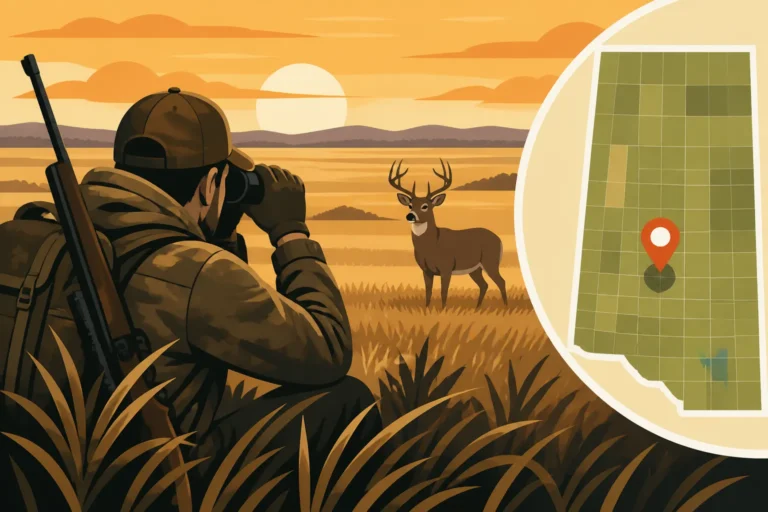
Finding quality hunting ground without tripping over three other hunters on opening morning is one of the most maddening parts of the season. Regional park boundaries across Saskatchewan offer an under-the-radar solution, acting as unpressured sanctuaries where mature bucks hole up before stepping out to feed. This guide breaks down how to legally map, scout, and hunt these edge lines with precision and confidence.
Understanding Regional Park Boundaries in Saskatchewan
Regional parks across Saskatchewan occupy a unique space in the province’s outdoor landscape. Unlike vast tracts of provincial forest or open prairie, regional parks are localized recreational zones created to preserve green space, offer camping, and protect natural habitats. Because active hunting is strictly prohibited or heavily restricted within park limits, these lands naturally become safe havens for wildlife. Big game animals quickly learn that human foot traffic inside the park remains predictable and non-threatening, allowing mature whitetails, mule deer, and even moose to reach impressive age classes.
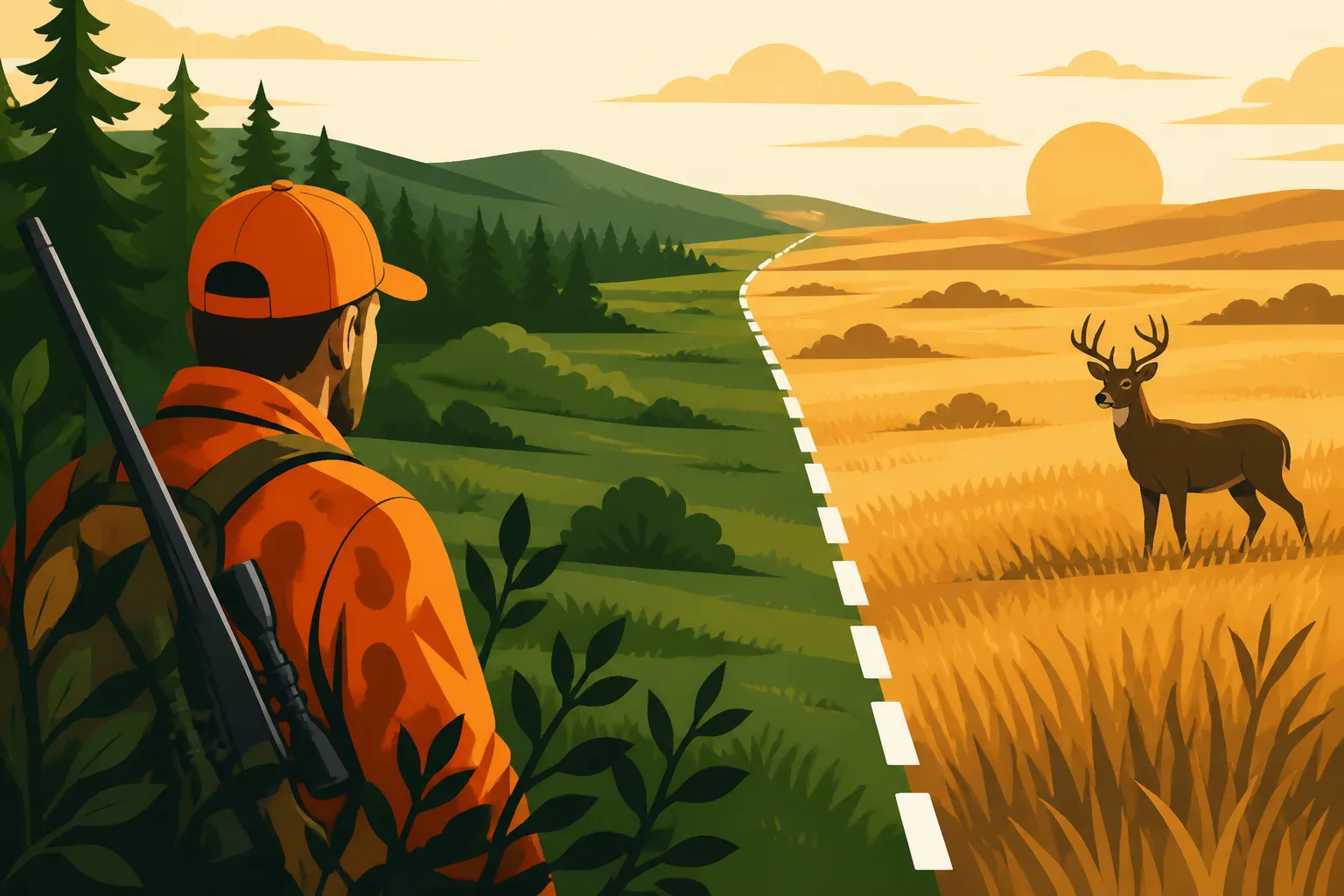
The key to unlocking this potential is understanding where the park’s protection ends and where legal hunting ground begins. The land immediately adjacent to a regional park boundary—whether it is a quarter section of private cropland, a block of public Crown land, or an agricultural grazing lease—functions as a high-volume corridor. Game animals spend their daylight hours resting in the secure, undisturbed cover of the park, but as dusk approaches, they move across the property line to exploit nearby grain fields, alfalfa, and native forage.
What Makes Regional Park Edges Unique Sanctuaries
The micro-habitats formed along park borders are often vastly different from standard farmland edges. Because regional parks are managed for conservation and leisure, they frequently retain old-growth timber, dense willow thickets, undisturbed slough bottoms, and brushy coulees that adjacent agricultural operations may have cleared years ago. This creates a stark edge effect. Animals bedding in heavy cover enjoy thermal protection during brutal prairie cold snaps and remain entirely out of reach of road hunters.
When pressure builds across nearby Wildlife Management Zones during rifle season, deer do not simply disappear; they shift their core home ranges a few hundred yards inside the park line. Knowing this behavior gives you a massive tactical advantage. Instead of wandering miles into deep timber, you can position yourself along the precise exit routes animals use when moving out of their safe zone under the cover of evening darkness.
Navigating Property Lines and Regulations
Hunting near any protected zone demands absolute precision regarding property boundaries. Being off by ten yards can mean the difference between a successful, legal harvest and a severe wildlife infraction. Regional park boundaries are not always marked with clear fences or bright signs, and old cattle wire on the ground does not automatically denote a legal property line.
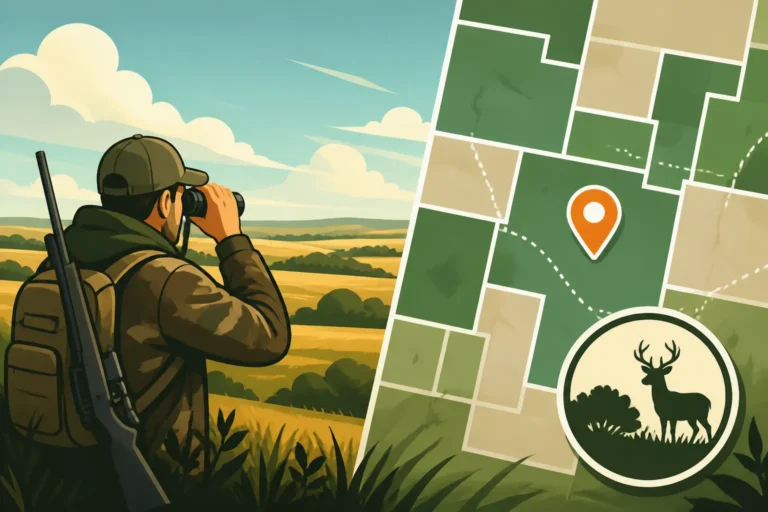
To map these zones accurately, modern digital mapping tools are indispensable. Running robust navigation applications like onX Hunt allows you to see real-time GPS positioning overlaid directly onto public and private land boundaries. Pair this with platforms like GoHunt to analyze topographical features, aerial imagery, and vegetation shifts along the park perimeter before you ever set foot on the ground. Understanding the exact spatial relationship between park land, adjacent private property, and open access terrain is the foundational step of this strategy.
Before setting up a blind or hanging a stand, review local regulations and check Saskatchewan Provincial Park Hunting Rules to ensure you understand how regional and provincial designations differ. Additionally, if the land adjoining the park is privately owned, you must secure explicit permission from the landholder in accordance with Saskatchewan Landowner Permission Law.
Scouting and Pinpointing High-Traffic Pinch Points
Scouting a park border requires a subtle approach. Because game animals inside the park are sensitive to unusual human activity along their sanctuary perimeter, walking directly down the fence line during daylight hours can blow your pattern before the season even begins. Successful scouting along these borders relies heavily on long-range glassing, winter sign identification, and strategic trail camera placement on legal ground.
Focus your initial efforts on identifying natural funnels that force movement through specific points along the boundary. Topographical features like steep coulee drainages, narrow strips of poplar bluffs, or dry slough crossings act as natural highways. When these terrain features intersect a park line next to an attractive food source, you have found a prime location for an ambush.
Identifying Transition Zones and Feeding Patterns
Transition zones along park borders are defined by changes in cover and food availability. In regions featuring Hunting Saskatchewan’s Aspen Parkland, park land often consists of dense aspen bluffs interspersed with heavy brush, while the adjacent land features swathed canola, standing corn, or cut wheat stubble.
Animals usually stage inside the park edge, waiting for the sun to drop below the horizon before stepping out into the open. Look for staging areas where dense timber thins into lighter brush just inside the legal hunting boundary. If you are hunting early autumn archers, watch for deer coming out to hit unharvested crops. Late in the fall, look for movement toward standing grain or rich cattle pastures.
| Terrain Feature | Park Side Characteristics | Legal Boundary Tactical Advantage |
|---|---|---|
| Poplar Bluff Finger | Heavy thermal bedding cover | Natural pinch point for bow stands |
| Coulee Washout | Steep, brushy erosion draw | Concentrates movement into funnel |
| Slough Ring Transition | Tall cattails and dense willow | Ideal low-scent ambush in snow |
| Agricultural Fence Line | Undisturbed wooded bedding area | High-volume evening exit route |
Reading Sign Along the Fence Line
When you carry out on-foot scouting on the legal side of the boundary, train your eye to spot subtle sign rather than heavy, obvious roads. Look for low spots in wire fences where deer consistently cross, evidenced by tufts of hair snagged on the top wire or packed earth at the base. Pay close attention to rub lines running parallel to the park perimeter, which indicate mature bucks patrolling their territory boundaries.
If there is fresh snow on the ground, pattern evaluation becomes significantly easier. You can spend a morning Reading Whitetail Sign in Saskatchewan Bluffs to determine whether animals are exiting the park in single file or fanning out across a wide border area. Look for fresh tracks emerging from thick cover at dusk and note the direction of travel toward local feeding areas. Combining this field sign with satellite layers on onX Hunt gives you a clear visual map of how game uses the landscape.
To maximize your scouting efficiency without disturbing the area, consider these key steps:
- Glass from a distance using a tripod-mounted optic from a truck or high ridge during the last hour of daylight.
- Locate specific agricultural fields drawing game out of the park, such as swathed grain or standing crops.
- Hang trail cameras on legal land at least 50 to 100 yards back from the park line along identified exit trails.
- Mark exact property boundaries on
GoHuntto ensure all camera placement and scouting activity stays strictly outside park limits.
Tactical Setups for Boundary Edge Success
Executing a hunt on a regional park boundary requires discipline and strategic flexibility. Because you cannot step over the line to pursue game or push cover, your setup must pull animals onto legal ground naturally or catch them during their routine daily movements.
Patience is vital. Setting up too close to the park line risks pushing bedding game deeper into the sanctuary where you cannot follow. A superior tactic is backing off the boundary line by 50 to 150 yards, positioning your stand or blind along a proven travel route between the park perimeter and the primary feeding site.
Wind Management and Stand Placement
Wind direction is the single most critical factor when hunting a sanctuary edge. If your scent blows into the park, every mature animal bedding near the boundary will stay put until long after dark or clear out of the area entirely. Always hunt boundary setups on crosswinds or wind directions that carry your scent away from the park interior and out over non-critical open ground.
For morning hunts, positioning can be tricky because game is returning to the park sanctuary from night feeding grounds. Catching a buck returning late requires being in position well before first light. A setup near a brushy approach like Hunting a Poplar Bluff at First Light allows you to intercept animals as they drift back toward park cover.
During the late afternoon, set up over egress routes targeting animals leaving the park. Position your blind to overlook a terrain feature like a willow run or a low fence crossing, setting up an ambush point such as Hunting a Swathed Grain Field at Dusk.
Recovery Ethics and Landowner Relations
One of the most sensitive aspects of hunting near a regional park line is game recovery. Even with a precise shot, a hard-hit big game animal may run 50 to 100 yards on an adrenaline surge before collapsing. If that animal crosses the boundary line into the park, you must understand the legal and ethical protocols required to retrieve it.
You cannot simply walk into a protected regional park with a firearm or bow to drag an animal out. Entering a park with hunting gear or taking game inside park boundaries without authorization can lead to severe fines under Saskatchewan Trespass Penalties for Hunters. If an animal crosses into the park:
- Mark the exact spot where the animal crossed the boundary line using your GPS mapping software.
- Leave your firearm or bow secured at your vehicle or stand setup outside the park.
- Contact the local Conservation Officer service or park authority immediately to report the situation and request permission or escort for recovery.
- If the adjacent ground involves private property, ensure you follow all proper procedures for Retrieving Game From Private Land in Saskatchewan.
Maintaining complete transparency with park officials and surrounding landowners preserves access privileges for future seasons and ensures that your hunt remains fully compliant with provincial laws.
Season-Specific Strategies for Boundary Lines
Game behavior along park boundaries shifts dramatically as the autumn progresses into the harsh Canadian winter. Adjusting your tactics to match the seasonal phase is essential for consistent success.
Archery and Early Rifle Phases
During the September archery opener and early fall, deer are driven heavily by feeding patterns and social bachelor groups. Patterns are highly predictable. Bucks move slowly out of park bedding areas in the cool of the evening to feed on lush agricultural fields. Low-impact setups, quiet ground blinds, and subtle wind management are supreme during this window.
As October transitions into November, the rut completely alters animal movement. Bucks that spent the summer hiding deep within the park sanctuary begin patrolling perimeter fence lines, searching for estrus does feeding in nearby fields. This is the prime time for active calling methods, rattles, and scent setups positioned legally on field edges. Glassing open terrain, such as Glassing a Saskatchewan Coulee for Mule Deer, can reveal wide-ranging bucks cruising park borders in broad daylight.
Late Season Deep Cold
When December cold snaps arrive and temperatures drop dramatically, survival becomes the sole motivator for game. Deep snow accumulates in open fields, pushing deer to seek thermal shelter inside park timber while concentrating their feeding activity on high-calorie crop leftovers.
During extreme cold, game will leave park cover earlier in the afternoon to maximize feeding time before nightfall. Sitting a blind along a packed snow trail leading out of the park requires serious gear preparation to handle the weather, as outlined in Field Dressing in Saskatchewan’s Deep Cold. Ensure your setup is rock-solid, dress in silent insulating layers, and watch high-traffic trail exits where park timber meets agricultural feed.
By using mapping tools like onX Hunt to confirm your legal standing, scouting transition zones thoroughly, and respecting sanctuary borders, regional park boundaries can offer some of the most exciting and productive big game hunting available across Saskatchewan.
Disclaimer
This article is for general informational purposes only and does not constitute professional advice. Laws, prices and regulations vary by location and change over time. Consult a qualified professional for guidance on your specific situation.