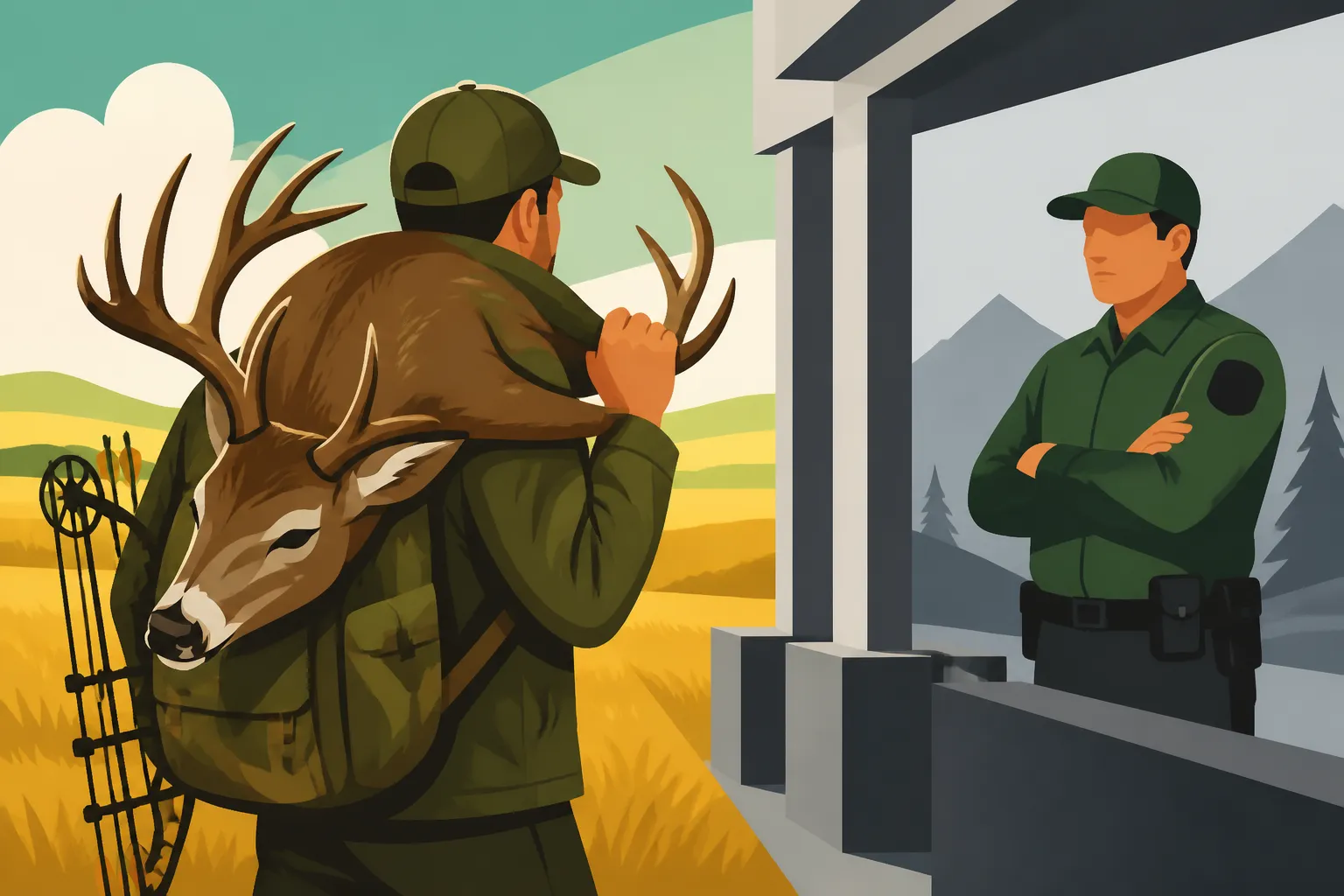
Taking a Trophy Across the Border
It's an incredible feeling when you finally get that buck or bear you've been dreaming about, after all the scouting, planning, and long hours in the stand. But then a new kind of challenge often emerges: how do you get your hard-earned trophy home across an international border without a headache, or worse, a costly delay? This guide will walk you through the essential steps and regulations to ensure your Saskatchewan hunting trophy makes it safely from the Canadian prairies and forests to your living room wall, detailing what you need to know to avoid common pitfalls.
Understanding the Rules Before You Go
Bringing any wildlife across an international border isn't as simple as tossing it in the back of your truck. There are layers of regulations from both the exporting country (Canada) and the importing country (often the United States), and understanding them before your hunt is absolutely critical. This isn't something you want to figure out on the fly at a border crossing.
The Importance of CITES Permits
While many common Saskatchewan game animals like whitetail deer or black bear don't typically require a CITES (Convention on International Trade in Endangered Species of Wild Fauna and Flora) permit for export to the United States, it's a vital concept to understand for any international trophy transport. CITES is an international agreement that regulates the trade of endangered and threatened species. For hunters, this means that if you were to hunt certain species in other parts of the world, or even some migratory birds that might be listed, you would absolutely need a CITES permit from the exporting country and often an import permit from your home country.
Always, and I mean always, double-check if your specific species requires a CITES permit. Even if it seems unlikely, an hour of research before your trip can save you days of frustration and potential seizure of your trophy at the border. The process for obtaining CITES permits is lengthy, usually involving applications to Environment and Climate Change Canada (ECCC) and potentially the U.S. Fish and Wildlife Service (USFWS), with processing times that can stretch for weeks or even months. You won't be able to just show up at the border with your trophy and fill out a form; these permits are issued in advance.
Canadian Export Regulations
Canada has its own set of rules for exporting wildlife. For big game like deer, moose, or bear harvested in Saskatchewan, you'll need to demonstrate legal take and ownership. This typically includes:
- Your valid Saskatchewan hunting license and species tag: This proves you legally harvested the animal. The tag must be properly validated and attached to the trophy or its parts as required by provincial regulations. Check out Saskatchewan Hunting Licences and What They Cost and Saskatchewan's HAL Account and Licensing for details on obtaining these.
- Proof of ownership: This could be your license, tag, and possibly a receipt if you used an outfitter or purchased processing services.
- A Canadian Export Permit: For most big game trophies leaving Canada for the U.S., you'll need an export permit issued by Environment and Climate Change Canada (ECCC). This is separate from your provincial hunting license. The application usually involves submitting details of your hunt, the species, and the destination. Like CITES, this permit needs to be applied for in advance, and usually, the outfitter or taxidermist you use can guide you through this, or even handle it on your behalf.
- Health certificates (for certain items): While not typically required for fully processed (salted, dried) capes or cleaned skulls, if you're attempting to export raw hides, meat, or unprocessed parts, you could run into agricultural or veterinary import restrictions in your home country. Most hunters avoid this by having their trophy professionally processed.
The key takeaway here is that Canada wants to ensure that any wildlife leaving its borders was legally harvested and is not part of illegal trade. Having your paperwork in order is your best defence.
U.S. Import Regulations
If you're a U.S. resident bringing your trophy home, you'll be dealing with the U.S. Fish and Wildlife Service (USFWS) and potentially other federal agencies. The primary document for importing wildlife into the U.S. is the Declaration for Importation or Exportation of Fish or Wildlife (Form 3-177).
- Form 3-177: This form must be completed and submitted to USFWS upon import. You'll declare the species, quantity, country of origin, and other details. It's best to fill this out in advance, but agents will have copies at designated ports of entry.
- Designated Ports of Entry: Not all border crossings are equipped with USFWS inspectors. You must cross at a designated port of entry that handles wildlife imports. Planning your route to hit one of these specific crossings is non-negotiable. Skipping this step can lead to significant delays, fines, or even seizure of your trophy.
- CWD Regulations: Chronic Wasting Disease (CWD) is a serious concern for cervids (deer, elk, moose). Many U.S. states, and the federal government, have strict regulations regarding the importation of certain deer parts from CWD-affected areas, which includes parts of Saskatchewan. Generally, you can import:
- Deboned meat
- Clean skull plates with antlers (all brain matter removed)
- Hides without the head
- Cleaned teeth
- Finished taxidermy mounts
You cannot typically import brain, spinal cord, lymph nodes, or other high-risk tissues. Ensure your outfitter or taxidermist understands these rules and prepares your trophy accordingly. For more on the disease itself, read Saskatchewan's CWD Testing Rules.
This layered approach means you need to be meticulous. Don't assume anything. A quick call to the USFWS prior to your hunt can clarify any doubts.
Preparing Your Trophy for Border Crossing
The journey home for your trophy begins long before you reach the border. Proper field care and professional preparation are not just about preserving the quality of your mount; they are essential for meeting regulatory requirements and avoiding major headaches.
Field Care and Initial Processing
The first crucial steps happen right in the field. How you handle your trophy immediately after the harvest sets the stage for its long-term preservation and border clearance.
- Caping: If you plan on a shoulder mount, proper caping is paramount. This involves carefully removing the hide from the neck and shoulders, ensuring enough hide is left for the taxidermist. Many hunters choose to have their outfitter or a local meat processor handle this, especially if they aren't experienced. The goal is a clean cut, preserving the cape in good condition.
- Salting and Drying: Once the cape is removed, it needs to be thoroughly salted and dried. This is a critical step to prevent spoilage and bacterial growth. A quality non-iodized salt should be generously applied to the flesh side of the cape, rubbed in, and then the cape should be allowed to dry in a cool, well-ventilated area. This process needs to be repeated multiple times to draw out all moisture. A wet, smelly, or improperly salted cape is a red flag at the border and a guaranteed way to ruin your trophy.
- Skull Plates: For antlered game, if you're only taking the antlers, the skull plate must be thoroughly cleaned of all meat and brain matter. This is particularly important for CWD compliance. Boiling or simmering the skull plate and then meticulously scraping it clean is the standard practice. Any remaining tissue can cause issues. Reading Antler Growth After a Wet Year might give you some insight into the antler itself.
Many outfitters offer services to help with field care and initial processing. Utilizing their expertise can save you a world of trouble. Remember, the cleaner and drier your trophy parts are, the smoother your border crossing will likely be.
Working with a Taxidermist or Expeditor
After the initial field care, your trophy's journey typically involves a professional taxidermist or a specialized expediting service. These professionals are worth their weight in gold when it comes to international trophy transport.
- Local Saskatchewan Taxidermists: Using a taxidermist in Saskatchewan often simplifies the process immensely. They are intimately familiar with Canadian export regulations and can prepare your trophy in a way that meets both Canadian and U.S. import standards. They can handle the caping, fleshing, salting, drying, and often the necessary export permits. They can also coordinate shipping directly to your home or to your preferred taxidermist in your home country. This removes a huge burden from your shoulders. When choosing an outfitter, it's a good idea to ask about their recommended local taxidermists or if they offer trophy processing services as part of their package, as detailed in What a Saskatchewan Guided Deer Hunt Includes. Reputable outfitters and guides, often found through platforms like BookYourHunt or GoHunt, frequently have established relationships with local taxidermists who understand the nuances of cross-border trophy handling.
- Shipping Timelines: Be realistic about timelines. Taxidermy takes time, often many months, sometimes over a year, depending on the complexity of the mount and the taxidermist's workload. Shipping, especially international, also adds time. Don't expect to pick up your mount a week after your hunt. Plan for a significant wait, and choose a taxidermist or expediter known for clear communication and reliability.
- Expediting Services: Some companies specialize solely in the expediting of hunting trophies. They don't do the taxidermy themselves but act as a liaison, ensuring all paperwork is correct, guiding the trophy through customs, and arranging transport. This can be a good option if you want to use a specific taxidermist in your home country but need help with the international logistics.
It's a huge peace of mind to know that a professional is handling the intricate details of preparing and shipping your trophy. They know the regulations, they have the contacts, and they can troubleshoot issues that might arise.
Packaging and Shipping Requirements
The way your trophy is packaged for transport is another factor that can influence its smooth passage across the border.
- Secure Packaging: Capes should be thoroughly dried and folded or rolled, then placed in a durable container, often a heavy-duty box or wooden crate, along with all necessary documentation. Antlers and skull plates should be secured to prevent damage during transit. For finished mounts, professional crating is essential.
- Clear Labeling: All packages must be clearly labeled with the contents, shipper's information, and recipient's information. Crucially, all relevant permit numbers (Canadian export permit, CITES if applicable) should be clearly marked on the exterior of the package and within the documentation.
- Shipping Methods: The most common method for international trophy shipment is specialized freight or air cargo. Standard postal services or couriers may not handle wildlife products, or may have more restrictive rules. Your taxidermist or expediter will arrange the most appropriate and compliant shipping method. If you're driving home with a smaller trophy like a cleaned skull plate or cape, it should be easily accessible for inspection.
Remember, the goal is to make it as easy as possible for customs and wildlife officials to verify the legality and nature of your trophy without needing to open poorly packaged items or hunt for paperwork.
Navigating the Border Crossing Itself
The moment of truth arrives at the border. Even with all your preparation, this can still be a nerve-wracking experience. Knowing exactly what to expect and how to present your trophy and documents will make a significant difference.
Necessary Documentation Checklist
To ensure a smooth crossing, you need to have a comprehensive set of documents readily available. It’s like presenting your case to an official, and your documents are your evidence. Here’s a quick overview of what you should have, ideally organized in a dedicated binder or folder:
| Document Type | Purpose | Issuing Authority | Notes |
|---|---|---|---|
| Saskatchewan Hunting Licence | Proof of legal authorization to hunt in Saskatchewan | Saskatchewan Ministry of Environment | Must be valid for the season and species harvested. |
| Species Tag(s) | Proof of legal harvest of the specific animal | Saskatchewan Ministry of Environment | Properly validated and attached to the trophy or its parts as required. See Saskatchewan Tag Validation Rules. |
| Canadian Export Permit | Authorization from Canada to export wildlife parts | Environment and Climate Change Canada (ECCC) | Required for most big game trophies leaving Canada. Apply in advance. |
| U.S. Fish & Wildlife Service Form 3-177 | Declaration for importing wildlife into the United States | U.S. Fish & Wildlife Service (USFWS) | Required for U.S. residents. Fill out in advance, bring multiple copies. |
| Proof of Ownership/Receipts | Documentation of where/when the animal was harvested, outfitter/taxidermy fees | Outfitter, Meat Processor, Taxidermist, Self | Helps establish clear chain of custody and legal ownership. |
| CITES Permits (if applicable) | International agreement permits for endangered/threatened species | ECCC (export) & USFWS (import) | Highly specific to certain species. Always verify if needed; lengthy application process. |
| Hunter Education Card | Proof of completing mandatory hunter education | Your home state/province | May be requested, especially if questions arise about your hunting background. See Saskatchewan Hunter Education Requirements. |
| Passport/ID | Standard identification for international travel | Your Government | Essential for personal border crossing. |
Keep originals and several copies of everything. A digital backup on your phone or in the cloud is also a good idea.
Declaring Your Trophy to Customs
When you pull up to the customs booth, whether Canadian or American, honesty and transparency are your best allies.
- Declare Everything: Clearly state that you are importing/exporting a hunting trophy and have all your documentation ready. Do not try to minimize or hide anything. Customs officials are trained to spot inconsistencies, and trying to be clever will only backfire.
- Be Prepared for Inspection: Your vehicle and your trophy are subject to inspection. Have your trophy easily accessible if you're transporting it yourself. Officials may want to verify that skull plates are clean, capes are properly salted, and that the tag matches the animal. They might also check your vehicle for any undeclared items.
- Answer Questions Truthfully: If asked about your hunt, be direct and honest. You've done the work to hunt legally and prepare your trophy correctly, so you have nothing to hide. Your goal is to cooperate fully and make their job as easy as possible.
Remember, the officials are there to enforce laws and protect national resources. Your cooperation helps them do that efficiently.
Common Pitfalls and How to Avoid Them
Even the most prepared hunter can encounter unexpected issues, but many common problems can be avoided with foresight.
- Lack of Proper Permits: This is by far the biggest pitfall. Not having the Canadian export permit, the USFWS Form 3-177, or CITES permits when required will halt your trophy's journey immediately. The only way to avoid this is meticulous planning and application well in advance.
- CWD Concerns: Attempting to bring in high-risk CWD parts (brain, spinal cord) into the U.S. will lead to immediate confiscation. Ensure your taxidermist or outfitter fully cleans skull plates or only ships permissible parts.
- Improper Preparation: A rotting cape or a skull with residual flesh can be deemed a biohazard, leading to delays or destruction of the trophy. Always ensure thorough salting, drying, and cleaning.
- Undeclared Items: Attempting to smuggle any part of the animal, or other regulated items, is a serious offense that can result in heavy fines, forfeiture of your vehicle, and even denial of future entry.
- Crossing at a Non-Designated Port: Showing up at a border crossing without USFWS agents will mean turning around and finding a compliant port, adding significant time and frustration. Research your route thoroughly.
- Impatience: Border crossings can be busy, and wildlife inspections take time. Plan for potential delays, and maintain a respectful, patient attitude. Rushing or being argumentative will not expedite the process.
- Outdated Information: Regulations can change. Always check the most current information directly from Environment and Climate Change Canada and the U.S. Fish and Wildlife Service websites right before your hunt. Don't rely solely on what you heard from a friend a few years ago.
Taking a trophy across the border is certainly manageable, but it demands diligence and respect for the regulations of both countries. A successful crossing is the final, rewarding chapter of your hunting adventure, allowing you to cherish your memories and your trophy for years to come.
Disclaimer
This article is for general informational purposes only and does not constitute professional advice. Laws, prices and regulations vary by location and change over time. Consult a qualified professional for guidance on your specific situation.