Driving Into Saskatchewan With Firearms
One of the biggest anxieties many hunters face when planning a trip to Saskatchewan, especially if you're driving up from the United States, is navigating the rules around bringing your firearms across the border. It's completely understandable to feel a bit overwhelmed or worried about making a mistake with something so serious. This guide is here to cut through the confusion and give you a clear, realistic roadmap for legally driving your hunting firearms into Saskatchewan, ensuring your trip starts on the right foot, not with a headache at the border.
Understanding Canadian Firearm Laws for Non-Residents
Before you even pack your bags, let alone your rifle, it's crucial to grasp the fundamental distinctions in Canadian firearm law. We're not talking about your local state regulations anymore; Canada has its own classification system, and understanding it is key to a smooth border crossing and a legal hunt. Don't assume what's legal at home is automatically legal here – that's where many misunderstandings begin.
The Basics: Non-Restricted, Restricted, and Prohibited Firearms
In Canada, firearms are broadly categorized into three types: non-restricted, restricted, and prohibited. For most hunters coming to Saskatchewan, your focus will almost exclusively be on non-restricted firearms. These generally include most common hunting rifles and shotguns, which don't have certain features (like very short barrels or automatic capability) that would classify them differently. A typical bolt-action deer rifle or a pump-action shotgun for waterfowl will usually fall into this category.
Restricted firearms include most handguns and certain rifles that have specific barrel lengths or designs, or are semi-automatic with specific characteristics. While these might be legal to own in Canada with the proper licensing, they are almost never permitted for non-resident hunters driving in, and you won't be using them for big game or bird hunting in Saskatchewan. Leave your handguns at home. They are not legal for hunting here, and attempting to bring them in will cause significant problems.
Prohibited firearms are exactly what they sound like – they're generally banned for civilian ownership in Canada, with very few exceptions, and are absolutely not allowed for non-residents. This category includes fully automatic firearms, certain assault-style rifles, and firearms that have been modified to be easily concealable. Bringing a prohibited firearm to the border, even by accident, can lead to seizure, fines, and serious legal trouble, potentially impacting your ability to enter Canada in the future. Always double-check your firearm's classification before you travel.
The Non-Resident Firearm Declaration Form (RCMP 5589)
This form is your golden ticket for bringing your non-restricted hunting firearms into Canada. It's officially known as the "Non-Resident Firearm Declaration" (form RCMP 5589), and it serves as a temporary registration for your firearms while you're visiting. You absolutely must fill this out truthfully and completely before you arrive at the border. You can often find this form online, print it, and fill it out in advance, which will save you a lot of time and potential stress at the port of entry.
When filling out the form, pay close attention to details like make, model, serial number, and calibre/gauge for each firearm. You'll need to declare every single firearm you're bringing. It's a legal document, so accuracy is paramount. Don't omit anything, even if you think it's minor. At the border, a Canadian Border Services Agency (CBSA) officer will review the form with you and, if everything is in order, they will validate it. This validation carries a nominal, one-time processing fee, so be prepared to pay that at the border. Once validated, this form essentially acts as your temporary license to possess and transport those specific firearms in Canada for up to 60 days. Keep multiple copies, both paper and digital, and keep the original with your important travel documents. Remember, you'll need to present this same form when you leave Canada.
Acceptable Reasons for Importing Firearms
The Canadian government is very clear about the limited circumstances under which non-residents can import firearms. For hunters, the primary and almost exclusive acceptable reason is for "hunting." This means you must be coming to Saskatchewan with the genuine intention of participating in a legal hunt. Other acceptable reasons might include target shooting competitions, but for our purposes as hunters, it's all about the hunt.
It is absolutely critical to understand that bringing a firearm into Canada for "self-defense" or "personal protection" is never an acceptable reason. Canadian law does not recognize a right to self-defense with a firearm in the same way some other countries do, and any mention of this at the border will lead to immediate refusal of entry for your firearms, and possibly for you as well. Your firearms must be for the purpose of hunting specific game animals, which means you should also have appropriate hunting licenses or proof of booking a hunt ready to show. This distinction is one of the most important things to remember when crossing the border.
Proper Transportation and Storage While Traveling
Once you've cleared the border, your responsibilities regarding firearms don't end. Canadian law has strict rules about how you must transport and store your firearms, not just at the border, but for the entire duration of your trip in Saskatchewan. These regulations are designed for public safety and apply whether you're driving to your hunting camp, making a quick stop for groceries, or staying overnight in a hotel. Failing to follow these rules can result in serious penalties, including fines and the seizure of your firearms.
Securing Firearms in Your Vehicle
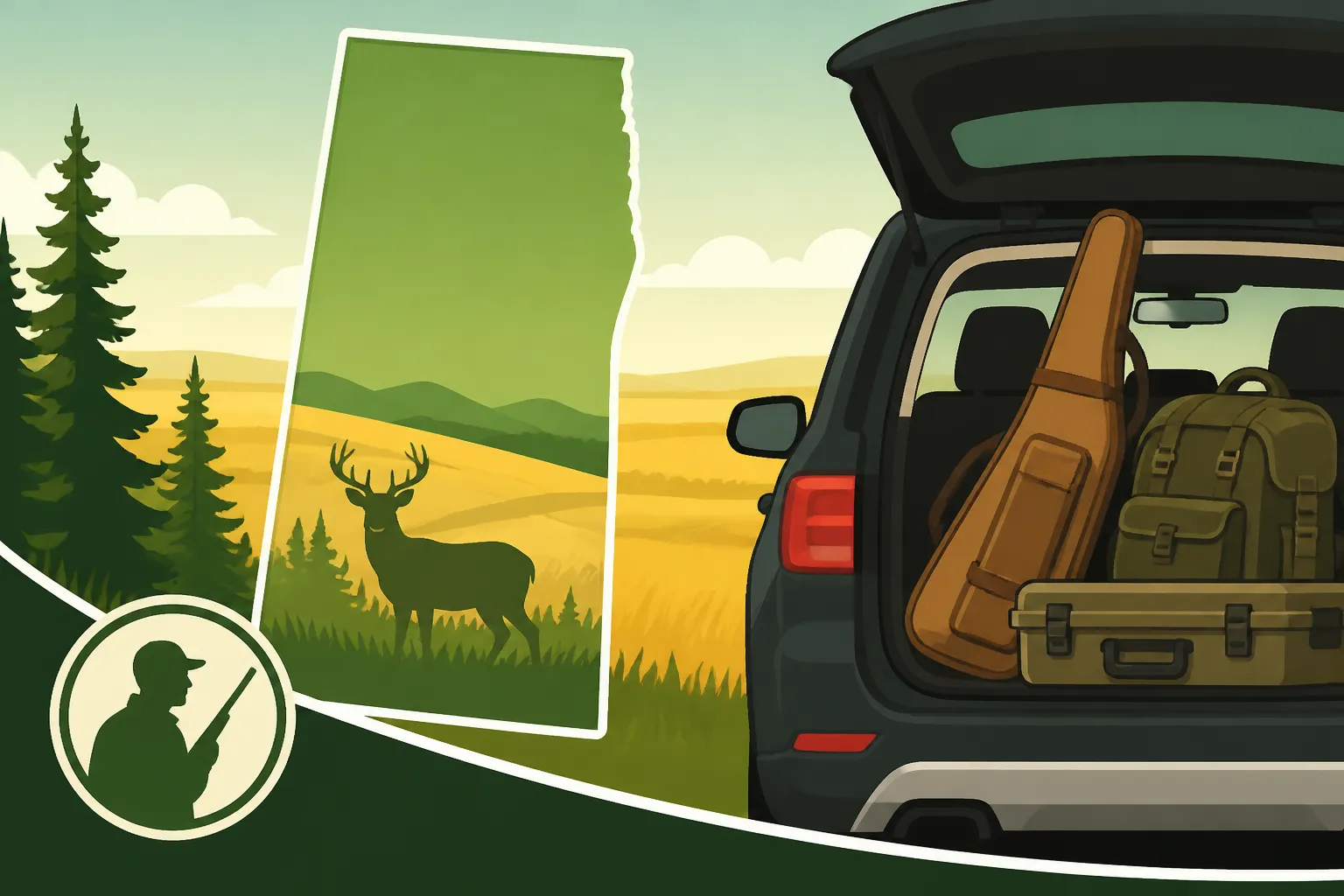
The most fundamental rule for transporting non-restricted firearms in your vehicle is that they must be unloaded. This means no ammunition in the chamber, magazine, or attached to the firearm in any way. Beyond that, the firearm must be "rendered inoperable" or "secured." The most common and recommended way to do this is to use a trigger lock or a cable lock, making it impossible to fire the weapon. Alternatively, you can remove the bolt (for a bolt-action rifle) or another essential component, rendering it inoperable.
Furthermore, the firearm should be securely cased. A soft gun case is generally acceptable, but a hard-sided, lockable case offers better security and protection, especially if the vehicle is left unattended. It's also good practice, though not always legally mandated for non-restricted firearms, to store ammunition separately from the firearm. For example, keep your cased and locked rifle in the back of your truck, and your ammunition in a separate locked container in the cab. When you're driving through towns or even just pulling off the highway for gas or food, your firearms must remain secured as outlined. Don't leave them casually leaning against the back seat or easily accessible. Think "out of sight, out of mind" and securely locked.
Ammunition Limits and Storage
While the focus is often on the firearms themselves, ammunition also has rules. For non-residents, you're generally allowed to bring a "reasonable" amount of ammunition for the purpose of hunting. This is typically understood to be a generous quantity, more than enough for a week or two of hunting, but it's not an unlimited supply. There isn't a hard-and-fast numerical limit like you might find for tobacco or alcohol, but officers can question excessively large quantities. If you're bringing several boxes for each calibre you intend to hunt with, you'll likely be fine.
When it comes to storage, ammunition must be kept separate from your firearms. It should be stored in a sturdy container, like an ammo can or the original factory boxes, and kept in a secure location in your vehicle. Many hunters will store their ammunition in a locked toolbox or a dedicated compartment in their vehicle, separate from where their cased and locked firearms are stored. The key is that it shouldn't be readily accessible or loaded into a firearm while you are transporting it.
Overnight Stays and Campground Rules
Your obligation to securely store your firearms continues even when you're not actively driving. If you're staying overnight in a hotel, motel, or campground before reaching your final destination, your firearms must still be stored legally. The best practice is to keep them cased, locked, and out of sight in your vehicle, especially if you have a secure truck box or trunk. However, if you feel your vehicle isn't secure enough, you can bring the cased and locked firearms into your hotel room. It's always a good idea to check with the hotel about their specific policies on firearms, although generally, if they are properly secured and concealed, it won't be an issue.
For hunters staying in campgrounds, similar rules apply. Your firearms should be secured in your locked vehicle, trailer, or RV. Never leave an unsecured firearm lying around your campsite, even if you're just stepping away for a moment. These rules apply equally whether you're just passing through or settling into a long-term hunting camp. The principle is always to prevent unauthorized access and ensure the firearm is safe and inoperable. Hunting Saskatchewan Winter Weather Safely emphasizes proper planning for all aspects of a hunting trip, and firearm security is definitely part of that planning.
Navigating the Border Crossing into Saskatchewan
The border crossing itself can be the most nerve-wracking part of your journey. Approaching a Canadian Border Services Agency (CBSA) booth can feel intimidating, but if you're prepared and honest, it should be a straightforward process. Remember, the officers are there to protect Canada's borders and enforce its laws, not to automatically assume you're doing something wrong. Your attitude and preparedness go a long way.
The Canadian Border Services Agency (CBSA) Process
As you approach the border crossing into Saskatchewan, ensure all your firearms are unloaded, trigger-locked, and cased in a secure, out-of-sight location in your vehicle. When you pull up to the CBSA booth, the first thing you must do is declare your firearms. Do not wait for the officer to ask; state clearly and calmly, "I am declaring firearms for hunting." Honesty and immediate disclosure are paramount. Any attempt to conceal or mislead will result in severe consequences.
The officer will then ask you to present your passport and your completed Non-Resident Firearm Declaration (RCMP 5589) form. They will review your documents, ask you questions about your trip, where you're going, and the purpose of your firearms. Be prepared to answer truthfully and confidently. You may be directed to a secondary inspection area where your firearms might be physically inspected to ensure they match the declaration and are properly secured. This is a normal part of the process, so remain cooperative and patient. It might take a bit of time, especially during busy periods, but a prepared hunter can make this process as smooth as possible. For more general advice on what to expect, refer to Bringing Firearms Into Saskatchewan.
Required Documentation
To ensure a seamless border crossing, you'll need more than just your firearms and the declaration form. Here's a checklist of essential documents:
- Valid Passport or Travel Documents: This is non-negotiable for entering Canada.
- Non-Resident Firearm Declaration (RCMP 5589): Pre-filled and ready for validation, with an understanding of the nominal fee.
- Proof of Hunting Purpose: This is very important. Bring your Saskatchewan hunting license if you've purchased it online, or proof of your planned hunt. This could be a booking confirmation from a Saskatchewan outfitter, an email from a landowner granting permission, or details about the WMZ (Wildlife Management Zone) you plan to hunt. Having this clearly demonstrates your intent is genuinely for hunting. If you've booked with an outfitter, they often provide letters of invitation which are excellent for this purpose. If you're curious about booking options, resources exist to explore guides, but remember the border officers need documentation about your trip and your firearms, not a booking platform itself. Having your Saskatchewan Hunting Licences and What They Cost information readily available is also a good idea.
- Vehicle Registration and Driver's License: Standard travel documents you should always have.
Having all these documents organized and easily accessible will greatly speed up the process and show the CBSA officer that you are a responsible and prepared visitor.
Common Pitfalls and How to Avoid Them
Even with the best intentions, some hunters encounter issues at the border. Knowing these common pitfalls can help you avoid them:
- Not Declaring Firearms: This is the absolute worst mistake. Failing to declare your firearms immediately and truthfully can lead to seizure, fines, charges, and potentially being banned from future entry into Canada. Always declare.
- Incorrectly Filled Forms: Errors, omissions, or illegible handwriting on the RCMP 5589 can cause delays and require you to fill out a new form, wasting time and potentially creating suspicion. Double-check everything before you arrive.
- Bringing Prohibited Firearms: As discussed, certain firearms are outright banned. Don't even attempt to bring them. If you're unsure about a specific firearm, contact the Canadian Firearm Program well in advance.
- Muzzleloader Rules: Muzzleloaders are generally classified as non-restricted, but some might be considered restricted if they don't meet specific length requirements. Ensure yours meets the definition of a non-restricted firearm. You can find specific guidelines in resources like Saskatchewan Muzzleloader Equipment Rules.
- Loaded Firearms: Even a single round in the chamber or magazine is a serious offense. All firearms must be completely unloaded. Check, double-check, and triple-check before you put them in your vehicle.
By being meticulous and honest, you can largely avoid these common problems and ensure your entry into Saskatchewan is as smooth as possible, letting you focus on the hunt ahead.
After the Border: Hunting and Departure Considerations
Congratulations, you've made it into Saskatchewan with your firearms! Now it's time to shift your focus to enjoying your hunt and understanding the rules that apply once you're on Canadian soil. Your validated Non-Resident Firearm Declaration covers your possession and transport, but specific hunting regulations and departure procedures are equally important.
Adhering to Saskatchewan's Hunting Regulations
Once you're in Saskatchewan, you're bound by provincial hunting laws, which can differ from your home state. This includes everything from specific legal firearms for big game (refer to Legal Firearms and Bows for Big Game) to mandatory blaze orange requirements (explained in Saskatchewan Blaze Orange Rules), and of course, season dates, bag limits, and animal specific regulations. You should have already familiarized yourself with the hunting regulations guide for Saskatchewan, which is available online.
Always carry your validated Non-Resident Firearm Declaration, your hunting license, and any permits with you while hunting. Wildlife officers in Saskatchewan are professional and helpful, but they will expect you to know and follow the rules. This includes understanding the specific zones you're permitted to hunt in, as per your license, and ensuring you have landowner permission if hunting on private land. Being a responsible hunter means respecting the laws, the land, and the wildlife.
Exporting Your Firearms When Leaving
Your validated Non-Resident Firearm Declaration form (RCMP 5589) isn't just for entry; it's also your key to a smooth departure. When you're ready to leave Canada and return home, you'll present this same validated form to the CBSA officer at the border. This form serves as proof that you legally brought the firearms into the country and are now taking them out.
Just like when you entered, your firearms must be unloaded, trigger-locked, and securely cased for transport. The CBSA officer may perform another inspection to verify the firearms match the declaration. As long as everything is in order, you'll be processed efficiently. Don't lose this document! It's essential for proving you're legally exporting your firearms and avoiding any issues on your way out. If you're also transporting game meat, make sure you understand the regulations for Transporting Game Meat in Saskatchewan as well as international border rules.
When to Seek Professional Guidance
While this guide covers the general process, there are specific situations where seeking professional advice is highly recommended. If you own a firearm that might fall into a grey area (e.g., an antique, a custom build, or a semi-automatic with unique features), it's always best to clarify its classification before you travel. The Canadian Firearm Program (CFP) of the RCMP is the ultimate authority on firearm classification in Canada. You can contact them directly for clarification on specific models.
Additionally, if you have any criminal history, especially involving firearms or violence, or if you've ever been denied entry to Canada before, you should consult with an immigration lawyer specializing in Canadian border law. These situations are complex, and attempting to cross the border without proper legal guidance can lead to refusal of entry. It's better to be safe than sorry and get clarity from the experts before you embark on your hunting adventure. While some services might help you plan aspects of your hunt, such as finding guides (which can be done via platforms like BookYourHunt or through direct research), they are not a substitute for legal advice on firearm importation.
Disclaimer
This article is for general informational purposes only and does not constitute professional advice. Laws, prices and regulations vary by location and change over time. Consult a qualified professional for guidance on your specific situation.