Setting a Bear Bait Site in Saskatchewan
Venturing into Saskatchewan's wilderness for a black bear hunt is an exhilarating prospect, but anyone who's tried it knows that successfully luring in a mature bruin requires more than just luck. Setting up an effective bear bait site is a critical, often frustrating, puzzle involving meticulous planning, understanding local regulations, and a good dose of woodsmanship. This comprehensive guide is here to unravel that puzzle, walking you through every step of creating a bear bait site that not only attracts bears but also stands the test of the elements and adheres to all the rules.
Understanding Saskatchewan's Bear Baiting Regulations
Before you even think about hauling a barrel into the bush, it's absolutely crucial to familiarize yourself with Saskatchewan's specific regulations regarding baiting for black bears. Ignorance of the law is never an excuse, and a misstep can lead to hefty fines or worse, losing your hunting privileges. These rules are in place for safety, ethical hunting, and to manage wildlife populations responsibly.
Legal Framework for Baiting
Saskatchewan has clear guidelines on what constitutes legal baiting, where it’s allowed, and for what species. For black bears, baiting is a widely accepted and often highly effective method, particularly during the spring and fall seasons. However, it's not a free-for-all. The provincial hunting regulations outline specific dates when bait can be placed, and perhaps more importantly, when hunting over that bait is permissible. Typically, you can begin placing bait a certain number of weeks before the actual bear season opens, allowing bears time to find and become accustomed to the site. Always double-check the current year's Saskatchewan Hunters' and Trappers' Guide for precise dates, as they can change annually. You'll also find information on Saskatchewan Bear Season Dates here.
One key aspect of the legal framework is the definition of "bait" itself. Generally, it refers to any substance that is used to attract game. This can include everything from sweet pastries to meat scraps, but there are restrictions on what kind of material you can use. For instance, in many areas, using the carcass or parts of an ungulate (like deer, moose, or elk) that you've killed is prohibited, unless specifically allowed under certain conditions, such as for furbearers or predators under a specific licence. The intent is to prevent the spread of diseases and to maintain ethical standards. It’s also illegal to bait in certain proximity to dwellings or public roads, so knowing your proposed site's surroundings is non-negotiable.
Location Restrictions and Ethical Considerations
Beyond the timing and type of bait, where you set up your bait site is subject to strict rules. You cannot simply drop a barrel anywhere. Firstly, it’s imperative to hunt on land where you have legal access. This means either Crown land that is open to hunting, or private land where you've secured explicit permission from the landowner. Trespassing is a serious offence, and an unauthorized bait site on private property will quickly get you into trouble. If you're hunting in the north, remember that Hunting Saskatchewan's Boreal North often involves vast tracts of Crown land, but even there, understanding access points and potential restrictions is key.
Furthermore, proximity to human habitation, public roads, and certain wildlife management areas (WMAs) often carries restrictions. For example, you typically cannot place bait within a certain distance of a provincial park or residential area. These rules are for public safety, preventing bears from associating humans with food sources in populated areas. Ethically, a responsible hunter also considers the impact on other wildlife. An improperly managed bait site can attract non-target species, leading to potential conflicts or unintended consequences. When planning your hunt, consider also Baiting Black Bear in Saskatchewan which provides a general overview. Always practice "leave no trace" principles, removing all non-natural materials, including your bait barrels, at the end of the season. The goal is to hunt ethically and responsibly, ensuring the health of the bear population and the safety of the public.
Choosing the Perfect Bear Bait Site
Selecting the right location for your bear bait site is arguably the most critical step after understanding the regulations. It's not just about finding a spot; it's about finding the spot where a bear feels safe, can access the bait easily, and where you can effectively hunt it. This demands careful scouting and an understanding of bear behaviour.
Scouting for Active Bear Sign
Before you commit to a location, you need to verify there are indeed bears in the area. This involves serious boots-on-the-ground scouting, ideally in the spring after the bears emerge from their dens. Look for fresh tracks, especially around natural water sources, muddy trails, or sandy creek beds. Bears are creatures of habit, often using the same travel corridors year after year. Scat (bear droppings) can tell you a lot about their diet and recent activity. Look for rub trees – usually conifers or poplars – where bears rub their backs and heads, leaving hair, claw marks, and sometimes even bite marks on the bark. These are prime indicators of active bear travel.
Consider natural food sources in the area. Are there berry bushes, old apple trees, or aspen stands? Bears are opportunistic feeders, and while they'll eventually come to your bait, they'll initially be drawn to areas with natural sustenance. Use tools like GoHunt, a mapping software that can help you identify potential travel corridors, dense cover, and water sources by layering satellite imagery with topo maps. This can be invaluable in narrowing down your search before you even step foot in the woods, helping you scout more efficiently and pinpoint promising spots that might hold Black Bears in Saskatchewan's Boreal Forest. The more natural bear sign you find, the higher your chances of success.
Factors for Ideal Site Placement
Once you've confirmed bear activity, it's time to refine your site selection. The "perfect" site balances several factors: bear comfort, hunter access, and wind direction. Bears are wary animals; they prefer to feed in locations where they feel secure. This means choosing a spot with dense cover nearby that offers an easy escape route. A thick stand of spruce, a dense willow run, or a bush bluff between two fields provides excellent sanctuary.
Access for you is also key. Can you get bait in and out without disturbing the area too much or being seen by the bear? This might mean using an ATV on an old logging road or a quad on a cutline, but always check regulations for vehicle use on Crown land or private property. A bait site that requires a long, arduous hike with heavy bait buckets might be less practical to maintain consistently. Finally, and perhaps most crucially for the hunter, consider the prevailing wind direction. You must position your stand or blind downwind of the bait. Bears have an incredible sense of smell, and if they catch your scent, your hunt is over. Look for natural windbreaks or topographical features that consistently direct air currents away from your approach and stand. This means observing wind patterns over several days, not just guessing. Placing a stand strategically where the wind carries your scent away from the bait is absolutely paramount to avoid spooking a wary bruin. Understanding these dynamics is key to Hunting Saskatchewan's Aspen Parkland Bluffs or anywhere bears frequent.
What Makes Effective Bear Bait
Once you've selected your prime location and confirmed it's legal and active, the next big question is: what do you actually put in the barrel? The effectiveness of your bear bait isn't just about quantity, but quality, variety, and how well you manage it. Bears have excellent noses and sweet, fatty, or pungent smells will grab their attention from afar.
Diverse Bait Components
A successful bear bait site thrives on diversity. Don't rely on just one type of food; a mix of sweet, savory, and high-energy foods will keep bears coming back.
- Sweet Treats: These are often the primary attractant. Think pastries, donuts, cookies, candy, and molasses. Local bakeries or grocery stores are great sources for day-old goods that are often inexpensive or even free. Bears have a serious sweet tooth, and the strong sugary scent travels far. Maple syrup and honey also work wonders, though they can be pricey.
- High-Energy Foods: Fat and carbohydrates are essential for bears, especially in spring when they're replenishing after denning, or in fall when they're packing on weight for winter. Restaurant grease, old cooking oil, dog food, and even some types of livestock feed can be excellent. The grease is particularly potent for carrying scent.
- Pungent Attractants: Some hunters swear by odorous items to draw bears from long distances. Anise oil, a few drops of which can carry for miles, is a classic. Used fryer oil, especially from a fish and chip shop, is another potent option. Even slightly fermented grains or fruit can create a strong, appealing aroma.
The key is to offer a smorgasbord that appeals to a bear's natural curiosity and caloric needs. A single barrel filled with stale bread might get some attention, but a barrel that’s a rich tapestry of scents and flavours will establish your site as a consistent food source. Remember, consistency is queen; bears learn quickly where the easy calories are.
Optimal Bait Delivery and Presentation
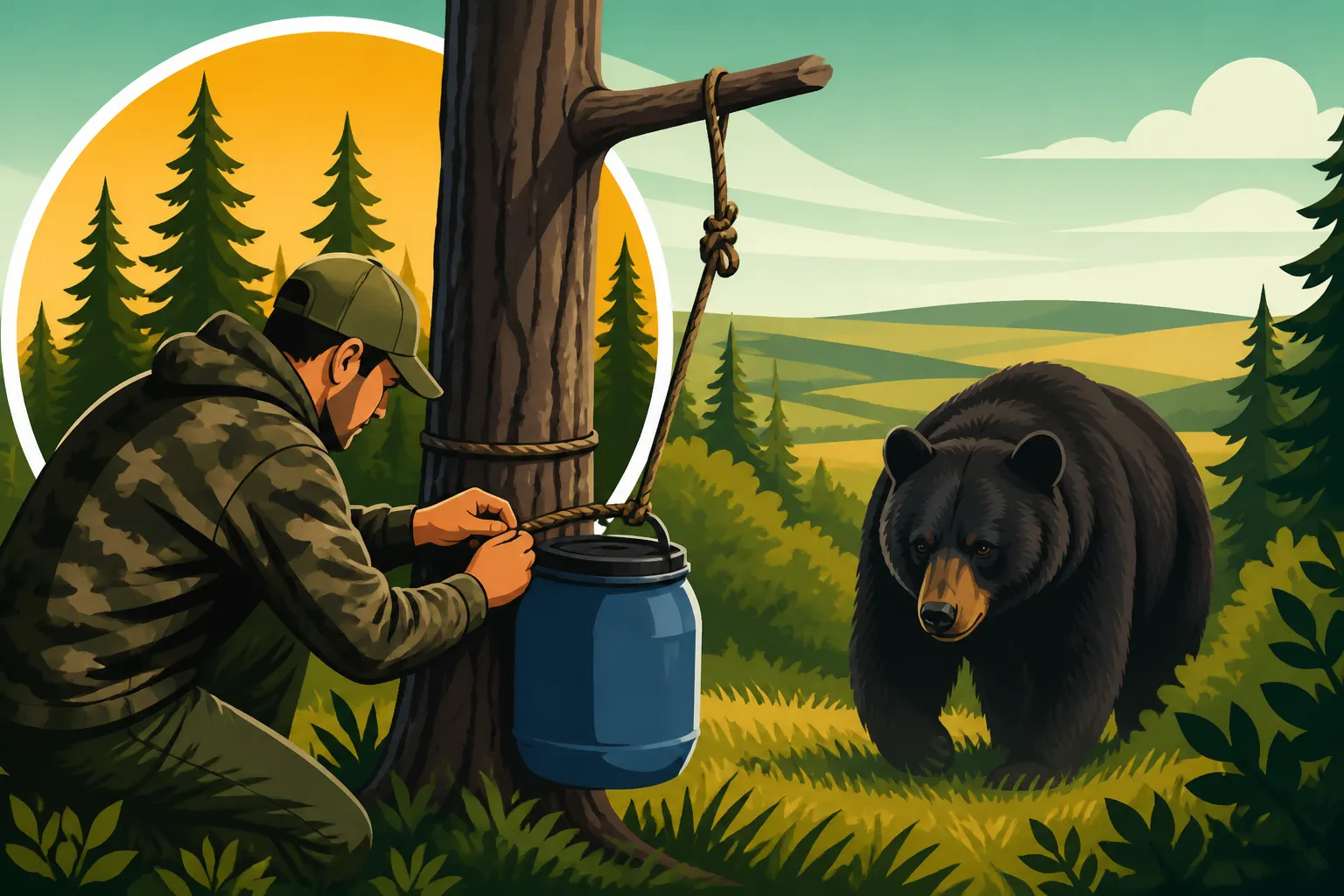
How you present your bait is nearly as important as what it's made of. A simple open pile might work, but it exposes the bait to rain, sun, and other animals. A sturdy bait barrel is the industry standard for a reason. These heavy-duty plastic or steel barrels (often 55-gallon drums) are designed to contain bait, prevent rapid consumption, and withstand the incredible strength of a bear.
Here’s how to optimize your delivery:
- Secure the Barrel: Bears are incredibly strong and will try to drag or roll your barrel away. Use heavy chain or cable to secure it to a robust tree. Bolt down the lid or use sturdy straps to keep it closed, ensuring the bear has to work at it. This forces them to spend more time at the site, increasing your chances of a shot.
- Add a "Starter" Scent Trail: When first setting up, creating a scent trail leading to your barrel can significantly speed up the discovery process. Drip molasses, anise oil, or used cooking grease on trees or the ground along likely bear travel routes heading towards your site. This acts like a breadcrumb trail for their powerful noses.
- Prevent Rapid Consumption: Don't just dump all your bait in the barrel. Consider drilling small holes in the bottom of your barrel and hanging it slightly off the ground, or placing logs and rocks inside the barrel with the bait. This makes the bear work harder to get the food, preventing them from emptying the barrel in one go and requiring more frequent, potentially risky, visits. The goal is to condition them to visit regularly, not just once. This also helps with Timing a Saskatchewan Spring Bear Hunt as you want them coming in daylight.
A well-presented bait site, combined with diverse, high-quality bait, forms the backbone of a successful bear hunting strategy.
The Science of Scent and Attraction
Bears don't rely on their eyesight for finding food as much as their incredible sense of smell. Their olfactory system is nothing short of phenomenal, allowing them to detect scents from miles away. Understanding how scent works and how to maximize its spread is paramount to effectively drawing bears to your bait site.
Leveraging Olfactory Prowess
A black bear's sense of smell is estimated to be seven times greater than that of a bloodhound, and possibly 2,100 times more acute than a human's. This is why scent is your most powerful tool in bear baiting. The air currents in the forest carry scent, acting as an invisible beacon for hungry bears. Your goal is to create a scent cone that broadens as it travels, maximizing the chances of a bear crossing its path.
To effectively leverage this, consider where the prevailing winds typically blow in your chosen area. If you can position your bait site where the scent drifts into known bear travel corridors or bedding areas, you're at a huge advantage. On days with light breezes, that scent cone might be narrow and short. On windy days, however, the scent can dissipate and travel vast distances, pulling in bears from a wide radius. This is why sustained baiting over several days or weeks is so effective; it ensures that regardless of the daily wind patterns, enough scent is out there to be eventually detected. Additionally, certain atmospheric conditions, like high humidity before a rain, can help hold scent closer to the ground, making it easier for bears to track.
Creating a Long-Distance Scent Trail
Beyond the bait itself, creating additional long-distance attractants can make a significant difference, especially when first establishing a site. This is where specialized scents and creative delivery methods come into play.
- Anise Oil: This is a classic for a reason. Its sweet, licorice-like aroma is highly attractive to bears and carries exceptionally well. You can hang rags soaked in anise oil from branches near your bait site, or even drip a diluted mixture along your access trail to create a scent path.
- Used Cooking Oil/Grease: As mentioned before, the strong, often savory, smell of used cooking oil from restaurants is incredibly potent. Pouring it onto a burning log near your bait site (ensure it's safe to do so and within regulations) can create a thick, fragrant smoke that wafts through the woods. The thermal updraft helps carry the scent higher and further. Alternatively, you can pour it onto a stump or directly into the bait barrel, where it will slowly leach out and continue to attract.
- Sweet Syrups and Molasses: These sticky, sugary substances are not only good bait but also excellent attractants. Drip them onto nearby trees or logs. The slow release of their potent sweetness will constantly refresh the scent in the area.
- Hang Scents High: Suspending scent-soaked materials (like a burlap sack filled with bait scraps or a bottle of liquid attractant with a wick) from a tree limb allows the scent to disperse more effectively over a wider area, rather than being confined to ground level.
- Rotting Fruit: While not always pleasant for humans, slightly fermenting fruit can produce a strong, sweet, and yeasty odor that bears find irresistible. A small amount of this mixed into your main bait can boost its overall aromatic appeal.
Remember that while strong scents are great for initial attraction, the quality and consistency of your actual bait are what keep the bears coming back. The scent draws them in, but the good food makes them regular visitors.
Maintaining Your Bear Bait Site Ethically and Effectively
Setting up the bait site is only the first part of the equation. To consistently attract and hold bears, you need to commit to regular, ethical, and effective maintenance throughout the hunting season. This dedication is what separates successful bear hunters from those who merely scatter some donuts in the woods.
Regular Refreshing and Observation
Consistency is absolutely key. Bears are intelligent and learn quickly. If they visit your site and find it empty, they'll eventually stop coming. You should aim to refresh your bait every 2-3 days, or at least twice a week, depending on how quickly the bait is consumed. This means more trips into the bush, more bait to haul, but it’s crucial for success. When you visit, don't just dump and run. Take time to observe the site for signs of activity.
Look for:
- Tracks: Are there fresh bear tracks around the barrel? This tells you who's visiting and how often.
- Hair: Check for hair rubs on the barrel or nearby trees. This is a great indicator of size and the specific bear (e.g., if you're looking for Colour Phase Black Bears in Saskatchewan).
- Scat: Fresh scat can give you clues about the bear's diet and its general health.
- Consumption Rate: Is the bait disappearing quickly? If so, you might have multiple bears, or a very hungry bear, meaning you need to increase the quantity of bait you're putting out.
- Trail Camera Footage: This is an invaluable tool. A good trail camera (e.g., from brands like Browning or Stealth Cam, though remember the brand restriction – just mention "a good trail camera") can show you exactly which bears are visiting, when they're coming (day vs. night), and how often. This intel helps you tailor your hunting schedule and ensure you're targeting the specific bear you're after. Reviewing footage can inform you about the typical weight of bears in the area and give you an idea of What a Northern Black Bear Weighs. GoHunt maps can also help you track historical visits to a site if you log your camera data there, helping you identify patterns over seasons.
Remember to approach and leave your bait site quietly and cautiously, trying not to leave too much human scent. Use rubber boots and scent-eliminating sprays if you're concerned.
Adjusting to Bear Behavior and Environmental Factors
Bear baiting isn't a static strategy; it requires adaptability. Bears are creatures of habit, but their habits can change based on natural food availability, hunting pressure, and weather.
- Natural Food Abundance: If there's a bumper crop of berries, acorns, or other natural food sources nearby, your bait site might see less activity. You might need to increase the potency or variety of your bait to compete. Conversely, in years with scarce natural food, your bait site could be a hotspot.
- Weather Changes: Extreme heat can reduce bear activity during the day, making them more nocturnal. Cold snaps, especially in the fall, can spur bears to feed more aggressively as they prepare for hibernation. Rain can wash away scent, so refreshing after a heavy downpour can be beneficial.
- Nocturnal Visits: If your trail camera consistently shows bears only visiting at night, you might need to reconsider your setup. Are they wary of your stand? Is there too much human scent? Sometimes, moving your stand or adjusting your approach can help. You might also try increasing the amount of bait and making it harder for the bear to empty the barrel quickly, forcing them to visit more often, and hopefully, closer to daylight hours.
- Non-Target Species: Be prepared for other animals to visit your bait. Coyotes, foxes, and even deer are common visitors. This is part of the natural ecosystem, but if non-target animals are consuming too much bait, you might need to secure your barrel more effectively or use bait that is less appealing to them (e.g., less dog food if coyotes are a problem).
Ultimately, ethical and effective bear baiting is a commitment. It's about patience, observation, and being willing to adapt your strategy. When done correctly, it's a highly rewarding method that offers incredible opportunities to observe and hunt one of Saskatchewan's most formidable big game animals.
Disclaimer
Hunting is an activity that carries inherent risks. Always prioritize safety, understand and follow all provincial and federal hunting regulations, and obtain proper landowner permissions. The information provided in this guide is for informational purposes only and should not replace official government resources or professional instruction. Regulations can change, so it is the hunter's responsibility to stay informed.