Hunting Spruce Grouse in Black Spruce
For many upland bird hunters, the sheer joy of flushing a covey of sharp-tailed grouse on the open prairie or walking up a Hun along a shelterbelt is a classic Saskatchewan experience. But then there's the spruce grouse – a bird often overlooked, nestled deep in the black spruce stands of our northern forests, and notorious for being incredibly elusive, despite its "fool hen" moniker. This guide is designed to cut through the confusion and frustration, giving you practical, real-world strategies and insights into successfully hunting spruce grouse in their unique black spruce domain across Saskatchewan.
Understanding the Spruce Grouse and Its Black Spruce Home
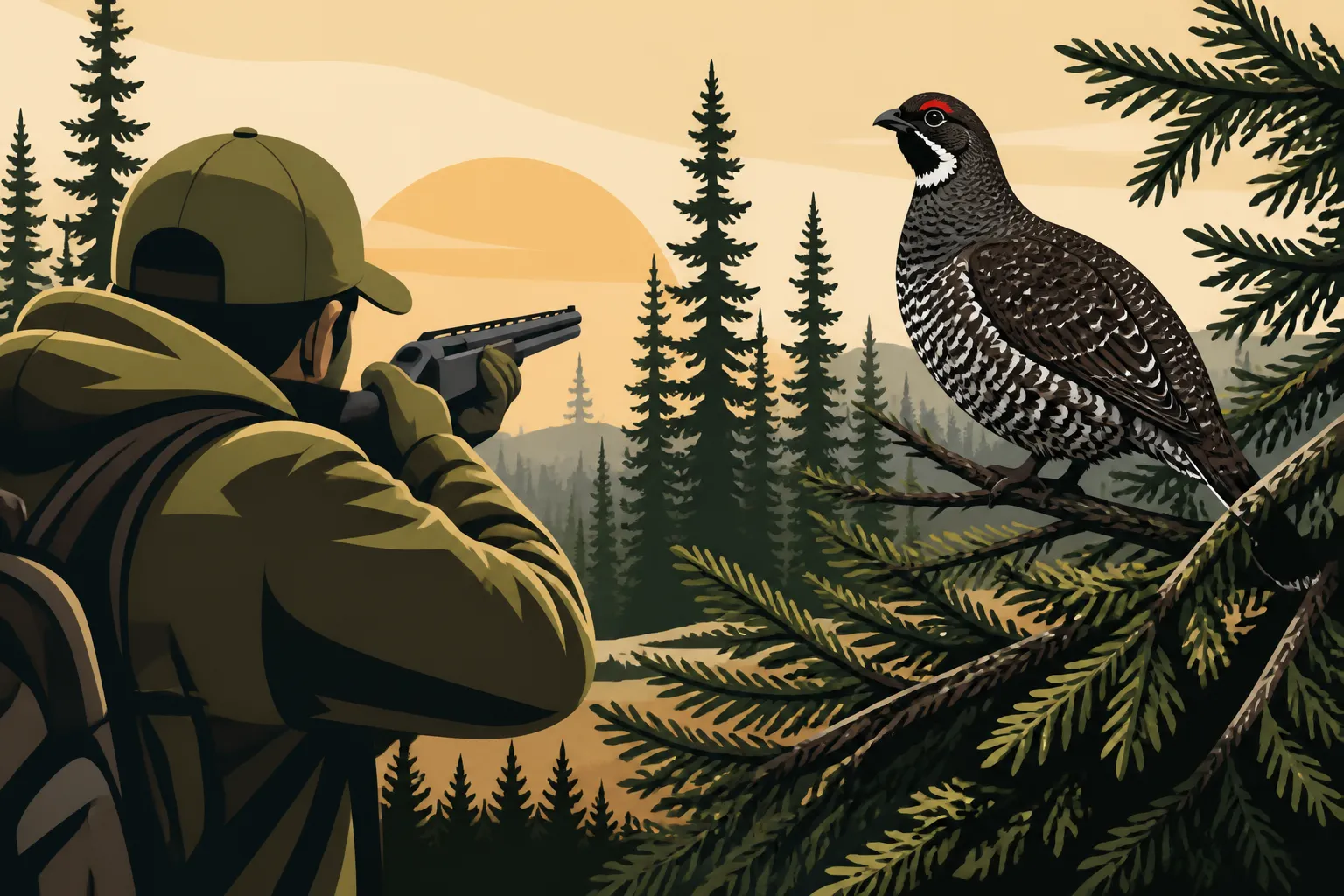
The spruce grouse (Falcipennis canadensis) is a fascinating creature, perfectly adapted to its northern coniferous environment. Unlike its prairie cousins or even the ruffed grouse of the aspen parkland, this bird truly thrives in the dense, often swampy, world of black spruce. If you've ever tried to hunt them without understanding their specific habitat needs and behaviours, you've likely come away empty-handed and perhaps a little scratched up.
The Elusive "Fool Hen" – Behavior and Habitat Preference
While sometimes called "fool hens" because of their tendency to hold tight or even freeze when approached, don't let that fool you into thinking they're an easy target. That very behaviour makes them masters of camouflage, disappearing into the dark shadows and needles of the spruce, often just feet away. They don't typically explode into a noisy flush like a ruffed grouse, making them hard to spot and even harder to track once disturbed. Their diet is primarily made up of spruce needles, buds, and berries, especially during winter, which keeps them deeply entrenched in coniferous forests. This specialized diet means they rarely venture into open areas, preferring the dense canopy for both food and predator protection. They are primarily ground feeders but will roost in trees. Their territorial nature means that if you find one, there's a good chance others aren't far off. Learning to identify the subtler signs of their presence, like droppings or disturbed needles, becomes critical.
Identifying Black Spruce Stands and Key Terrain
Black spruce is the cornerstone of the spruce grouse's existence. These trees typically grow in poorly drained, acidic soils, forming dense, dark, often stunted stands, particularly prevalent in Saskatchewan's boreal forest and forest fringe regions. You’ll find them in muskegs, along the edges of peat bogs, or on slightly elevated, drier ridges within otherwise swampy terrain. Look for areas with a thick understory of moss, Labrador tea, and various berry bushes like cranberries or blueberries. These are the prime feeding grounds. When Scouting With Satellite Imagery in Saskatchewan, paying close attention to the colour and density of forest cover can help you pinpoint these black spruce stands. Darker, more uniform green patches, especially those adjacent to wetlands or burn areas, are often good indicators. Areas where the forest starts to transition from aspen or birch to predominantly conifer are excellent starting points. Consider checking out areas like the Nipawin or Meadow Lake Provincial Forests. They offer vast tracts of this kind of habitat.
Seasonal Movements and Foraging Habits
Spruce grouse don't migrate; they're year-round residents of their black spruce domain. Their movements are largely dictated by food availability and weather. In spring and summer, they might be slightly more dispersed as insects and berries are plentiful, often venturing towards the edges of clearings or cutlines to sun themselves or find gravel. However, as fall progresses and particularly into winter, they retreat deeper into the security and consistent food source of black spruce stands. They will feed heavily on spruce needles, often consuming a large volume to sustain themselves through the cold. You might find them scratching in the snow under the dense boughs. Look for areas where they have fed, leaving small piles of droppings or disturbed snow and needles. A key to finding them late season is identifying these dense, sheltered pockets within the black spruce forest, especially when you are Hunting the December Late Season Cold.
Essential Gear for Black Spruce Grouse Hunting
Hunting spruce grouse isn't about covering vast open ground; it's about navigating thick cover and being prepared for sudden, close-range encounters. Your gear choices will reflect this unique environment and the bird's behaviour. Comfort, durability, and practicality are paramount when you're pushing through dense, thorny black spruce.
Shotguns, Ammunition, and Choke Choices
For spruce grouse, a lighter, quick-handling shotgun is a definite asset. Over-unders, side-by-sides, or even reliable pump-action shotguns in 20 gauge or 12 gauge are excellent choices. Since shots are usually at very close range, often within 15-20 yards, open chokes like Improved Cylinder or Skeet are ideal. You want a wide pattern to increase your chances of hitting a bird that might only offer a fleeting glimpse through the trees. As for ammunition, smaller shot sizes are perfect. No. 7.5 or No. 8 lead shot will provide plenty of pellets for a dense pattern and are more than adequate to bring down these relatively small birds. In some areas, or for general Upland Bird Hunting in Saskatchewan, non-toxic shot might be required, so always check the regulations for your specific hunting area and for migratory birds that might share habitat.
Clothing, Footwear, and Navigation Tools
Your clothing needs to be tough, water-resistant, and offer good protection from thorns, branches, and the inevitable spruce sap. Durable canvas or synthetic pants, a sturdy jacket, and possibly even chaps will be your best friend. Layers are crucial for adapting to the effort of walking through thick bush versus sitting still. Good quality waterproof boots are non-negotiable; black spruce country often means wet feet. Look for boots with excellent ankle support and aggressive tread for slippery, uneven terrain. Navigation is absolutely critical. GPS devices or a reliable mapping app on your phone (like GoHunt, which can be useful for pre-scouting and in-field navigation to mark your location and track your path) are essential. Cell service can be spotty to non-existent in many black spruce areas. Always carry a compass and a physical map as a backup. Knowing how to use them can literally be a lifesaver, especially when you're delving deep into areas like Hunting Saskatchewan's Boreal Forest Fringe. A small backpack with water, snacks, a first-aid kit, and a small saw or hatchet for clearing shooting lanes or getting unstuck can also be invaluable.
Canine Companions – Pros and Cons
A well-trained dog can be an incredible asset for spruce grouse, but it needs to be the right kind of dog, and it needs to be trained for this specific cover. Flushing dogs, especially those that stay close and quarter effectively in thick cover, can be fantastic for pushing birds that might otherwise sit tight. Breeds like Springer Spaniels or smaller retrievers that are good at Using a Flushing Dog in Thick Cover can be effective. However, the density of black spruce makes long-ranging pointing dogs less effective, as their points can be hard to honour, and the bird might be long gone before you can get to it. If you do bring a dog, consider investing in a GPS dog collar. Losing a dog in the labyrinthine black spruce can be a nightmare. Furthermore, ensure your dog is conditioned for cold weather and protected from sharp branches. Paw protection can be a wise choice. Sometimes, for this type of hunting, going solo allows for a slower, more deliberate approach that mimics the bird's own stealth.
Effective Strategies for Hunting Black Spruce Grouse
Unlike the fast-paced action of a prairie hunt, successful spruce grouse hunting is a slow, methodical game of patience and observation. It’s about being present in the environment and picking apart the cover with your eyes.
Slow and Deliberate Still-Hunting Techniques
The "fool hen" reputation stems from their tendency to hold incredibly tight. This means you need to slow down, sometimes to a crawl. Walk a few steps, then pause and scan every branch, every dark shadow, every change in the texture of the forest floor. Spruce grouse blend in remarkably well. They will often sit on a low branch or simply freeze among the needles. You might only spot a flicker of movement, an eye, or a small patch of distinct plumage. Walk a zigzag pattern through the densest black spruce. This allows you to approach birds from different angles, which can sometimes break their camouflage. Pay particular attention to the bases of trees, deadfalls covered in moss, and areas where berry bushes are plentiful. These are primary holding and feeding spots. In areas where you suspect birds are present, take ten steps, then stop and stand still for a full minute, scanning with your eyes. Many times, a bird you walked past will reveal itself only after you pause. This method is surprisingly effective, similar to how one might approach Hunting a Muskeg Island of Spruce for other game.
Working With a Dog in Dense Cover
If you're hunting with a dog, communication and control are paramount. Your dog needs to work close, within eyesight or close hearing range, and understand commands to stay tight. A wide-ranging dog will quickly get out of control and flush birds far ahead of you, making shots impossible. The dog's job is to systematically work the cover, flushing birds that are sitting too tight for your eyes to pick up. As the dog flushes, be ready. These flushes can be explosive and very close. Ensure your dog is trained to retrieve in thick cover, as finding a downed bird in dense black spruce can be incredibly challenging without a good retriever. After a shot, mark where the bird went down precisely, then direct your dog. GoHunt can be useful here, allowing you to quickly mark the location of a flush or a downed bird, ensuring you can return to that spot even if you get disoriented in the dense undergrowth.
The Importance of Post-Shot Retrieval
Retrieval is arguably one of the most critical aspects of spruce grouse hunting. Because they are often shot in very dense cover at close range, they can fall into nearly impenetrable tangles of branches, moss, and undergrowth. A wounded bird, or even a dead one, can disappear in seconds. Always watch where your bird falls. Use landmarks – a bent tree, a distinctive rock, a patch of moss – to triangulate the exact spot. If hunting with a partner, both of you should be marking the fall. If you don't have a dog, be prepared to get on your hands and knees and thoroughly search the area. Leave your shotgun propped safely against a tree and focus entirely on the search. Losing a bird is not only unethical but also incredibly frustrating after all the effort it takes to find and shoot one. A good rule of thumb is to search an area much larger than you think necessary.
Best Practices and Conservation Considerations
Hunting spruce grouse, like any other pursuit, comes with responsibilities. Being a good steward of the land and respecting the wildlife ensures these opportunities remain for future generations.
Respecting Habitat and Other Wildlife
The black spruce forest is home to more than just grouse. It's a critical ecosystem for moose, deer, bear, and a myriad of smaller furbearers and migratory birds. When you're in this environment, always be mindful of your impact. Stick to existing trails, cutlines, or natural openings where possible to avoid trampling sensitive undergrowth. If you're driving into these areas, understand the rules for Quad and Side-by-Side Rules on Crown Land and always respect signage. Be aware that you might encounter other hunters pursuing larger game like moose or bear, especially if you're exploring common access points such as Hunting a Cutline Grid in the North. Be courteous and safe. Always carry bear spray in spring and fall, as black bears are common residents of these forests.
Ethical Shooting and Bag Limits
Always identify your target positively before shooting. While spruce grouse are unique, especially if you are good at Telling a Ruffed Grouse From a Spruce Grouse, sometimes in a quick flush, it can be easy to confuse them, especially the hens. Check the current Saskatchewan hunting regulations for daily bag and possession limits for spruce grouse, which are typically quite generous but still important to adhere to. It's usually combined with ruffed grouse and sharp-tailed grouse under the general "grouse" category. Avoid taking more than you intend to eat, and if you're not planning to eat them, perhaps consider focusing on other species. Remember, the goal is not just to harvest, but to experience the hunt. If you happen to be in an area that holds both species, check the specific Ruffed Grouse Season Dates and Limits to ensure you're compliant.
Meat Care in Remote Black Spruce Country
Spruce grouse meat is dark and flavourful, often described as having a slightly resinous or piney taste due to their diet. It's excellent roasted, fried, or in stews. Given that you're often in remote areas, proper meat care is important. Field dress your birds as soon as possible after harvest. This means removing the entrails to allow the body cavity to cool down. In colder weather, this is less critical, but in mild conditions, it's essential to prevent spoilage. You can either pluck them whole or breast them out. If you choose to breast them out, remember that evidence of sex and species might be required during transport or storage, so always check the regulations. Keep the meat cool and dry. A small game bag or even a cooler with ice (if you're not too deep in the bush) will help preserve the quality of your harvest until you get back to camp.
Disclaimer
Please be aware that hunting regulations, seasons, and licensing requirements in Saskatchewan can change. It is your responsibility to consult the most current Saskatchewan Hunters' and Trappers' Guide, available from the provincial government, before planning any hunting trip. Always prioritize safety, ethical hunting practices, and respect for wildlife and private landowners.