Hunting Saskatchewan Late When Roads Drift In
That sinking feeling when you look at the weather forecast in late November or December in Saskatchewan, and it's calling for a foot of fresh snow, followed by a week of high winds, is something every dedicated hunter here knows all too well. Suddenly, those remote sections you’ve been scouting all fall become question marks, your vehicle access routes turn into impassable white drifts, and the thought of reaching prime hunting ground feels like an uphill battle. This guide is all about tackling those challenging late-season conditions head-on, offering practical advice and strategies for successfully hunting Saskatchewan when the roads drift in and access becomes a true test of grit and planning.
Understanding Saskatchewan's Late Season Challenges
Late-season hunting in Saskatchewan offers incredible opportunities for big game, but it comes with a unique set of hurdles, primarily dictated by the unforgiving winter weather. Roads that were perfectly passable just days before can transform into significant obstacles, demanding careful planning and preparation from any hunter brave enough to venture out.
The Reality of Winter Road Conditions
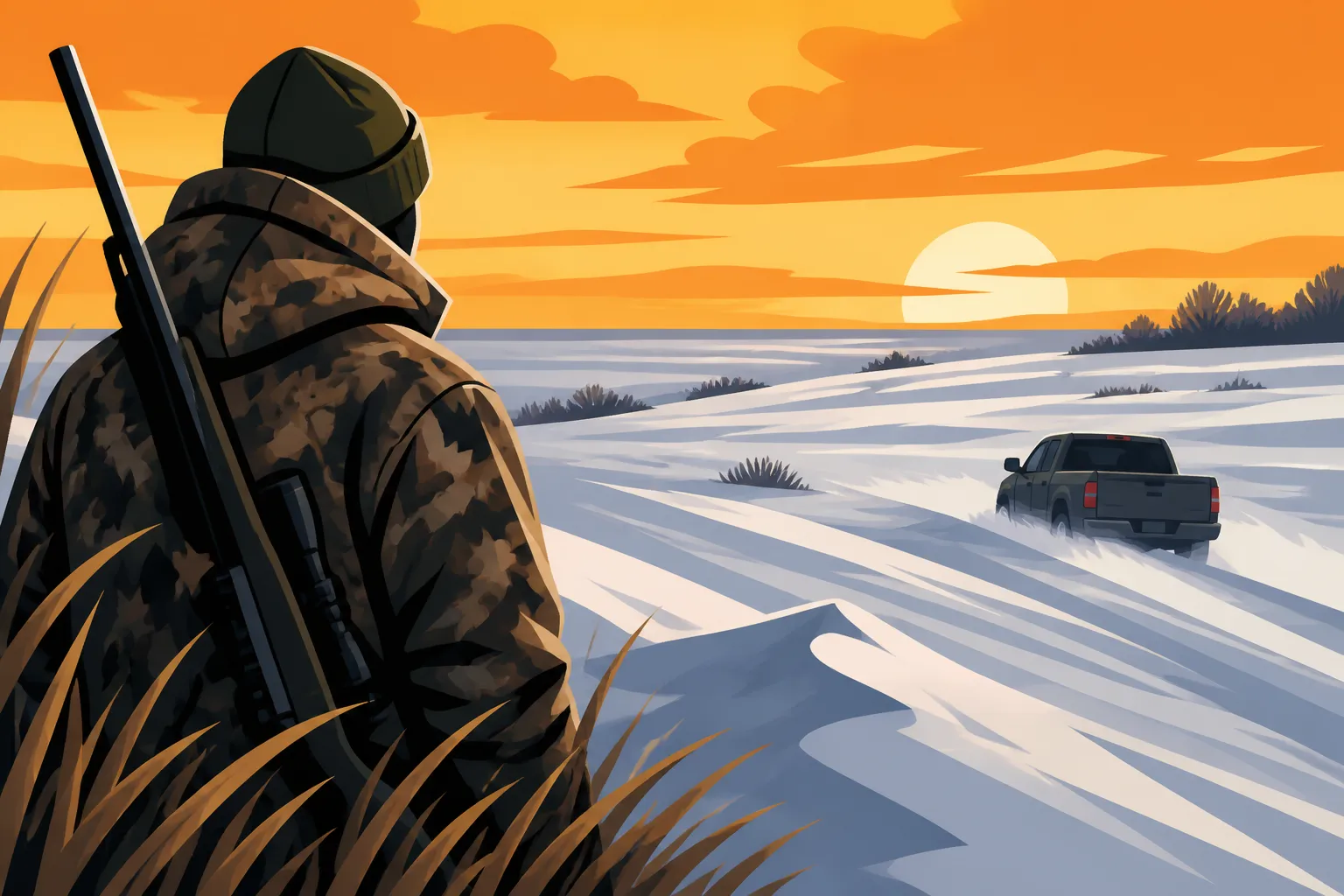
Saskatchewan's vast network of grid roads, minimum maintenance roads, and unmaintained trails are often the lifelines to prime hunting areas. However, these quickly become the first casualties of a heavy snowfall and subsequent high winds. Imagine driving down a seemingly clear gravel road, only to round a corner and find a drift the size of a small car blocking your path. It's not just the depth of the snow, but the notorious Saskatchewan wind that creates these impassable drifts, sometimes stretching for hundreds of yards. Farmers often plow out their private approaches, but the public access points can remain snowed in for days, or even weeks, depending on the remoteness and priority of clearing. This can mean losing precious hunting time, or worse, getting stuck miles from anywhere and facing a dangerous situation in plummeting temperatures.
Accessing Hunting a Saskatchewan Quarter Section or getting into those remote sections that others drive past becomes significantly harder. Even well-maintained main roads can become treacherous with black ice or compacted snow, making travel slow and risky. The frustration of seeing fresh tracks heading into an inaccessible area is a common late-season lament. Hunters often find themselves staring at a GPS map, like those provided by GoHunt, seeing incredible potential just beyond reach, knowing that the only thing separating them from that trophy buck is a wall of snow.
Impact on Game Movement and Behavior
Deep snow profoundly impacts how game animals move and where they choose to spend their time. Whitetail deer, mule deer, and moose all adapt their behavior to conserve energy and find shelter and food. When the snow really piles up, they'll seek out the path of least resistance, often forming "deer yards" in dense bush, river bottoms, or thick cover where travel is easier. This means their patterns shift dramatically from the early season.
Instead of browsing widely, deer will often stick to established trails, sometimes even creating tunnels under heavy snow in thickets. They'll frequent areas with protective thermal cover, like stands of spruce or dense willow, where the snow isn't as deep and the wind is less biting. Food sources also become concentrated. Deer might yard up near standing cornfields, old farmsteads with overgrown apple trees, or areas where browse is still accessible. Understanding Where Saskatchewan Whitetails Bed in Snow is paramount. These areas, once possibly overlooked, become high-priority scouting locations. Moose, with their longer legs, handle deep snow better than deer but will still seek areas of shelter and accessible browse, often along frozen creek beds or in mature timber. Elk, too, will concentrate in specific areas, often using thick cover and south-facing slopes to conserve energy and find what forage is available.
Essential Gear and Vehicle Prep for Snow-Challenged Access
When you know you're heading into conditions where roads might drift in, preparing your vehicle and your personal gear isn't just a good idea, it's a non-negotiable safety measure. Getting stuck, or becoming too cold, can quickly turn a hunt into a life-threatening ordeal.
Vehicle Modifications and Recovery Tools
A standard two-wheel-drive pickup simply won't cut it when the snow starts to pile up. A reliable four-wheel-drive (4×4) truck or a capable SUV with good ground clearance is your absolute minimum. Equipping it with aggressive winter tires, preferably studded, can make a world of difference in maintaining traction on icy or snow-packed surfaces. But even the best 4×4 can get stuck in a deep drift.
Here’s a non-exhaustive list of recovery essentials that should be permanently affixed to your truck bed for any late-season Saskatchewan hunt:
| Item | Purpose |
|---|---|
| Heavy-duty tow strap | For self-recovery with another vehicle or pulling out smaller drifts. |
| Winch (front mounted) | The ultimate self-recovery tool for serious stuck situations. |
| Full-size shovel | For digging out tires, clearing drifts in front of your vehicle. |
| Traction mats/boards | Place under spinning tires for grip on ice or deep snow. |
| Tire chains | For extreme conditions, provide incredible traction but are slow to install. |
| High-lift jack | Can lift a vehicle out of deep ruts; useful for changing tires in tough spots. |
| Air compressor/gauge | For adjusting tire pressure for different snow conditions. |
| Extra fuel | Getting stuck means burning fuel to stay warm; always carry a full spare tank. |
It's not enough to have these tools; you need to know how to use them. Practice with your winch, understand how to safely use a tow strap, and ensure your jack is functional and you're comfortable operating it in freezing temperatures. Consider taking a four-wheel-drive recovery course if you're new to extreme winter driving. Remember, preventing getting stuck is always better than recovering from it. Before you even head out, check the forecast and road conditions. Sometimes, despite all your preparation, you might just need to stay home, or be prepared to spend the night in your vehicle if you end up asking yourself What to Do If You Get Stuck in the Bush.
Personal Gear for Extreme Cold and Remote Access
Saskatchewan winters are legendary for a reason. Temperatures can plummet to -30°C (-22°F) or colder, with wind chill making it feel even more brutal. Staying warm and dry is absolutely critical for safety and enjoyment. Layering is paramount, starting with a moisture-wicking base layer, insulating mid-layers (fleece, down), and a windproof, waterproof outer shell.
Invest in high-quality insulated boots designed for extreme cold, especially if you plan on Sitting All Day in a Saskatchewan Blind or walking in deep snow. Look for boots rated to at least -40°C. Don't forget multiple pairs of wool socks. Hands and head are major areas of heat loss, so a warm hat, neck gaiter, and insulated gloves or mitts are essential. Bring extra pairs.
Beyond clothing, a comprehensive emergency kit is vital. This should include:
- Communication: A satellite messenger (like an inReach or Zoleo) is non-negotiable where cell service is spotty, which is common in remote areas. A fully charged cell phone is a backup, but don't rely on it.
- Navigation: A reliable GPS device (like those on a GoHunt app) with extra batteries, along with a compass and physical map of your hunting area.
- Survival: Fire starting kit (waterproof matches, lighter, fire starter), emergency blanket, first-aid kit, high-energy snacks, plenty of water (kept from freezing in an insulated container), and a headlamp with spare batteries.
- Tools: Knife, multi-tool, small axe or saw.
Proper preparation ensures that even if you face unexpected challenges, you have the means to stay safe and comfortable while you figure out your next move. It’s all part of Hunting Saskatchewan Winter Weather Safely.
Strategies for Hunting When Access is Limited
When traditional vehicle access is compromised by snow, it opens up a world of opportunities for hunters willing to put in the extra effort. These hard-to-reach areas often become sanctuaries for game, offering less pressure and potentially bigger animals.
Leveraging Foot Access and Alternative Transportation
The most direct way to bypass snowed-in roads is to go on foot, but not just any foot access. If you're going into deep snow, snowshoes or cross-country skis become invaluable. Snowshoes distribute your weight, allowing you to traverse deep drifts without post-holing, saving immense amounts of energy. Cross-country skis are excellent for covering long distances efficiently, especially on relatively flat terrain or old logging roads. This allows you to reach areas that are otherwise cut off, turning a disadvantage into a unique advantage.
For those willing to invest, snowmobiles or ATVs (equipped with tracks or aggressive tires) can be game-changers for late-season access. These machines can chew through snow that would stop a truck in its tracks, giving you access to remote bush, cutlines, or pipelines. However, it's crucial to understand and adhere to the regulations regarding their use on Crown land and private property. Always check local rules and ensure you have permission if crossing private land. You'll want to be familiar with the specific Quad and Side-by-Side Rules on Crown Land to avoid any issues. Always have a recovery plan, extra fuel, and a companion when using these vehicles in remote, snowy conditions. The ability to move silently and efficiently on snowshoes or skis, or rapidly on a snowmobile, means you can penetrate deeper into otherwise undisturbed territory, increasing your chances of finding unpressured animals.
Identifying Undisturbed Game Sanctuaries
The beauty of late-season hunting when roads drift in is that the deepest snow often acts as a natural barrier, creating de facto sanctuaries for game. Animals quickly learn where human pressure is light, and they will gravitate towards these areas. Your job is to identify them. Look for areas on your topographical maps or GoHunt satellite imagery that are surrounded by terrain that becomes difficult to access when heavy snow hits—dense bush, large sloughs, remote sections of Crown land, or properties with unmaintained access points.
Whitetails, in particular, will seek out dense thermal cover when temperatures drop and snow deepens. This could be a thick spruce bluff, a willow run along a creek bottom, or even a standing field of corn or cattails. Learning to interpret Reading Whitetail Sign in Saskatchewan Bluffs becomes even more critical, as fresh tracks will tell you if deer are consistently using these areas. Focus your efforts on these less-accessible pockets. Often, these areas are only a few hundred yards off a main road that has drifted in, making them perfectly reachable by snowshoe or ski, but far enough that casual road hunters won't bother. These are the places where big, mature bucks often survive the hunting season, only to be found by the hunter willing to brave the elements and the difficult travel. Hunters often find success Hunting a Willow Run for Whitetails or Hunting a Saskatchewan Bush Bluff when snow makes vehicle access difficult. These areas become winter strongholds for deer. When pursuing large whitetails, understanding that Hunting the Forest Fringe for Big Bucks becomes even more pertinent as these areas offer dense cover and varied food sources that become critical during deep snow.
Planning and Execution for Success and Safety
Late-season hunting in Saskatchewan requires more than just good gear; it demands meticulous planning and disciplined execution. The stakes are higher, and the margins for error are much smaller.
Pre-Hunt Scouting and Intel Gathering
Never go into a late-season hunt unprepared. Your pre-hunt scouting should extend beyond just finding game sign. It needs to include a thorough assessment of access routes and potential challenges. Utilize online mapping tools like GoHunt, which can provide satellite imagery to identify potential access points, dense cover, and likely game travel corridors even before you leave home. Pay close attention to terrain features that might cause snow to drift, like treelines, shelterbelts, and cuts in the landscape.
Talk to locals—farmers, landowners, or even other hunters in the area. They can provide invaluable real-time information about road conditions and game movement. Often, a brief conversation can save you hours of wasted effort or prevent you from getting stuck. Check weather forecasts religiously, not just for temperature and snowfall, but also for wind direction and speed. High winds after a snowfall are the primary architects of deep drifts. Consider a trip to the area before the deep snow hits, specifically to identify areas that will likely become inaccessible by vehicle but accessible by foot or snowmobile. This forward thinking is key to Scouting With Satellite Imagery in Saskatchewan and identifying those hidden gems. If you’re lucky enough to get permission on a private quarter section, ask the landowner about their usual plowing schedule or if they have unplowed access roads that might serve as your ingress.
Contingency Planning and Communication
Because of the inherent risks of late-season hunting in remote, snow-covered Saskatchewan, a robust contingency plan is absolutely essential. Before you leave, tell someone exactly where you are going, your planned route, when you expect to return, and what your emergency contact information is. This "hunt plan" should be detailed and left with a trusted person who will know to alert authorities if you don't check in by your specified time.
Always carry more food and water than you think you'll need, along with a portable charger for your devices. A full tank of gas in your vehicle and an extra jerry can are crucial. If you get stuck or stranded, you'll need to run your vehicle intermittently for heat. Dress in layers, and bring an extra layer, even if you don't think you'll need it. Staying hydrated is often overlooked in cold weather, but it's just as important as in warm weather. Understand your own physical limits and the limits of your equipment. Don't push into a situation that feels too risky. It's far better to come home empty-handed than to become a statistic. Remember to prioritize safety over success. Dealing with Meat Care in Saskatchewan's Cold Snaps or Field Dressing in Saskatchewan's Deep Cold will present its own challenges if you are successful, so factor that into your planning, especially when considering extraction methods. Always remember to check your Winter Truck Kit for a Saskatchewan Hunt before heading out.
Late Season Access Methods Comparison
Navigating Saskatchewan's late-season snowy landscape requires adapting your mode of transport. Here's a quick comparison to help you plan.
| Access Method | Pros | Cons | Ideal Use Case |
|---|---|---|---|
| 4×4 Truck/SUV | Can handle light snow, carries gear, comfortable. | Prone to getting stuck in deep drifts, limited by road maintenance. | Maintained gravel roads with moderate snow, short distances. |
| Foot (Hiking) | Silent, inexpensive, deep penetration if willing to work. | Slow, physically demanding, limited gear capacity. | Short walks into nearby cover from accessible roads. |
| Foot (Snowshoes/Skis) | Excellent for deep snow, silent, good exercise. | Physically demanding, slower than motorized, learning curve. | Remote areas cut off by deep drifts, covering longer distances. |
| ATV/Side-by-Side | Good mobility in moderate snow, can carry gear. | Can get stuck in very deep snow, noisy, fuel dependent, regulatory limits. | Medium distances on trails, old cutlines, moderate snow. |
| Snowmobile | Fastest over deep snow, excellent mobility in severe conditions. | Noisy, expensive, specialized gear, regulatory limits, high fuel consumption. | Long distances in remote, deep snow, bush access. |
Disclaimer
Hunting is an inherently dangerous activity. This guide provides general information and recommendations. Always consult the official Saskatchewan hunting regulations, local laws, and seek professional training for safety and survival skills. Personal responsibility for safety and ethical hunting practices rests with each individual hunter. Conditions can change rapidly, and hunters should always prioritize safety above all else.