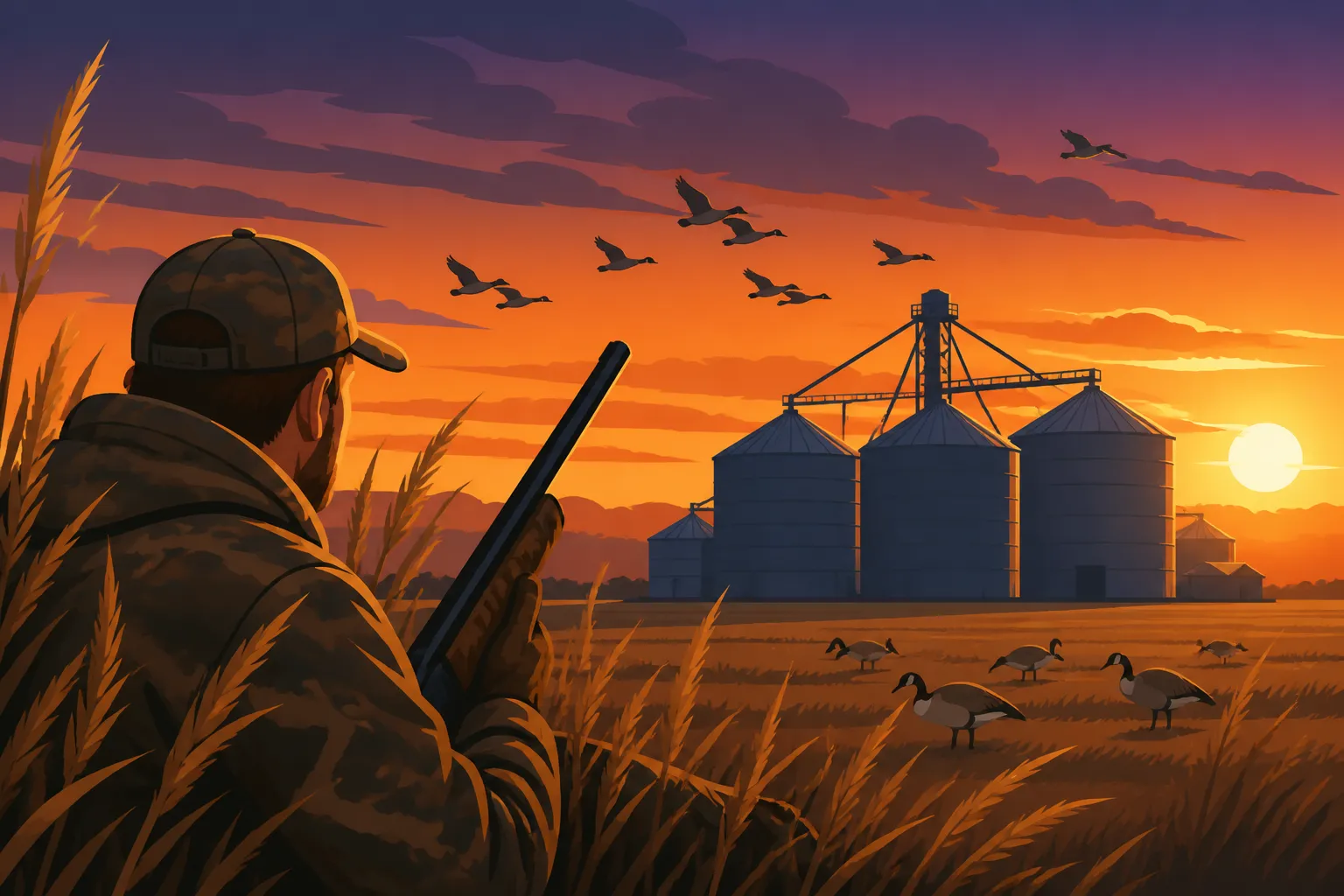
Hunting a Grain Bin Yard at Dusk
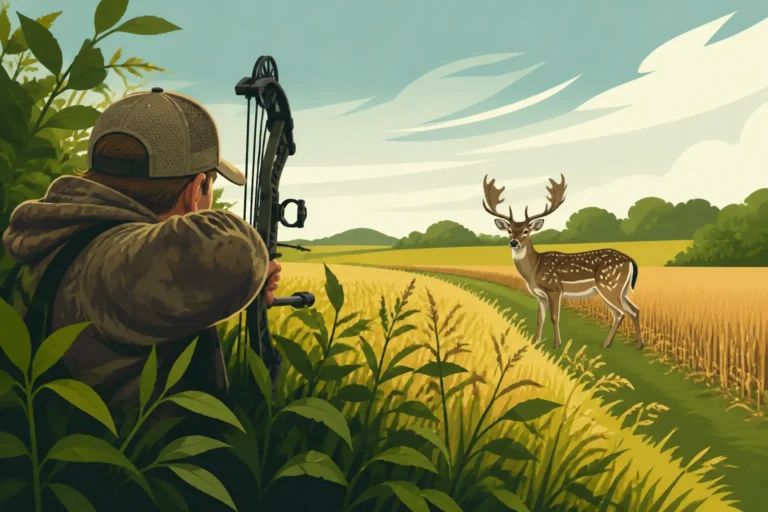
There’s a certain frustration that comes with knowing the deer are there, seeing their tracks everywhere, but never quite catching them in daylight. You scout during the day, find all the classic signs – rubs, scrapes, fresh tracks leading from heavy cover to promising food sources – but come hunting time, they seem to vanish until well after dark. This is a common tale across Saskatchewan’s agricultural landscape, where big bucks often become almost completely nocturnal. This guide is all about tackling that challenge head-on, specifically by focusing on one often-overlooked hotspot: the grain bin yard, and how to effectively hunt it at that magical, fleeting time of dusk.
Why Grain Bin Yards Become Deer Magnets at Dusk
If you’ve spent any time on a farm, you know grain bin yards are hubs of activity. Trucks, tractors, people coming and going – it doesn’t exactly scream "prime deer habitat" during the day. Yet, as the sun dips below the horizon, these seemingly chaotic spots can transform into prime feeding grounds. It’s all about understanding what draws deer to them and when.
The Irresistible Allure of Spilled Grain
Deer are, above all, opportunists. They’re constantly looking for the easiest, most energy-rich food sources available, especially when natural forage starts to dwindle in late fall and winter. And let’s be honest, farm operations are rarely spotless. Whether it's during loading, unloading, auger spills, or even just the tireless work of mice and rats dragging kernels out, there's almost always a scattering of grain around the bins.
Think about it: a concentrated pile of high-energy wheat, barley, oats, or even protein-rich peas and lentils is like a gourmet buffet for a deer. They don't have to work hard to find it, or spend precious calories digging it out from under snow. This makes a grain bin yard an incredibly powerful draw, especially as temperatures drop and deer need those extra calories to sustain themselves. While you might be focused on Hunting Whitetails on Saskatchewan Farmland, don't forget these small, concentrated food sources. This consistent availability, even if it's just a few handfuls here and there, makes the yard a known, reliable feeding stop.
The Comfort of Proximity to Cover and Safety
It's not just the food; it's the package deal. Grain bin yards, particularly those on older homesteads or active farms, are rarely out in the absolute open prairie. They almost always have some form of adjacent cover. This could be a dense shelterbelt, a small bush pocket, a bluff of poplars, a sprawling slough, or even an unharvested field of standing crops like corn or tall stubble.
Deer rely on these cover elements to feel secure. They will stage in this thick stuff during the day, browsing and bedding, waiting for the cover of darkness to venture into more open areas. The grain bin yard, nestled often right on the edge of this security cover, becomes a natural transition point. As the light fades, they feel confident enough to emerge from their bedding areas, slip into the yard, grab a quick meal, and then often retreat back into cover or move to other feeding areas under the full cloak of night. This predictable movement pattern, from safety to food, is exactly what we're looking to capitalize on. If you're Hunting a Shelterbelt Between Two Fields, a nearby bin yard could be the missing piece of the puzzle.
Decoding Human Activity Patterns
Deer are incredibly adaptable and intelligent animals. They learn human routines, and they do it fast. On most farms, the peak of human activity – the tractors running, the vehicles moving, the general hustle and bustle – tends to wind down as dusk approaches. Farmers are often heading in for supper, equipment is parked, and the noise subsides.
Deer pick up on this rhythm. They know when the coast is generally clear. This learned behavior is why targeting dusk at a grain bin yard is so effective. They're not going to be charging in at noon, but as that last hour of legal shooting light ticks away, they've often processed that the immediate threat has lessened, and their stomachs are calling. It’s crucial for you as a hunter to mimic this winding down – arrive early, settle in, and become part of the quiet landscape, allowing the deer to believe the yard is "safe" once again.
Strategic Scouting and Setup for Dusk Hunts
Hunting a grain bin yard at dusk isn't about luck; it's about meticulous scouting and a smart setup. You can't just show up and expect success. These spots demand a calculated approach that respects the dynamics of farm life and deer behavior.
Identifying Active Bin Yards and Permission
Your first step is reconnaissance. Don't just pick any bin yard; you need to find one that deer are actually using. Look for the obvious signs: fresh tracks in the mud or dust around the bins, distinct trails leading into and out of nearby cover, and piles of deer droppings. Most importantly, look for the spilled grain itself. Is it fresh, or has it been there a while? The more fresh sign, the better.
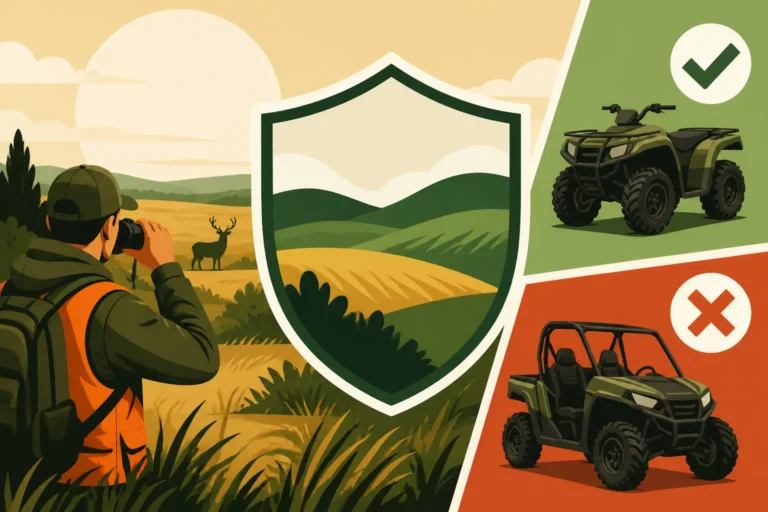
A great way to confirm activity is to do some distant observation. Grab your binoculars or spotting scope and watch the yard from a quarter-mile away (or further, if possible) during the last hour of daylight a few evenings before you plan to hunt. See how deer are approaching, where they’re feeding, and when. This non-invasive scouting is critical. Tools like GoHunt can be invaluable here, allowing you to identify potential bin yards on accessible land, overlay property lines, and locate nearby cover without ever stepping foot on the property until you have permission. You'll want to remember to scout not just the yard, but the surrounding Reading Whitetail Sign in Saskatchewan Bluffs and other potential bedding areas.
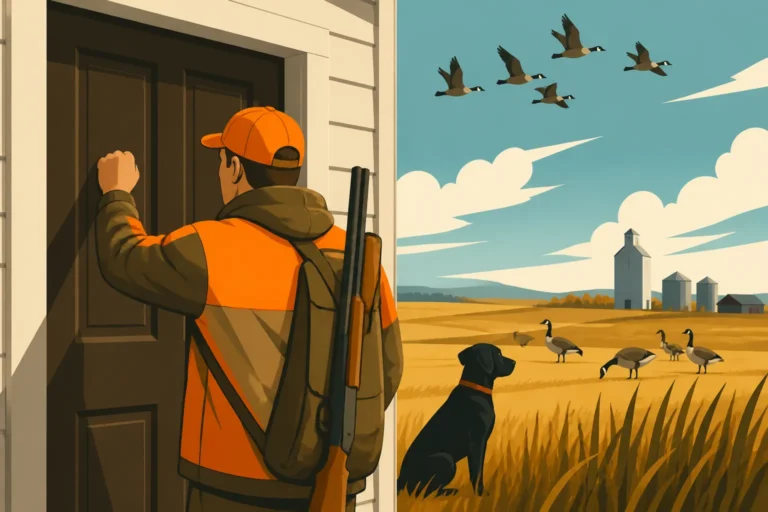
Crucially, always, always, always obtain explicit permission from the landowner. Hunting on private land, especially around active farm operations, requires a conversation, respect, and trust. Before you even think about stepping onto a grain bin yard with a rifle or bow, go knock on that door. Explain what you want to do, emphasize your commitment to safety and respect for their property. Many farmers are happy to grant access to ethical hunters, especially if deer are causing crop damage or safety concerns around their bins. Understanding Saskatchewan Landowner Permission Law is fundamental here.
Optimal Stand or Blind Placement
Once you've identified an active yard and secured permission, it's time to think about your setup. This is where many hunts are won or lost.
- Wind Direction is King: I cannot stress this enough. Your wind needs to be consistently blowing away from where you expect deer to approach and feed. Deer will almost always circle downwind before committing to an open area. A bad wind will bust your hunt before it even starts. Check the forecast, but also verify the actual wind direction on site before you climb into your stand or blind.
- Concealment is Key: Grain bin yards can be relatively open. Look for natural cover that breaks up your outline. An old shelterbelt, a small clump of trees, the corner of an unused outbuilding (with permission, of course), or even a large bale pile can provide excellent concealment. If using a ground blind, set it up well in advance to let deer get used to it. Position it to offer a clear shot at the feeding area while providing a safe backdrop.
- Shooting Lanes and Backstops: In a farmyard setting, you might have obstacles. Ensure your shooting lanes are clear, accounting for any small trees, machinery, or buildings. Always consider your backstop – what’s behind your target? You need to be absolutely sure your bullet or arrow will stop safely.
Silent Entry and Exit Routes
This is where the "dusk hunt" strategy truly shines, but also where it can be most easily ruined. Deer that use grain bin yards are inherently wary due to human presence. Any unnecessary disturbance can send them scurrying.
- Approach Smart: Plan your entry route to be as stealthy as possible, minimizing noise and scent. Walk in from a direction that doesn't push deer out of the area you want them to come from. This might mean a longer walk, but it's worth it. Park your vehicle far enough away that the sound of closing doors or an engine won't alert incoming deer. Consider parking downwind of the bin yard and walking in a way that your scent doesn't drift across their approach paths.
- Disappear Early: For a dusk hunt, you need to be in your stand or blind well before the deer start moving. Give the area at least an hour, preferably two, to settle down after you’ve entered. This allows any residual scent or noise to dissipate and for the deer to feel safe enough to begin their evening routine.
- Exiting Safely: After you've taken a shot, or even if you haven't, your exit needs to be as quiet as your entry. If you've shot a deer, focus on marking the last spot you saw it. Then, try to exit without further disturbing the area, especially if you need to return for tracking later. If you get stuck in the bush on your way out, knowing What to Do If You Get Stuck in the Bush is important, but preventing it by planning your exit is better.
Executing the Dusk Hunt and Ethical Considerations
Now that you've done your homework and set up shop, it's time for the actual hunt. This phase requires patience, precision, and a deep commitment to ethical hunting practices.
Timing Your Arrival and Exercising Patience
As discussed, showing up late is a recipe for failure. For a dusk hunt, you should be in your stand or blind at least 1.5 to 2 hours before official sunset, giving everything time to calm down. Bring a good book or just enjoy the quiet. The magical window, especially for older, wiser bucks, often happens in the last 30 minutes of legal shooting light.
Deer, particularly mature bucks, often hold tight in their bedding areas, like a Hunting a Willow Run for Whitetails or a dense patch of bush, until the absolute last moment before venturing into the more open bin yard. They're playing it safe, using the fading light as their cloak. This means you might sit for hours with no action, only to have a giant step out when you can barely see your pins or crosshairs. Be ready for that moment; it can be incredibly intense and fleeting. Don't fidget, don't check your phone, and certainly don't stand up until the hunt is over or you've recovered your animal.
| Aspect of Hunting a Grain Bin Yard at Dusk | Pros | Cons |
|---|---|---|
| Food Source | High-energy, consistent, easy access to grain attracts deer. | Can attract other critters (mice, rats, coyotes) that might spook deer. |
| Predictability | Deer often develop predictable patterns coming to the yard at specific times (e.g., dusk). | Patterns can be easily disrupted by unexpected human activity or severe weather. |
| Cover Proximity | Yards are usually near good cover, making deer feel secure when transitioning. | Limited shot opportunities if deer only skirt the edge of cover or don't commit to the open. |
| Low Light Advantage | Capitalizes on deer's crepuscular nature; often the only time mature bucks expose themselves. | Challenging visibility for shot placement and tracking. Requires excellent optics and ethical discipline. |
| Landowner Relations | Opportunity to build strong relationships, potentially leading to long-term access. | Requires extra effort to gain and maintain permission; risk of disturbing farm operations. |
| Accessibility | Often easy to access by vehicle close to main roads, unlike deep bush hunts. | Can attract more hunting pressure if widely known; might be too close to buildings for safe shooting. |
Shot Placement and Tracking in Low Light
This is perhaps the most critical section for an ethical hunter. Shooting in low light conditions adds a significant layer of challenge and responsibility.
- Patience for the Perfect Shot: When that buck finally steps out, your adrenaline will surge. But you must hold it in check. Wait for a broadside or slightly quartering-away shot. Do not take a questionable shot in low light. If you have any doubt about the angle, the distance, or your ability to make a clean kill, let the deer walk. There will always be another opportunity. Remember, ethical hunting prioritizes a quick, humane kill above all else. Review your Saskatchewan Rifle Season Dates and be mindful of your specific zone's regulations.
- Mark the Spot: If you take a shot, immediately mark the precise spot where the deer was standing, and where you last saw it go into cover. Use a landmark, a piece of flagging tape, or even a mental GPS coordinate. Your memory will play tricks on you in the dark, especially under pressure.
- Tracking Protocol: For any shot taken in low light, even if you think it was perfect, resist the urge to immediately jump up and chase. Give the deer time to expire. For a good hit, waiting 30-60 minutes can be sufficient. For a questionable hit, or if the deer didn't react as expected, it's often best to back out entirely and return in the morning to track. This allows the deer to bed down and stiffen, increasing your chances of a successful recovery. A good headlamp or powerful tracking light is absolutely essential for tracking after dark. When you're dealing with Meat Care in Saskatchewan's Cold Snaps, getting the animal quickly is even more vital.
Respecting Landowners and Property
Your access to this unique hunting opportunity is entirely dependent on the landowner's goodwill. This is a privilege, not a right.
- Communicate and Be Considerate: Always keep lines of communication open. If you plan to hunt, let them know. If you've shot something, tell them. If you need to return in the morning to track, inform them. Never assume.
- Leave No Trace: Pack out everything you pack in. Don't leave spent casings, trash, or anything else behind. If you use a ground blind, remove it promptly after your hunt.
- Damage Control: Be extremely careful around farm equipment, buildings, and fences. Drive slowly on their roads and stay on designated paths. Avoid driving in wet fields. Any damage you cause is your responsibility.
- Offer Help: A fantastic way to show appreciation and secure future access is to offer assistance. Can you help move bales? Pick up rocks? Even just bringing a small gift of appreciation can go a long way. Building a relationship makes you an asset, not a burden. Always remember the lessons from Knocking on Doors in Saskatchewan Farm Country.
- Educate Yourself: Ensure you're fully up-to-date on all Saskatchewan hunting regulations, including blaze orange requirements and legal hunting hours. Consider taking a refresher on Saskatchewan Hunter Education Requirements if it's been a while.
By focusing on these strategic elements and adhering to the highest ethical standards, hunting a grain bin yard at dusk can become one of your most successful and rewarding hunting methods in Saskatchewan. Understanding the intricacies of deer behavior, especially when it comes to Hunting the December Late Season Cold, can further enhance your success. And always consult your Reading a Saskatchewan WMZ Map Before You Go to ensure you're in an open zone.
Disclaimer
Hunting is an activity with inherent risks. This guide is for informational purposes only and does not substitute for proper hunter education, adherence to all local, provincial, and federal laws and regulations, or personal responsibility. Always prioritize safety, ethics, and respect for wildlife and landowners. Ensure you understand and follow all Saskatchewan hunting regulations before venturing afield.