Saskatchewan Youth and Mentored Hunting
Bringing new hunters into the fold is one of the most rewarding aspects of our outdoor lifestyle, but it often comes with a heap of questions about rules, safety, and how to best teach the ropes. It can feel like a daunting task to navigate all the requirements while also trying to foster a love for the outdoors in a young person. This comprehensive guide will walk you through everything you need to know about youth and mentored hunting in Saskatchewan, making it easier to share your passion responsibly and effectively.
The Crucial Role of Youth in Saskatchewan Hunting Heritage
Hunting in Saskatchewan isn't just a pastime; it's a vital part of our culture, our economy, and our approach to wildlife management. When we talk about youth hunting, we're not just discussing getting a licence in a young person's hand. We're talking about the future of this tradition, ensuring that the next generation understands and cherishes the natural world and the responsibilities that come with harvesting game. The decline in hunter numbers across North America is a real concern, and actively engaging youth is perhaps the most critical step we can take to reverse that trend here in Saskatchewan.
Passing Down More Than Just a Skill
Mentored hunting goes far beyond teaching someone how to pull a trigger or stalk a deer. It's about transmitting a deep, abiding respect for the land, the animals, and the deeply rooted traditions that define responsible hunting. When you take a young person out, you're not just showing them how to aim; you're sharing stories, teaching patience, demonstrating perseverance, and imparting knowledge that has been passed down through generations. It's in these moments, often spent in quiet contemplation in a blind or walking through a bluffy coulee, that the true value of hunting is understood. The connection to nature, the understanding of ecosystems, and the simple joy of being outdoors are gifts that last a lifetime, far outweighing any game taken.
Instilling a Deep Conservation Ethic
One of the most powerful lessons a young hunter learns from a mentor is the importance of conservation. Hunting fees and licenses directly fund wildlife management, habitat restoration, and research efforts. By participating in hunting, youth become direct contributors to these critical initiatives. A good mentor explains this connection, showing how sustainable hunting practices help maintain healthy wildlife populations and robust ecosystems. It's about understanding that we are stewards of the land, not just consumers of its resources. This direct involvement in conservation efforts, seeing firsthand how their participation benefits wildlife, fosters a deep sense of responsibility and stewardship that is often hard to grasp from a textbook or a screen. The act of Hunting Saskatchewan's Aspen Parkland Bluffs or Hunting Saskatchewan's Boreal Forest Fringe offers tangible lessons in habitat and wildlife interaction.
Developing Essential Life Skills Through Hunting
The outdoors is arguably the best classroom, and hunting offers a unique curriculum. For young people, mentored hunting builds a suite of invaluable life skills. Patience is paramount, whether sitting in a cold blind waiting for a whitetail or quietly stalking a mule deer. Perseverance comes from countless hours without success, learning to push through discomfort. Self-reliance grows as they learn to navigate, track, and make independent decisions in challenging environments. Critical thinking is honed when interpreting sign, considering shot angles, and understanding animal behaviour. Responsibility is learned through firearm safety, ethical shot placement, and proper game care. These are skills that translate directly into success in school, careers, and life in general, making the investment in a young hunter's journey incredibly worthwhile.
Understanding Saskatchewan's Youth and Mentored Hunting Framework
Saskatchewan has specific regulations designed to encourage youth participation while ensuring safety and ethical conduct. It's crucial for both mentors and young hunters to understand these rules to ensure a legal and enjoyable experience. The system is set up to provide a structured introduction to hunting, prioritizing education and supervised learning.
Age Requirements and the Path to Hunter Education
In Saskatchewan, a young person can begin their journey into hunting quite early, but with strict supervision. There is no minimum age to participate in the Mentored Hunter Program, which means even very young children can accompany a qualified mentor to observe and learn. However, to legally hold a hunting licence and carry a firearm themselves, a hunter must be at least 10 years old.
Before a young person can purchase a Saskatchewan hunting licence, they must successfully complete a recognized hunter education course. For most, this means the Saskatchewan Hunter Education Course, which covers firearms safety, hunting regulations, wildlife identification, conservation ethics, and outdoor survival. This course is foundational, providing the theoretical knowledge necessary for safe and responsible hunting. While younger children can start absorbing these lessons informally with a mentor, completing the formal course is a non-negotiable step toward becoming a licensed hunter. Information on Saskatchewan Hunter Education Requirements is readily available through the provincial government and local wildlife federations.
Licensing for Young Hunters and Mentors
Once a young person (aged 10 or older) has completed their hunter education, they can apply for hunting licences. The process typically starts by creating a Setting Up a Saskatchewan HAL Account through the provincial HAL (Hunter and Angler Licence) system. For youth, several licence options exist depending on the species and hunting method. For instance, a youth can apply for a regular resident deer licence, similar to an adult, once eligible. The cost for a Saskatchewan Resident Deer Licence Cost is often lower for youth, making it more accessible.
Mentors also play a critical role in the licensing aspect. A mentor must be a properly licensed adult hunter (18 years or older) with at least three years of hunting experience in Saskatchewan. They must hold the necessary licences for the species being hunted and ensure they are compliant with all regulations. For the Mentored Hunter Program specifically, the mentor must also possess a valid Saskatchewan's Wildlife Habitat Certificate. It's the mentor's responsibility to ensure the youth hunter adheres to all laws, including bag limits, season dates, and reporting requirements. This dual responsibility ensures that the youth is learning within a safe and legal framework.
Specifics of the Mentored Hunter Program
The Mentored Hunter Program in Saskatchewan is a fantastic initiative designed to give aspiring young hunters hands-on experience before they are fully licensed. Under this program, a youth who does not yet possess a hunter education certificate (and is therefore not yet licensed to hunt independently) can still accompany a qualified adult mentor during a hunt. The key here is that the youth is observing and learning, but not actively hunting or carrying a firearm themselves.
Here's a breakdown of how it works:
- Who can be a mentor? Any adult (18+) with at least three years of hunting experience and a valid Saskatchewan hunting licence for the species being hunted, along with their Wildlife Habitat Certificate.
- Who can be a mentee? Any youth, regardless of age, who does not yet have a hunter education certificate.
- What can the mentee do? The mentee can accompany the mentor, observe, assist with non-hunting tasks (like carrying gear or scouting), and learn fieldcraft. They cannot carry a firearm or crossbow, or discharge any hunting device. They are there to learn, not to hunt.
- Mentor's Responsibility: The mentor is legally responsible for the mentee's safety and adherence to all regulations. The mentor must be in direct control and supervision of the youth at all times.
This program provides a crucial stepping stone, allowing young enthusiasts to immerse themselves in the hunting experience, feel the excitement, and learn the routines long before they are ready to handle a firearm or make a harvest themselves. It builds anticipation and a solid foundation of understanding.
Preparing for a Successful Mentored Hunt in Saskatchewan
A successful mentored hunt isn't just about the moment a game animal is spotted; it's about the hours, days, and even weeks of preparation that lead up to it. For young hunters, this preparation is an integral part of the learning process, teaching them foresight, planning, and the importance of being ready for anything the Saskatchewan wilderness throws at them.
Pre-Season Scouting and Planning with Digital Tools
Preparation for a mentored hunt truly begins long before opening day. This is where mentors can really shine, involving the young hunter in every step. Start by reviewing maps of your chosen Wildlife Management Zone (WMZ), paying close attention to Saskatchewan's FWDF Land Access Rules and understanding the boundaries of public and private land. Digital tools are invaluable here. Platforms like GoHunt offer detailed satellite imagery, topographic maps, and land ownership overlays that can help you identify potential hunting spots, escape routes, water sources, and bedding areas.
Take your mentee on a few scouting trips, without weapons, to walk the terrain you've identified. Show them how to Reading Whitetail Sign in Saskatchewan Bluffs or how to identify game trails near a Hunting a Willow Run for Whitetails. This teaches them observation skills and reinforces what they've seen on the maps. Discuss different scenarios, plan strategies, and talk about wind direction, animal behaviour, and how to approach different types of cover. This pre-season planning is not just logistical; it's a vital part of building the young hunter's confidence and understanding of the hunting process.
Essential Gear and Safety Protocols for Young Hunters
Proper gear is crucial for comfort and safety, especially when introducing a young person to hunting. Layered clothing appropriate for Saskatchewan's often unpredictable weather is a must. This includes good quality base layers, insulating mid-layers, and a waterproof/windproof outer shell. Pay particular attention to warm, waterproof boots, especially if you're planning on Hunting Saskatchewan Winter Weather Safely in late season or venturing into slushy areas. Don't forget essentials like hats, gloves, and hand warmers. For safety, ensure the young hunter has properly fitting blaze orange outerwear, adhering to Saskatchewan Blaze Orange Rules.
For firearms, if the youth is licensed and will be carrying one, ensure it's a manageable calibre and size for them. Recoil sensitivity can quickly deter a young hunter, so starting with a smaller calibre or even a .22 for target practice can be beneficial. Crucially, emphasize firearm safety from the very beginning. Review the four cardinal rules of firearm safety repeatedly:
- Treat every firearm as if it were loaded.
- Always point the muzzle in a safe direction.
- Be sure of your target and what is beyond it.
- Keep your finger off the trigger until ready to shoot.
Practice these rules constantly, both at the range and in the field, making them second nature.
Navigating Land Access and Permissions
One of the most common hurdles for hunters, particularly those new to the sport, is finding places to hunt. This is an excellent opportunity for mentors to teach crucial etiquette and legalities. In Saskatchewan, whether you're planning to hunt on Crown land or private land, understanding access rules is paramount. For private land, obtaining explicit permission from the landowner is absolutely essential. This means Knocking on Doors in Saskatchewan Farm Country and having respectful conversations, explaining your intentions, and perhaps even offering to help with chores or share some wild game if successful.
For Crown land, while generally open to public hunting, there can be specific restrictions or zones, and it's always wise to double-check maps and local regulations. Utilize resources like the Saskatchewan government's online map viewers or hunting apps like GoHunt to clearly identify Crown land parcels. Teach your mentee the importance of leaving no trace, respecting fences and gates, and always being a good ambassador for hunting. This proactive approach to land access instills responsible habits and fosters positive relationships with landowners, which is vital for the future of hunting.
Here's a quick comparison of general youth licensing options in Saskatchewan:
| Feature | Mentored Hunter Program (Under 10, or uncertified) | Youth (10-15 years old, Hunter Ed certified) | Young Adult (16-17 years old, Hunter Ed certified) |
|---|---|---|---|
| Hunter Education | Not required (mentor certified) | Required | Required |
| Can Carry Firearm | No | Yes (with adult supervision) | Yes (with adult supervision until 18) |
| Can Harvest Game | No (mentor uses their tag) | Yes (uses their own valid tag) | Yes (uses their own valid tag) |
| Licence Required | No (for mentee, mentor needs theirs) | Yes (youth specific or regular resident options) | Yes (regular resident options) |
| Supervision Required | Direct, hands-on supervision by qualified mentor | Direct supervision by licensed adult (18+) | Direct supervision by licensed adult (18+) |
| Primary Focus | Observation, learning, fieldcraft | Active participation, skill development, harvesting | Independent skill application, ethical hunting |
On the Ground: Guiding and Learning During the Hunt
When the season finally arrives and you’re out in the field with your young hunter, the real teaching begins. This is where all the preparation, the scouting, and the safety talks come to life. Your role as a mentor is to be a guide in every sense of the word—patient, knowledgeable, and always prioritizing the experience over the outcome.
Teaching Fieldcraft and Ethical Decision-Making
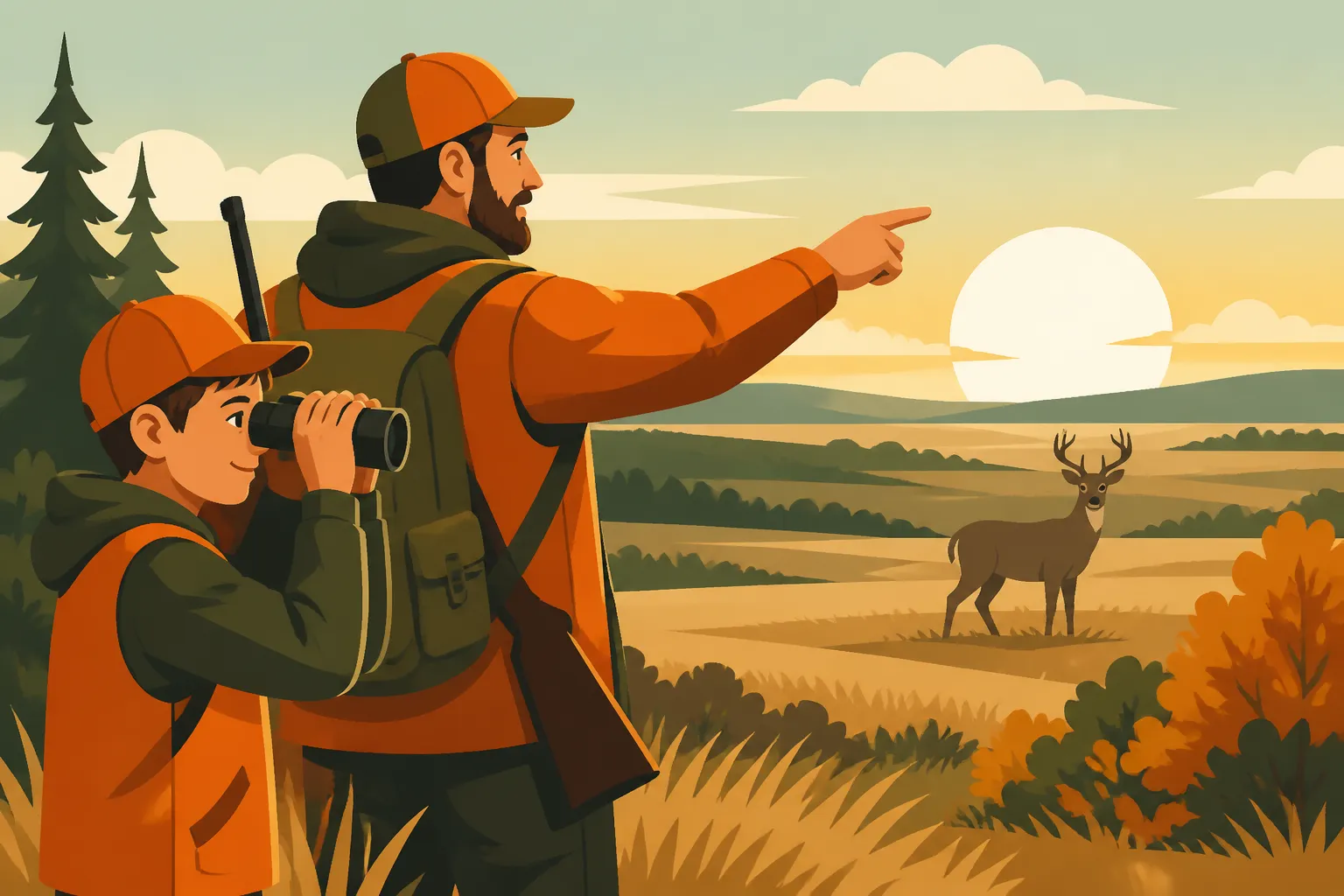
Being in the field provides countless opportunities to teach critical fieldcraft skills. Show your mentee how to move quietly through the bush when Hunting the Forest Fringe for Big Bucks, how to interpret animal tracks and droppings, and how to use natural cover to their advantage. Explain the importance of wind direction and how it influences animal movement. Demonstrate how to use binoculars effectively for glassing large areas, perhaps scanning a Hunting a Prairie Coulee Bottom for movement.
Beyond the technical skills, focus heavily on ethical decision-making. Discuss what constitutes a clean, ethical shot and the importance of shot placement. Talk about why passing on a questionable shot, even if it means going home empty-handed, is the mark of a responsible hunter. If a shot is taken, involve them in tracking the animal, teaching perseverance and responsibility to recover game. This teaches them the gravity of taking a life and the respect owed to the animal. It’s about cultivating a deep sense of responsibility that will guide their hunting decisions for years to come.
Prioritizing Safety and Enjoyment Over Success
When hunting with youth, safety is always the absolute priority, above all else. This means constant vigilance regarding firearm handling, identifying targets, and being aware of surroundings. Ensure that the young hunter understands and follows all rules regarding safe shooting lanes and the use of shooting sticks or rests for stability. Reinforce the concept that no animal is worth compromising safety.
Equally important is ensuring the young hunter actually enjoys the experience. It's easy for adult hunters to get caught up in the pursuit of a trophy or filling a tag, but for a mentee, the overall experience is far more important. If they're cold, tired, or bored, they're unlikely to develop a lasting passion for hunting. Keep hunts shorter, bring plenty of snacks, and allow for breaks. Focus on the small victories—seeing a deer, identifying tracks, hearing a distant coyote call. Celebrate these moments, regardless of whether a harvest occurs. A positive first experience is far more valuable than a filled tag. This might mean deciding to forgo Sitting All Day in a Saskatchewan Blind if the weather turns nasty or if the young hunter is losing interest, opting instead for a shorter, more engaging hunt.
Post-Harvest Responsibilities and Meat Care
If the hunt is successful, the learning doesn't stop. Post-harvest responsibilities are a critical part of the hunting experience and offer invaluable lessons. Involve your mentee in the field dressing process. Explain why it's done, how to do it efficiently, and the importance of hygiene. This might seem grisly to some, but it connects the harvest directly to the food on the table, reinforcing the ethical treatment of game and preventing waste. Field Dressing in Saskatchewan's Deep Cold requires specific knowledge, which is best learned hands-on.
Teach them about proper meat care, including cooling the carcass quickly, transportation, and processing. Discuss the importance of submitting samples for Saskatchewan's CWD Testing Rules if hunting in a mandatory zone. If you take the animal to a local butcher, explain that process. If you process it yourself, involve them in butchering, packaging, and freezing. This completes the cycle, showing the young hunter that the responsibility extends far beyond the shot, culminating in providing healthy, organic food for the family.
Challenges and Rewards of Mentoring the Next Generation
Mentoring young hunters is undeniably challenging, requiring immense patience, adaptability, and dedication. However, the rewards are equally profound, creating lasting memories and shaping the future of our hunting heritage. Understanding both the ups and downs can help you prepare for a more fulfilling mentorship journey.
Overcoming Common Hurdles for Young Hunters
Young hunters often face a unique set of challenges that can test their resolve and a mentor's patience. Physical endurance can be an issue; long walks, cold weather, and early mornings can be tough. Mentors should plan hunts that match the young hunter's physical capabilities, gradually increasing the intensity as they gain experience. The emotional aspect of taking an animal's life can also be difficult. Some youth may struggle with this realization, and it's essential for mentors to be sensitive, open to discussion, and provide reassurance about the ethical nature of hunting as a means of sustenance and wildlife management.
Another common hurdle is frustration with lack of success. Hunting is not always about immediate gratification, and sometimes multiple trips result in no game. This is where a mentor's ability to keep spirits high and focus on the overall experience, rather than just the kill, becomes crucial. Celebrate small successes, point out interesting wildlife encounters, and remind them that patience is a virtue in hunting. Use tools like GoHunt to show them areas where game might be, but also temper expectations by explaining that wildlife is wild, and success is never guaranteed. Remember, the goal is to cultivate a lifelong passion, not just a single successful hunt.
The Profound Impact of Mentorship
Despite the challenges, the impact of mentorship on a young hunter is immeasurable. A mentor provides a safe, supportive environment for learning, acting as a guide, teacher, and role model. They instill values like respect, responsibility, and conservation that extend far beyond the hunting field into all aspects of life. The bond forged during shared outdoor experiences, facing challenges together, and celebrating successes, creates memories that strengthen family ties and friendships for a lifetime. These are the stories that will be recounted around campfires and dinner tables for years to come.
Moreover, mentorship ensures that the traditions, knowledge, and ethics of hunting are not lost. It creates a lineage of conservationists and outdoors enthusiasts who will continue to advocate for wildlife and wild places. Seeing a young person's eyes light up after spotting their first deer, or the pride on their face after an ethical harvest, is a reward that truly validates all the effort and patience invested.
Ensuring a Sustainable Future for Saskatchewan Hunting
The future of hunting in Saskatchewan, and indeed across the continent, hinges on our ability to recruit and retain new hunters. The decline in hunter numbers directly impacts funding for wildlife management and diminishes the political voice for conservation efforts. By actively engaging in youth and mentored hunting programs, we are directly contributing to the sustainability of our hunting heritage. We are creating a new generation of informed, ethical, and passionate conservationists who will carry the torch forward.
Organizations like the Saskatchewan Wildlife Federation (SWF) are vital in this effort, offering hunter education courses, youth camps, and advocating for policies that support new hunters. Supporting these organizations and participating in their programs is another way to ensure that youth hunting continues to thrive. Every time a young person joins the ranks of hunters, it’s a victory for wildlife, for conservation, and for the enduring legacy of outdoor traditions in Saskatchewan.
Disclaimer
This article is intended for informational purposes only and does not constitute legal advice. Hunting regulations, licensing requirements, and season dates in Saskatchewan are subject to change. Always consult the official Saskatchewan Hunters' and Trappers' Guide, available from the Saskatchewan Ministry of Environment, and other relevant government publications for the most current and accurate information before planning any hunting activity. It is the responsibility of each hunter to know and adhere to all applicable laws and regulations.