Saskatchewan Muzzleloader Equipment Rules
The world of hunting regulations can often feel like navigating a dense Saskatchewan bush in the dark, and when you throw in specialized equipment like muzzleloaders, it's easy for confusion to creep in. Many hunters, whether seasoned veterans or newcomers, grapple with understanding the specific rules for black powder firearms, especially when comparing them to modern rifles or bows. This guide aims to shine a light on Saskatchewan's precise regulations for muzzleloader equipment, ensuring you're legally equipped and confident when you head out into the field.
Understanding Saskatchewan's Muzzleloader Definition
Before we even talk about specific gear, it's crucial to understand what Saskatchewan legally defines as a "muzzleloader." This isn't just a semantic exercise; it dictates what firearms are permissible during hunting seasons. The regulations are designed to be clear, but subtle nuances can often be overlooked, leading to unintentional non-compliance.
The Basics of What Qualifies as a Muzzleloader
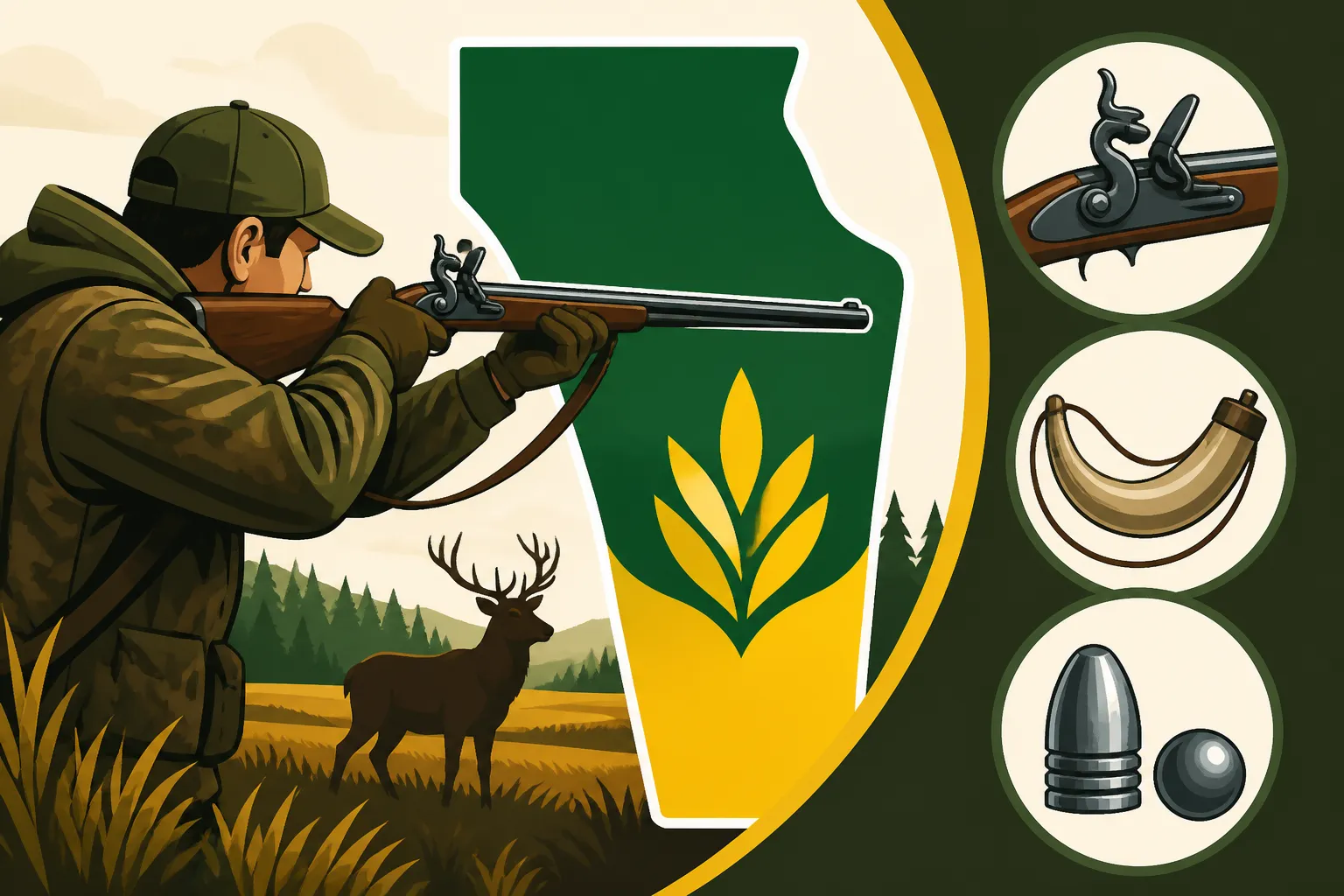
In Saskatchewan, a muzzleloader is generally understood as a firearm that is loaded from the muzzle end of the barrel. This might sound straightforward, but it encompasses a range of designs, from classic flintlock and percussion cap rifles to more modern in-line muzzleloaders that use 209 shotgun primers. The key distinction is the loading process, where the projectile and propellant are inserted from the front. This manual, often slower, loading method is what sets it apart from breech-loading cartridge firearms.
The province's regulations acknowledge the evolution of these firearms, allowing for various ignition systems. You'll find that percussion caps, whether traditional small pistol caps or the more powerful 209 primers used in modern in-lines, are generally accepted. The critical factor is that the firearm cannot accept a self-contained cartridge. This means no break-action muzzleloaders that are designed to load a cartridge-like system from the breech, even if it's technically a "muzzleloader projectile." If you're pondering a purchase, always ensure it strictly adheres to the muzzle-loading principle, both for propellant and projectile. Remember, if it can chamber a cartridge, even if you choose not to, it likely doesn't qualify as a muzzleloader for regulatory purposes.
Legal Ignition Systems and Projectiles
When it comes to ignition, Saskatchewan regulations are fairly inclusive. As mentioned, both traditional percussion caps (number 10 or 11 typically) and the hotter 209 shotgun primers are permitted. This allows hunters to use a wide variety of muzzleloader designs available on the market today. Black powder or approved black powder substitutes (like Pyrodex or Triple Seven) are the only legal propellants. You cannot use smokeless powder in a firearm designed for black powder, as this is extremely dangerous and strictly illegal. Always consult your firearm's manual for recommended propellants and charges.
Projectiles are another important consideration. Saskatchewan allows for both patched round balls and various conical bullets, including those housed in sabots. Sabots, which are plastic sleeves that allow a smaller-diameter bullet to be fired through a larger bore, are a popular choice for their improved accuracy and ballistic performance. However, some jurisdictions have restrictions on sabots, so it's good to know they are generally permitted here. The focus is on the projectile's interaction with the bore and the loading method rather than specific bullet types, as long as it meets the minimum caliber requirements for the species you're pursuing. Always ensure your projectile choices are appropriate for the game animal, promoting a quick and ethical harvest. For deeper dives into ethical hunting, you might want to look into topics like Meat Care in Saskatchewan's Cold Snaps or proper Field Dressing in Saskatchewan's Deep Cold.
Specific Equipment Requirements for Muzzleloader Hunting
Beyond the fundamental definition, there are practical rules concerning the actual construction and accessories of your muzzleloader. These details ensure fair chase, hunter safety, and consistent application across the province's diverse hunting landscapes.
Caliber and Bore Size Regulations
For big game hunting in Saskatchewan, there are minimum caliber requirements that apply to muzzleloaders just as they do to rifles. Generally, for animals like white-tailed deer, mule deer, elk, and moose, the minimum legal bore size for a muzzleloader is .44 caliber. This ensures that the projectile carries enough kinetic energy to humanely dispatch the animal. A .50 caliber muzzleloader is a very common choice and will meet these requirements handily for most big game species.
It's crucial to double-check the specific regulations in the Saskatchewan Hunters' and Trappers' Guide for any changes or species-specific nuances. While a .44 caliber is often the benchmark, ensuring your chosen projectile and powder charge deliver sufficient energy for larger animals like moose or elk is an ethical consideration beyond just meeting the minimum legal bore. Choosing a heavier conical bullet over a lighter sabot, for example, might be a better option for larger game, even if both meet the caliber minimum. Outfitters like those specializing in Moose Hunting Saskatchewan's Farmland and Forest will often advise on optimal calibers and loads for their areas.
Optic and Sighting Restrictions
This is an area where regulations vary widely between jurisdictions, leading to a lot of confusion. Thankfully, Saskatchewan's rules are generally straightforward and quite accommodating for muzzleloader hunters. Unlike some regions that restrict muzzleloaders to open sights only, Saskatchewan permits the use of scopes and other optical sighting devices during general big game seasons. This means you can mount a traditional rifle scope, a red dot sight, or even a low-power variable optic on your muzzleloader.
This flexibility allows muzzleloader hunters to maximize their accuracy, particularly at longer distances where open sights can be challenging. Whether you prefer the simplicity of fiber optic open sights or the precision offered by a modern scope, you have options. However, always ensure your scope is zeroed properly and that you practice extensively with it at various ranges to understand your muzzleloader's trajectory. Given the comparatively slower velocities and greater bullet drop of muzzleloaders compared to modern rifles, knowing your holdovers is absolutely critical, especially if you're out Hunting Saskatchewan's September Archery Opener and considering a muzzleloader as an alternative. Using a ballistic calculator, perhaps even one found through scouting apps like GoHunt, can provide valuable data for your specific load and optic setup.
Loading and Ammunition Rules
The act of loading itself carries specific regulations. During the muzzleloader season, or when using a muzzleloader during a general rifle season, your firearm must be loaded from the muzzle. This sounds obvious, but it reinforces that it must not be a breech-loading firearm. Typically, you're permitted to carry a maximum of one projectile and one powder charge loaded in the barrel. This "one shot" rule emphasizes the traditional, deliberate nature of muzzleloader hunting.
While you can carry additional components (pre-measured powder charges, spare primers, and bullets) in the field, these must not be pre-assembled into cartridges or otherwise loaded into the firearm's breech. Rapid reloading is generally not a feature of true muzzleloaders, reinforcing the focus on careful shot selection. It's a good practice to have your reloading supplies organized in a speed loader or a secure pouch for efficient and safe reloading in the field if a follow-up shot is needed or if you need to unload and reload for safety. For instance, if you're doing some serious Rifle Hunting Saskatchewan's Whitetail Rut, and decide to carry a muzzleloader instead of a modern rifle, ensure your loading setup is compliant and efficient for the conditions.
Muzzleloader Seasons and Designated Zones
It's one thing to know your equipment is legal; it's another to know when and where you can actually use it. Saskatchewan's approach to muzzleloader seasons is quite practical, often integrating them into general hunting periods rather than creating entirely separate seasons for big game.
Where and When You Can Hunt with a Muzzleloader
Unlike some other provinces or states that have dedicated "muzzleloader only" seasons for big game, Saskatchewan generally permits the use of muzzleloaders during the regular open rifle seasons for the various big game species. This means if you have a valid big game tag for, say, white-tailed deer in a particular Wildlife Management Zone (WMZ), you can typically use your legal muzzleloader during the rifle portion of that season. This simplifies things considerably for hunters, as they don't have to juggle a separate set of dates and specific WMZs just for their muzzleloader. You can find comprehensive season dates in the annual Saskatchewan Hunters' and Trappers' Guide or by checking specific WMZ information on platforms like GoHunt.
However, it's always crucial to verify the specific regulations for the WMZ you intend to hunt. While muzzleloaders are broadly permitted during rifle seasons, there might be specific local restrictions or zones where only archery is allowed, or where special permits apply. For example, some urban fringe zones or conservation areas may have unique weapon restrictions. Always check the current year's hunting guide and any local amendments. This integrated approach allows muzzleloader enthusiasts to participate in mainstream hunting seasons, pursuing species like White-Tailed Deer, Saskatchewan's Signature Animal or Mule Deer Across Saskatchewan's Prairie alongside rifle hunters.
Benefits and Challenges of Muzzleloader-Only Seasons (or lack thereof)
Since Saskatchewan doesn't typically have specific "muzzleloader-only" seasons for big game, hunters using these firearms often experience the same hunting pressure as those with modern rifles. This means you won't necessarily get an "early season" advantage or reduced competition that hunters in other jurisdictions might enjoy. However, the benefit is broader access; you're not confined to limited, specific dates or areas.
The challenge, of course, is that a muzzleloader has inherent limitations compared to a modern rifle, such as slower reloading times, shorter effective range, and more susceptible ballistics to wind and weather. When hunting during general rifle seasons, you're competing with hunters using firearms capable of much greater range and faster follow-up shots. This means a muzzleloader hunter must be even more diligent in their scouting, shot selection, and understanding of game movement. For example, a muzzleloader might excel in the thick cover of Hunting Saskatchewan's Forest Fringe where shot distances are often shorter, but could be a disadvantage in the open expanses of Hunting Saskatchewan's Southern Prairie where long shots are more common.
Practical Tips for Muzzleloader Hunters in Saskatchewan
Mastering a muzzleloader involves more than just understanding the rules; it requires dedicated practice, meticulous maintenance, and a deep respect for the firearm's capabilities and limitations.
Preparing Your Muzzleloader for the Hunt
Preparation is paramount for muzzleloader success. Unlike a modern cartridge rifle that you might clean once a year, a muzzleloader demands attention to detail both before, during, and after each use. Before the season, thoroughly clean your firearm, removing all residue from the previous year. Then, dedicate time to the range. Test different powder charges and bullet combinations to find what shoots most accurately in your specific firearm. Keep meticulous records of your loads, noting powder type, grain weight, primer, and projectile, along with accuracy results.
Practice shooting from various field positions – standing, kneeling, sitting, and prone. Understand your muzzleloader's effective range and, more importantly, your effective range with it. Given the muzzleloader's single-shot nature, the first shot is often the only shot. Knowing its trajectory intimately at 50, 100, and 150 yards is crucial. A shooting app or online resource can provide ballistic data, and some hunting platforms, like GoHunt, may even have community forums where experienced muzzleloader hunters share their loading tips and range experiences for specific brands like Traditions or CVA.
When you're preparing for a day in the field, ensure your components are well-organized and protected from the elements. Moisture is the enemy of black powder and primers. Waterproof containers for powder charges and primers are a must. Carry a cleaning jag and patches for swabbing the bore between shots during practice, and know how to safely unload your muzzleloader if the hunt is called off or if you need to cross an obstacle.
Ethical Considerations and Shot Placement
With a muzzleloader, ethical shot placement becomes even more critical due to the single-shot capability and generally slower projectile velocities compared to modern rifles. While modern muzzleloaders are highly accurate and capable of taking big game humanely, the margin for error can be smaller. Always strive for a broadside shot into the vital lung-heart area. Avoid marginal shots, especially at longer ranges or when an animal is quartering away or straight on, as these present a smaller, less forgiving target.
Patience is a virtue for the muzzleloader hunter. Wait for the animal to present the best possible shot. If the shot isn't clean, be prepared for a diligent tracking job. The smoke from a black powder shot can momentarily obscure your view, so practice staying on target through the recoil and smoke to quickly assess the shot and the animal's reaction. Understanding blood trailing techniques is invaluable, particularly when Reading Sign After Fresh Saskatchewan Snow or in dense cover. A wounded animal requires immediate and dedicated pursuit to ensure a humane recovery.
Remember, the goal is always a quick, ethical harvest. Using appropriate loads for the species, practicing regularly, and understanding your equipment's limitations contribute to responsible hunting. This dedication is part of the unique challenge and reward of hunting with a muzzleloader in Saskatchewan.
| Feature | Legal Requirement / Standard Practice in Saskatchewan (Muzzleloaders for Big Game) | Notes |
|---|---|---|
| Loading Method | Muzzle-loaded only | No breech-loading cartridge firearms allowed, even if they fire muzzleloader projectiles. |
| Ignition System | Percussion caps (#10, #11) or 209 shotgun primers | Ensure primers are compatible with your firearm. |
| Propellant | Black powder or approved black powder substitutes (e.g., Pyrodex, Triple Seven) | NEVER use smokeless powder in a muzzleloader designed for black powder. |
| Minimum Caliber | .44 caliber for most big game (deer, elk, moose) | Always confirm for specific species in the annual regulations. |
| Projectiles | Patched round balls, conical bullets, saboted bullets | Choose heavy-for-caliber projectiles for larger game. |
| Sighting System | Open sights, fiber optic sights, scopes, red dot sights | No specific restrictions on optics; use what aids your accuracy. |
| Ammunition Carry | One loaded projectile/powder charge in the barrel at a time | Additional components carried separately (pre-measured powder, primers, bullets). |
Disclaimer
Always consult the most current Saskatchewan Hunters' and Trappers' Guide for the definitive and up-to-date regulations. This article is intended for informational purposes and should not be considered a substitute for official government publications.