Ruffed Grouse Season Dates and Limits
There’s nothing quite like the explosive flush of a ruffed grouse in the thick cover of a Saskatchewan bush trail. That heart-stopping moment, followed by the rapid wingbeats as they disappear into the poplars, is what keeps so many of us coming back. But before you even think about loading up your shotgun and heading out, you need to be absolutely sure about the rules of the game. It’s easy to get excited, grab your gear, and hit the bush, only to realize you’re not quite clear on the season dates or how many birds you can actually take home. This guide is here to untangle the specifics of Saskatchewan's ruffed grouse season dates and limits, ensuring your hunt is not only thrilling but also fully legal and respectful of our precious wildlife resources.
Understanding Saskatchewan's Ruffed Grouse Hunting Seasons
For many upland bird hunters, the ruffed grouse season is a highlight, offering a fantastic opportunity to get into the woods and enjoy the crisp fall air. But unlike some big game species where zones might have different opening and closing dates, ruffed grouse generally follow a more unified provincial schedule. This consistency is a blessing, as it simplifies planning, but it still requires careful attention to the official Saskatchewan hunting guide each year.
Provincial Season Dates for Ruffed Grouse
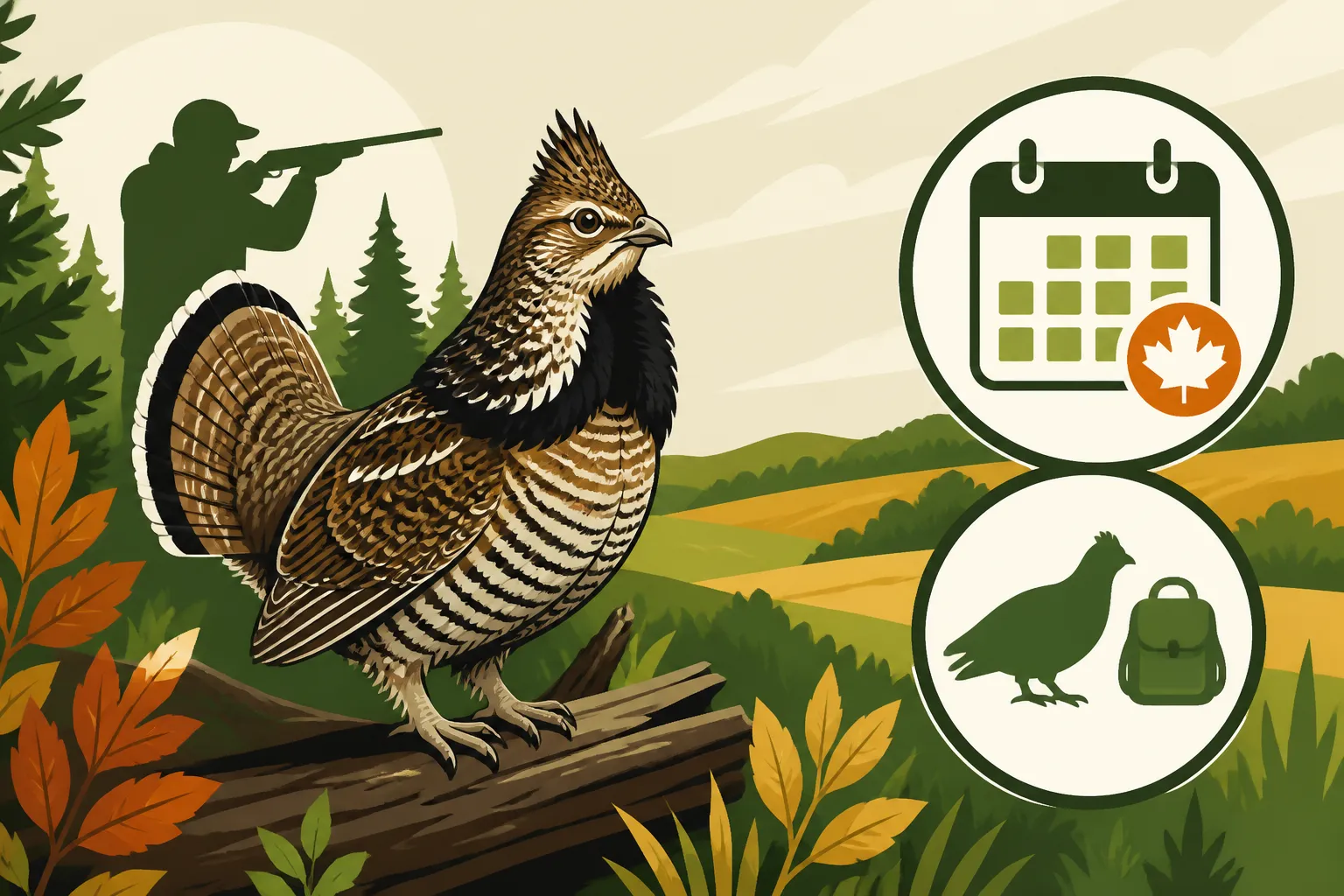
The province of Saskatchewan typically offers a generous season for ruffed grouse, running for several months through the prime fall hunting period. While specific dates can shift slightly year to year based on various factors and ministerial orders, you can generally expect the season to kick off around September 1st and extend all the way through to December 31st. This broad window provides ample opportunity for hunters to pursue these drumming birds, whether they prefer the early-season lushness of the forest or the quieter, snow-dusted trails of late fall.
Early in the season, particularly in September, the foliage is still dense, which can make spotting birds a real challenge after they flush. This is when a good pointing or flushing dog truly shines, helping to pinpoint birds in thick cover. As October and November roll around, leaves drop, improving visibility, and the colder weather can sometimes concentrate birds near food sources or thicker thermal cover. Later in the season, especially in December, deep snow might limit access in some areas, but it also makes tracking easier and can push grouse into more accessible areas like tree lines along fields. Always confirm the exact dates in the current Saskatchewan Hunters' and Trappers' Guide, which is your ultimate authority. For deeper insight into the broader calendar, check out the information on Saskatchewan Upland Bird Seasons.
Why Timing Matters for Ruffed Grouse Hunters
The timing of your ruffed grouse hunt can significantly impact your experience. An early September hunt, for instance, might find you battling mosquitoes and dense undergrowth, but the birds are often less wary, and you might encounter young-of-the-year birds that are still learning the ropes. If you're a fan of combining hunts, this early window often overlaps with the archery seasons for deer and moose, offering a chance to fill multiple tags if you're ambitious and well-prepared. Many hunters use the early grouse season as a way to scout for bigger game, learning the lay of the land and animal movements.
Conversely, a late-season hunt in November or December can be challenging with colder temperatures and potentially significant snowfall. However, these conditions often mean less hunting pressure, and birds might be concentrated in areas with good food and thermal protection. The absence of leaves can make for easier shooting lanes and better visibility of flushes. It's a completely different experience, requiring warmer gear, but it can be incredibly rewarding. For those thinking about other game, this late season also coincides with Rifle Hunting Saskatchewan's Whitetail Rut, offering varied opportunities. Good planning, possibly with a tool like GoHunt to check weather patterns and access points, can make all the difference.
Daily Bag and Possession Limits for Ruffed Grouse
Understanding bag and possession limits is non-negotiable for ethical and legal hunting. These limits are set to ensure sustainable populations and fair distribution of the harvest among hunters. Ignoring them, even accidentally, can lead to serious penalties.
Deciphering Daily Bag Limits
In Saskatchewan, the daily bag limit for ruffed grouse is generally 5 birds per hunter per day. This means that in any single calendar day, regardless of how many times you go out or which areas you hunt, you cannot harvest more than five ruffed grouse. This limit resets at midnight, so if you've harvested your five birds by lunchtime, you must cease hunting ruffed grouse for the remainder of that day.
It's a straightforward rule, but one that new hunters sometimes confuse. It doesn't mean five birds per outing; it means five birds per person, per day. This is crucial for planning your hunting trips, especially if you're part of a larger group or spending multiple days in the field. When you're out there enjoying the solitude of the forest fringe or working a bush trail, it's easy to get carried away, so keeping a mental (or actual) count is essential. A reliable mapping app like GoHunt can help you mark where you've found birds and keep track of your harvest.
Understanding Possession Limits
The possession limit for ruffed grouse in Saskatchewan is typically 15 birds per hunter. This limit refers to the total number of birds you can have in your possession at any given time, whether they are freshly harvested, in your freezer at home, or being transported. The possession limit is usually three times the daily bag limit for upland birds, which provides flexibility for hunters on multi-day trips or those who might freeze birds for later consumption.
For example, if you hunt for three consecutive days and manage to harvest five birds each day, you would hit your possession limit of 15 birds by the end of the third day. At that point, you cannot harvest any more ruffed grouse until you have reduced your total possession below 15 birds (e.g., by consuming some, or legally giving them away). This ensures that hunters aren't stockpiling game and helps distribute the harvest more broadly. It's a common practice for hunters returning from a weekend trip to immediately process and consume some birds, or share them, to stay within the legal possession limit before their next outing.
Here's a quick summary of the typical ruffed grouse limits:
| Limit Type | Number of Birds (per hunter) | Description |
|---|---|---|
| Daily Bag Limit | 5 | Maximum birds harvested in one calendar day. |
| Possession Limit | 15 | Maximum birds in your possession at any given time. |
| Season Dates | Sept 1 – Dec 31 (approx.) | General provincial season window (check current guide). |
Group Hunting and Limits
When hunting in a group, it’s important to remember that bag and possession limits apply to each individual licensed hunter. This isn't a collective limit for the group. So, if you're hunting with a buddy, each of you can harvest up to five ruffed grouse per day and possess up to 15 birds overall. This is a common point of confusion, especially when sharing a vehicle or cooler.
For instance, if three licensed hunters are out together, they could collectively harvest up to 15 birds in one day (5 birds x 3 hunters), and between them, possess up to 45 birds (15 birds x 3 hunters) spread across their various locations (freezers, coolers, etc.). However, it is paramount that each individual's harvest can be attributed back to them if questioned, even if the birds are temporarily pooled in a cooler. Make sure everyone has their own valid licence, including the Saskatchewan's Wildlife Habitat Certificate and any other required permits.
Essential Regulations Beyond Dates and Limits
Hunting ruffed grouse in Saskatchewan involves more than just knowing when and how many. There are other critical regulations that every hunter must adhere to, designed to promote safety, ethical practices, and conservation.
Licence Requirements and Hunter Education
Before you even step foot in the bush, you need to ensure you have the correct licensing. All hunters in Saskatchewan require a valid hunting licence for the species they are pursuing, along with a Wildlife Habitat Certificate. For most resident upland bird hunters, this is a straightforward purchase through the HAL (Hunter and Angler Licence) system. Non-residents have specific requirements, often needing to go through an outfitter for big game, but bird hunting for non-residents also has its own rules, including specific five-day terms which differ from resident licences. Details on Saskatchewan Hunting Licences and What They Cost are readily available.
Furthermore, if you are a new hunter or a non-resident who hasn't completed an equivalent course, you will likely need to complete the Saskatchewan Hunter Education program. This course covers everything from firearm safety and game identification to ethical hunting practices and basic regulations. It's not just a hoop to jump through; it's vital education that makes you a safer, more responsible hunter. You can find more information on Saskatchewan Hunter Education Requirements.
Legal Shooting Hours and Equipment
Just like big game, there are specific legal shooting hours for upland birds, including ruffed grouse. Generally, these hours run from one half-hour before sunrise to one half-hour after sunset. This prevents hunting in the dark, which can be unsafe and make proper identification difficult. Always check the current hunting guide for precise sunrise/sunset tables, as these change throughout the season.
When it comes to equipment, shotguns are the primary tool for ruffed grouse. While there isn't a specific gauge requirement, most hunters opt for 12, 16, or 20 gauge shotguns, typically loaded with smaller shot sizes like 6, 7.5, or 8. These lighter loads are effective on grouse without being overkill, preserving more meat. Archery is technically legal for upland birds, but it's rarely practical given the fast-flushing nature of grouse. While Legal Firearms and Bows for Big Game focuses on larger animals, the general principles of safe firearm handling apply universally.
Accessing Land for Ruffed Grouse Hunting
One of the most frequent frustrations for hunters is figuring out where they can actually hunt. Saskatchewan offers a mix of private and public lands, and the rules for access differ significantly. For private land, you must obtain permission from the landowner before hunting. This is not just polite; it's the law in Saskatchewan, regardless of whether the land is posted or not. Many ruffed grouse hot spots are found on private land, particularly in the aspen parkland regions, so Knocking on Doors in Saskatchewan Farm Country is a key skill. Respecting landowners and their property is paramount to maintaining good hunter-landowner relations.
If you prefer to hunt on public land, Saskatchewan has extensive Crown land, including provincial forests and Wildlife Management Zones (WMZs). These areas often hold excellent populations of ruffed grouse, especially in the northern forest fringe. However, even on Crown land, there might be specific rules or restrictions, such as vehicle access limitations or closures due to fire risk. Utilizing resources like GoHunt or the provincial iMap Saskatchewan tool can help you identify Crown land parcels. For a comprehensive overview, read about Public Hunting Land in Saskatchewan.
Strategies for a Successful Ruffed Grouse Hunt
Knowing the rules is half the battle; the other half is understanding the birds themselves and how to find them. Ruffed grouse are masters of camouflage and can be incredibly elusive, making them a true sporting challenge.
Where to Find Ruffed Grouse in Saskatchewan
Ruffed grouse thrive in specific habitats across Saskatchewan, primarily in the northern two-thirds of the province. You'll generally find them in areas with a mix of aspen poplar stands, willow thickets, and coniferous cover. They love areas with diverse forest edges, particularly where younger forest growth provides dense cover and plenty of browse. These birds are often found near water sources but can adapt to drier upland forests as well.
Key areas to target include:
- Aspen Parkland: This transitional zone between the southern prairie and northern boreal forest is prime ruffed grouse country. The mix of aspen bluffs, willow bottoms, and agricultural fields provides excellent habitat. Exploring areas like those described in Hunting Saskatchewan's Aspen Parkland is a great start.
- Forest Fringe: Just south of the true boreal forest, the forest fringe offers even denser cover and extensive tracts of ruffed grouse habitat. Old logging roads, cutlines, and natural clearings within this zone are often productive. Consider hunting areas covered in Hunting Saskatchewan's Forest Fringe.
- Bush Trails and Old Roads: Ruffed grouse frequently use old trails, abandoned farm roads, and cutlines for dusting, feeding, and travel. These linear features often provide easier walking for hunters and are excellent places to encounter birds. Learning more about Ruffed Grouse Hunting Saskatchewan's Bush Trails can improve your success. Look for areas with a good understory of berry bushes (like saskatoons or cranberries) or aspen catkins, which are key food sources.
Hunting Methods and Tips
Hunting ruffed grouse is often a game of stealth, patience, and quick reflexes.
- Walking Trails: The most common method involves slowly walking bush trails, old logging roads, or cutlines. Stop frequently, listen for drumming (especially in spring, though you might hear some in fall), and keep your eyes peeled for subtle movements or birds perched. Many hunters find success by walking just off the main trail, pushing birds out onto the clear path.
- Using Dogs: A good bird dog, whether a flusher (like a Springer Spaniel or Labrador Retriever) or a pointer (like a German Shorthaired Pointer or English Setter), can dramatically increase your success rate and enjoyment. Dogs help locate birds you might otherwise walk past, and they can retrieve downed birds from dense cover. If you hunt with a flusher, read up on Using a Flushing Dog in Thick Cover.
- Patience and Persistence: Ruffed grouse are often found in small coveys or individually. Don't get discouraged if you walk a long stretch without seeing anything. Move to new patches of cover, try different types of habitat, and be prepared for that sudden, explosive flush at any moment. The element of surprise is always on their side! Also, sometimes you'll encounter other upland species in the same habitat. Knowing how to differentiate them is key; for example, understanding Telling a Ruffed Grouse From a Spruce Grouse can prevent a misidentified shot and ensure you comply with specific species limits.
Disclaimer
Please note that hunting regulations, season dates, and limits are subject to change. While this guide provides general and accurate information based on typical Saskatchewan regulations, it is imperative that every hunter consults the most current Saskatchewan Hunters' and Trappers' Guide published by the Ministry of Environment before heading out into the field. This official guide is the definitive source for all legal hunting information.