How Drought Moves Saskatchewan Game
One of the most disheartening things to witness as a hunter, especially here in Saskatchewan, is the relentless grip of a drought. You spend months anticipating the season, scouting your favourite spots, only to find the landscape parched, the sloughs dry, and the usual game patterns completely thrown off. It's frustrating to plan a hunt when the very environment seems to be working against you, making it feel like you're chasing ghosts. This guide is here to unravel the complex ways drought conditions force Saskatchewan's diverse game species to shift their behaviour, giving you a better understanding of what to expect and how to adapt your strategies when the land gets thirsty.
How Drought Directly Impacts Habitat and Food Sources
Drought isn't just about dry fields; it fundamentally alters the very building blocks of an animal's life: their home and their dinner plate. When rainfall dwindles, the entire ecosystem feels the pinch, leading to cascading effects that force game animals to make tough choices for survival.
Reduced Forage Quality and Quantity
The most immediate and obvious impact of drought is on vegetation. Fields that would normally be lush with peas, lentils, or even natural grasses quickly turn brown and brittle. This means a severe reduction in both the quality and quantity of food available for everything from whitetail deer to a hungry bull moose. For animals that rely on succulent green browse or high-protein crops, a dry spell can be devastating. They might find some withered plant matter, but it lacks the nutritional punch they need to maintain body condition, grow antlers, or sustain fawns. Imagine a deer trying to put on weight for winter when all the prime forage is essentially cardboard. It's a real struggle, and you'll see animals that are noticeably thinner, with less energy. This scarcity can push them to take risks they wouldn't normally, venturing into more open areas or closer to human activity in search of something, anything, to eat.
Altered Cover and Shelter Availability
Beyond food, drought profoundly impacts the cover and shelter that game animals rely on. Lush cattail sloughs, vital for ducks and bedding deer, shrink or disappear entirely. Dense bush pockets might thin out as undergrowth withers, making animals more exposed to predators and the elements. Think about how a healthy willow run offers excellent security; in a severe drought, those willows might be sparse, providing little visual barrier. This reduction in effective cover forces animals into areas they might normally avoid, or concentrates them into the few remaining patches of dense vegetation. It also means less protection from summer heat, which can be brutal in Saskatchewan, further stressing animals already struggling to find food and water. For a hunter, this means the landscape you've always known might look completely different, with the usual bedding areas no longer offering the same appeal.
Impact on Wetland and Riparian Zones
Saskatchewan is famous for its potholes and sloughs, which are absolute lifelines for countless species, especially waterfowl and resident game like moose and deer. Drought, however, can turn these vibrant wetlands into cracked mudflats. When these vital water bodies dry up, the entire ecological community built around them collapses. Migratory birds like ducks and geese are forced to bypass traditional staging areas, pushing them further north or south in search of suitable habitat. For resident game, the lush vegetation along riparian zones – stream banks and slough edges – usually provides a consistent source of food and water. When these areas dry up, animals lose critical thermal cover, escape routes, and dependable hydration. Hunters need to pay close attention to the state of these wetlands, as they often dictate where the game will not be, and by extension, where they will be. Understanding the health of these vital areas is key, and tools like GoHunt can provide satellite imagery to pinpoint historical water sources and gauge current conditions before you even set foot in the field.
Water Scarcity and Its Influence on Game Movement
Water is life, and in a drought-stricken landscape, its availability becomes the single most dominant factor influencing where game animals move and spend their time. Forget the subtle nuances of rut timing or feed preferences; if an animal can't find water, nothing else matters.
Concentrated Activity Around Remaining Water Sources
When vast tracts of land dry up, any reliable water source becomes an oasis, drawing game animals like a magnet. This means dugouts, perennial springs, larger sloughs that haven't completely evaporated, or even cattle troughs can become intense hubs of activity. You might find several species, from mule deer to coyotes, using the same small waterhole, especially during the hottest parts of the day or right at dusk and dawn. This concentration can be a double-edged sword for hunters. On one hand, it makes finding game more predictable, as they're tethered to these spots. On the other hand, these areas can see increased hunting pressure, and animals become incredibly wary. Scouting these specific, isolated water points is absolutely crucial. When Hunting a Saskatchewan Dugout at Dusk, you'll often see this phenomenon play out, with animals carefully approaching from various directions.
Increased Travel Distances for Water
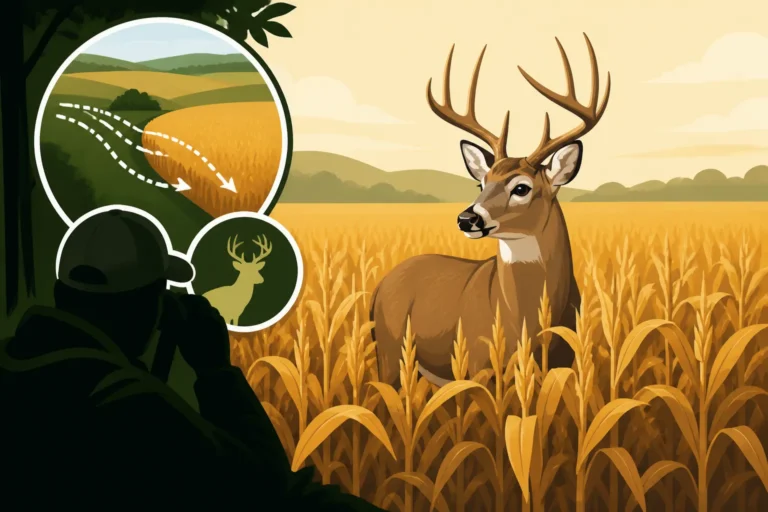
As local water sources vanish, game animals are forced to travel much further than they normally would to find a drink. What might have been a short jaunt from a bedding area to a nearby pothole now becomes a long, exposed trek across dry fields. This increased movement expends vital energy, which is already at a premium during drought conditions due to reduced food quality. These longer travel routes create new corridors of movement that hunters can identify. Animals will often follow the path of least resistance – coulee bottoms, treelines, or even field edges – connecting distant water points to bedding and feeding areas. This is where really understanding the land becomes critical; a successful hunter will identify these "water highways" that might not exist in a normal year.
Shifts in Bedding and Feeding Patterns Near Water
The need for water also dictates where animals choose to bed and feed. Instead of bedding in a distant bluff and travelling to water, they'll often try to bed as close to a reliable water source as possible, minimizing their exposure and energy expenditure. This means traditional bedding areas that are now far from water might see significantly less activity. Similarly, feeding patterns will shift. If a small pocket of greener vegetation exists near a water source, that's where animals will congregate, even if it's not their preferred forage in a normal year. For example, a patch of standing corn that's still somewhat green due to runoff from a nearby well might become a prime feeding spot. This requires hunters to abandon preconceived notions about where game should be and adapt to the current reality. Satellite imagery through platforms like GoHunt can be invaluable for identifying these localized green-ups near water.
Behavioral Shifts in Key Saskatchewan Game Species During Drought
Different game species react to drought in their own unique ways, shaped by their biology and typical habitat use. Recognizing these species-specific shifts is vital for any hunter trying to pattern animals in a dry year.
Whitetail and Mule Deer Responses
Whitetail and mule deer, while both members of the deer family, exhibit slightly different drought responses. Whitetails, often found in more diverse habitats like the Hunting Saskatchewan's Aspen Parkland or the forest fringe, will cling to denser cover near any remaining water. They become incredibly wary, often moving mostly at night to conserve energy and avoid the heat. Their feeding patterns will be focused on whatever palatable browse remains, often stripping leaves from less desirable plants they'd normally ignore. You might find them concentrated in small, uncharacteristic pockets of cover near a dugout or a larger, deeper slough.
Mule deer, being creatures of the open prairie and coulee country, are typically more accustomed to arid conditions. However, severe drought still pushes them hard. They will become even more reliant on the deepest parts of coulees, seeking whatever moisture and shade they can find. Their nomadic tendencies might be amplified as they travel further to find pockets of adequate forage and water. When Hunting Mule Deer After a Snowfall in a dry year, even a light dusting of snow can provide much-needed moisture, and you might see increased activity as they lick snow or browse on plants that hold moisture. Both species will show signs of stress, potentially having smaller body sizes and reduced antler growth if the drought is severe and prolonged.
Moose and Elk Adaptations
Moose, being large-bodied animals that thrive in wet, riparian environments and the boreal forest, are particularly vulnerable to drought. They rely heavily on aquatic vegetation and lush browse found along water bodies. When these dry up, moose struggle immensely. They will abandon smaller, dried-up sloughs and streams, congregating around larger, more permanent bodies of water or deeper bush that retains moisture. Their movement can become more restricted to these damp havens, making them more predictable but also more sensitive to pressure. You might find them Hunting Farmland Moose Around Saskatchewan Sloughs that still hold water, or pushing further into the thicker, swampier parts of the Hunting Saskatchewan's Boreal Forest Fringe where moisture persists.
Elk, while more adaptable than moose, still feel the pinch. They are grazers and browsers that prefer a mix of open areas and timber. In a drought, their grazing areas can quickly turn to dust, forcing them to rely more on browse or whatever standing crops might be available. Like deer, they will concentrate around reliable water sources. If the drought affects forested areas, their traditional bedding cover might become too dry, pushing them into denser timber where humidity is higher. Where Saskatchewan's Elk Herds Winter might also shift, as they seek out areas that haven't been as severely impacted by the dry conditions, potentially moving into zones where they aren't typically found in high numbers during hunting season.
Upland Bird and Waterfowl Relocation
Upland birds like sharp-tailed grouse and Hungarian partridge, while resilient, are still affected. Their food sources – seeds, insects, and berries – can be scarce. More critically, they need water for brooding and often rely on dew for hydration. In a drought, they might concentrate around the edges of remaining stubble fields where some moisture might collect, or near farmyards with scattered puddles. Walking Up Sharp-Tailed Grouse in Saskatchewan in a dry year might mean covering more ground to find these pockets of activity.
Waterfowl, as mentioned before, face the most immediate and dramatic impact. When potholes and smaller wetlands dry up, ducks and geese simply cannot nest or stage there. This forces massive relocations. Birds will bypass drought-stricken areas entirely, pushing them towards larger, more permanent lakes and rivers, or into neighbouring regions that have received more rainfall. This can mean fewer birds in traditional hunting grounds and a concentration of birds in areas with reliable water. Hunters need to adjust their scouting and understand that traditional flight paths and feeding patterns might be completely altered. This is where platforms like GoHunt can help track regional precipitation and water trends to predict where birds might be concentrating.
Long-Term Effects of Prolonged Drought on Game Populations
A single dry year can be tough, but a prolonged drought stretching over multiple seasons can have severe, lasting impacts on game populations, affecting everything from reproduction to overall herd health.
Decreased Fawn/Calf Survival Rates
One of the most concerning long-term effects of drought is the hit to recruitment. Pregnant does and cows, already stressed by poor forage and lack of water, struggle to maintain their health. This can lead to lower birth weights, stillbirths, or simply fewer offspring being conceived in the first place. Once born, fawns and calves face an uphill battle. Mothers have less milk production due to poor nutrition, and young animals are more susceptible to disease and dehydration in harsh, dry conditions. When a doe is weak, her fawn is weak. The long-term consequence is a significant drop in the number of young animals surviving to adulthood, leading to an aging population structure and fewer animals for future hunting seasons. This isn't just a tough hunting season; it's a potential threat to the health of the entire herd.
Increased Susceptibility to Disease and Predation
Stressed animals are vulnerable animals. When game is weakened by drought-induced malnutrition and dehydration, their immune systems take a hit. This makes them far more susceptible to diseases that might otherwise be minor. For instance, Saskatchewan's CWD Positive Numbers can see a spike in areas where deer are under severe environmental stress, as the disease progresses faster in compromised individuals. They also become easier targets for predators like coyotes or wolves, as their energy reserves are low, and they may be forced into less secure areas in search of food or water. This increased predation isn't necessarily a bad thing from an ecological perspective, as it often targets the weakest animals, but it further reduces overall population numbers.
Changes in Migration and Distribution Patterns
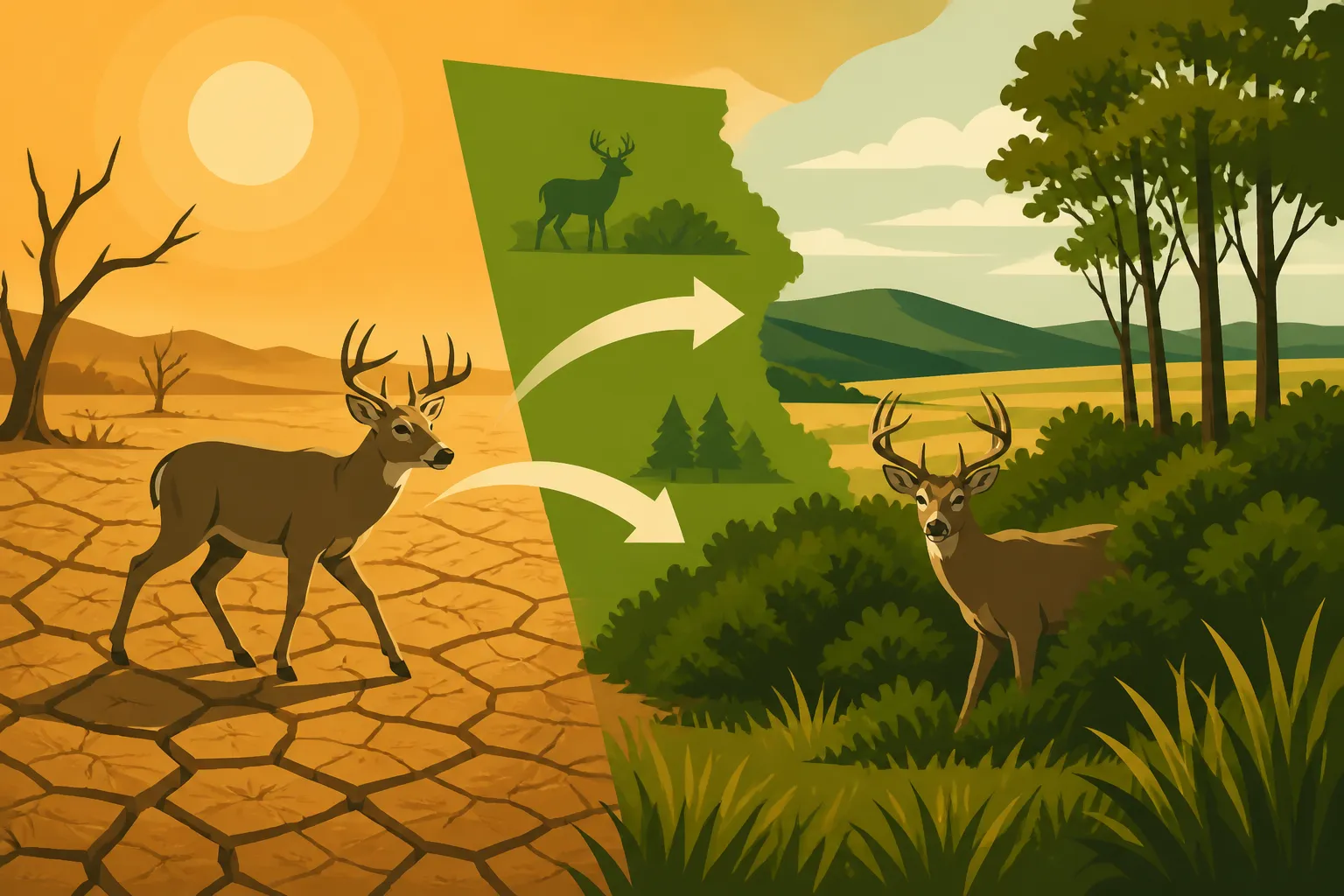
For species that exhibit migratory behaviour, or even localized seasonal movements, prolonged drought can fundamentally alter these patterns. Waterfowl are the most obvious example, bypassing entire regions to find suitable wetlands. But even resident game can exhibit significant shifts in their distribution. Deer and elk might permanently abandon traditional wintering or summering grounds if those areas become consistently unproductive due. They might establish new patterns, moving into areas previously less occupied, or concentrating more heavily in localized pockets of persistent habitat. This can create new hunting opportunities in unexpected places, but it also makes traditional scouting and hunting knowledge less reliable. Hunters need to be flexible and think regionally, understanding that game populations might be shifting their ranges in response to long-term environmental changes.
Strategies for Hunters Adapting to Drought Conditions
Hunting in a drought year requires a complete recalibration of your approach. The old tricks might not work, and relying on past experience without adapting to current conditions will likely lead to frustration.
Scouting for Water and Remaining Green Zones
In a dry year, water is the ultimate key. Spend significant time, well before the season, scouting every potential water source. Look for dugouts that are still holding water, permanent sloughs that haven't dried up, or even small seeps and springs in coulees. These will be high-traffic areas. Beyond water, look for any pockets of green vegetation – a standing crop that got a bit more rain, a lush riparian zone fed by groundwater, or even just a field of weeds that managed to thrive. These "green zones" will offer both food and a modicum of cover. Don't just drive by; get out and walk these areas, looking for fresh tracks, droppings, and browse lines. Using satellite imagery from a tool like GoHunt can save you countless hours by identifying potential water and green-up spots before you even leave home. This pre-season intel is critical for success when faced with dry conditions.
Adjusting Hunting Methods and Stand Placement
Your traditional hunting methods might need a serious overhaul. If you usually rely on large, widespread movements of deer through bush, you might find fewer animals there. Instead, focus your efforts around the concentrated water sources and green zones. This could mean more time still-hunting or spot-and-stalk if the cover is sparse, or setting up blinds strategically overlooking a key waterhole. For instance, Hunting a Frozen Slough Crossing could still be effective in late season if it's one of the only remaining water sources, or a major travel corridor to one. You might need to scale back rattling efforts in open, dry country, as sound carries differently and animals are more alert. Consider using ground blinds more often, as tree stands might offer less concealment if the leaf cover is sparse. The key is to be adaptable and observant of the subtle shifts in animal behaviour around these limited resources.
Utilizing Mapping Tools for Water Features
Modern mapping tools are an absolute game-changer when hunting in drought conditions. Services like GoHunt allow you to overlay various map layers, including satellite imagery, topography, and even public land boundaries. Use these tools to meticulously identify every potential water source in your hunting area. Look for dark spots in satellite images that might indicate deeper water, or depressions in the topography where water would naturally collect. Compare current satellite views with historical ones to see which water bodies are typically reliable and which are ephemeral. These tools can also help you identify hidden coulees or treelines that animals might be using as travel corridors to access water. For example, when Scouting With Satellite Imagery in Saskatchewan, you can pinpoint potential bedding areas that are strategically located near a water source, helping you decide where to focus your ground scouting efforts. Being able to visualize the landscape, especially the crucial water features, without actually being there, is an immense advantage.
Understanding Regional Variations in Drought Impact
Saskatchewan is a vast province, and drought impacts can vary significantly from one region to another. What's happening on the dry southern prairie might be very different from the situation in the northern boreal forest, and hunters need to understand these nuances.
Prairie Region Specifics
The southern prairie region of Saskatchewan, characterized by its grasslands, coulees, and widespread agriculture, is particularly susceptible to drought. Water sources here are often limited to dugouts, dams, and deep coulee springs. When drought hits, these areas dry up quickly, forcing pronghorn, mule deer, and even whitetails to concentrate around the few remaining sources. Food can also become critically scarce, especially if grain crops fail or are prematurely harvested due to dry conditions. Hunters in this region need to focus almost exclusively on water and deep coulee systems that retain moisture and provide cover. When Hunting Saskatchewan's Southern Prairie, you'll find that game trails leading to water become superhighways, and any standing crop that survived the dry spell will be a major attractant. It’s also important to remember that the open nature of the prairie means animals have fewer places to hide, making them exceptionally wary around the limited resources.
Aspen Parkland Challenges
The aspen parkland, a transitional zone between the prairie and the forest, offers a mix of agricultural fields, bluffs, and sloughs. Drought here presents a unique set of challenges. While there's more natural cover than the prairie, the countless potholes and smaller wetlands are often the first to go dry. This impacts both waterfowl and resident game like whitetails and moose. The bluffs, which usually provide excellent thermal cover and browse, can become less appealing if the undergrowth withers. Animals in the aspen parkland will often gravitate towards larger bush blocks, river valleys, or the edges of persistent sloughs that still hold water. When Hunting a Poplar Bluff at First Light, if that bluff is near a perennial water source, you might find more activity than usual as animals move back and forth. The key here is identifying the remaining pockets of reliable habitat within a mosaic of dried-out areas.
Forest Fringe and Boreal Zone Considerations
Moving further north into the forest fringe and boreal forest, the impact of drought can be different. While these regions generally receive more precipitation and have larger, more permanent water bodies, severe drought can still cause problems. Forest fires become a much greater threat, destroying vast tracts of habitat and displacing game. Even without fire, dry conditions can reduce berry crops, impact the health of aquatic vegetation in smaller lakes, and make stream beds run low. Moose, as previously discussed, are heavily reliant on these wetter environments, and will concentrate around the larger, more stable lakes and rivers. Black bears, whose diet relies heavily on berries, might travel further in search of food. When Hunting the Forest Fringe for Big Bucks in a dry year, you might find deer deeper in the timber, seeking shade and any remaining moisture, rather than along the usual field edges. Understanding the specific drought resilience of different vegetation types in the boreal, and how it affects food and water, is crucial for successful hunting in these northern zones.
Table: Drought Impact on Saskatchewan Game Species
To give you a quick overview, here's a look at how different species tend to cope (or struggle) during drought conditions in Saskatchewan:
| Species | Primary Drought Impact | Behavioral Shifts | Hunter Focus |
|---|---|---|---|
| Whitetail Deer | Reduced forage, water scarcity | Concentrate near water, increased nocturnal activity | Water sources, dense cover, specific green-ups |
| Mule Deer | Reduced forage, water scarcity | Increased travel, deeper coulee reliance, wary | Coulee systems, isolated water, long-range glassing |
| Moose | Loss of aquatic vegetation | Abandon small sloughs, seek permanent water bodies | Large sloughs, rivers, deep boreal swamps |
| Elk | Poor grazing, water scarcity | Concentrate near water, seek remaining green forage | Water sources, standing crops, timber pockets |
| Pronghorn | Widespread forage loss | Highly concentrated on few water points, nomadic | Water sources, long-range glassing, field edges |
| Black Bear | Berry crop failure | Increased travel for food, can be less predictable | Baiting sites, persistent berry patches |
| Upland Birds | Food/water scarcity, poor cover | Concentrate near farmsteads, stubble, moisture pockets | Specific field edges, farm infrastructure |
| Waterfowl | Wetland/pothole drying | Massive relocation to permanent water, bypass regions | Major lakes, rivers, large impoundments |
Understanding these species-specific reactions, combined with a keen eye on current conditions, will undoubtedly help you adapt your hunting plans to the realities of a dry Saskatchewan season.
Disclaimer
This article is for general informational purposes only and does not constitute professional advice. Laws, prices and regulations vary by location and change over time. Consult a qualified professional for guidance on your specific situation.